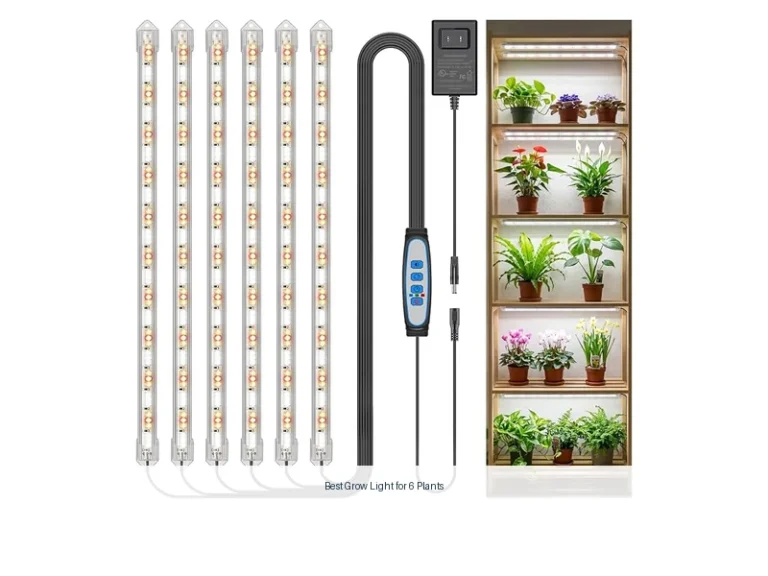
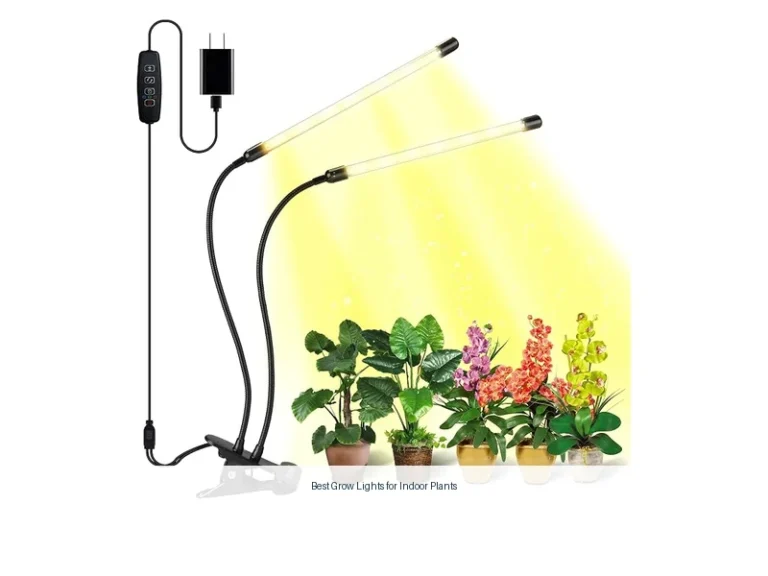
3 Best LED Grow Lights for Strawberries for Indoor Fruiting
Strawberries need more usable light than many low-light houseplants if the goal is vigorous growth, flowering, and fruit production. The best LED grow lights for strawberries should provide enough canopy-level intensity while keeping heat manageable and distributing light evenly across spreading leaves, flowers, and developing berries.
For indoor strawberries, I would focus on PPFD, photoperiod, coverage, dimming, spectrum, and airflow rather than simply choosing the largest wattage. Research on indoor strawberry production has tested white-plus-red-and-blue LED lighting at 200, 300, and 450 µmol/m²/s PPFD with 12- and 16-hour photoperiods, illustrating that strawberries can make productive use of meaningful artificial-light intensity when the rest of the growing environment is controlled.
My primary recommendation is the Spider Farmer SF1000 100W LED Grow Light. I would choose it for most indoor strawberry growers because the current U.S. listing combines 100W actual power, 2.5 µmol/J system PPE, full-spectrum output, dimming, and 2×2/3×3-oriented coverage.
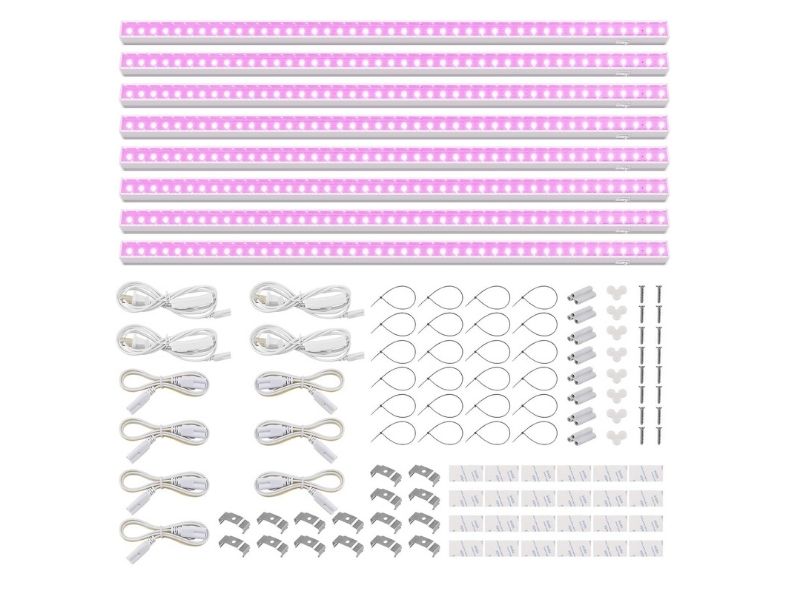
I would choose the Barrina T5 4FT Grow Lights 8-Pack for strawberries grown in rows, long planters, NFT channels, or multi-level shelves. The selected package provides eight 4-foot bars at 20W each for 160W total available power, making it easy to distribute light along a strawberry canopy rather than concentrating output in the center.
For one strawberry plant or a small container where a large fixture would be excessive, I would choose the GE PAR38 Balanced Spectrum Grow Bulb. Its current listing publishes 50 µmol/s PPF, balanced white-spectrum output, and a rated life of up to 25,000 hours.
3 Best LED Grow Lights for Strawberries
| Image | Product Name | Check Price |
|---|---|---|
Best Choice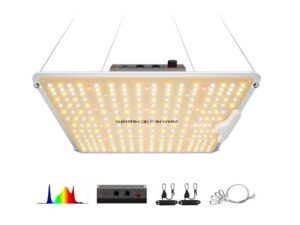 | Spider Farmer SF1000 100W LED Grow Light | Check Price |
Second Best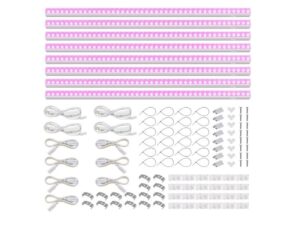 | Barrina T5 4FT Grow Lights 8-Pack | Check Price |
Third Choice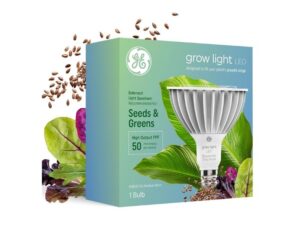 | GE PAR38 Balanced Spectrum Grow Bulb | Check Price |
3 Best LED Grow Lights for Strawberries Reviewed
1. Spider Farmer SF1000 100W LED Grow Light
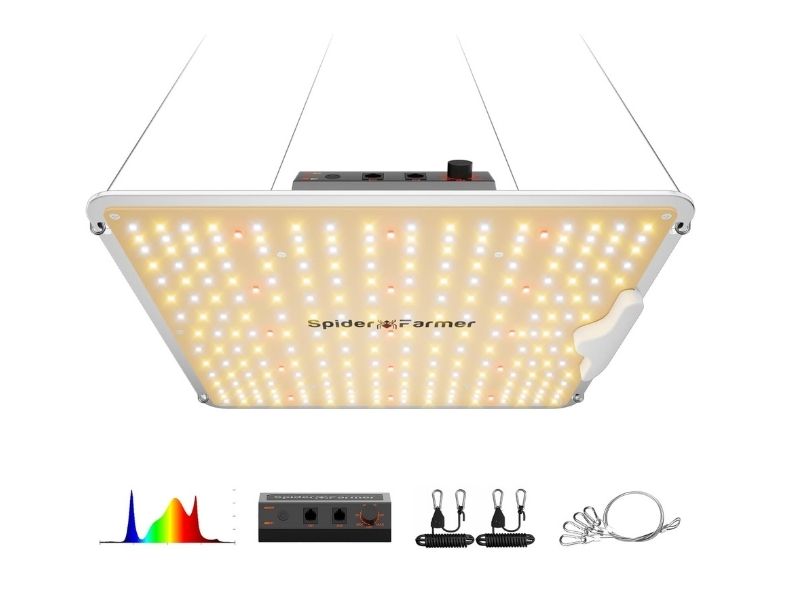
Key Features
- 100W actual input
- 2.5 µmol/J system PPE
- Full-spectrum output
- Dimmable
- New-generation upgraded diode layout
- 2×2/3×3 grow-space positioning
- Fanless design
- Suitable from young plants through fruiting
The Spider Farmer SF1000 is my primary recommendation because it provides enough output headroom for fruiting strawberries without jumping into the much higher wattages intended for large tomato or commercial grow-room canopies.
The current Amazon listing identifies the SF1000 as a 100W dimmable full-spectrum fixture using a new-generation high-efficiency diode arrangement and publishing 2.5 µmol/J system PPE.
That is a sensible power class for a compact strawberry garden.
Strawberry plants remain relatively low to the growing surface, but their leaves spread outward and can quickly create a broad canopy.
I would consider the SF1000 particularly useful for:
- Several strawberry pots
- A small raised indoor planter
- Compact hydroponic strawberries
- DWC strawberry systems
- A small drip system
- One 2×2-style strawberry canopy
The dimmer is one of its most useful features.
Newly transplanted strawberry crowns do not necessarily need the same intensity as mature plants carrying flowers and fruit.
A better progression is:
Establishment → moderate output
Active vegetative growth → gradually increase
Flowering and fruiting → increase as plant response and environment allow
This avoids wasting electricity and reduces the risk of pushing stressed plants with more light than they can use.
The 2.5 µmol/J system PPE is also more informative than a vague watt-equivalent claim.
PPE describes how efficiently a complete grow-light system converts electrical energy into photosynthetically active photons.
That matters because strawberries may need meaningful artificial intensity for many hours each day.
Controlled-environment research on the day-neutral cultivar ‘Albion’ tested PPFD levels of 200, 300, and 450 µmol/m²/s under 12- and 16-hour lighting periods.
I would not interpret those experimental levels as a universal recipe for every home strawberry cultivar.
Instead, they show why a proper overhead grow fixture such as SF1000 makes more sense for fruit production than a tiny decorative lamp positioned several feet away.
The fixture also gives you broader coverage than a single bulb.
That is important because strawberries form a low, spreading canopy.
You want usable light reaching:
- Center leaves
- Outer leaves
- Flower clusters
- Developing fruit
rather than one intense circle directly in the middle.
Poor coverage can create uneven plant development even when total wattage seems sufficient.
A strawberry plant near the edge may receive far less light than the plant beneath the center of the fixture.
The full-spectrum output is another advantage.
Strawberries do not require a specialized “strawberry-only” spectrum.
Research on controlled-environment strawberries has successfully used broad white light combined with blue and red wavelengths.
For practical home growing, I would prioritize:
usable PPFD → even coverage → photoperiod → temperature → airflow → spectrum refinements.
The fanless design also keeps fixture noise low.
However, 100W still contributes heat to a small tent or enclosed cabinet.
Strawberries generally perform better when the canopy is not allowed to become excessively hot, so ventilation should increase as the room becomes more enclosed.
What I Like
- Strong 100W output for compact strawberry gardens
- Published 2.5 µmol/J system PPE
- Dimmable
- Full-spectrum output
- Broad overhead coverage
- Easier to manage than oversized 300W+ fixtures
- Good fit for compact hydroponic setups
What I Do Not Like
- Requires hanging hardware or overhead support
- Too large for one tiny strawberry pot
- Maximum output may be unnecessary during early growth
- Coverage still needs to be matched carefully to canopy dimensions
The SF1000 is the strawberry grow light I would choose when the goal is reliable indoor flowering and fruiting across several plants rather than basic supplemental lighting. Its 100W power class, dimming, efficiency, and compact canopy coverage make it the most balanced option in this comparison.
2. Barrina T5 4FT Grow Lights 8-Pack
Key Features
- Eight 4-foot LED bars
- 20W per bar
- 160W total available power
- Full-spectrum plant lighting
- Separate on/off operation
- Linkable design
- Flexible mounting
- Excellent for long strawberry rows
The Barrina T5 system is the option I would choose when strawberries are arranged in rows rather than grouped under one square fixture.
The selected Amazon package contains eight 4-foot fixtures at 20W each, totaling 160W across the package. It is designed as a full-spectrum grow-light system with separate switching and flexible mounting.
The main advantage is geometry.
Strawberries are frequently grown in:
- Long troughs
- Gutter-style planters
- NFT channels
- Rack systems
- Shelf planters
- Multi-level hydroponics
A four-foot linear fixture naturally follows those layouts.
Instead of producing a bright center and weak ends, several long bars can be spaced across the entire growing row.
That can improve consistency between plants.
For example, if eight strawberry crowns are planted in a four-foot trough, linear lighting helps each plant receive overhead illumination instead of forcing end plants to rely on light traveling sideways from a compact center fixture.
You also do not need to use all eight bars together.
The package can be configured as:
Two bars × four shelves
or
Four bars × two stronger shelves
or another arrangement appropriate to the canopy.
That flexibility is particularly useful with strawberries because plant density changes as runners and leaves develop.
The 20W-per-bar format allows intensity to be increased by adding another bar instead of replacing the entire lighting system.
For a relatively shallow strawberry shelf, two bars may be adequate to begin with.
For a deeper or denser canopy, adding more parallel bars can improve front-to-back coverage.
The system does not offer the convenient continuous dimmer found on SF1000.
Instead, intensity is managed through:
- Number of active bars
- Bar spacing
- Distance above the canopy
- Photoperiod
That is less convenient for frequent adjustments but works very well in a fixed strawberry rack once the setup is dialed in.
Barrina’s modular format also makes it particularly interesting for hydroponic strawberry systems.
A long growing channel benefits from light that follows its shape.
This is more efficient geometrically than hanging a square fixture over the center of a long narrow row.
Strawberry photoperiod response deserves attention as well.
Ohio State’s controlled-environment berry resources note that strawberry flowering and dormancy responses can depend on cultivar and photoperiod type, and photoperiodic lighting is sometimes used separately from photosynthetic lighting.
That means I would not simply copy one universal timer program for every cultivar.
Day-neutral, June-bearing, and other types can respond differently.
For most home growers, the practical goal is to provide a stable light schedule and adjust according to cultivar behavior, flowering, and overall plant health.
What I Like
- Excellent for long strawberry rows
- Eight modular 4-foot bars
- 160W total available capacity
- Easy to divide across multiple shelves
- Full-spectrum output
- Separate switching
- Good fit for hydroponic racks
What I Do Not Like
- No continuous dimmer
- Requires more installation and cable management
- Long bars are unnecessary for one or two pots
- More complicated to reposition than a single fixture
The Barrina T5 system is the light I would choose for strawberries grown on shelves, in troughs, or along hydroponic channels where uniform linear coverage is the primary requirement.
3. GE PAR38 Balanced Spectrum Grow Bulb
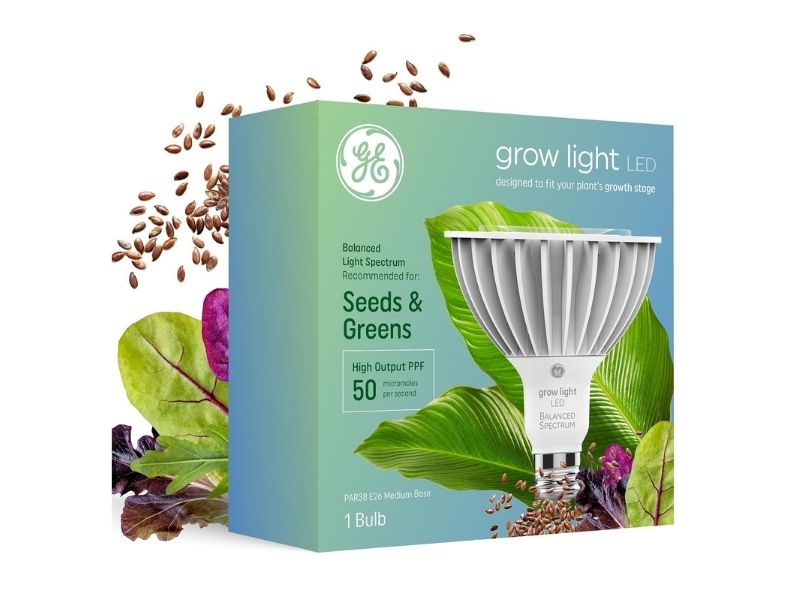
Key Features
- 50 µmol/s PPF
- Balanced white spectrum
- PAR38 directional beam
- Rated up to 25,000 hours
- Standard bulb-style format
- Good for one plant or a compact container
- Suitable for flowering and fruiting plants
The GE PAR38 is my choice for a smaller strawberry setup where the SF1000 or four-foot Barrina bars would be unnecessary.
The current Amazon listing publishes 50 micromoles per second PPF and identifies the bulb as a balanced-spectrum plant light suitable for indoor plants, seeds, greens, tomatoes, herbs, and flowers. It also lists a service life of up to 25,000 hours.
PPF measures the total photosynthetically active photon output emitted by the bulb each second.
That does not tell you the exact PPFD reaching strawberry leaves, because PPFD changes with:
- Distance
- Beam spread
- Fixture angle
- Canopy location
Still, having a published photon-output figure is much more informative than relying only on lumens or “equivalent wattage.”
The PAR38 format produces a directional pool of light.
That makes it useful for:
- One strawberry pot
- A hanging strawberry basket
- A small hydroponic container
- Two closely spaced plants
- Supplemental winter lighting
The advantage over a tiny clip lamp is stronger focused output.
Strawberries grown for fruit need enough light to support both foliage and reproductive growth.
A weak lamp may keep leaves alive but provide disappointing flowering or fruit development when it is the only meaningful light source.
The GE bulb is easier to integrate into a normal living space than a panel fixture.
You can place it in an appropriate lamp or overhead socket and aim the beam toward the plant.
Its balanced white appearance also makes flowers, foliage, fruit color, pests, and nutrient symptoms easier to inspect than under strongly purple lighting.
The limitation is coverage.
A PAR38 bulb is directional.
As your strawberry canopy expands, outer leaves can move beyond the useful beam.
At that point, either add another bulb or move to SF1000 or linear bars.
The bulb also lacks built-in dimming and timing.
I would normally pair it with an appropriately rated external timer.
Intensity can be adjusted mainly through distance.
Move the lamp gradually rather than making large changes suddenly.
What I Like
- Published 50 µmol/s PPF
- Strong focused output for a small setup
- Balanced white spectrum
- Convenient standard-bulb format
- Long rated operating life
- Good for an individual strawberry plant
What I Do Not Like
- Limited coverage
- No built-in timer
- No integrated dimmer
- Several plants may require multiple bulbs
The GE PAR38 is the best fit here when you want a focused strawberry grow light for one plant or a very small container without installing a dedicated panel or rack system.
LED Grow Lights for Strawberries Comparison
| Product | Format | Power/Photon Class | Dimming | Coverage Style | Best Strawberry Use |
| Spider Farmer SF1000 | Overhead panel | 100W, 2.5 µmol/J | Yes | Square/compact canopy | Several plants, hydroponics |
| Barrina T5 4FT 8-Pack | Linear bars | 160W total available | By bar arrangement | Long/linear | Shelves, troughs, NFT |
| GE PAR38 | Directional bulb | 50 µmol/s PPF | Distance-based | Focused | One plant or small pot |
SF1000 provides the most balanced compact fruiting setup, Barrina is the strongest option for rows and racks, and GE PAR38 is the most practical focused solution for one or two plants.
How to Choose the Best LED Grow Lights for Strawberries
Strawberries Need More Than Survival Light
A strawberry plant may remain green under relatively weak illumination.
That does not necessarily mean the light is sufficient for:
- Strong flowering
- Good leaf development
- Fruit filling
- Repeat production
Indoor fruiting requires a meaningful daily photon supply.
Controlled-environment research has therefore tested strawberries under 200–450 µmol/m²/s PPFD, rather than the extremely weak levels often produced by decorative houseplant lamps.
PPFD Matters More Than Lumens
PPFD measures photosynthetically active photon density reaching the canopy.
Lumens are based on human visual sensitivity.
For plants, PPFD is the more useful measurement when you want to understand actual canopy intensity.
Iowa State Extension also identifies PPFD as a more accurate measurement for supplemental indoor plant lighting.
What PPFD Is Good for Strawberries?
There is no single universal PPFD target for every cultivar and environment.
Ohio State’s controlled-environment berry information notes that roughly 100–200 µmol/m²/s is a typical photosynthetic-lighting range seen in strawberry applications, while experimental indoor studies have evaluated substantially higher levels such as 200–450 µmol/m²/s.
That range difference reflects different production goals and environments.
A home grower should increase intensity gradually and observe plant response.
DLI Matters Too
Daily Light Integral combines PPFD with the number of hours the light operates.
This is important because:
moderate PPFD for a longer period
and
higher PPFD for a shorter period
can deliver different—or sometimes similar—daily photon totals.
Do not choose photoperiod independently from intensity.
How Many Hours of LED Light Do Strawberries Need?
Controlled-environment strawberry research has used both 12-hour and 16-hour photoperiods, but cultivar response matters.
Strawberries are photoperiod-sensitive plants, and flowering behavior differs among types.
Ohio State specifically notes that photoperiod selection should account for cultivar and photoperiodic type.
So I would avoid treating “16 hours” as universally ideal.
Day-Neutral vs June-Bearing Strawberries
This distinction matters indoors.
Day-neutral cultivars are often easier to manage for continuous indoor fruiting because flowering is less tightly dependent on short-day induction than traditional June-bearing cultivars.
June-bearing strawberries can respond strongly to day length, and photoperiod manipulation may influence flowering, dormancy, or runner development.
Lighting should therefore match the cultivar, not just the fixture.
Best LED Grow Light for One Strawberry Plant
I would choose GE PAR38.
Its focused 50 µmol/s output is much more proportionate to one pot than installing a 100W panel.
Keep the bulb centered above the leaf canopy and adjust distance gradually.
Best LED Grow Light for Several Strawberry Plants
I would choose Spider Farmer SF1000.
Its broader overhead footprint and dimming make it easier to cover several plants uniformly.
The fixture also provides enough output headroom to remain useful as plants move into flowering and fruiting.
Best LED Grow Light for Strawberry Shelves
I would choose Barrina T5.
Long fixtures match long plant rows much better than a central spotlight.
Use multiple parallel bars if the shelf is deep enough that one row of LEDs leaves the front and back edges weak.
Best LED Grow Light for Hydroponic Strawberries
SF1000 is my preferred option for a compact square hydroponic system.
Barrina is better when the system consists of:
- Long NFT channels
- Troughs
- Vertical racks
- Multiple shelves
Fixture geometry should match the plant layout.
Are 100W Grow Lights Enough for Strawberries?
A modern efficient 100W fixture can provide substantial useful light over a compact strawberry canopy.
The selected SF1000 publishes 2.5 µmol/J system PPE, so it provides much more horticultural capability than an ordinary 100W household-style lamp.
Whether it is enough depends on:
- Canopy size
- Fixture height
- Dimmer setting
- Cultivar
- Natural light
Are 4-Foot Grow Lights Good for Strawberries?
Yes, particularly when strawberries grow in long rows.
The Barrina package’s 4-foot bars allow you to match the lighting footprint to troughs and shelves.
For a single pot, however, a four-foot system is unnecessary.
Is Full Spectrum Good for Strawberries?
Yes.
Strawberry studies under sole-source artificial lighting have successfully used combinations of white, blue, and red LEDs.
Broad white/full-spectrum lights are also convenient because they let you inspect fruit and foliage naturally.
Does Red Light Help Strawberries?
Red wavelengths participate in photosynthesis and photoperiod responses, but I would not buy a fixture solely because it advertises red LEDs.
Strawberries respond to the entire lighting environment.
Start with:
- Adequate intensity
- Appropriate photoperiod
- Uniform coverage
- Temperature control
before optimizing advanced spectral details.
Far Red and Strawberry Photoperiod
Far-red light can influence strawberry photomorphogenic and photoperiod responses, and research continues to examine its effects in controlled environments.
For most home growers, this is an advanced variable.
It should not distract from getting basic PPFD and photoperiod correct first.
Flowering Does Not Depend on Light Alone
A strong grow light cannot guarantee flowers.
Strawberry flowering is influenced by:
- Cultivar
- Temperature
- Photoperiod
- Plant age
- Crown condition
Photoperiod response is especially cultivar dependent.
Pollination Matters Indoors
Once strawberries flower indoors, pollination becomes another important part of fruit production.
Outdoor insects may not be available.
Indoor growers may need to encourage pollen movement manually or with gentle air movement.
Good light creates flowers; successful pollination helps those flowers become well-shaped berries.
Keep Lighting Overhead
Strawberries form low spreading rosettes.
Overhead light helps maintain more even growth than one strong lamp shining entirely from the side.
Centered overhead lighting also helps flower clusters and young fruit receive illumination without encouraging the entire canopy to lean.
Watch for Leaf Shading
Strawberry leaves can overlap quickly.
If plants are crowded, the upper leaves may shade smaller crowns and flowers.
Space plants so the grow light can reach the productive canopy rather than only the tallest leaves.
More Light Can Increase Water Demand
As useful light intensity increases, photosynthesis and transpiration can increase when other conditions are favorable.
That can change how rapidly the substrate or hydroponic reservoir is used.
Do not automatically water more just because a stronger light is installed; monitor actual root-zone moisture and plant demand.
Temperature Matters
A high-output fixture can warm a small indoor grow space.
Strawberries generally do not benefit from excessively warm canopy conditions.
If plants look stressed despite adequate nutrients and water, check:
- Air temperature
- Root-zone temperature
- Light intensity
rather than assuming they need still more light.
Airflow Is Important
Gentle airflow helps reduce stagnant humidity around dense strawberry foliage.
It can also support pollen movement when flowers are open.
The goal is gentle circulation, not strong wind constantly bending the plants.
How Far Should a Grow Light Be Above Strawberries?
There is no universal distance.
The SF1000, Barrina T5, and GE PAR38 produce very different light distributions.
Follow fixture-specific guidance and monitor the canopy.
Possible signs of insufficient light include:
- Long leaf stalks
- Weak growth
- Pale foliage
- Poor flowering
Possible signs of excessive light include:
- Bleaching
- Curling
- Pale upper leaves
- Localized stress
Adjust intensity gradually.
Use a Quantum Sensor if You Want Precision
For serious indoor strawberry growing, a quantum sensor can measure actual PPFD at canopy level.
Take measurements at:
- Center
- Corners
- Edges
rather than measuring only directly beneath the light.
Uniformity matters almost as much as the peak number.
Electricity Use of SF1000
At full 100W output for 16 hours:
0.1 kW × 16 = 1.6 kWh/day
Over 30 days:
48 kWh/month
Actual use falls when dimmed.
Electricity Use of Barrina T5
The full eight-bar package is 160W.
At 16 hours:
0.16 × 16 = 2.56 kWh/day
Over 30 days:
76.8 kWh/month
If only four bars are used, the electrical load is approximately half the full-package figure.
Common Strawberry Grow-Light Mistakes
Using a Weak Houseplant Lamp for Fruiting
Keeping leaves green is not the same as supplying enough photons for productive fruiting.
Buying an Oversized Commercial Fixture
Match output to the actual strawberry canopy.
Ignoring Cultivar Photoperiod Response
Day-neutral and June-bearing strawberries can respond differently.
Lighting Only the Center of a Long Row
Use linear fixtures or multiple sources for long planters.
Running Maximum Power From Day One
Use dimming when available.
Ignoring Temperature
Higher intensity can also increase thermal-management needs.
Leaving the Lights On Continuously
Use a deliberate photoperiod rather than assuming 24-hour lighting is better.
Forgetting Pollination
Good lighting supports flowers, but indoor fruit set may still need help with pollen movement.
Frequently Asked Questions
What are the best LED grow lights for strawberries?
Spider Farmer SF1000, Barrina T5, and GE PAR38 are my three current selections.
They cover three practical strawberry setups: compact multi-plant growing, long rows or shelves, and individual-container lighting.
What is my primary recommendation for strawberries?
Spider Farmer SF1000 is my primary choice for most compact indoor strawberry gardens.
Its 100W input, dimming, full-spectrum output, and 2.5 µmol/J system PPE provide a strong balance for flowering and fruiting.
What grow light is best for one strawberry plant?
GE PAR38 is the most proportionate focused option for one plant or small pot.
It publishes 50 µmol/s PPF and provides a concentrated balanced-spectrum beam.
What grow light is best for a strawberry shelf?
Barrina T5 is my preferred option for long shelves and strawberry rows.
Its eight 4-foot bars can be distributed across multiple shelves or parallel rows.
Is 100W enough to grow strawberries indoors?
Yes, a modern efficient 100W fixture can support a compact strawberry canopy.
Actual success depends on canopy size, PPFD, photoperiod, temperature, and cultivar.
What PPFD do strawberries need indoors?
Roughly 100–200 µmol/m²/s is common in supplemental applications, with higher levels used experimentally.
Indoor strawberry research has also tested 200–450 µmol/m²/s under controlled conditions.
Is 300 PPFD good for strawberries?
It can be a useful indoor intensity when the cultivar and environment support it.
Research on ‘Albion’ strawberries specifically included 300 µmol/m²/s among the tested PPFD levels.
How many hours of LED light do strawberries need?
Common controlled-environment studies use 12–16 hours, but cultivar response matters.
Photoperiod should be adjusted with intensity and strawberry type rather than using one universal setting.
Can strawberries grow entirely under LED lights?
Yes, strawberries can be grown under sole-source LED lighting in controlled environments.
Published studies have successfully grown and fruited strawberries without relying on natural sunlight.
Are full-spectrum LEDs good for strawberries?
Yes, broad-spectrum LEDs are suitable for vegetative growth, flowering, and fruit production.
Controlled-environment research has used white, blue, and red LED combinations successfully.
Do strawberries need red grow light?
Red light is useful, but overall PPFD and photoperiod matter more than one wavelength alone.
A balanced full-spectrum fixture is usually the simpler choice for home growers.
Do strawberries need blue light?
Blue wavelengths contribute to normal vegetative development, but a broad spectrum is more practical.
Modern full-spectrum fixtures already provide useful blue-region photons alongside other wavelengths.
Are Barrina lights good for strawberries?
Yes, particularly for long rows, troughs, and multi-level strawberry shelves.
Their linear geometry makes even end-to-end coverage easier than using one small central source.
Is Spider Farmer SF1000 good for strawberries?
Yes, it is especially well matched to several plants in a compact indoor canopy.
Its current configuration is 100W, dimmable, full-spectrum, and rated at 2.5 µmol/J system PPE.
Is GE PAR38 good for strawberries?
Yes, especially for one plant where focused directional light is more useful than broad coverage.
Its current listing publishes 50 µmol/s PPF.
Can strawberry grow lights stay on for 24 hours?
I would not use 24-hour lighting as the default for strawberry production.
Strawberry flowering and dormancy responses are influenced by photoperiod, making a deliberate day/night schedule more appropriate.
Why are my indoor strawberries not flowering?
Light may be insufficient, but cultivar, temperature, and photoperiod can also limit flowering.
Strawberries are photoperiodic, and flowering behavior differs among cultivar types.
Why are my strawberry leaves stretching upward?
The plant may be reaching for stronger or more evenly positioned light.
Check canopy PPFD, fixture distance, and whether outer plants are receiving substantially less light than center plants.
Can too much LED light hurt strawberries?
Yes, excessive intensity can stress leaves when the rest of the environment cannot support it.
Increase light gradually and watch for bleaching, curling, or persistent upper-canopy stress.
Do indoor strawberries need pollination?
Indoor flowers may need help moving pollen when insects and outdoor airflow are absent.
Gentle air movement or manual pollination can improve fruit set in enclosed environments.
Which strawberry grow light should I buy?
Choose SF1000 for several plants, Barrina for rows, or GE PAR38 for one plant.
Match the fixture to the mature canopy shape instead of buying solely by wattage.
Conclusion
The best LED grow lights for strawberries need to provide enough usable canopy-level light for both vegetative growth and fruit production without creating unnecessary heat or severe hotspots. I would prioritize PPFD, coverage, photoperiod, dimming, canopy temperature, and cultivar response ahead of raw wattage.
The Spider Farmer SF1000 remains my primary recommendation. Its 100W actual input, dimming, full-spectrum output, and 2.5 µmol/J system PPE make it a strong fit for several strawberry plants or a compact hydroponic system.
The Barrina T5 4FT 8-Pack is my preferred option for rows and racks. Its eight 20W linear bars can distribute up to 160W across long strawberry troughs, shelves, or NFT-style systems while providing better end-to-end coverage than one concentrated light source.
The GE PAR38 Balanced Spectrum is the more sensible choice for one plant or a very small container. Its published 50 µmol/s PPF provides focused plant-light output without requiring a dedicated grow panel.
For most compact indoor strawberry gardens, I would choose Spider Farmer SF1000. For long shelves or hydroponic rows, I would choose Barrina T5. For one strawberry plant or a small pot, I would choose GE PAR38.

I’m Maya L. Greenwood, a lifelong plant lover who believes anyone can grow something beautiful with the right guidance. After years of testing soil mixes, pruning methods, irrigation tricks, and pest-safe solutions, I started EasyGardenTips.com to turn hard-won lessons into step-by-step advice. From seed starting and container gardens to composting and seasonal checklists, my goal is to make gardening simple, sustainable, and fun.