5 Best Grow Tent Heaters for Safe Temperature Control
Finding the best grow tent heater requires more care than choosing a powerful household space heater. A grow tent contains reflective fabric, electrical equipment, water, plant containers, ventilation ducts, and limited open floor space. The heater must provide stable warmth without directing excessively hot air at plants or creating a fire and electrical hazard.
My top recommendation for most small and medium setups is the VIVOSUN AeroFlux 700W Smart Grow Tent Heater. It is designed specifically for indoor growing and uses a 700-watt PTC heating element, five adjustable output levels, temperature and VPD-based control, app scheduling, overheat protection, and tip-over shutoff. Its lower maximum wattage is also easier to manage inside a compact tent than a standard 1,500-watt room heater.
Larger tents, cold garages, basements, and shared grow rooms may need a stronger 1,500-watt greenhouse heater. The Bio Green Palma, Dr. Infrared DR-268, and EAGLE PEAK heater provide more heating capacity and moisture-resistant construction. The Dreo Atom One offers a cheaper alternative for heating the room outside the tent, but it is an indoor household heater and should not be exposed directly to wet or humid grow-tent conditions.

This guide reviews five options for different tent sizes, heating demands, and budgets. It also explains safe placement, heater sizing, thermostat-probe positioning, electricity costs, nighttime temperature control, and the main mistakes to avoid.
5 Best Grow Tent Heaters Reviewed
| Image | Product Name | Check Price |
|---|---|---|
Best Choice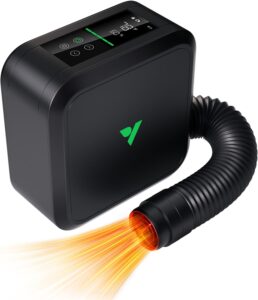 | VIVOSUN AeroFlux 700W Smart Grow Tent Heater — Best Overall | Check Price |
Second Best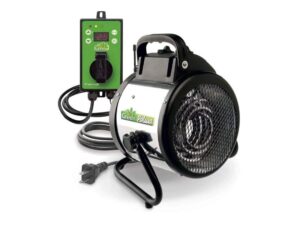 | Bio Green Palma Greenhouse Heater With Digital Thermostat — Best Premium Option | Check Price |
Third Choice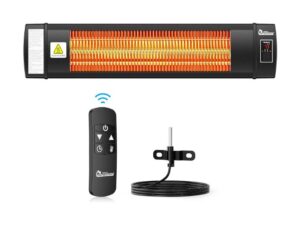 | Dr. Infrared Smart Greenhouse Heater— Best Mounted Infrared Option | Check Price |
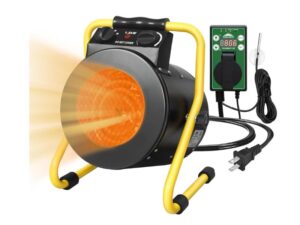 | EAGLE Greenhouse Heater With Thermostat— Best for Large Grow Tents | Check Price |
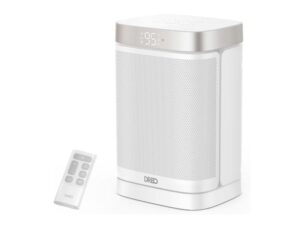 | Dreo Atom One 1500W Ceramic Space Heater — Best Budget Lung-Room Heater | Check Price |
1. VIVOSUN AeroFlux 700W Smart Grow Tent Heater — Best Overall
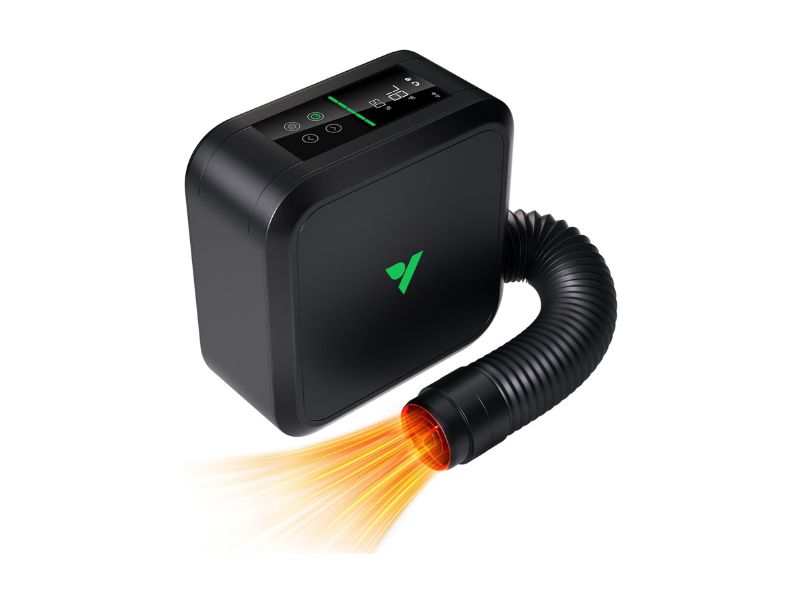
Key Specifications
- Maximum heating power: 700W
- Heating technology: PTC ceramic
- Output levels: Five
- Temperature control: Smart thermostat
- Environmental control: Temperature and VPD
- App control: Yes
- Scheduling: Day and night recipes
- Tip-over protection: Yes
- Overheat shutoff: Yes
- Housing: V0 flame-retardant material
- Recommended placement: Grow tent or grow room, following required clearances
The VIVOSUN AeroFlux is the strongest overall choice because it was designed as a grow-tent heater instead of being adapted from a bedroom or office heater.
Its 700-watt PTC element provides more controlled heat than a typical 1,500-watt household space heater. This is useful inside compact growing spaces, where a high-wattage heater can raise the temperature too quickly and create wide on-and-off swings.
The AeroFlux provides five adjustable heating levels. You can start at a lower level in a small 2×2 or 2×4 tent and increase the output when the surrounding room becomes colder. A 4×4 tent in a moderately cool room may also benefit from the 700-watt capacity, though performance depends heavily on air exchange and insulation.
The smart environmental controls are its main advantage. The sensor system tracks temperature and humidity conditions, while the app can adjust operation based on temperature targets and VPD. VIVOSUN also supports programmed day and night modes, allowing the heater to respond differently during lights-on and lights-off periods.
This is more useful than running a heater from a simple outlet timer. Tent temperatures do not always follow a fixed schedule. A cold weather change, open room door, or increased exhaust speed can alter the heating requirement.
The PTC heating element also has a self-regulating characteristic. As the ceramic element becomes hotter, its electrical resistance increases. This does not replace overheat protection, but it helps the heating system operate more predictably than a basic exposed-resistance coil.
Safety features include tip-over protection, overheat shutoff, and V0-rated flame-retardant materials. These protections reduce risk, but they do not make poor placement safe. The heater still requires a stable surface, clear air intake, open heat outlet, and separation from tent fabric, leaves, water, and electrical cables.
The compact design preserves more floor space than many full-size greenhouse heaters. It also avoids the unnecessary electrical load of running a 1,500-watt heater at full power inside a small enclosure.
Its main limitation is total heating capacity. A 700-watt unit may struggle in an uninsulated garage, cold basement, large 8×8 tent, or high-airflow setup. In those situations, warming and insulating the surrounding room may be more effective than placing a larger heater directly inside the tent.
The app and VPD functions may also feel excessive for someone who wants a simple thermostat. Local controls remain available, so the heater does not depend entirely on a phone for basic operation.
Pros
- Designed specifically for grow tents
- Manageable 700-watt maximum output
- Five heat levels
- Temperature and VPD-based automation
- App schedules for day and night cycles
- Tip-over and overheat protection
- Compact footprint
Cons
- May be underpowered for large or poorly insulated spaces
- App setup adds complexity
- No stated IPX moisture rating on the current listing
- Requires careful placement despite its grow-focused design
Who Should Buy It?
The AeroFlux is a good fit for 2×2, 2×4, 3×3, and many 4×4 tents located in mildly cold rooms. It also suits growers who already use the VIVOSUN app or GrowHub ecosystem.
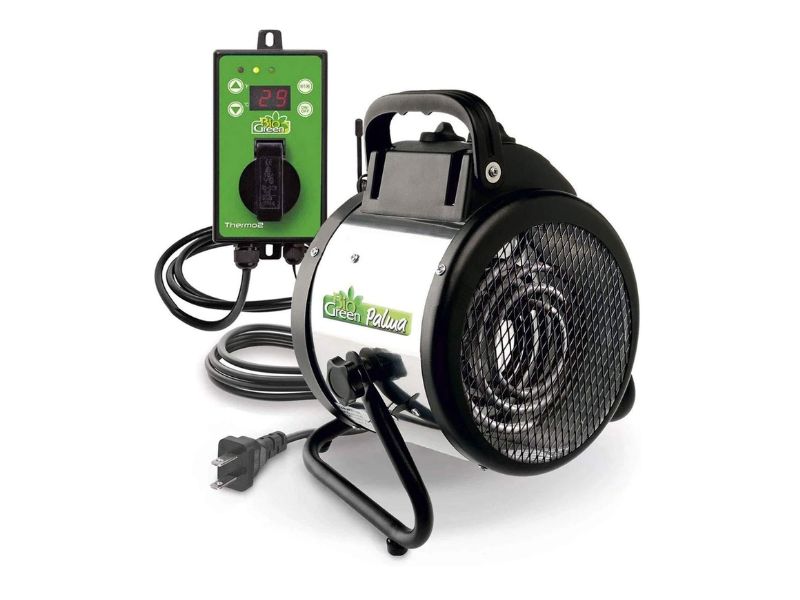
2. Bio Green Palma Greenhouse Heater With Digital Thermostat — Best Premium Option
Key Specifications
- Heating power: 750W or 1,500W
- Maximum heat output: Approximately 5,100 BTU/hr
- Heater type: Electric greenhouse fan heater
- Thermostat: External Thermo 2 digital controller
- Controller range: -58°F to 210.2°F
- Air circulation: Approximately 5,800 ft³/h
- Moisture protection: IPX4
- Fan-only operation: Yes
- Recommended residential coverage: Up to approximately 120 sq. ft.
- Power-cord length: Approximately 6.2 ft.
- Dimensions: Approximately 11 × 8 × 12.5 in.
- Weight: Approximately 4.5 lb.
The Bio Green Palma is built for damp greenhouse environments and offers more heating capacity than the VIVOSUN AeroFlux. It uses two separately selectable heating elements, allowing operation at 750 watts or the full 1,500 watts.
The lower setting is useful in smaller tents or mild cold conditions. The 1,500-watt mode is better suited to large tents, greenhouses, cold garages, or a lung room supplying warm air to multiple growing areas.
The included Thermo 2 controller is one of the Palma’s most useful features. Its corded sensor can be positioned away from the heater, allowing temperature measurement near the plant canopy instead of beside the warm air outlet.
The controller has an extremely wide adjustment range, though plants only need a small portion of it. Its practical advantage is the ability to control both heating and ventilation equipment. The thermostat automatically switches the connected device based on the selected target, helping reduce unnecessary heater runtime.
Air movement is another strength. Bio Green rates the Palma at 163 cubic meters per hour, roughly 5,800 cubic feet per hour. This helps distribute heat instead of allowing a hot pocket to form directly in front of the heater.
The fan-only mode can also circulate air when heating is unnecessary. It should not replace dedicated canopy fans, but it gives the heater a useful role outside the cold season.
The IPX4 splash-resistant construction makes the Palma more suitable for humid growing areas than an indoor-only household heater. IPX4 does not mean waterproof or safe for direct spraying. It should remain away from irrigation lines, humidifier mist, runoff, and standing water.
Its stainless-steel body and greenhouse-specific construction help justify the premium price. The unit can sit on the floor, but it needs enough open space around its inlet and outlet. In a small fabric tent, providing normal portable-heater clearance may be difficult.
The 1,500-watt load also needs electrical planning. At 120 volts, a heater of this size can draw around 12.5 amps. Many household circuits are rated for 15 amps, leaving little capacity for grow lights, fans, humidifiers, and pumps on the same circuit.
The Palma is best connected to an appropriate dedicated outlet. Do not assume a grow-light power strip can safely support another 1,500-watt appliance.
Pros
- Two heating settings
- Strong 1,500-watt maximum output
- External digital thermostat
- High air-circulation rate
- IPX4 splash-resistant construction
- Fan-only operation
- Greenhouse-focused build
Cons
- Premium purchase price
- Large output can overwhelm a small tent
- Requires careful electrical-circuit planning
- Takes more floor space than a compact heater
- No app control
Who Should Buy It?
The Palma suits growers with large tents, cold basements, garages, greenhouses, or lung rooms. It is also a strong choice when moisture-resistant construction and an external thermostat matter more than app control.
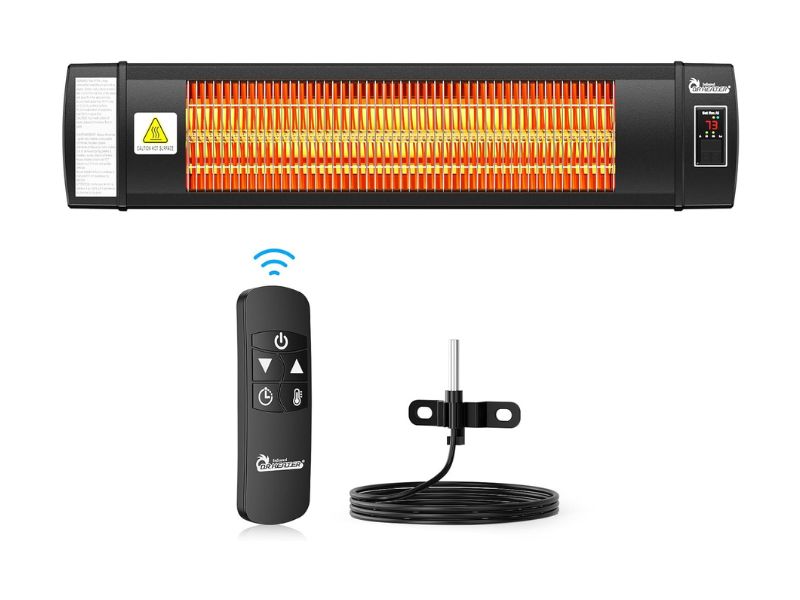
3.Dr. Infrared Smart Greenhouse Heater— Best Mounted Infrared Option
Key Specifications
- High heat setting: 1,500W
- Low heat setting: 1,000W
- Heating technology: Infrared
- Control modes: Automatic and manual
- Temperature sensing: Corded thermal probe
- Display: Built-in digital display
- Moisture protection: IPX5/IP55 listed
- Mounting options: Wall, ceiling, or hanging chain
- Construction: Dual-layer aluminum
- Certification: ETL
- Recommended placement: Mounted above floor level with required clearances
The Dr. Infrared DR-268 takes a different approach from the fan heaters in this guide. It uses infrared energy to warm plants, containers, soil surfaces, and nearby objects directly instead of relying only on heated airflow.
This can be helpful in drafty spaces where warm air escapes quickly. Infrared energy reaches surfaces in its line of sight, making the heater useful above a bench, propagation area, or fixed plant zone.
The DR-268 provides two output settings: 1,000 watts on low and 1,500 watts on high. That gives it more flexibility than a single-output infrared heater, though even the low setting is stronger than the complete output of the VIVOSUN AeroFlux.
Its corded thermal probe improves temperature control. The probe can be placed near the growing area, while the built-in display and automatic mode regulate heater operation from that reading. A manual mode is available when direct user control is preferred.
Mounting flexibility is the product’s strongest practical advantage. It can be attached to a wall or ceiling or suspended with the included chain. This keeps it off the tent floor and away from containers, runoff trays, and foot traffic.
Mounting it above the floor does not automatically make it suitable for every tent. The heater needs a secure structural support, and lightweight tent poles may not be rated for its weight or the repeated heat exposure. It should only be attached to a support that meets the manufacturer’s installation requirements.
The IPX5 or IP55-listed weather-resistant construction offers better moisture protection than a household room heater. The dual-layer aluminum housing is also designed to resist humidity and corrosion. The manufacturer lists ETL certification and positions the DR-268 for greenhouses, grow tents, sheds, and workshops.
Infrared heating has a limitation: it may warm exposed plant and container surfaces without evenly raising the complete tent’s air temperature. Leaves shaded from the heater may receive less radiant heat, and a temperature probe positioned in the wrong location may not represent the entire canopy.
The beam should not be aimed too close to foliage. Direct radiant heating can raise leaf-surface temperature above the surrounding air temperature, even when the room thermometer looks acceptable.
Pros
- Direct infrared heating
- Two power settings
- External temperature probe
- Automatic and manual modes
- Wall, ceiling, or hanging installation
- IPX5/IP55-listed moisture resistance
- ETL certified
- Preserves floor space
Cons
- 1,000W is the lowest heat setting
- Direct radiant heat can create surface hotspots
- Does not circulate air like a fan heater
- Requires secure mounting
- Too powerful for many small tents
Who Should Buy It?
The DR-268 is best for larger grow spaces, permanent installations, propagation benches, cold garages, and users who want to keep the heater off the floor.
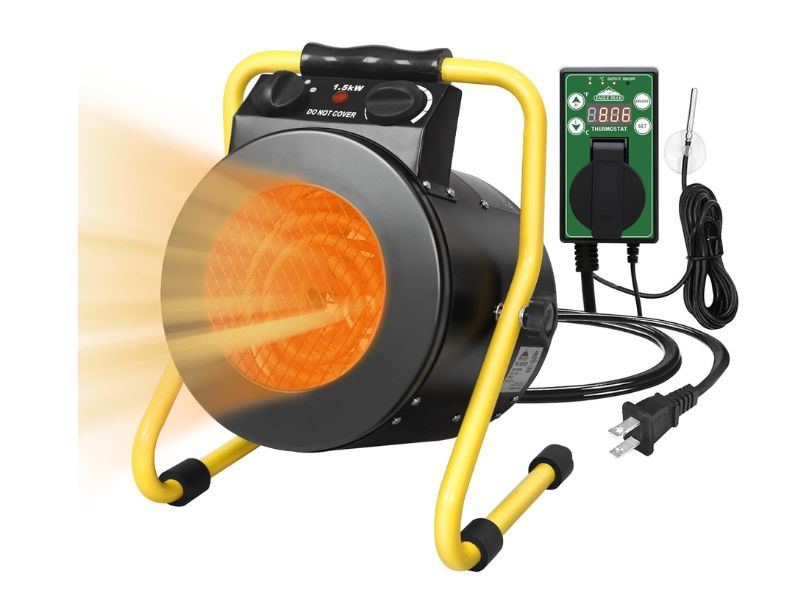
4.EAGLE Greenhouse Heater With Thermostat— Best for Large Grow Tents
Key Specifications
- Maximum heating power: 1,500W
- Heater type: Radiant heater with low-CFM fan
- Recommended coverage: Up to approximately 120 sq. ft.
- Thermostat: External digital thermostat
- Operating ambient range: -4°F to 107°F
- Moisture protection: IPX4
- Overheat protection: Yes
- Air movement: Low-CFM fan
- Recommended electrical protection: GFCI outlet
- Warranty: One-year limited coverage
- Availability: May vary
The EAGLE PEAK greenhouse heater is intended for large enclosed growing spaces, greenhouses, sheds, and grow rooms. Its 1,500-watt output can recover temperature quickly after lights-off or when a cold intake fan brings outdoor air into the room.
The included digital thermostat measures ambient temperature and switches the heater based on the selected setting. A separate thermostat controller is more useful than a control located directly on the heater because it can measure temperature closer to the canopy.
EAGLE PEAK combines radiant heating with a low-CFM fan. The lower airflow may be useful around plants because it reduces the strong drying effect produced by some high-speed ceramic heaters.
It is rated for spaces up to approximately 120 square feet, but that number should not be used as a guarantee. An insulated 10×10 room may be easier to heat than a drafty 5×5 tent in an unheated garage.
The heater includes an internal heat-limiting thermostat and overheat-protection circuit. It also has an IPX4 water-resistance rating and is designed for damp greenhouse environments. The manufacturer recommends using a GFCI-protected outlet and states that the heater should not be exposed directly to rain or snow.
Its 1,500-watt power is better suited to a 5×5, 8×8, large lung room, or similarly demanding environment than a small 2×2 tent. In a compact enclosure, it could cycle rapidly or produce hot air close to tent fabric.
The unit should be positioned where the fan can move air without blowing directly at leaves. Strong direct heat can dry one side of a plant while the opposite side remains cold.
Availability is a possible problem. EAGLE PEAK’s own product page has shown the heater as sold out or backordered, and Amazon stock may change. Buyers should confirm the seller, warranty eligibility, and return conditions before ordering.
Pros
- Strong 1,500-watt output
- External digital thermostat
- Low-CFM air distribution
- IPX4 moisture resistance
- Overheat protection
- GFCI guidance from the manufacturer
- Suitable for large enclosures
Cons
- Too powerful for many compact tents
- No lower wattage setting listed
- No app control
- Product availability can be inconsistent
- Requires substantial electrical capacity
- One-year warranty
Who Should Buy It?
The EAGLE PEAK heater is better for a large tent, greenhouse, garage grow room, or shared lung room than for a small fabric enclosure.
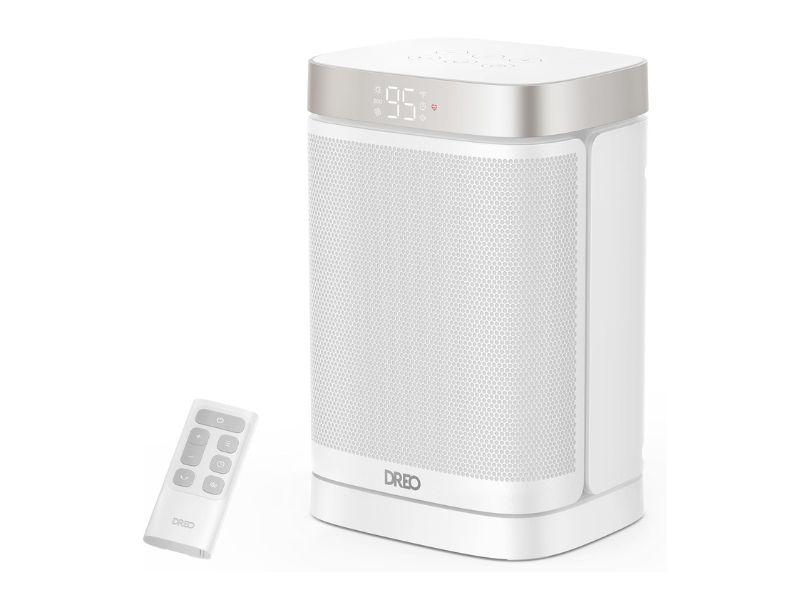
5. Dreo Atom One 1500W Ceramic Space Heater — Best Budget Lung-Room Heater
Key Specifications
- Maximum heating power: 1,500W
- Heating technology: PTC ceramic forced air
- Thermostat range: 41°F to 95°F
- Heat modes: High, medium, low, ECO, and fan-only
- Oscillation: 70 degrees
- Timer: 1 to 12 hours
- Tip-over shutoff: Yes
- Overheat protection: Yes
- Housing: V0 flame-retardant material
- Filter: Washable
- Intended environment: Indoor household use
- Best placement: Outside the grow tent
The Dreo Atom One is not a greenhouse heater. It is included because it offers useful controls and safety protections at a lower price than most purpose-built grow heaters.
The unit provides up to 1,500 watts of heat, three manual heating levels, an ECO mode, and a fan-only setting. Its programmable thermostat can be adjusted from 41°F to 95°F, while 70-degree oscillation helps distribute warm air across a room.
The Dreo is best placed in the lung room rather than inside a humid grow tent. Its Amazon listing classifies it for indoor use, and Dreo does not advertise an IPX water-resistance rating for this model.
Positioning it outside the tent lets the exhaust and intake system pull warmed room air into the growing area. This arrangement also gives the heater more space around its intake and outlet and keeps it farther from irrigation water and humidifier mist.
ECO mode is useful for this type of setup. The heater measures the surrounding room temperature and cycles its output to maintain the selected target. You can warm the complete room to a moderate level rather than forcing the tent heater to fight freezing intake air.
The 70-degree oscillation distributes heat more evenly than a fixed heater. Do not aim it directly into a tent opening from very close range. The incoming air may become too hot and dry on one side of the canopy.
Safety features include overheat protection, tip-over shutoff, and a V0 flame-retardant housing. The 12-hour timer is useful for temporary operation, though it should not replace thermostat control. Dreo also includes a washable filter that needs regular cleaning in dusty grow rooms.
The main issue is its 1,500-watt electrical load. The low and medium heat modes reduce heating output, but the circuit still needs enough capacity for the selected mode and other equipment.
The heater may also remain off after a power interruption, depending on its control state. Confirm restart behavior before connecting it to an external thermostat or relying on it for unattended frost protection.
Pros
- Lower purchase price
- Three heat levels and ECO mode
- Wide thermostat range
- Oscillating airflow
- Tip-over and overheat protection
- Quiet, compact design
- Washable filter
Cons
- Not moisture-rated
- Not designed for greenhouse or tent interiors
- Best used only in the lung room
- Full power draws 1,500 watts
- May not automatically restart after a power outage
- No external temperature probe
Who Should Buy It?
The Atom One is suitable for growers who need an affordable heater for a dry basement, bedroom, office, or lung room surrounding the tent. It should not be placed inside a wet or highly humid grow tent.
Quick Comparison of the 5 Best Grow Tent Heaters
| Product | Heater Type | Wattage | Thermostat | Moisture-Ready Design | Best Placement | Price Level |
| VIVOSUN AeroFlux | PTC grow-tent heater | 700W | Smart temperature and VPD control | Grow-focused, but no current IPX claim | Small or medium tent | Mid-range |
| Bio Green Palma | Greenhouse fan heater | 750W/1500W | External digital controller | IPX4 | Large tent or lung room | Premium |
| Dr. Infrared DR-268 | Infrared greenhouse heater | 1000W/1500W | Digital control with probe | IPX5/IP55 listed | Mounted grow room or large tent | Premium |
| EAGLE PEAK Heater | Radiant/fan greenhouse heater | 1500W | External digital thermostat | IPX4 | Large tent or lung room | Mid-range |
| Dreo Atom One | Household ceramic heater | Up to 1500W | Digital thermostat | No | Dry lung room only | Budget |
The VIVOSUN offers the most manageable power and the most grow-focused automation for compact tents. The other purpose-built heaters provide more output for larger or colder spaces.
The Dreo costs less but should be treated as a room heater, not a moisture-resistant grow-tent appliance.
How I Selected the Best Grow Tent Heaters
I evaluated each heater based on its actual wattage, thermostat design, heat settings, safety protections, moisture resistance, airflow, physical size, control options, and suitability for an enclosed growing environment.
Grow-tent heating is not only about maximum power. A heater that is too large can cause rapid temperature swings, dry the plants, and repeatedly switch on and off. A weak heater may run continuously while failing to maintain the target temperature.
Models received additional consideration for:
- Automatic temperature control
- External or remote temperature sensing
- Adjustable heat output
- Overheat protection
- Tip-over shutoff
- Water-resistant construction
- Fan-only or air-circulation modes
- App scheduling
- Grow-controller compatibility
- Safe mounting options
- Reliable electrical certification
I also considered placement. A purpose-built, moisture-resistant greenhouse heater can be used closer to a growing environment when its manual permits it and all clearance requirements are met. A normal household space heater is usually safer in the surrounding room, where it can warm the air entering the tent without sitting beside water and reflective fabric.
Square-foot coverage claims were treated as rough guidance. Tent volume, insulation, exhaust speed, outside temperature, grow-light heat, and the required temperature increase have a greater effect on actual performance.
What Is the Best Grow Tent Heater?
The best grow tent heater is a thermostat-controlled electric model that provides enough heat for the space without running continuously or causing sharp temperature swings.
For small and medium tents, a 500- to 700-watt heater with several output levels is often easier to manage than a fixed 1,500-watt unit.
For a large tent, garage, or lung room, a 1,000- to 1,500-watt heater may be needed. Moisture-resistant greenhouse construction becomes more important when the heater is used near a growing area.
The most useful features are:
- External or canopy-level temperature sensing
- Adjustable heating output
- Overheat protection
- Tip-over shutoff for floor-standing models
- Moisture resistance
- Automatic thermostat control
- Safe mounting or stable placement
- Proper electrical certification
The strongest heater is not automatically the best one. A smaller unit running steadily can create a more stable environment than an oversized unit cycling between cold and hot.
Why Does a Grow Tent Need a Heater?
Many grow tents need supplemental heat during winter, especially when they are placed in:
- Basements
- Garages
- Sheds
- Attics
- Unheated spare rooms
- Areas with cold nighttime intake air
LED grow lights produce heat, but many efficient fixtures release less radiant warmth than older HID systems. The tent may be comfortable during lights-on and then become much colder when the light switches off.
Cold temperatures can slow germination, root activity, water uptake, and plant growth. Potting mix can also be colder than the surrounding air. University of Minnesota Extension notes that container media may be several degrees cooler than room air and that bottom heat can support seed germination and root development.
Temperature drops can also raise relative humidity. Cooler air holds less water vapor, so the same moisture level may produce a higher RH reading after lights-off. This can lead to condensation on tent walls and foliage.
A heater can stabilize temperature, but humidity still needs to be monitored. Heating may lower the relative-humidity reading without actually removing water from the air.
What Temperature Should a Grow Tent Be?
The correct temperature depends on the plant species and growth stage. The following ranges are practical starting points, not universal rules.
Temperature for Seedlings
Many warm-season seedlings perform well around 70°F to 78°F during the day, with a modest drop at night.
Seedlings have small root systems and can be stressed by cold growing media. A thermostat-controlled heat mat may be more efficient than heating the complete tent when only one propagation tray needs warmth.
Keep seedlings away from direct hot airflow. Their small leaves and limited roots make them vulnerable to rapid moisture loss.
Temperature for Vegetative Growth
A starting air-temperature range around 68°F to 80°F works for many common indoor crops.
The upper part of that range may support rapid growth when lighting, water, nutrition, and humidity are balanced. Plants adapted to cool conditions may prefer lower temperatures.
Measure temperature at canopy level. A sensor on the tent floor can show a lower reading than the upper leaves experience under the grow light.
Temperature for Flowering Plants
Many flowering and fruiting crops perform well around 65°F to 78°F, though crop-specific requirements vary.
Avoid running the heater so aggressively that nighttime temperatures remain very high. Some vegetables experience flowering and fruit-set problems during sustained heat. University extension guidance shows that warm-season crops can become stressed when day and night temperatures remain excessively high.
Dense flowers also need good airflow. A heater should not be used to compensate for stagnant, humid air.
Lights-On vs Lights-Off Temperature
The tent will normally be warmer when the grow light is operating.
A heater may remain off for most of the light cycle and activate shortly after lights-out. A smart controller or thermostat handles this change more effectively than a fixed timer.
A moderate day-to-night drop is normal. Large, sudden drops can slow growth and encourage condensation.
What Size Heater Do You Need for a Grow Tent?
Heater sizing depends on:
- Tent length, width, and height
- Starting room temperature
- Desired temperature increase
- Insulation
- Exhaust-fan speed
- Intake-air temperature
- Air leaks
- Grow-light wattage
- Number of hours the lights remain off
2×2 Grow Tent
A 2×2 tent has very little internal air volume.
A heater below 500 watts, heat mat, heating cable, or warmed lung room may be enough. A 1,500-watt heater is difficult to place safely and may cycle too aggressively.
2×4 Grow Tent
A controlled 500- to 700-watt heater can be a good starting point.
If the tent sits in a freezing garage, heating and insulating the surrounding room may work better than placing a large heater inside the enclosure.
3×3 Grow Tent
A 500- to 700-watt heater may handle a mild temperature increase.
Move toward 1,000 watts only when the surrounding room is very cold or the exhaust system replaces the tent air frequently.
4×4 Grow Tent
A 700-watt grow-tent heater can manage many moderate conditions.
A 750- or 1,000-watt setting may be more suitable for cold basements and garages. Full 1,500-watt output is best reserved for severe heat loss or outside-tent placement.
5×5 Grow Tent
A 750- to 1,500-watt greenhouse heater may be appropriate, depending on insulation and ventilation.
Use a thermostat with the probe near canopy height so the heater does not respond only to colder floor air.
8×8 and Larger Tents
A 1,500-watt heater may provide supplemental heat but may not be enough for an uninsulated large room.
At this size, calculate the complete room heat loss and consider permanent heating, better insulation, or multiple properly controlled heat sources.
Ceramic vs Infrared vs Oil-Filled Heaters
Ceramic Fan Heaters
Ceramic heaters warm air over a PTC ceramic element and push it into the room with a fan.
Advantages include:
- Fast temperature recovery
- Compact size
- Adjustable output
- Good air mixing
- Lower surface temperature than exposed coils
The fan can dry plants if aimed directly at them. It also adds noise and requires clear intake space.
Infrared Heaters
Infrared heaters warm objects and surfaces in their line of sight.
They are useful in drafty spaces because the energy does not depend entirely on keeping warm air trapped in the room.
Their main limitation is uneven surface exposure. A leaf or container facing the heater may become warmer than a shaded one.
Oil-Filled Radiators
Oil-filled heaters provide slow, steady warmth without strong forced airflow.
They work well in dry lung rooms, but their large footprint and hot surface make them difficult to use safely inside a small fabric tent.
They also respond more slowly to rapid temperature drops.
Tube Heaters and Heat Mats
Low-wattage tube heaters provide gentle background warmth near the floor or lower tent area.
Heat mats warm propagation trays and root zones rather than the complete tent.
These options are efficient for seedlings and small setups but may not raise the air temperature enough for mature plants in a cold room.
Should the Heater Go Inside or Outside the Grow Tent?
Heater Inside the Tent
Inside placement can warm a small volume quickly.
It also creates serious placement challenges:
- Tent fabric may be close to the heater
- Water and runoff are nearby
- Air intake may become blocked
- Hot airflow may hit plants directly
- Power strips and cables may be on the floor
- A tipped heater may contact combustible material
NFPA recommends keeping portable heaters at least three feet from anything that can burn, placing them on a solid flat surface, using tip-over protection, and plugging them directly into a wall outlet. A small grow tent may not have enough free space to meet those normal guidelines.
Use an inside heater only when the manufacturer allows that application and the complete setup can maintain all stated clearances.
Heater Outside the Tent
Heating the lung room is often safer.
Benefits include:
- More open clearance
- Easier access
- Less direct leaf drying
- Lower water exposure
- Better electrical organization
- One heater can support several tents
The downside is that you must heat a larger air volume. Insulating the room and reducing cold drafts can reduce energy use.
Best Placement Strategy
Use a purpose-built compact grow heater inside only when adequate clearance is available.
Place household ceramic heaters, oil-filled radiators, and most general room heaters outside the tent.
Direct warm room air toward the tent intake rather than placing the heater directly against an open vent.
How to Set Up a Grow Tent Heater Safely
- Measure the tent and surrounding room.
- Record the lowest temperature during a complete dark cycle.
- Calculate the required temperature increase.
- Choose a heater with a thermostat and suitable output.
- Confirm the manufacturer allows the intended environment.
- Place it on a stable, noncombustible surface or approved mount.
- Maintain every required clearance.
- Keep it away from humidifiers, irrigation lines, reservoirs, and runoff.
- Position the temperature probe at canopy level.
- Keep the probe outside the heater’s direct airflow.
- Plug the heater into a properly rated wall outlet.
- Begin with a conservative temperature setting.
- Monitor the plug, outlet, and cable for unusual heat.
- Test the setup through a complete light and dark cycle.
Do not run heater cords under tent fabric, carpets, mats, or water trays.
NFPA advises plugging portable heaters directly into a wall outlet rather than an extension cord or power strip. It also recommends only one heat-producing appliance per outlet at a time.
Where Should the Temperature Probe Be Placed?
Place the main probe near canopy height in a shaded location that represents the plants’ average environment.
Avoid placing it:
- Directly in front of the heater
- Under intense grow-light radiation
- Against the tent wall
- Beside the cold intake
- On the floor
- Near a humidifier outlet
- Against wet growing media
A probe beside the heater may reach the target too quickly and switch the unit off while the opposite side remains cold.
A probe beside the intake may keep calling for heat after most of the canopy is already warm.
Use a second independent thermometer to confirm the controller’s reading.
Can You Use a Space Heater Inside a Grow Tent?
A normal household space heater should generally remain outside the grow tent.
Household models may not be designed for:
- High humidity
- Condensation
- Water splashes
- Restricted clearances
- Dust and plant debris
- Close proximity to fabric
A greenhouse-rated heater with an IPX rating is a better choice near a damp growing environment. Its moisture resistance still has limits.
No electric heater should be sprayed, submerged, covered, or placed where runoff can reach the plug.
How Much Electricity Does a Grow Tent Heater Use?
Use this formula:
Wattage ÷ 1,000 × operating hours × electricity rate × 30
At an electricity rate of $0.16 per kWh:
500W Heater Running Six Hours Daily
0.5 × 6 × $0.16 × 30 = $14.40 per month
700W Heater Running Six Hours Daily
0.7 × 6 × $0.16 × 30 = $20.16 per month
1,000W Heater Running Six Hours Daily
1 × 6 × $0.16 × 30 = $28.80 per month
1,500W Heater Running Six Hours Daily
1.5 × 6 × $0.16 × 30 = $43.20 per month
A thermostat-controlled heater may draw power for less than six complete hours because the heating element cycles off after reaching the target.
Actual cost depends on:
- Room insulation
- Outdoor temperature
- Target setting
- Exhaust airflow
- Grow-light heat
- Heater efficiency
- Day and night schedule
Reducing heat loss usually saves more electricity than buying a larger heater.
Important Safety Features
Adjustable Thermostat
A thermostat prevents continuous operation after the target temperature is reached.
External Temperature Probe
A remote probe measures the plant area instead of the warm air beside the heater.
Overheat Protection
Overheat protection switches the unit off if internal temperature becomes unsafe.
Tip-Over Shutoff
A floor-standing heater should stop automatically if it falls.
Moisture Resistance
An IPX rating provides information about splash protection. It does not mean the heater can be placed in water or exposed to direct spraying.
Flame-Retardant Housing
Flame-retardant materials may slow ignition but do not make combustible surroundings safe.
Electrical Certification
Look for certifications from recognized testing laboratories, such as ETL or UL, when applicable.
Auto Restart
Auto restart is useful after a power failure, but it must be considered carefully. Automatic heater restart should only be used in a properly installed and regularly inspected system.
Stable Mounting
A mounted infrared heater must be attached to a support rated for the product’s weight and temperature.
Common Grow Tent Heater Mistakes
Avoid these common errors:
- Using a heater without a thermostat
- Placing it against tent fabric
- Pointing hot air directly at leaves
- Positioning the probe beside the heater
- Using an undersized extension cord
- Connecting the heater to a crowded power strip
- Sharing the circuit with a high-wattage grow light
- Placing the heater beside a humidifier
- Allowing water to collect near the plug
- Blocking the air intake
- Running a 1,500-watt heater in a tiny tent
- Ignoring lights-off temperature
- Assuming an IPX rating means waterproof
- Relying only on tip-over protection
- Leaving plant debris around the heater
The heater should not be used to correct every temperature issue. Insulation, exhaust control, room heating, light scheduling, and root-zone heat can provide safer and more efficient solutions.
Grow Tent Heater vs Heat Mat
A grow-tent heater warms the air and surfaces throughout the enclosure.
A heat mat warms the root zone or propagation tray.
Choose a heat mat when:
- Germinating seeds
- Rooting cuttings
- Using a small propagation tray
- The room air is acceptable but the growing medium is cold
Choose an air heater when:
- The complete canopy is too cold
- Nighttime air temperature drops sharply
- Several mature plants share the tent
- Cold intake air affects the whole enclosure
A heat mat cannot fully correct very cold air. A large heater may waste electricity when only one seed tray needs warmth.
How to Reduce Heating Costs
Reduce heat loss before increasing heater wattage.
Practical steps include:
- Insulate the surrounding room
- Raise the tent above a cold concrete floor
- Seal unnecessary air leaks
- Use a variable-speed exhaust fan
- Reduce excessive nighttime exhaust when safe
- Run grow lights during the coldest hours
- Heat the lung room
- Use a heat mat for seedlings
- Keep the temperature target realistic
- Maintain clean heater filters
- Use day and night thermostat settings
Do not block essential ventilation merely to save heat. Plants still need air exchange, circulation, and safe humidity control.
Final Buying Recommendations
The VIVOSUN AeroFlux 700W Smart Grow Tent Heater is the best overall option for most compact grow tents. Its five output levels, app control, temperature and VPD automation, and grow-focused design provide more control than a standard room heater.
The Bio Green Palma Greenhouse Heater is the strongest premium floor-standing option. Its 750- and 1,500-watt settings, external thermostat, strong airflow, and IPX4 construction suit larger tents and cold grow rooms.
The Dr. Infrared DR-268 is the better choice when floor space is limited and secure wall or ceiling mounting is available. Its infrared output directly warms plants and surfaces.
The EAGLE PEAK 1500W Greenhouse Heater provides strong heat for large enclosures, though availability should be checked before planning the setup around it.
The Dreo Atom One offers the lowest-cost option. Use it in a dry lung room rather than inside the grow tent.
Conclusion
The VIVOSUN AeroFlux 700W Smart Grow Tent Heater is my top choice for the best grow tent heater because its output is easier to manage in compact spaces and its controls are designed around plant temperature and VPD.
Large tents, cold garages, and shared grow rooms may need a 1,000- to 1,500-watt greenhouse heater. In those environments, external temperature sensing, moisture resistance, and proper electrical capacity are essential.
Place the temperature probe at canopy level, keep hot airflow away from plants, and maintain every clearance required by the manufacturer. Do not place an ordinary household heater beside water, humidifier mist, or reflective tent fabric.
A safe heating setup should maintain a stable temperature without causing hot spots, overloaded circuits, or constant full-power operation. Match the heater to the tent volume, room temperature, ventilation rate, and real heat loss rather than selecting the model with the highest wattage.

I’m Maya L. Greenwood, a lifelong plant lover who believes anyone can grow something beautiful with the right guidance. After years of testing soil mixes, pruning methods, irrigation tricks, and pest-safe solutions, I started EasyGardenTips.com to turn hard-won lessons into step-by-step advice. From seed starting and container gardens to composting and seasonal checklists, my goal is to make gardening simple, sustainable, and fun.