
Humidity plays an important role in the health and growth of indoor plants. When the air inside a grow tent becomes too dry, plants can lose moisture quickly, which may lead to slow growth, leaf stress, and difficulty maintaining proper development.
Low humidity is especially common in small grow tents, heated indoor spaces, and during colder months when indoor air becomes naturally dry. Maintaining the right humidity level helps plants absorb water efficiently and creates a more stable growing environment.
The best way to increase humidity in a grow tent depends on your tent size, plant growth stage, temperature, and current humidity level. Simple solutions like adding water sources may help slightly, while humidifiers provide better control for larger setups.
In this guide, I’ll explain how to raise humidity in a grow tent using practical methods, how to maintain ideal humidity levels, and how to avoid problems caused by excessive moisture.
Why Is Humidity Important in a Grow Tent?
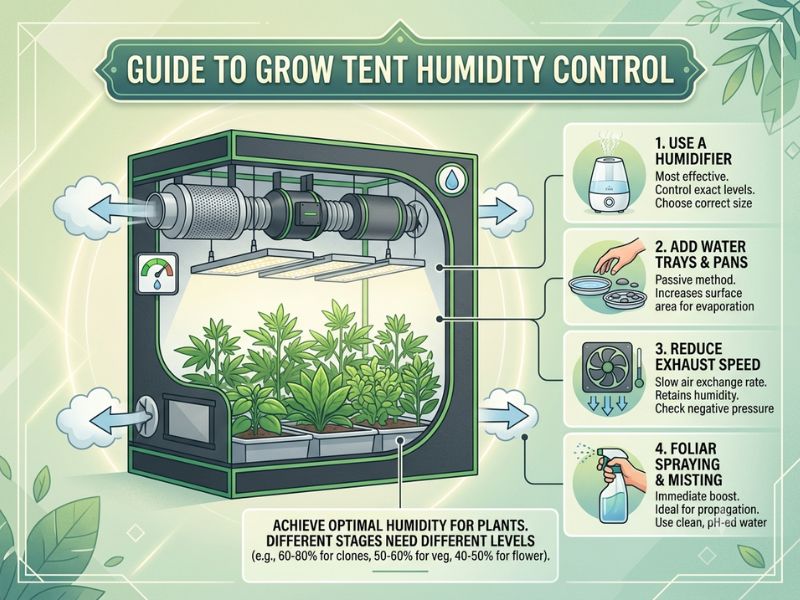
Humidity is one of the most important environmental factors in a grow tent because it directly affects how plants absorb water, exchange gases, and regulate moisture loss. The amount of water vapor in the air influences plant transpiration, nutrient movement, and overall growth performance.
When humidity is too low, plants lose water through their leaves faster than they can replace it through their roots. This can cause stress, especially for young plants with small root systems. On the other hand, maintaining suitable humidity levels helps plants grow more efficiently and reduces unnecessary moisture stress.
How Low Humidity Affects Plants
When the air inside a grow tent is too dry, plants may show signs such as:
- Dry or curling leaf edges
- Slow growth
- Wilting despite proper watering
- Increased water consumption
- Difficulty maintaining healthy foliage
Low humidity can be especially challenging during the seedling stage because young plants have smaller root systems and depend more on moisture in the surrounding air.
Humidity and Plant Growth Stages
Different growth stages usually require different humidity levels:
- Seedling stage: Higher humidity helps young plants maintain moisture while their roots develop.
- Vegetative stage: Moderate humidity supports strong leaf and stem growth.
- Flowering stage: Lower humidity is often preferred to reduce moisture-related issues.
The ideal humidity range depends on the plant species, temperature, airflow, and growing method.
The Relationship Between Temperature and Humidity
Temperature and humidity are closely connected inside a grow tent. Warm air can hold more moisture, while cooler air holds less.
For example:
- Increasing temperature can lower relative humidity.
- Lowering temperature can increase relative humidity.
- Strong exhaust fans can remove humid air quickly.
Understanding this relationship helps you choose the right method for increasing humidity without creating an unstable environment.
Before adding moisture, always measure your current humidity level with a reliable hygrometer. This helps you determine whether you need a small adjustment or a dedicated humidity-control solution.
Use a Humidifier to Increase Humidity in a Grow Tent
The most effective and reliable way to raise humidity in a grow tent is by using a humidifier. Unlike simple methods that provide only a small increase in moisture, a humidifier allows you to control humidity levels more precisely and maintain a stable growing environment.
A humidifier is especially useful when the surrounding room air is naturally dry or when your exhaust system removes humid air faster than plants can replace it.
Choose the Right Humidifier Size
The correct humidifier size depends on:
- Grow tent size
- Current humidity level
- Room temperature
- Exhaust fan strength
- Number of plants
A small humidifier may work well for a compact grow tent, while larger tents may require a higher-capacity unit that can maintain moisture levels for longer periods.
Avoid choosing a humidifier that is too powerful for your tent because excessive moisture can create high humidity conditions and increase the risk of mold or other moisture-related problems.
Types of Humidifiers for Grow Tents
Common humidifier types include:
Ultrasonic Humidifiers
These use high-frequency vibrations to create a fine mist. They are popular for grow tents because they are quiet, energy-efficient, and can increase humidity quickly.
Evaporative Humidifiers
These use a fan to move air through a wet filter or wick. They naturally limit humidity output because evaporation slows as moisture levels increase.
Cool Mist Humidifiers
These release room-temperature mist and are commonly used for indoor growing environments.
Place the Humidifier Correctly
Where you place the humidifier affects how evenly moisture spreads throughout the tent.
Helpful placement tips:
- Keep it away from direct contact with plants.
- Avoid placing mist directly onto leaves.
- Position it where airflow can distribute moisture evenly.
- Keep electrical components away from water sources.
Using an external humidity controller can also help automate the humidifier by turning it on and off based on your target humidity level.
Monitor Humidity After Adding a Humidifier
A humidifier can quickly change the environment inside a small grow tent, so regular monitoring is important.
Use a digital hygrometer to track:
- Current humidity level
- Temperature changes
- Daily humidity fluctuations
The goal is stable humidity, not simply achieving the highest possible moisture level. A balanced environment helps plants grow better while preventing excess moisture problems.
Add Water Trays or Containers to Increase Humidity
If your grow tent only needs a small humidity increase, adding open water containers can be a simple and affordable solution. As water naturally evaporates, it adds moisture to the surrounding air and can slightly raise humidity levels inside the tent.
This method works best for small grow tents, dry environments, or situations where humidity is only a few percentage points below your target range.
How Water Trays Increase Humidity
Water evaporation depends on several factors:
- Air temperature
- Air movement
- Surface area of the water
- Existing humidity level
A wider container with more exposed water surface will evaporate faster than a narrow, deep container. Placing the container near moving air can also increase evaporation because airflow helps distribute moisture throughout the tent.
Best Places to Put Water Containers
For better results:
- Place water trays near an air circulation fan.
- Keep them away from electrical equipment.
- Position them where they cannot spill easily.
- Use multiple smaller containers instead of one large container if needed.
The goal is to allow moisture to spread gradually without creating wet areas inside the grow tent.
Add Wet Towels or Sponges for a Small Humidity Boost
Another simple method is placing a damp towel, sponge, or cloth inside a tray of water. The material increases the surface area available for evaporation, allowing moisture to enter the air more quickly.
However, these methods require regular attention because:
- Towels can dry out quickly.
- Standing water can collect dust.
- Dirty water may encourage unwanted growth.
Replace the water frequently and keep the containers clean to avoid creating additional problems.
Limitations of Water-Based Methods
While water trays are inexpensive and easy, they have limitations:
- They provide less control than a humidifier.
- They may not increase humidity enough in larger tents.
- Their effectiveness changes with temperature and airflow.
For small adjustments, water containers can help. But if your grow tent humidity remains consistently low, a dedicated humidifier with a controller will provide much better control and stability.
Reduce Exhaust Fan Speed to Keep More Humidity Inside the Grow Tent
Your exhaust fan plays a major role in controlling humidity because it removes warm, humid air from inside the tent. If the fan is running too aggressively, it may remove moisture faster than plants and other humidity sources can replace it.
Reducing exhaust airflow can help retain more moisture and naturally increase humidity levels inside the grow tent.
Adjust the Fan Speed
If your inline fan has a speed controller, try lowering the fan speed gradually while monitoring humidity levels.
A slower exhaust fan can:
- Keep humid air inside the tent longer
- Reduce moisture loss
- Improve humidity stability
- Lower unnecessary energy use
Avoid turning the exhaust fan off completely because plants still need fresh air exchange and proper ventilation.
Balance Exhaust and Intake Airflow
Humidity problems often happen when the exhaust system removes more air than necessary. Check the balance between:
- Exhaust fan strength
- Intake openings
- Tent size
- Plant requirements
If too much air is being exchanged, the tent may continuously pull in dry outside air, making it difficult to increase humidity.
Maintaining proper airflow balance allows you to keep enough moisture inside while still providing fresh air for plant growth.
Avoid Excessive Air Movement
Strong airflow inside the tent can increase evaporation from plant leaves and growing media. While air circulation is important, excessive airflow can contribute to a drier environment.
Consider:
- Reducing the speed of circulation fans.
- Avoiding direct airflow pointed at plants.
- Adjusting fan positions for gentle air movement.
The goal is to maintain fresh air circulation without rapidly removing moisture.
Monitor Changes After Adjustments
After reducing exhaust speed, check your hygrometer regularly. Humidity may increase quickly in a small grow tent, especially when temperatures are warm or plants are transpiring heavily.
If humidity rises too much, increase airflow slightly until you find the right balance.
Adjusting your ventilation system is one of the easiest ways to raise humidity without adding extra equipment, but it should always be done carefully to maintain proper air exchange.
Increase Plant Transpiration to Naturally Raise Humidity
Plants naturally release moisture into the air through a process called transpiration. As plants absorb water through their roots, they release water vapor through tiny openings in their leaves. In a healthy grow tent, this natural process can contribute to overall humidity levels.
While you should not add more plants only to increase humidity, maintaining healthy plant growth can help create a more balanced environment.
Keep Plants Properly Watered
Well-hydrated plants release more moisture through transpiration. If plants are underwatered, they reduce their water movement and may not contribute as much humidity to the tent.
To support healthy transpiration:
- Follow an appropriate watering schedule.
- Avoid allowing the growing medium to become completely dry.
- Ensure proper root health.
- Use suitable containers with adequate drainage.
Overwatering should be avoided because it can create excessive humidity and increase the risk of root problems.
Use the Right Number of Plants
Plant density affects humidity levels inside a grow tent. A tent with more healthy plants will generally produce more moisture through transpiration than an empty or lightly planted tent.
However, overcrowding can create problems:
- Reduced airflow between plants
- Higher humidity pockets
- Increased risk of moisture-related issues
Maintain a balance between plant coverage and proper air circulation.
Maintain Healthy Growing Conditions
Healthy plants transpire more efficiently. Factors that support good transpiration include:
- Proper lighting levels
- Suitable temperature
- Adequate water supply
- Good air circulation
- Healthy root systems
When plants are growing actively, they naturally contribute moisture to the environment.
Understand the Limits of Plant-Based Humidity Control
Plant transpiration alone may not be enough to significantly increase humidity, especially in:
- Large grow tents
- Rooms with very dry air
- Setups with powerful exhaust fans
For small humidity adjustments, healthy plants can help. But if your humidity is consistently too low, combining natural transpiration with a humidifier or ventilation adjustments will provide better control.
Add a Humidity Dome for Seedlings and Young Plants
A humidity dome is a simple tool that helps maintain higher moisture levels around seedlings and young plants. Instead of increasing humidity throughout the entire grow tent, a dome creates a smaller controlled environment with higher humidity where young plants need it most.
This method is especially useful during the early growth stage when plants have small root systems and are more sensitive to dry air.
How a Humidity Dome Works
A humidity dome is a transparent cover placed over a seed tray or small plant containers. It traps moisture released from the growing medium and plants, creating a more humid microclimate.
Benefits include:
- Reduced moisture loss from leaves
- Faster seed germination
- Better support for young seedlings
- More stable early growth conditions
Because the dome only covers a small area, it is easier to control than increasing humidity across an entire grow tent.
Use a Humidity Dome Correctly
To get the best results:
- Keep the growing medium slightly moist but not waterlogged.
- Open ventilation vents on the dome when humidity becomes too high.
- Remove the dome gradually as plants become stronger.
- Avoid keeping seedlings in extremely high humidity for too long.
Young plants need time to adapt to normal grow tent conditions. Removing the dome too quickly or too slowly can stress developing plants.
When to Use a Humidity Dome
A humidity dome is most helpful during:
- Seed germination
- Early seedling development
- Plant cloning
- Dry indoor conditions
For mature plants, a humidity dome is usually unnecessary because they can regulate moisture better through their larger root systems and leaf area.
A humidity dome is a targeted solution rather than a whole-tent humidity adjustment method. For larger humidity problems, combining proper ventilation control with a humidifier will provide more consistent results.
Use a Wet Growing Medium to Help Increase Humidity
The growing medium inside your containers naturally releases moisture into the air through evaporation. Maintaining the correct moisture level can help increase humidity inside a grow tent, especially in smaller setups.
However, this method should be used carefully because keeping the growing medium too wet can create other problems, such as root issues, mold growth, and poor plant health.
Keep the Growing Medium Properly Moist
A healthy growing medium contains enough moisture to support plant roots while allowing proper airflow.
To maintain balanced moisture:
- Water plants according to their needs.
- Avoid letting the medium become completely dry.
- Allow excess water to drain properly.
- Check moisture levels before watering again.
When the growing medium stays at an appropriate moisture level, it releases small amounts of water vapor into the surrounding air.
Use Larger Containers When Appropriate
Larger containers generally hold more moisture than smaller pots. As a result, they can contribute slightly more humidity through evaporation.
However, increasing container size only to raise humidity is not recommended. Choose container sizes based on plant requirements first, with humidity improvement as a secondary benefit.
Avoid Overwatering to Increase Humidity
One common mistake is adding excessive water to the soil or growing medium in an attempt to raise humidity.
Overwatering can lead to:
- Root damage
- Poor oxygen availability around roots
- Fungus and mold problems
- Unhealthy plant growth
The goal is to maintain healthy moisture levels, not create a wet environment.
Combine Moisture Management With Airflow
A properly watered growing medium works best when combined with good air circulation. Gentle airflow helps distribute moisture evenly throughout the tent and prevents humid pockets from forming around the plants.
Using the growing medium as a humidity source can provide a small natural boost, but it usually cannot replace a humidifier when humidity levels are significantly low. For consistent control, combine this method with proper ventilation adjustments and humidity monitoring.
Use a Humidity Controller for Automatic Humidity Management
A humidity controller is one of the best tools for maintaining stable humidity levels inside a grow tent. Instead of manually turning a humidifier on and off, a controller automatically monitors humidity and activates equipment when moisture levels fall below your target range.
This helps create a more consistent growing environment and prevents sudden humidity changes.
How a Humidity Controller Works
A humidity controller uses a sensor to measure the relative humidity inside the grow tent. You set your desired humidity range, and the controller manages connected equipment.
For example:
- When humidity drops too low, it turns on a humidifier.
- When humidity reaches the set level, it turns the humidifier off.
Some advanced controllers can also manage exhaust fans and dehumidifiers to maintain balanced conditions.
Benefits of Using a Humidity Controller
A controller provides several advantages:
- Maintains more stable humidity levels.
- Reduces the need for constant monitoring.
- Prevents excessive moisture buildup.
- Helps protect plants from humidity fluctuations.
- Makes environmental management easier.
Stable conditions are especially helpful when growing in areas where indoor humidity changes throughout the day.
Place the Humidity Sensor Correctly
The location of the sensor affects accuracy. Avoid placing it:
- Directly in front of a humidifier mist output.
- Directly under grow lights where heat can affect readings.
- Against tent walls where readings may not represent the plant environment.
For accurate measurements, place the sensor near plant height in an area with good air circulation.
Combine a Controller With Other Humidity Methods
A humidity controller works best when paired with:
- A properly sized humidifier
- Balanced ventilation
- A reliable hygrometer
- Good airflow circulation
The controller does not create humidity by itself—it simply automates your humidity equipment and helps maintain consistent conditions.
For growers who want precise environmental control, a humidity controller is a worthwhile upgrade that makes managing a grow tent much easier and more reliable.
Common Mistakes When Trying to Raise Humidity in a Grow Tent
Increasing humidity inside a grow tent may seem simple, but incorrect methods can create new problems. Many growers focus only on adding moisture without considering airflow, temperature, and plant health.
Avoiding these common mistakes will help you raise humidity safely and maintain a stable growing environment.
Adding Too Much Humidity Too Quickly
A sudden increase in humidity can create an unstable environment for plants. Rapid moisture changes may encourage problems such as mold, poor airflow, and excessive condensation.
Instead of making large adjustments:
- Increase humidity gradually.
- Monitor changes with a hygrometer.
- Adjust your humidifier settings slowly.
- Check how plants respond.
Stable humidity is usually better than constantly changing humidity levels.
Placing a Humidifier Too Close to Plants
Direct mist from a humidifier can create wet areas on leaves, soil, or equipment. Constant moisture on plant surfaces may increase the risk of fungal problems.
For better results:
- Place the humidifier away from plants.
- Allow airflow to distribute moisture evenly.
- Avoid pointing mist directly at leaves.
- Use a controller to prevent over-humidification.
Ignoring Ventilation Balance
Reducing exhaust airflow can help increase humidity, but lowering it too much can create other issues.
Poor ventilation may cause:
- Excess heat buildup
- Stagnant air
- Uneven humidity distribution
- Reduced fresh air exchange
Your goal should be balanced airflow, not eliminating ventilation.
Using Standing Water Without Maintenance
Water trays and containers can increase humidity, but dirty or stagnant water can become a source of unwanted odors and microbial growth.
To avoid problems:
- Replace water regularly.
- Clean containers frequently.
- Prevent spills inside the tent.
- Keep electrical equipment away from water.
Not Measuring Humidity Accurately
Guessing humidity levels can lead to unnecessary adjustments. A grow tent may feel dry or humid, but actual humidity readings can be very different.
Always use a reliable digital hygrometer to monitor:
- Relative humidity (RH)
- Temperature
- Daily humidity changes
Accurate measurements help you make better decisions and avoid overcorrecting.
Ignoring Temperature Effects
Temperature has a direct impact on relative humidity. If the temperature changes significantly, humidity readings will also change.
For example:
- Higher temperatures can lower relative humidity.
- Lower temperatures can increase relative humidity.
Managing both temperature and humidity together creates a more stable grow tent environment.
Avoiding these mistakes will help you increase humidity effectively while protecting your plants from moisture-related problems. The best humidity strategy combines controlled moisture addition, proper airflow, and regular monitoring.
How to Maintain the Ideal Humidity Level in a Grow Tent
Raising humidity is only the first step. The real goal is maintaining a stable humidity range that supports healthy plant growth without creating excessive moisture problems.
Humidity requirements change depending on plant type, growth stage, temperature, and ventilation setup. Regular monitoring and small adjustments are the best way to keep your grow tent environment balanced.
Monitor Humidity Regularly
A digital hygrometer is one of the most important tools for tracking humidity inside a grow tent. It allows you to see how moisture levels change throughout the day.
Place the hygrometer:
- Near plant height.
- Away from direct airflow from fans.
- Away from humidifier mist.
- In an area that represents the plant environment.
Checking humidity at different times helps identify patterns, such as drops when lights turn on or increases during dark periods.
Adjust Humidity Based on Plant Growth Stage
Plants usually prefer different humidity levels during different stages of growth.
General guidelines:
- Seedlings: Higher humidity often helps young plants retain moisture while developing roots.
- Vegetative growth: Moderate humidity supports strong leaf and stem development.
- Flowering stage: Lower humidity is often preferred to reduce moisture-related risks.
Always consider the specific needs of your plant variety rather than following a single humidity number.
Balance Humidity With Temperature
Humidity and temperature work together. A humidity level that is acceptable at one temperature may behave differently at another.
For better environmental control:
- Monitor temperature and humidity together.
- Avoid large temperature fluctuations.
- Adjust ventilation when conditions change.
- Use heating or cooling equipment if necessary.
A stable temperature makes humidity management much easier.
Prevent Excessive Humidity at Night
Humidity often rises when grow lights turn off because cooler air holds less moisture and plants may continue releasing water vapor.
To prevent nighttime humidity spikes:
- Maintain proper air circulation.
- Adjust exhaust fan settings if needed.
- Use a humidity controller.
- Monitor humidity during the dark cycle.
Keeping humidity stable throughout the entire day helps create a healthier growing environment.
Make Small Adjustments Instead of Large Changes
Environmental changes work best when made gradually. Large increases or decreases in humidity can stress plants and make the grow tent harder to manage.
A successful humidity strategy focuses on consistency:
- Measure current conditions.
- Make one adjustment at a time.
- Observe the results.
- Fine-tune the setup.
By combining proper monitoring, controlled moisture addition, and balanced airflow, you can maintain the right humidity level and create a more stable grow tent environment.
Frequently Asked Questions About Raising Humidity in a Grow Tent
What is the fastest way to increase humidity in a grow tent?
The fastest way to increase humidity is by using a humidifier. A properly sized ultrasonic or cool mist humidifier can quickly add moisture and help maintain stable humidity levels. For small increases, water trays or reducing exhaust fan speed may also help.
What humidity level should a grow tent have?
The ideal humidity level depends on the plant type and growth stage. In general, young plants usually benefit from higher humidity, while mature plants often prefer lower humidity levels. Always monitor humidity with a hygrometer and adjust based on your plants’ needs.
Can I raise humidity in a grow tent without a humidifier?
Yes, you can increase humidity without a humidifier by using methods such as:
- Adding water trays.
- Reducing excessive exhaust airflow.
- Maintaining proper moisture in the growing medium.
- Increasing healthy plant transpiration.
- Using a humidity dome for seedlings.
However, these methods usually provide smaller increases compared to a dedicated humidifier.
Why is my grow tent humidity too low?
Low humidity can happen because of several factors, including:
- Dry indoor air.
- Strong exhaust fans removing moist air.
- High temperatures.
- Small plant coverage.
- Lack of moisture sources inside the tent.
Finding the cause of low humidity helps you choose the right solution.
Does increasing humidity improve plant growth?
Maintaining proper humidity can support healthier plant growth by helping plants regulate water loss and maintain efficient transpiration. However, excessively high humidity can create other problems, so balance is important.
Can a fan lower humidity in a grow tent?
Yes. Exhaust fans remove humid air from inside the tent and replace it with drier outside air. Strong ventilation can lower humidity, especially in dry environments. Adjusting fan speed can help maintain better moisture levels.
How do I keep humidity stable in a grow tent?
To maintain stable humidity:
- Use a reliable hygrometer.
- Install a humidifier with a humidity controller.
- Balance intake and exhaust airflow.
- Monitor temperature changes.
- Make gradual adjustments.
Consistent monitoring is the key to preventing large humidity swings.
Conclusion
Raising humidity in a grow tent requires a balanced approach. Simple methods like water trays, proper watering, and airflow adjustments can help with minor humidity issues, while a humidifier and controller provide the most reliable control.
The best results come from monitoring your environment regularly and adjusting humidity based on plant needs, temperature, and ventilation. By maintaining stable moisture levels, you can create a healthier grow tent environment that supports strong and consistent plant development.

I’m Maya L. Greenwood, a lifelong plant lover who believes anyone can grow something beautiful with the right guidance. After years of testing soil mixes, pruning methods, irrigation tricks, and pest-safe solutions, I started EasyGardenTips.com to turn hard-won lessons into step-by-step advice. From seed starting and container gardens to composting and seasonal checklists, my goal is to make gardening simple, sustainable, and fun.