How to Set Up a Mushroom Grow Tent: Complete Step-by-Step Guide
A mushroom grow tent is a controlled indoor environment designed to maintain the specific conditions mushrooms need to fruit successfully. Unlike plants, mushrooms do not require strong light or active nutrient feeding systems. Instead, they depend heavily on stable humidity, fresh air exchange, and consistent temperature.
Setting up a dedicated grow tent helps you control these variables more precisely than a normal room, leading to healthier pinning, better yields, and reduced contamination risk.
This guide explains how to build a simple and effective mushroom grow tent setup from start to finish.
Read More: how to set up a hydroponic grow tent
Read More: how to set up a grow tent for drying
Step 1: Choose the Right Grow Tent Size
Mushrooms do not require large amounts of vertical space, but you do need enough room for airflow, shelving, and humidity control equipment.
Common tent sizes:
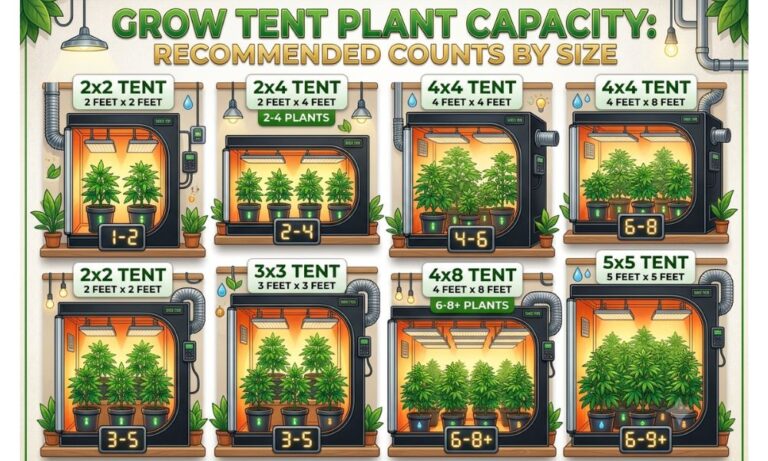
- 2×2 ft: Small personal mushroom setup
- 2×4 ft: Beginner to medium production
- 3×3 ft: Balanced small grow operation
- 4×4 ft: High capacity indoor setup
Make sure the tent has:
- Good sealing ability
- Multiple ventilation ports
- Enough height for shelves or hanging racks
Step 2: Clean and Sterilize the Tent Area
Cleanliness is extremely important in mushroom cultivation because contamination can quickly spread.
Before setup:
- Wipe down the inside of the tent
- Clean all surfaces with mild disinfectant
- Allow everything to dry completely
- Ensure the surrounding area is also clean
Avoid using harsh chemicals that may leave residue inside the tent.
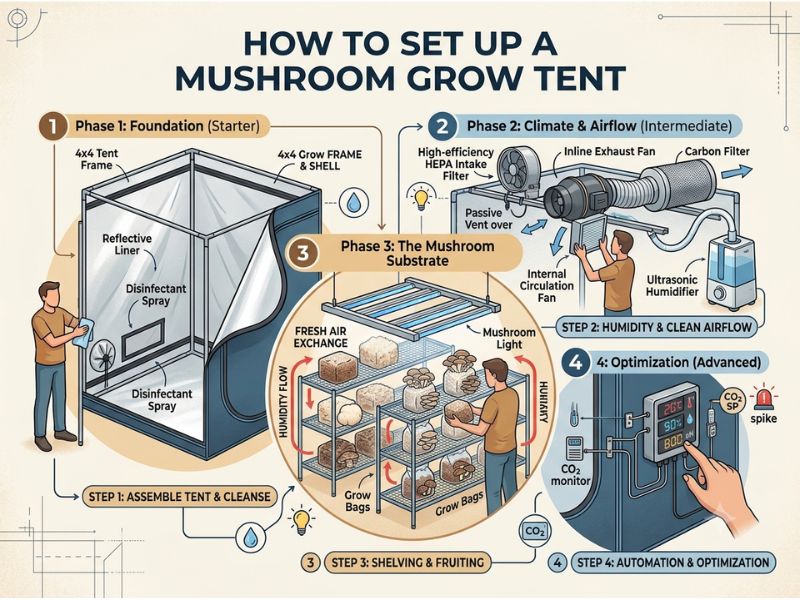
Step 3: Set Up the Grow Tent Frame and Fabric
If your tent is not already assembled:
- Build the frame using metal poles and connectors
- Attach the reflective outer fabric
- Secure zippers and ensure proper sealing
- Install the floor tray
Make sure the tent is stable and fully sealed to maintain humidity levels inside.
Read More: how to build a DIY grow tent
Step 4: Install Shelving or Growing Space
Mushrooms are usually grown on shelves or stacked systems.
You can use:
- Metal wire racks
- Plastic shelving units
- Hanging trays (for smaller setups)
Ensure shelves are:
- Rust-resistant
- Easy to clean
- Spaced enough for airflow between layers
Leave enough room for misting and maintenance access.
Step 5: Install Humidity Control System
Humidity is the most important factor in mushroom growth.
Ideal mushroom fruiting conditions usually require high humidity levels.
To maintain this:
- Install an ultrasonic humidifier inside or outside the tent
- Use a humidity controller if possible
- Place a hygrometer at mid-height for monitoring
The goal is to maintain stable moisture levels without over-saturating the environment.
Avoid direct water pooling inside the tent.
Step 6: Set Up Fresh Air Exchange (FAE)
Mushrooms require fresh air exchange to grow properly and avoid CO2 buildup.
Install:
- Small inline exhaust fan (low speed)
- Passive air intake vents
- Optional small circulation fan (very gentle airflow)
Air movement should be soft. Strong airflow can dry out mushroom surfaces and affect growth.
Step 7: Control Temperature and Lighting
Mushrooms do not require strong light, but they do need a basic day-night cycle.
Temperature should remain stable depending on the mushroom type being grown.
Setup includes:
- Thermometer/hygrometer combo
- Low-intensity LED light (optional)
- Timer for consistent light cycles if needed
Avoid direct bright light or heat sources inside the tent.
Step 8: Mist and Maintain Moisture Levels
Instead of nutrient feeding like plants, mushrooms require controlled moisture in the air.
You can maintain this by:
- Running humidifier periodically
- Light misting if needed
- Keeping surfaces slightly moist but not wet
Avoid over-misting, as excess water can lead to contamination or stalled growth.
Step 9: Place Mushroom Blocks or Substrate
Once the environment is stable:
- Place colonized substrate blocks or fruiting containers inside the tent
- Space them evenly for airflow
- Avoid stacking blocks directly on top of each other unless shelves are used
Proper spacing ensures even fruiting and reduces contamination risk.
Step 10: Monitor Daily Conditions
Check the grow tent regularly for:
- Humidity stability
- Fresh air circulation
- Temperature consistency
- Signs of contamination
- Proper mushroom pinning development
Small adjustments in humidity or airflow can significantly impact results.
Common Mistakes to Avoid
- Too much direct airflow drying mushrooms
- Low humidity causing stalled growth
- Poor sanitation leading to contamination
- Overcrowding substrate blocks
- Inconsistent temperature control
Maintaining balance is more important than aggressive adjustments.
Final Thoughts
A mushroom grow tent is all about environmental stability rather than heavy equipment or complex systems. When humidity, airflow, and cleanliness are properly managed, mushrooms can grow efficiently with minimal intervention.
By keeping conditions stable and avoiding contamination risks, you can create a reliable indoor fruiting environment that produces consistent results over time.

I’m Maya L. Greenwood, a lifelong plant lover who believes anyone can grow something beautiful with the right guidance. After years of testing soil mixes, pruning methods, irrigation tricks, and pest-safe solutions, I started EasyGardenTips.com to turn hard-won lessons into step-by-step advice. From seed starting and container gardens to composting and seasonal checklists, my goal is to make gardening simple, sustainable, and fun.