How Long Should an Exhaust Fan Run in a Grow Tent?
An exhaust fan is one of the most important components of a grow tent ventilation system, but many beginners aren’t sure how long it should run. Should you leave it on 24/7, run it only when the lights are on, or use a timer? The answer depends on several factors, including your grow tent’s temperature, humidity, lighting system, and plant growth stage.
A properly timed exhaust fan helps remove excess heat and humidity while bringing fresh, CO₂-rich air into the tent. This creates a stable environment that supports healthy plant growth and reduces the risk of mold, mildew, and heat stress. On the other hand, running the fan longer than necessary can increase energy consumption and noise, while not running it enough can lead to poor airflow and environmental problems.
In this guide, I’ll explain how long an exhaust fan should run during both the light and dark cycles, the factors that affect fan runtime, and whether using a timer or climate controller is the best option for your grow tent. By the end, you’ll know how to create an efficient ventilation schedule that keeps your plants thriving throughout every stage of growth.
Should an Exhaust Fan Run All the Time?

In most grow tents, yes—an exhaust fan should run continuously while the grow lights are on. During the light cycle, grow lights generate heat, plants transpire more water, and humidity levels rise. A continuously running exhaust fan removes warm, humid air and replaces it with fresh air, helping maintain a stable growing environment.
Whether the fan should also run continuously during the dark cycle depends on your temperature and humidity levels. In many cases, growers reduce the fan speed or allow it to cycle on and off instead of running at full power all night.
Benefits of Running an Exhaust Fan Continuously
Keeping your exhaust fan running offers several advantages:
- Maintains consistent temperatures
- Controls humidity throughout the day
- Supplies fresh CO₂-rich air for plant growth
- Prevents stagnant air inside the tent
- Reduces the risk of mold and mildew
- Helps carbon filters remove odors more effectively
For most indoor gardens, steady ventilation creates a more stable environment than turning the fan on and off frequently.
When 24/7 Operation Is Recommended
Running your exhaust fan 24 hours a day is often the best option if:
- Your grow tent stays warm even after the lights turn off.
- Humidity regularly exceeds the recommended range.
- You’re using a carbon filter for odor control.
- Your grow room has poor natural ventilation.
- Plants are in the flowering stage, when humidity control becomes more important.
Many modern inline fans include variable speed controllers, allowing you to run the fan at full speed during the day and reduce the speed at night. This approach provides continuous air exchange while lowering noise and energy consumption.
When Continuous Operation May Not Be Necessary
If your grow room remains cool and humidity stays within the ideal range after the lights go out, the exhaust fan doesn’t always need to run at full speed overnight. Instead, you can:
- Reduce the fan speed.
- Use a timer to cycle the fan on and off.
- Let a thermostat or humidity controller activate the fan only when needed.
The goal is to maintain stable environmental conditions rather than simply keeping the fan running all the time.
In the next section, we’ll look at the ideal exhaust fan runtime during the light cycle and why most growers keep the fan operating whenever the lights are on.
How Long Should an Exhaust Fan Run During the Light Cycle?
For most indoor grow setups, the exhaust fan should run continuously while the grow lights are on. This is when your tent produces the most heat, humidity, and stale air, making constant ventilation essential for maintaining a healthy growing environment.
Whether you’re following an 18/6 light schedule during the vegetative stage or a 12/12 schedule during flowering, keeping the exhaust fan running throughout the entire light cycle helps maintain stable conditions and reduces stress on your plants.
Why Continuous Operation Is Recommended
Grow lights generate heat, and plants release moisture through transpiration. Without proper ventilation, temperatures and humidity can rise quickly, especially in smaller grow tents.
Running the exhaust fan continuously during the light cycle helps:
- Remove excess heat from grow lights
- Maintain a steady temperature
- Control humidity
- Bring fresh CO₂-rich air into the tent
- Prevent hot spots around the plant canopy
Consistent airflow also helps your ventilation system work more efficiently with a carbon filter.
Recommended Temperature During Lights On
While exact temperatures depend on the plant type and growth stage, most indoor growers aim for:
| Growth Stage | Ideal Temperature |
| Seedlings | 70–78°F (21–26°C) |
| Vegetative Stage | 70–82°F (21–28°C) |
| Flowering Stage | 65–80°F (18–27°C) |
If temperatures begin rising above the recommended range, increasing the exhaust fan speed can help remove excess heat before it affects plant growth.
Use a Variable-Speed Fan When Possible
Instead of turning the exhaust fan off, many growers prefer using a variable-speed controller. Running the fan at a lower speed during cooler periods saves energy and reduces noise while still providing continuous air exchange.
This approach is especially useful during spring and fall when the grow room temperature changes throughout the day.
Bottom Line
As a general rule, run your grow tent exhaust fan for the entire light cycle. Continuous ventilation helps maintain stable temperatures, regulate humidity, and provide the fresh air your plants need for healthy growth. If your fan supports speed control, simply adjust the airflow based on your tent’s environmental conditions rather than switching the fan on and off.
How Long Should an Exhaust Fan Run During the Dark Cycle?
Many growers assume the exhaust fan can be turned off once the lights go out, but that’s not always the best approach. Although temperatures usually drop during the dark cycle, plants continue to respire and release moisture into the air. Without adequate ventilation, humidity can rise quickly, increasing the risk of mold, mildew, and other moisture-related problems.
For most grow tents, it’s recommended to keep the exhaust fan running during the dark cycle, either continuously at a lower speed or intermittently using a timer or environmental controller.
Why Ventilation Is Still Important at Night
Even without grow lights producing heat, your plants still need fresh air and proper humidity control. Running the exhaust fan during the dark cycle helps:
- Remove excess humidity
- Prevent condensation inside the tent
- Reduce the risk of mold and mildew
- Maintain fresh air circulation
- Keep temperatures stable
This is especially important during the flowering stage, when plants release more moisture and dense buds become more susceptible to mold.
Continuous vs. Intermittent Operation
The best nighttime schedule depends on your grow environment.
Run the fan continuously if:
- Humidity frequently exceeds the recommended range.
- You’re using a carbon filter for odor control.
- Your grow room has limited airflow.
- You’re in the flowering stage.
Run the fan intermittently if:
- Temperatures remain stable.
- Humidity stays within the ideal range.
- Your grow room has good natural ventilation.
For example, some growers set the fan to run for 15–30 minutes every hour during the dark cycle. Others rely on a humidity controller that automatically turns the fan on whenever moisture levels become too high.
Ideal Humidity During the Dark Cycle
Keeping humidity within the proper range is just as important as controlling temperature.
| Growth Stage | Recommended Humidity |
| Seedlings | 65–70% |
| Vegetative Stage | 50–70% |
| Flowering Stage | 40–50% |
| Late Flowering | 35–45% |
If humidity rises above these levels after the lights turn off, increasing the exhaust fan runtime can help restore a healthier environment.
Bottom Line
For most growers, the exhaust fan should continue running during the dark cycle, especially if humidity is a concern. Running the fan at a lower speed or using a thermostat or humidity controller provides efficient ventilation while reducing energy use and noise. The goal isn’t simply to keep the fan on—it’s to maintain stable temperature and humidity levels throughout the night.
Factors That Affect Exhaust Fan Runtime
There’s no single exhaust fan schedule that works for every grow tent. The ideal runtime depends on your equipment, growing environment, and the stage of plant growth. Understanding these factors will help you decide whether your fan should run continuously or only when conditions require it.
Grow Tent Size
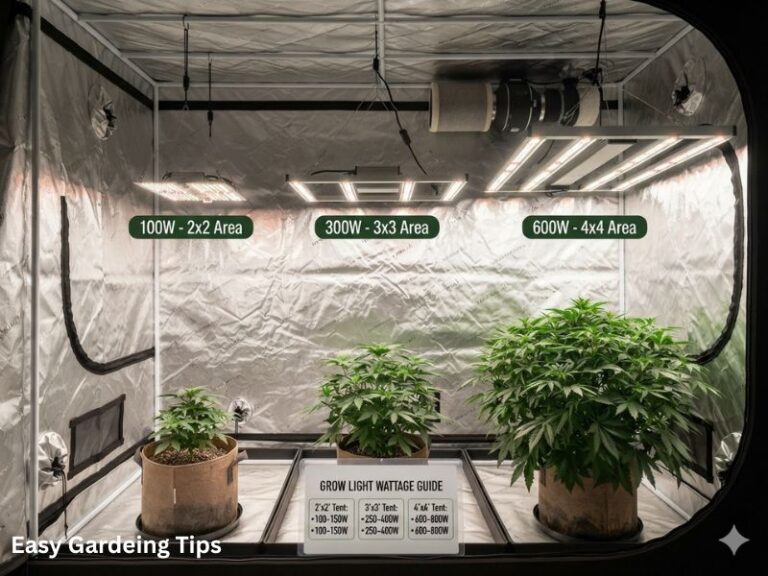
Larger grow tents contain more air and typically house more plants, requiring greater airflow to maintain consistent temperatures and humidity. Smaller tents heat up quickly but also cool down faster, while larger tents often need longer or continuous ventilation.
Grow Light Type
The type of lighting you use has a significant impact on fan runtime.
- LED grow lights produce less heat, so the fan may not need to run at full speed all the time.
- HID lights (such as HPS and MH) generate much more heat and usually require continuous ventilation during the light cycle.
Temperature
If the temperature inside your grow tent rises above the recommended range, the exhaust fan should run more frequently or at a higher speed. During cooler months, you may be able to reduce the fan speed without affecting plant health.
Humidity
Humidity often determines how long the fan should run after the lights turn off. As plants grow larger, they release more moisture into the air. If humidity becomes too high, increasing fan runtime helps prevent condensation and mold.
Carbon Filter
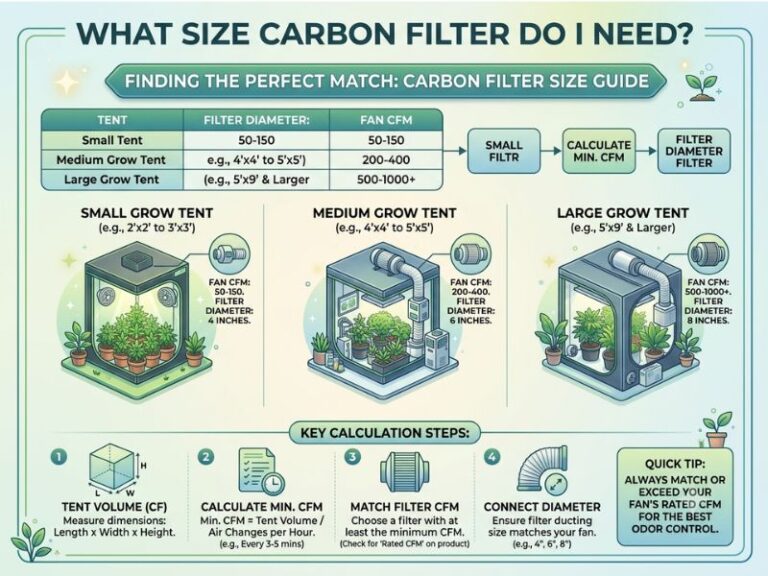
A carbon filter restricts airflow slightly, which means the fan may need to run longer or at a higher speed to achieve the same level of ventilation. Keeping the filter clean also helps maintain efficient airflow.
Plant Size and Growth Stage
Small seedlings produce very little heat and moisture, so ventilation demands are relatively low. Mature plants, especially during flowering, transpire much more water and usually require longer fan operation to keep humidity under control.
Season and Room Conditions
The surrounding room has a major influence on your grow tent’s environment.
- During summer, higher room temperatures often require the exhaust fan to run almost continuously.
- During winter, cooler conditions may allow you to reduce fan speed or cycle it on and off without affecting the grow environment.
Monitoring your grow tent’s temperature and humidity with a digital thermometer and hygrometer is the best way to determine whether your current fan schedule is effective.
Should You Use a Timer or Thermostat?
A timer can work for basic grow tent setups, but it isn’t always the most efficient way to control an exhaust fan. Environmental conditions constantly change throughout the day, and a fixed schedule can’t respond to sudden increases in heat or humidity.
Using a Timer
A timer turns the fan on and off at preset intervals.
Pros:
- Affordable and easy to use
- Reduces electricity consumption
- Suitable for simple grow setups
Cons:
- Doesn’t respond to temperature or humidity changes
- May over-ventilate or under-ventilate the tent
Using a Thermostat Controller
A thermostat controller automatically activates the exhaust fan when the temperature exceeds your chosen limit and slows or turns it off once the tent cools down.
This helps maintain a stable environment without wasting energy.
Using a Humidity Controller
A humidity controller works similarly but responds to moisture levels instead of temperature. It’s especially useful during the flowering stage, when excess humidity can increase the risk of mold and bud rot.
Smart Fan Controllers
Many modern inline fans include smart controllers that monitor both temperature and humidity. These systems automatically adjust fan speed based on real-time conditions, providing efficient ventilation while minimizing noise and power consumption.
For most growers, a temperature- or humidity-controlled fan offers the best combination of plant health, energy efficiency, and convenience. It removes the guesswork and keeps your grow tent environment stable throughout the day and night.
Signs Your Exhaust Fan Isn’t Running Enough
An exhaust fan that’s not running long enough can quickly create an unhealthy growing environment. Poor ventilation allows heat, humidity, and stale air to build up inside the tent, which can slow plant growth and increase the risk of disease.
Here are some common signs that your exhaust fan may need to run longer or at a higher speed.
High Temperatures
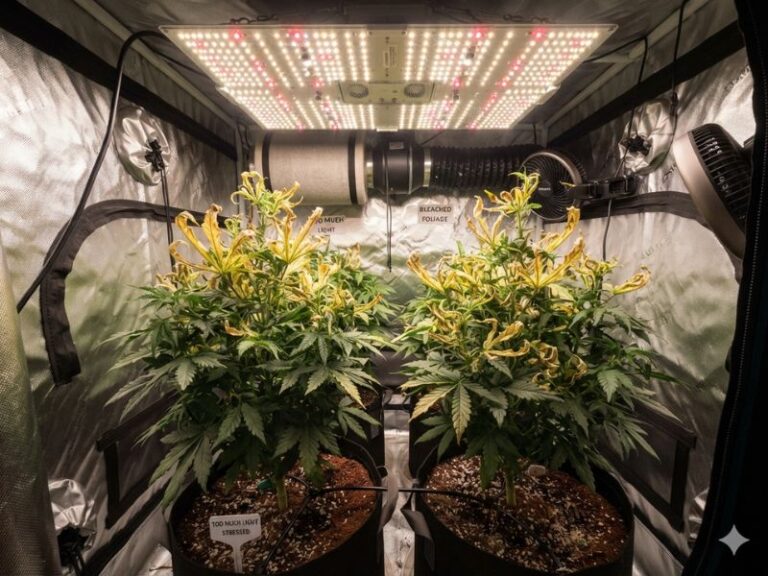
If the temperature inside your grow tent regularly exceeds the recommended range, your ventilation system may not be removing heat fast enough. This is especially common when using high-powered grow lights or during hot summer months.
Plants exposed to excessive heat may show signs of stress, including:
- Wilting leaves
- Leaf curling or “tacoing”
- Slower growth
- Reduced yields
High Humidity
Consistently high humidity is another sign that your exhaust fan isn’t exchanging enough air.
Excess moisture can lead to:
- Condensation inside the tent
- Mold and mildew
- Bud rot during flowering
- Poor transpiration
If humidity stays above the recommended range, increasing your fan runtime is often the quickest solution.
Condensation Inside the Tent
Water droplets on the tent walls, ducting, or equipment indicate that humid air isn’t being removed efficiently. Condensation is most common during the dark cycle when temperatures drop.
Stale or Musty Air
A healthy grow tent should always have fresh-moving air. If the tent smells stale, feels stuffy, or odors linger even with a carbon filter, your exhaust fan may not be running often enough.
Weak Plant Growth
Poor ventilation limits the supply of fresh CO₂, which plants need for photosynthesis. Over time, inadequate airflow can lead to slower growth, weaker stems, and lower overall plant health.
Persistent Odors
If strong plant odors begin escaping from the grow tent despite using a carbon filter, the exhaust fan may not be creating enough airflow through the filter. Increasing the fan speed or runtime often improves odor control.
Frequently Asked Questions
Should I leave my grow tent exhaust fan on 24/7?
In many cases, yes. Running the exhaust fan continuously provides stable temperature, humidity, and fresh air. If your grow tent remains cool and dry at night, you may be able to reduce the fan speed or cycle it on and off.
Can I turn my exhaust fan off at night?
You can if temperature and humidity remain within the ideal range. However, many growers continue running the fan at a lower speed overnight to prevent humidity buildup and maintain fresh air circulation.
Does an exhaust fan waste electricity?
Exhaust fans do consume electricity, but most modern EC inline fans are energy-efficient. Using a variable speed controller or smart climate controller can reduce power consumption while maintaining proper ventilation.
Can an exhaust fan run continuously?
Yes. Inline exhaust fans are designed for continuous operation, and many growers run them 24 hours a day throughout the growing cycle.
Should intake and exhaust fans run together?
Yes. If you’re using an active intake fan, it should generally operate whenever the exhaust fan is running to maintain balanced airflow. If your grow tent uses passive intake vents, the exhaust fan alone will draw fresh air into the tent.
Conclusion
The ideal exhaust fan runtime depends on your grow tent’s temperature, humidity, lighting system, and overall ventilation setup. For most indoor gardens, it’s best to run the exhaust fan continuously during the light cycle and either keep it running at a lower speed or cycle it as needed during the dark cycle.
Instead of relying on a fixed schedule, monitor your grow tent’s environment with a thermometer and hygrometer. Better yet, use a thermostat or humidity controller to automatically adjust the fan based on real-time conditions. This approach keeps temperatures and humidity within the ideal range while reducing unnecessary energy use.
With the right ventilation schedule, your grow tent will maintain a stable environment that promotes healthy growth, improves air quality, and supports higher-quality harvests throughout every stage of the growing cycle.

I’m Maya L. Greenwood, a lifelong plant lover who believes anyone can grow something beautiful with the right guidance. After years of testing soil mixes, pruning methods, irrigation tricks, and pest-safe solutions, I started EasyGardenTips.com to turn hard-won lessons into step-by-step advice. From seed starting and container gardens to composting and seasonal checklists, my goal is to make gardening simple, sustainable, and fun.