
Picture a sunny afternoon where the hum of a mower fills the air, yet one machine seems to glide effortlessly while another struggles through thick grass.
The difference isn’t luck or technique—it’s engine power. And to understand that power, it helps to know exactly what does cc mean on a lawn mower.
Those two small letters, CC, hide one of the most important details about how efficiently your mower runs. They stand for cubic centimeters, the measurement of an engine’s displacement or the volume of air and fuel it can draw in and burn with each cycle.
A higher CC generally means a stronger engine, capable of handling tougher grass and larger lawns without slowing down.
According to Briggs & Stratton, engine displacement directly affects torque, cutting performance, and fuel efficiency, making it a key factor in mower selection (briggsandstratton.com).
Likewise, Consumer Reports notes that a properly powered mower can reduce mowing time by nearly 30% on average, depending on terrain and grass density (consumerreports.org).
Understanding what does cc mean on a lawn mower helps homeowners match the right engine size to their yard type, ensuring a smoother, faster, and more reliable mowing experience.
What Does CC Mean on a Lawn Mower
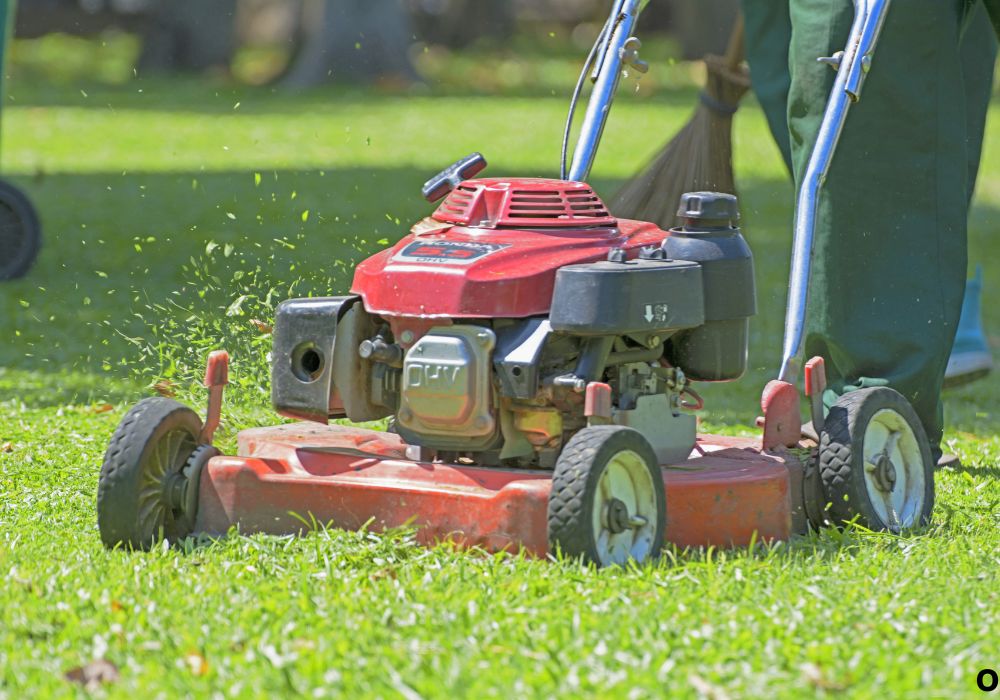
The term CC, short for cubic centimeters, refers to the engine displacement inside a lawn mower. It measures the total volume of the cylinder or cylinders where fuel and air are combined and burned to create power.
In simpler terms, the CC rating shows how much fuel-air mixture the engine can process in one full cycle, which directly influences how powerful and efficient the mower is.
A higher CC typically means the engine can handle more workload, making it better suited for thick, tall, or wet grass.
For example, a 190cc engine will usually produce more torque and cutting strength than a 140cc engine, allowing it to maintain blade speed even under heavy resistance.
However, CC alone doesn’t tell the full story—engine design, compression ratio, and tuning also impact overall performance.
Manufacturers use the CC measurement to help buyers compare engines more accurately across different models. Smaller CC mowers are ideal for compact lawns with smooth terrain, while higher CC engines are designed for large yards or commercial use.
Understanding what does cc mean on a lawn mower allows homeowners to balance cutting power, efficiency, and control—ensuring the right match between engine size and mowing needs.
CC vs Horsepower vs Torque: Understanding the Difference
When shopping for a mower, it’s common to see multiple specifications—CC, horsepower (HP), and torque—used to describe engine performance.
While these terms are related, they measure different aspects of how the mower delivers cutting power. Knowing how they connect helps determine what kind of performance to expect from each machine.
The CC rating defines the engine’s size and displacement, while horsepower measures how much work the engine can do over time. A higher horsepower means the mower can maintain blade speed even when faced with thicker or wetter grass.
Torque, on the other hand, represents the engine’s rotational force at lower speeds—crucial for pushing through dense growth or maintaining consistent cutting power without bogging down.
According to Briggs & Stratton, both horsepower and torque are tested under standardized SAE procedures to ensure fair comparison across engines (briggsandstratton.com). Generally, engines between 125cc and 190cc produce between 3.5 to 6.5 HP, depending on design and efficiency.
Typical CC Ranges by Mower Type and Yard Size
The right CC range for a lawn mower depends on both the mower type and the size of the yard it will maintain. Smaller engines are built for lighter tasks, while larger displacements handle tougher terrain and longer cutting sessions.
Choosing the proper range ensures the mower runs efficiently without wasting fuel or overworking the engine.
For push mowers and compact electric-start models, engine sizes typically range between 125cc and 160cc.
These are perfect for small to medium-sized lawns up to half an acre, especially if the grass is well maintained and the terrain is mostly flat. They provide enough torque for clean cuts without excessive fuel use.
Self-propelled mowers usually fall within the 160cc to 190cc range, offering more strength for thicker grass or gentle slopes. This extra displacement improves traction and keeps blade speed steady even when bagging or mulching.
For larger properties, riding mowers and zero-turn mowers use significantly higher CC ratings—from 344cc to over 700cc—depending on deck size and design. These engines can power wider blades and cover multiple acres efficiently.
Matching the mower’s engine size to the yard’s area and condition ensures optimal cutting performance, fuel economy, and long-term reliability.
How CC Affects Cutting Performance and Efficiency
The CC rating of a lawn mower directly impacts how effectively it handles different mowing conditions. A higher CC engine delivers more torque and maintains consistent blade speed when cutting through thick, tall, or wet grass.
This extra power prevents the mower from bogging down and ensures a cleaner, more even cut across the entire lawn.
Engines with smaller displacements, such as 125cc or 140cc, are efficient for light-duty mowing on flat, well-kept lawns.
However, when grass becomes dense or the ground uneven, these smaller engines can struggle to sustain power.
In contrast, a 170cc to 190cc engine offers better control, faster recovery speed, and higher cutting efficiency—especially for bagging or mulching heavy grass.
Deck width also plays a major role in how displacement affects performance. Larger decks require more power to keep the blades spinning at optimal speed. If the deck size and engine CC are mismatched, the mower may leave uncut patches or consume more fuel.
A properly sized engine provides the right balance between performance and efficiency. Understanding how CC influences cutting power helps homeowners choose a mower that not only finishes the job faster but also maintains long-term reliability and fuel economy.
Choosing the Right CC for Your Lawn
Selecting the right CC engine size depends on lawn size, terrain, and the mowing style you prefer. A well-matched mower engine ensures a cleaner cut, better fuel efficiency, and reduced strain on both the machine and operator.
Too small an engine can cause stalling or uneven cutting, while an oversized engine may waste fuel and add unnecessary weight.
For small lawns under half an acre, a mower between 125cc and 160cc is ideal. These models are lightweight, easy to maneuver, and perfect for regular trimming on even surfaces.
For medium-sized lawns up to two acres, a 160cc to 190cc engine is more practical, offering better torque to handle thicker grass and mild slopes without losing speed.
Homeowners with large properties or dense, uneven grass should consider riding or zero-turn mowers with engines above 350cc. These provide the power needed for wide decks, steep terrain, and long mowing sessions.
Before purchasing, check your mower’s deck width, terrain conditions, and maintenance frequency. The right engine CC ensures smooth performance and reduces long-term wear.
Understanding what does cc mean on a lawn mower empowers you to match your machine perfectly to your lawn’s specific needs.
Myths and Misconceptions About CC Ratings

Many homeowners assume that a higher CC rating automatically means a better or faster lawn mower, but this isn’t always true.
While more cubic centimeters generally indicate more engine displacement and potential power, performance also depends on factors like engine design, torque curve, blade sharpness, and mower deck efficiency.
Simply choosing the largest CC available can lead to overspending and unnecessary fuel use for small lawns.
Another common misconception is that CC directly equals horsepower. In reality, horsepower measures how quickly work is done, while CC only indicates engine size.
Two mowers with the same CC can produce very different horsepower outputs depending on compression ratio, air intake, and tuning.
This is why a 160cc engine from one brand may outperform a 190cc from another if it’s engineered for higher efficiency.
Some also believe that all high-CC mowers perform well on uneven or wet terrain. Without proper torque management and balanced deck airflow, even a large engine can struggle.
Understanding these differences helps homeowners make informed choices based on yard conditions rather than just numbers. The goal isn’t always more power—it’s the right power for your mowing needs.
Maintenance Tips to Keep Any CC Engine Performing Strong
No matter the CC rating, consistent maintenance is what keeps a lawn mower running smoothly season after season. Even a high-powered 190cc engine can lose performance if neglected, while a smaller 140cc engine can perform like new with proper care.
Regular upkeep not only protects the engine but also ensures efficient fuel use and consistent cutting power.
The first priority is oil maintenance. Check and replace engine oil every 25–50 hours of use to prevent buildup and friction damage. Clean or replace the air filter regularly since a clogged filter restricts airflow and reduces combustion efficiency.
Sharpen the blades every few weeks during heavy mowing seasons—dull blades increase resistance, forcing the engine to work harder and consume more fuel.
Deck cleanliness also matters. Grass buildup beneath the deck disrupts airflow and increases load on the engine, reducing torque and blade speed. Finally, use high-quality, ethanol-free fuel when possible, and stabilize leftover gas before storage to prevent carburetor clogs.
By maintaining even a small-displacement mower properly, owners can achieve performance comparable to larger engines. Proper care ensures that whatever the CC size, the mower delivers maximum power, longevity, and clean cutting results year after year.
Future Trends: How Engine CC is Evolving in Lawn Mowers
The future of lawn mower engines is shifting as manufacturers work toward cleaner, smarter, and more efficient power solutions.
While CC ratings remain an important performance measure, technological advances are redefining how displacement relates to power and efficiency.
Modern gas mowers are increasingly built with optimized combustion systems that produce more horsepower per cubic centimeter.
Brands like Honda and Briggs & Stratton now use improved valve designs, electronic fuel injection (EFI), and precision air-fuel mixing to deliver higher torque from smaller engines.
This innovation means a 160cc engine today can outperform older 190cc models, offering the same cutting strength with lower emissions and fuel consumption.
At the same time, battery-powered mowers are transforming how users think about engine size. Instead of cubic centimeters, performance is measured in volts and watt-hours, but the underlying principle remains the same—greater capacity equals greater power.
Manufacturers are even developing hybrid systems that intelligently regulate energy use to match grass density, mimicking how torque behaves in high-CC gas engines.
As the industry trends toward sustainability, future mowers will rely less on raw engine displacement and more on efficiency and intelligent design.
Understanding what does cc mean on a lawn mower will continue to matter, but the definition of power itself is evolving toward smarter, cleaner performance.
Conclusion
Understanding what does cc mean on a lawn mower is the key to choosing a machine that fits your yard’s size, terrain, and mowing style.
The CC rating represents the engine’s displacement—essentially how much air and fuel the motor can process in one cycle—and directly affects cutting power, torque, and efficiency.
Selecting the right CC ensures smoother performance, cleaner cuts, and less strain on the engine.
For small or flat lawns, a compact 125–160cc mower provides plenty of precision and fuel savings. Medium-sized or hilly lawns benefit from engines around 160–190cc, while large properties or commercial settings call for 350cc or more.
Beyond displacement, design, torque output, and regular maintenance also play vital roles in determining how efficiently your mower performs.
With the rise of improved engine technology and eco-friendly electric models, understanding CC helps homeowners make informed decisions about both traditional and modern mower types. The goal isn’t just owning a more powerful machine—it’s owning the right one.

I’m Maya L. Greenwood, a lifelong plant lover who believes anyone can grow something beautiful with the right guidance. After years of testing soil mixes, pruning methods, irrigation tricks, and pest-safe solutions, I started EasyGardenTips.com to turn hard-won lessons into step-by-step advice. From seed starting and container gardens to composting and seasonal checklists, my goal is to make gardening simple, sustainable, and fun.