Top Rated Heart Propagation Station: Top Picks and Buying Guide
As an Amazon Associate, I earn from qualifying purchases. Learn more
Choosing a heart propagation station can be harder than it looks. You need to balance attractive decor with stable construction, an opening that fits your cuttings, easy water changes, and enough visibility to monitor roots without disturbing them.
My first choice is Joyathome 2pack Plant Propagation Station. The two-piece format also gives plant lovers room to root multiple cuttings while keeping the setup compact enough for a desk, shelf, or windowsill.
My second choice is Mkono Propagation Stations. Mkono Propagation Stations, 2 Heart Shaped Glass Plant Vases with Wood Stand is the best alternative for shoppers who want a clearly sized, two-vase arrangement. Its 1.3-inch openings and stable natural-wood stand make it especially appealing to beginners who want a decorative display that can also accommodate different plant cuttings, flowers, or water-rooted stems.
This comparison ranks five options by design, material choices, capacity, versatility, available customer-feedback evidence, and practical ownership considerations. The buying guidance also explains how to choose a suitable opening, clean the vessels, prevent common propagation problems, and match each style to a particular space or gifting situation.
5 Best Heart Propagation Station
I selected these products by comparing their relevance to heart-shaped propagation, the usefulness and clarity of their supplied details, customer-feedback evidence when available, and the practical differences between glass, colored glass, and plastic designs. Brand variety was also considered where a strong alternative offered a meaningfully different capacity, setup, or ownership experience.
| # | Image | Product | Price on Amazon |
|---|---|---|---|
| 1 |  |
Joyathome 2pack Plant Propagation Station | Check Price |
| 2 |  |
Mkono Propagation Stations | Check Price |
| 3 |  |
Plant Terrarium Propagation Stations Hydroponics | Check Price |
| 4 |  |
Baderke Amazon.com: 24 Pack 3.74” Heart Plastic Plant Propagation Stations | Check Price |
| 5 |  |
MTsigns Plant Terrarium Propagation Stations Hydroponics | Check Price |
Joyathome 2pack Plant Propagation Station
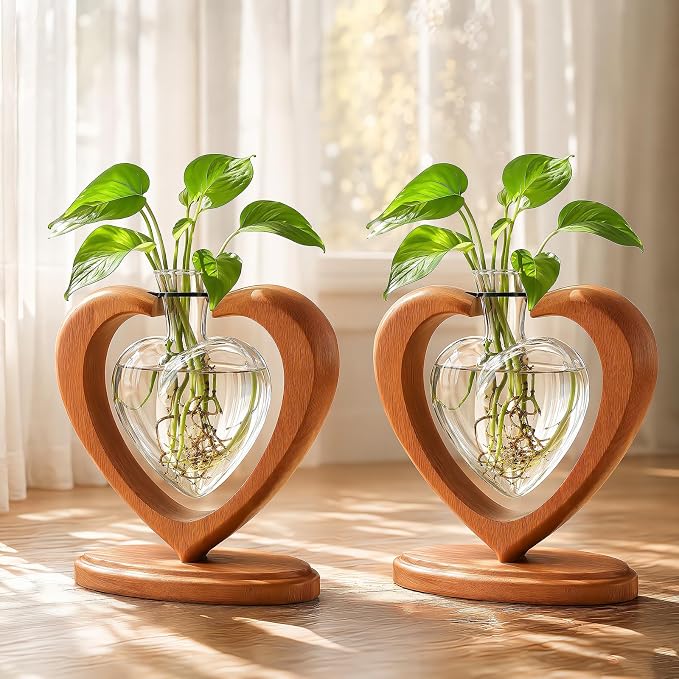
Joyathome earns the top position by pairing a romantic heart-shaped wooden frame with a matching clear heart-shaped glass vase in a two-pack. That coordinated design feels more intentional than a basic bulb vase, while the second station lets you propagate separate cuttings or create a balanced display on a desk, console, or windowsill.
The food-grade high-borosilicate glass is described as heat-resistant, shatter-proof, and highly transparent. Clear glass is particularly useful for beginners because roots, water levels, and signs of cloudiness remain easy to see. The removable vase should also make water changes and plant adjustments less awkward than working around a permanently fixed container.
Natural solid wood adds warmth and helps the display fit modern, minimalist, Nordic, boho, rustic, and farmhouse rooms. The listed plant compatibility is broad, including pothos, ivy, mint, succulents, spider plants, and herbs. However, a heart-shaped vessel is still better for small cuttings than for a mature plant with a large root system, and the glass should be handled carefully even with the stated durability.
Pros
- Two coordinated heart-shaped stations for separate cuttings or paired decor.
- Highly transparent glass makes root and water monitoring easier.
- Removable vase supports simpler water changes and plant handling.
- Natural wood and polished construction suit several decor styles.
Cons
- Glass still requires careful handling during cleaning and relocation.
- Small vessels are intended for cuttings rather than established plants.
My Opinion
This is the strongest all-around choice for someone who wants propagation to look like finished decor rather than a temporary jar on a counter. Its two-piece format, visible roots, and gift-friendly heart design provide more everyday flexibility than the single-station alternatives.
Mkono Propagation Stations
Mkono is a close second because it provides two heat-resistant glass heart vases on a sturdy natural-wood stand, with useful dimensions clearly supplied for planning a display. The stand measures 7.8 inches high by 3.9 inches long and 3 inches wide, while each vase is 4.1 inches high and 3.1 inches wide. That makes it easier to judge whether the set will fit a particular shelf or desktop before buying.
Each vase has a 1.3-inch opening, a practical middle ground for many small stems and cuttings. The opening is wide enough to make placement less frustrating than a narrow-neck bottle, but it still provides some support for a cutting as it roots. Beginners can also use the containers for fresh flowers, artificial stems, colored water, or decorative pebbles.
The arrangement suits offices, kitchens, living rooms, and windowsills where a compact vertical display is useful. Its main limitation is that the two-vase stand is more of a unified centerpiece than a flexible collection of separate stations. If you want to spread vessels throughout several rooms, the Joyathome two-pack may offer more placement freedom.
Pros
- Two glass vases create a coordinated, balanced display.
- Listed dimensions help with shelf and desktop planning.
- 1.3-inch openings support many small cuttings and stems.
- Can also hold flowers, colored water, pebbles, or artificial plants.
Cons
- The joined stand may be less flexible for distributing plants around a home.
- Small vessels are not intended for substantial root systems.
My Opinion
Mkono is a smart choice for a buyer who prioritizes predictable sizing and a tidy two-vase centerpiece. It ranks just behind Joyathome because the design is less flexible for separate placement, but its clearly stated dimensions and multi-use vessels make it an appealing second choice.
Plant Terrarium Propagation Stations Hydroponics
This colored-glass set stands out when visual style matters as much as propagation. The vases are colored using food-grade natural minerals, and the supplied information says the color remains transparent, clear, and resistant to fading over long-term use. That gives the display more personality than plain clear glass while still allowing a view of roots and water.
The wooden stand measures 5.1 inches high, 10.9 inches wide, and 2.2 inches deep, so it creates a wider horizontal presentation than the first two options. Each vase is 4.1 inches high and 3.1 inches wide with a 1.4-inch opening. The wider opening can be helpful when arranging several slim stems or removing a cutting without tugging on new roots.
High-boron-silicon glass and a sturdy natural-wood frame give the set an attractive balance of delicacy and support. It works well as a desk accent, home garden decoration, or gift for a plant enthusiast. The important ownership caution is transportation: the supplied information specifically notes that glass may be damaged in transit, so buyers should inspect the package promptly and contact the seller if a vessel arrives broken.
Pros
- Naturally colored glass offers a more distinctive decorative appearance.
- Transparent construction still supports root and water observation.
- 1.4-inch openings are useful for arranging and removing cuttings.
- Wide stand creates a noticeable centerpiece for a desk or shelf.
Cons
- Its wider footprint may not suit narrow shelves or small windowsills.
- Glass remains vulnerable to shipping damage and careful handling is necessary.
My Opinion
This option is best for a decorator or gift shopper who wants colored glass rather than the simplest clear-vase look. It is less space-efficient than the compact designs, but the wider stand and mineral-colored vessels make it a compelling choice for a visible centerpiece.
Baderke Amazon.com: 24 Pack 3.74” Heart Plastic Plant Propagation Stations
Baderke takes a completely different approach from the decorative glass sets. Instead of one or two display vessels, it supplies 24 clear PET hard-plastic bottles, 24 perforated wooden plugs, 24 thank-you tags, and 16.4 feet of hemp rope. That quantity is valuable for classrooms, plant swaps, party favors, employee gifts, or anyone who propagates many cuttings at once.
Each bottle holds about 5 ounces and measures approximately 3.74 inches high without the wooden plug and 3.15 inches in diameter. The perforated plug helps hold a stem in place while reducing excessive evaporation. Clear plastic also makes water levels and root development visible, and the bottles can be reused after washing with water.
Plastic makes this set easier to transport and less stressful around children, busy workspaces, or event tables than glass. It is not dishwasher-safe, however, and the supplied information notes that scratches may occur. The presentation is also more craft-oriented than furniture-like: the tags and hemp rope are useful for gifting, but the collection does not provide the polished wooden display stand found on the higher-ranked options.
Pros
- Twenty-four stations support large propagation projects or group gifting.
- Plastic is less breakable than glass during transport and everyday handling.
- Perforated plugs help secure stems and limit excessive evaporation.
- Tags and hemp rope add useful gift-packaging flexibility.
Cons
- Must be washed by hand rather than placed in a dishwasher.
- Plastic may scratch and offers a less refined display than glass and wood.
- No wooden display stand is included for a finished tabletop arrangement.
My Opinion
Baderke is the practical volume pick. It is the right match for propagation projects, workshops, favors, and budget-conscious gifting, but shoppers seeking a single elegant centerpiece should choose a glass-and-wood set instead.
MTsigns Plant Terrarium Propagation Stations Hydroponics
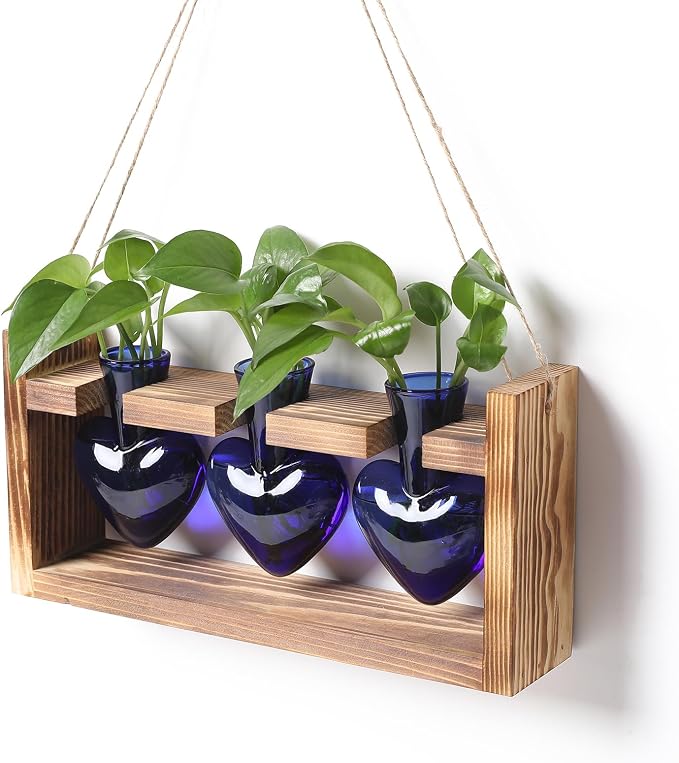
MTsigns offers the same general style of wide wooden display and colored heart-shaped glass that appeals to buyers who want propagation to function as home decoration. The colored glass is made with food-grade natural minerals and is described as transparent and fade-resistant, so the display can retain its decorative character while still showing water and developing roots.
The stand measures 5.1 inches high, 10.9 inches wide, and 2.2 inches deep. Each vase measures 4.1 inches high by 3.1 inches wide, with a 1.4-inch opening. This makes it a relatively broad, low-profile centerpiece rather than a tall, narrow station. The openings should be accommodating for small cuttings, flowers, and similar arrangements, but the vessels remain limited for plants that quickly develop dense roots.
MTsigns has a much larger supplied customer-feedback base than the other listed options, with a 4.7 rating from 534 customers. That is useful context, although feedback volume alone cannot guarantee that every shipment or individual experience will be identical. Buyers should also remember the stated shipping limitation: the glass is fragile, so checking each vase on arrival and reporting damage promptly is important.
Pros
- Large customer-feedback base provides stronger available purchase context.
- Colored, transparent glass combines decoration with root visibility.
- Wide wooden stand works well as a horizontal centerpiece.
- 1.4-inch openings suit many small cuttings and flower stems.
Cons
- Wide footprint may be inconvenient on narrow furniture.
- Glass requires careful transport, cleaning, and placement.
- Its format is less adaptable than a collection of separate plastic vessels.
My Opinion
MTsigns is a good fit for shoppers who want an established decorative style and value the larger available customer-feedback sample. It ranks fifth because the supplied details closely overlap with the colored-glass alternative above, while its wide footprint and glass-shipping limitation narrow the audience somewhat.
How I Selected These Heart-Shaped Propagation Stations
The ranking focuses on how well each product serves the two jobs buyers usually expect: rooting plant cuttings and adding a pleasant decorative accent. I gave extra weight to transparent vessels, practical openings, stable stands or plugs, and clear information about size and care. I also separated products by intended use instead of treating a 24-pack of plastic jars as directly interchangeable with a two-vase wooden centerpiece.
Customer-feedback evidence was considered where it was supplied, but it was not treated as the only measure of quality. For example, MTsigns has a much larger feedback sample than the other options, while the Baderke listing has no supplied rating or count. That difference is worth noting, but materials, capacity, dimensions, and use case still determine which product makes sense for an individual buyer.
Choose the product format first: a decorative centerpiece, several small individual vessels, or a high-quantity propagation and gifting kit.
The final order also reflects ownership friction. Removable glass, a practical opening, washable materials, safe placement, and an honest understanding of shipping fragility matter more over time than a heart shape alone.
How to Choose a Heart-Shaped Propagation Station
The best choice depends on whether you want a small display for a few cuttings or a larger supply for repeated propagation. Before buying, compare the container material, opening size, footprint, number of vessels, and how easily the station can be cleaned or moved.
- Pick glass for display: Clear or colored glass looks more finished and makes root growth easy to observe.
- Pick plastic for quantity: A large pack is better for classes, plant swaps, favors, and frequent propagation.
- Check the opening: Openings around 1.3 to 1.4 inches can be easier for placing and removing small stems.
- Measure the footprint: Wide stands need more shelf depth and side-to-side clearance than individual bottles.
- Match capacity to the cutting: These small vessels are most appropriate for young cuttings, not mature plants with crowded roots.
Glass, Colored Glass, or Plastic?
Glass provides a cleaner decorative appearance and a clear view of root growth. Colored glass adds visual interest while retaining transparency, but it still needs careful handling and inspection after delivery. Plastic is the more forgiving material for busy areas and repeated transport, although it can scratch and may look less like a finished centerpiece.
How Many Vessels Do You Need?
A two-vase station is enough for experimenting with a few cuttings or creating a balanced arrangement. A 24-pack makes more sense when you expect losses, want to propagate several plant types simultaneously, or plan to give individual stations to other people. Buying more vessels than you can maintain may create unnecessary water-changing work, so quantity should follow your actual propagation routine.
Setting Up Your Heart Propagation Station
Start with a healthy cutting and remove leaves that would sit below the waterline. Submerged foliage can decay and cloud the water, while a clean stem gives the cutting a better starting point.
- Wash the vessel with mild soap and rinse it thoroughly.
- Fill it with enough clean water to cover the appropriate part of the stem without submerging unnecessary leaves.
- Place the cutting so it remains supported and does not press hard against the glass or wooden plug.
- Position the station in bright, indirect light rather than harsh direct sun.
- Label different cuttings if you are propagating several plants at once.
For a wooden-stand model, make sure the vase is fully seated before moving the station. For a plug-style plastic bottle, guide the stem through the hole without forcing a thick or delicate cutting into an opening that does not fit.
Using These Stations for Different Plants
Pothos, ivy, mint, spider plants, herbs, and many other easy-to-root cuttings are sensible starting points based on the supplied compatibility information. Succulent cuttings can require a different approach depending on the variety, so avoid assuming that every succulent should remain in standing water for an extended period.
Use one vessel for a single cutting when the stem is delicate or the roots need unobstructed space. Several slim cuttings can share a wider heart vase if they do not crowd one another. A crowded container makes it harder to see individual root development and can complicate removal when one cutting is ready for soil.
Water Changes and Basic Maintenance
Check the water level and clarity regularly rather than waiting for the vessel to become empty. Add clean water when needed, and replace the water when it looks cloudy, develops an odor, or contains visible debris. Rooted cuttings still benefit from air and space, so avoid filling the container to the brim.
When changing water, hold the cutting gently near the stem and set it aside on a clean surface. Rinse the vessel thoroughly before refilling it. Glass vases can be washed carefully by hand; the Baderke plastic bottles are specifically described as washable with water but not suitable for a dishwasher.
Keeping Wood in Good Condition
Wooden stands should not sit in pooled water. Wipe drips promptly and keep the frame on a dry, level surface. If a vase leaks or cracks, remove it from the stand instead of continuing to use it, since water can affect both the surrounding furniture and the wood.
Placement, Light, and Stability
A windowsill can provide useful brightness, but direct hot sun may warm water quickly and stress tender cuttings. A bright desk, kitchen shelf, or office surface with indirect light is often easier to manage. Keep the station away from edges, pets, and high-traffic areas where a glass vessel could be knocked over.
Pay special attention to wide stands such as the colored-glass designs. Their horizontal footprint can look attractive on a console or deep shelf, but it may overhang a narrow desk. Measure the available surface before ordering, including enough room to lift the vessels out for cleaning.
Common Mistakes to Avoid
Most problems come from treating a small decorative vessel like a complete planter or from overlooking basic water hygiene. A simple routine prevents many avoidable issues.
- Do not submerge leaves that should remain above the waterline.
- Do not place a newly filled glass vessel where an accidental bump could send it over an edge.
- Do not crowd too many stems into a narrow opening or small container.
- Do not leave cloudy or foul-smelling water unchanged.
- Do not put the Baderke plastic bottles in a dishwasher.
- Do not move a glass station by gripping only the vase neck or rim.
- Do not assume a small root system should remain in water forever once the plant is ready for soil.
Clear water, clean tools, indirect light, and a stable surface are more important to successful propagation than decorative appearance alone.
Cleaning and Storage Tips
Clean vessels between batches so old roots, algae, and plant debris do not carry over to a new cutting. Empty the container, rinse away loose material, wash it gently, and rinse again until no soap remains. Allow pieces to dry fully before long-term storage.
Store glass vases with padding between them and avoid stacking heavy items on top. Plastic bottles are easier to store in quantity, but keeping them away from sharp objects can help reduce scratches. Wooden plugs and thank-you tags should be kept dry, especially if you plan to reuse the bottles for future gifts.
When to Move a Cutting to Soil
A cutting can usually be considered for potting once it has developed a healthy-looking root system rather than just a tiny root nub. The exact timing depends on the plant, but the practical signal is that the roots appear established enough to handle a transition without being easily damaged.
Remove the cutting carefully so new roots do not snag on the opening or plug. Use a suitable potting medium, keep it appropriately moist during the transition, and expect some adjustment as the plant moves from water to soil. The propagation station is a rooting environment, not necessarily the plant’s permanent home.
FAQS About Heart Propagation Station
What plants can grow in a heart propagation station?
Small cuttings from pothos, ivy, mint, spider plants, herbs, and similar easy-to-root indoor plants are suitable starting points. The supplied product information also mentions succulents, but care requirements vary by variety, so avoid treating every plant identically.
Are heart-shaped propagation stations suitable for beginners?
Yes. Transparent vessels make water levels and root growth easy to monitor, and the small size encourages a simple routine. Beginners should focus on clean water, bright indirect light, and keeping unnecessary leaves above the waterline.
Is a glass or plastic heart propagation station better?
Glass is generally the better fit for a polished centerpiece and clear root visibility. Plastic is more practical for large quantities, gifting, classrooms, or locations where breakage is a concern. The right material depends on whether appearance or convenience is the main priority.
Can flowers be placed in these heart-shaped vases?
Yes. The supplied information for the Mkono set specifically identifies fresh flowers, artificial flowers, and water-rooted plants as possible uses. Keep arrangements appropriately small so the vessel remains stable and easy to clean.
How often should the water be changed?
Check it regularly and change it whenever it becomes cloudy, smells unpleasant, or contains debris. A clean container and fresh water provide a better environment than allowing stagnant water to remain until the vessel is empty.
Can a heart propagation station hold a mature plant?
These designs are primarily intended for cuttings and small arrangements. Once roots become dense or the plant outgrows the vessel, move it to a properly sized container rather than treating the propagation vase as permanent housing.
Final Thoughts
For the best balance of appearance, flexibility, and beginner-friendly use, choose the Joyathome Joyathome 2pack Plant Propagation Station. If you prefer a clearly sized two-vase centerpiece with versatile openings, the Mkono Propagation Stations, 2 Heart Shaped Glass Plant Vases with Wood Stand is the strongest alternative. Either is a thoughtful way to make a heart propagation station part of everyday plant care without sacrificing useful visibility.

I’m Maya L. Greenwood, a lifelong plant lover who believes anyone can grow something beautiful with the right guidance. After years of testing soil mixes, pruning methods, irrigation tricks, and pest-safe solutions, I started EasyGardenTips.com to turn hard-won lessons into step-by-step advice. From seed starting and container gardens to composting and seasonal checklists, my goal is to make gardening simple, sustainable, and fun.