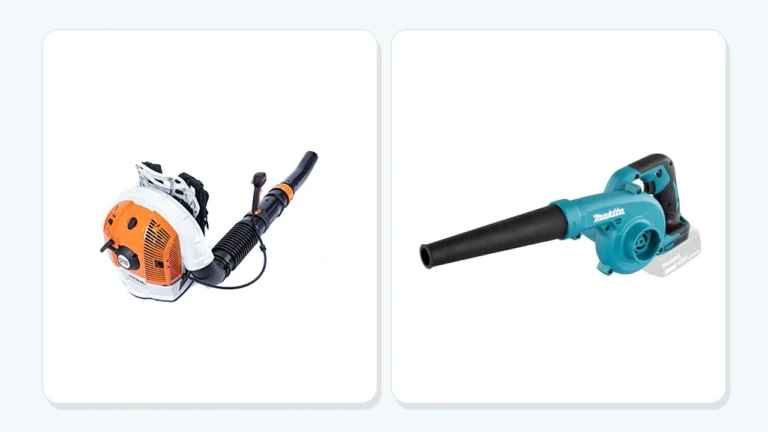
Dewalt Vs Makita Leaf Blower: Detailed Comparison and Verdict
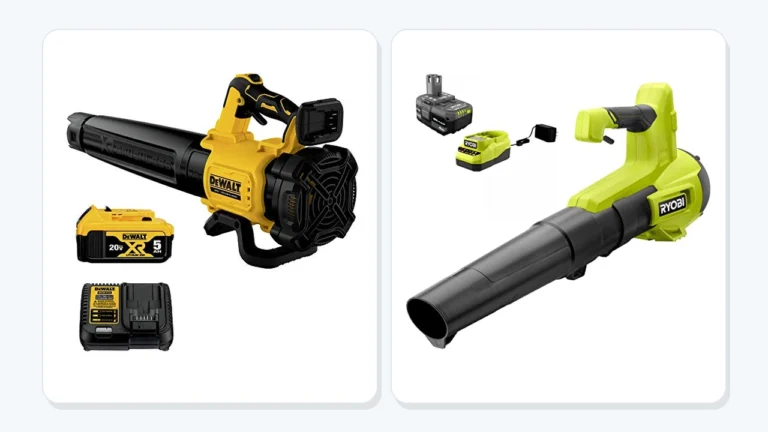
If you’re weighing a DEWALT vs. Makita leaf blower, the short answer is conditional: choose the DEWALT DCBL722P1 if you want published airflow figures and a speed lock; consider the Makita DUB185Z if its three airflow settings and vacuum function suit your cleanup routine.
The DEWALT is rated for up to 450 CFM and up to 125 mph with its concentrator, and its stated operating noise is 62 dB(A). The Makita uses a trigger and three airflow settings, but there’s no matching CFM or MPH figure here for a direct output comparison.
That makes the DEWALT the easier choice to assess for moving yard debris by airflow numbers. The Makita may fit someone who values adjustable settings, a compact handheld design, or the option to use a dust bag for vacuuming.
There’s a budget detail worth noticing: the DUB185Z is a bare tool, with its battery and charger not included. I’ll compare the two blowers’ airflow controls, comfort, noise information, and day-to-day trade-offs so you can choose for your yard rather than on brand alone.
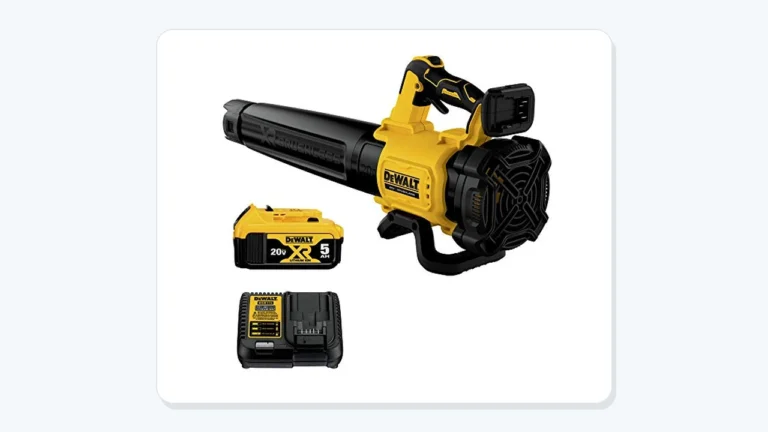
| DEWALT 20V MAX* XR Leaf Blower, 125-MPH, 450-CFM (DCBL722P1) | DUB185Z Cordless Handheld Leaf Blower Powered by 18V LXT Li-Ion |
 |
 |
Dewalt Vs Makita Leaf Blower Detailed Comparison
These are both cordless handheld leaf blowers, but they make different things easy to judge. The DEWALT 20V MAX* XR Leaf Blower, 125-MPH, 450-CFM (DCBL722P1) puts numbers on its maximum airflow: up to 450 CFM, plus up to 125 mph when using the concentrator. Those figures give you a useful reference point when deciding whether its stated output suits your cleanup.
The Makita DUB185Z takes a more settings-focused approach. Its trigger controls speed, and it also has three air-volume settings—Low, Medium, and High. Those controls let you choose among set airflow levels, but they don’t establish how its maximum airflow compares with the DEWALT’s stated figures.
Think about a driveway with dry leaves scattered along the edges. With the DEWALT, the variable trigger and speed lock give you ways to adjust and hold the airflow while working through a section. With the Makita, you can select one of its three volume settings and modulate with the trigger. Which arrangement feels more useful depends on whether you prefer a speed lock or preset levels.
The Makita has another feature the DEWALT comparison does not establish: it can be used as a vacuum with a dust bag, and its specifications note increased air volume in that configuration. That could be handy for certain localized cleanup jobs. It isn’t, by itself, proof that it will replace a dedicated yard vacuum or suit every kind of debris.
There’s also a practical ownership difference to keep in view. The DUB185Z is sold as a bare tool, so you’ll need a compatible battery and charger if you don’t already have them. Don’t assume the same package contents for the DEWALT from its name alone; check what comes with the exact version you plan to buy before comparing the total cost.
Key Differences That Matter
Airflow figures versus selectable settings
The DEWALT gives you two maximum airflow figures to consider: up to 450 CFM for air volume and up to 125 mph with the concentrator for air speed. CFM describes the volume of air moved; the mph figure describes its speed through the concentrator. Together, they help describe what the blower is designed to deliver, but they don’t tell you exactly how quickly it will clear a particular yard.
The Makita’s stated control options are different: Low, Medium, and High, plus a variable-speed trigger. There’s no comparable CFM or MPH number established for it here. So it wouldn’t be fair to say the DEWALT is definitively stronger or that the Makita is weaker just by comparing a DEWALT rating with Makita’s settings.
For a buyer who wants an output reference before choosing, the DEWALT has the advantage in measurable detail. If you’re more interested in having several airflow choices than in comparing maximum numbers, the Makita’s three settings may be easier to weigh. Neither detail guarantees the best result for every task: damp or matted material, the size of the area, and your technique all affect cleanup.
How you manage power while working
Both blowers offer trigger-based control. On the DEWALT, the trigger varies the power, and a speed lock lets you keep a selected level without continuously holding the trigger at that position. That can be helpful when you’re moving along a long edge or working through a steady patch of leaves, because it gives you another way to manage your hand while you guide the blower.
The Makita combines its variable trigger with three air-volume settings. That gives you defined Low, Medium, and High choices alongside trigger control. If you prefer working from preset levels, that’s a meaningful difference; if you want the specific speed-lock feature, the DEWALT is the one with that stated control.
In either case, match the airflow to the job instead of starting at full power by habit. A lower setting may be easier to control around a tight corner or a small pile, while a broader area may call for more airflow. The exact setting that works best depends on the material and layout, not just the tool’s brand.
Size, handling, and operating noise
Both are described as lightweight handheld designs, with an emphasis on ergonomic handling. The DEWALT’s design is intended to support arm movement and control; the Makita is described as compact and lightweight, with an ergonomic soft grip. Those descriptions point to comfort as a priority for both, but there are no verified weight figures here to establish which one weighs less.
The Makita has published dimensions of 11 by 6.9 by 8.5 inches, with the nozzle installed measuring 20.35 by 6.14 by 8.27 inches. Those measurements give you a more concrete idea of its size for storage or handling. Don’t compare them with an unstated DEWALT dimension or treat length alone as a measure of comfort.
The DEWALT’s stated operating noise is 62 dB(A), which may matter if you’re sensitive to noise or use a blower near noise-sensitive properties. No comparable Makita noise figure is established here, so there’s no sound-based winner to declare. If noise is a deciding factor, look for a comparable measurement and consider your local rules before buying.
Extra function and the cost of getting started
The Makita’s vacuum function sets it apart. It can be used with a dust bag, and its specifications note increased air volume in vacuum use. That may appeal if you want a blower with another cleanup mode, but check whether the vacuum setup matches the debris you plan to collect. The feature alone doesn’t establish the bag’s capacity or which materials it handles well.
Its bare-tool status matters just as much as that extra function for some buyers. The battery and charger are not included, so someone starting without a compatible 18V LXT battery and charger should factor those into the purchase. If you already own compatible equipment, the added cost may be less of a concern.
There’s no verified battery-package comparison here for the DEWALT, so don’t assume its total starting cost is lower. Compare the complete setup you need for each blower, including compatible battery and charger costs where applicable. A lower tool price can stop looking like a deal if you still need the essentials to use it.
Performance, Features, and Everyday Use
For everyday blowing, the main choice is how you want to direct and regulate the air. The DEWALT’s concentrator is tied to its 125-mph figure, while its variable trigger and speed lock support adjustable operation. A concentrator can help direct airflow into a narrower path; when working near a garden bed, parked car, or doorway, start gently and aim carefully rather than sending debris somewhere you’ll have to clean again.
The Makita’s Low, Medium, and High settings give you a straightforward way to choose among its three air-volume levels. The variable trigger adds control, so the settings aren’t the only detail to consider. If you regularly switch between small, precise jobs and broader clearing, think about which control style you’ll find simplest to use without stopping to adjust your approach.
Comfort depends on more than a product description. Grip, balance, and how long you work at a stretch all matter, and neither product has a verified weight figure here for a strict weight comparison. If possible, handle the model before committing. Otherwise, consider its shape and controls alongside your usual job: clearing a small path is different from working across a large area.
Noise deserves a realistic look, too. The DEWALT’s 62 dB(A) figure is useful context, especially for a noise-sensitive setting, but it shouldn’t be treated as a guarantee that the sound will feel unobtrusive in every yard. There’s no matching Makita figure for a fair side-by-side noise judgment. If you’ll work near neighbors, check local restrictions and use suitable hearing protection based on your situation.
The Makita’s vacuum mode could make sense for specific, contained cleanup. But don’t buy it expecting a complete substitute for a dedicated yard vacuum without checking that the dust bag and intended use fit your needs. The DEWALT’s described features focus on blowing and airflow control, so choose it for that job rather than assuming it has the Makita’s vacuum function.
Before purchase, check battery compatibility and what is included with the exact tool package. For the Makita, the battery and charger are not included. For either model, make sure you have the appropriate battery setup before planning a cleanup; a cordless tool isn’t ready to work if the required power equipment is missing.
Pros and Cons
DEWALT 20V MAX* XR Leaf Blower, 125-MPH, 450-CFM (DCBL722P1)
Pros
- ✓Published airflow ratings: Up to 450 CFM and 125 mph with concentrator offer useful output context.
- ✓Speed lock: Helps maintain a chosen level during steady clearing.
- ✓Noise figure: Its stated 62 dB(A) rating helps noise-conscious buyers compare options.
Cons
- –No stated vacuum function: Buyers wanting a blower-vacuum option should consider the Makita.
- –No verified weight figure here: Buyers comparing weight closely should confirm it before choosing.
DUB185Z Cordless Handheld Leaf Blower Powered by 18V LXT Li-Ion
Pros
- ✓Three air-volume settings: Low, Medium, and High give you defined airflow choices.
- ✓Vacuum option: Can be used with a dust bag for another cleanup mode.
- ✓Compact design: Its stated dimensions help with storage and fit planning.
Cons
- –Bare tool only: Battery and charger are extra if you don’t own compatible ones.
- –No comparable airflow rating established: Buyers seeking CFM or MPH figures can’t make a direct output comparison.
Which One Should You Buy?
Choose the DEWALT DCBL722P1 if airflow ratings matter to your decision and you want a speed lock alongside variable trigger control. Its up-to-450-CFM figure and up-to-125-mph figure with concentrator give you concrete output information to weigh. The 62 dB(A) noise figure is another useful point if operating noise is part of your choice, though it doesn’t make a direct comparison with the Makita possible.
Who Should Skip This: Skip the DEWALT if a vacuum function is a must-have, or if you’ll only buy after seeing a verified weight comparison that isn’t available here. Don’t pay extra for airflow figures if they don’t help you choose for the small, occasional cleanup you actually do.
The Makita DUB185Z is worth considering if you want three air-volume settings, a compact handheld form, or the option to vacuum with a dust bag. It may be a comfortable match for someone who prefers preset airflow levels and has compatible 18V LXT battery equipment already. Its listed dimensions can also help if storage space is tight.
Who Should Skip This: Skip the Makita if you need a published CFM or MPH figure to judge output, or if you expect the purchase to include a battery and charger. The bare-tool package can change the real cost for someone starting from scratch, and its vacuum feature shouldn’t be treated as a guarantee of suitability for every cleanup job.
If you’re unsure, write down the jobs you do most: open-area leaf clearing, precise work around landscaping, or small cleanup that might benefit from vacuuming. Then check the complete battery setup and any missing specifications that matter to you. That small bit of homework is more useful than treating either brand as the automatic winner.
FAQS About Dewalt Vs Makita Leaf Blower
Which blower has higher airflow, the DEWALT or the Makita?
The DEWALT has stated figures of up to 450 CFM and up to 125 mph with the concentrator. There’s no matching CFM or MPH figure established here for the Makita, so those numbers don’t prove a direct performance ranking.
Does the DEWALT or Makita leaf blower have more speed settings?
The Makita has three air-volume settings—Low, Medium, and High—and a variable-speed trigger. The DEWALT has a variable trigger and speed lock; a three-setting control is not among its verified features.
Can the Makita DUB185Z be used as a vacuum?
Yes. It can be used as a vacuum with a dust bag. Check that this setup fits the debris and cleanup you have in mind rather than assuming it replaces a dedicated yard vacuum.
Does the Makita DUB185Z include a battery and charger?
No. It is a bare tool, so its battery and charger are not included. Confirm you have compatible 18V LXT equipment or include those items in your budget.
Which blower is better for a noise-sensitive property?
The DEWALT has a stated operating-noise figure of 62 dB(A), which gives you a reference point. There’s no comparable Makita figure here, so you can’t make a fair noise-level ranking from these specifications alone.
Final Verdict: Which One Wins?
The DEWALT DCBL722P1 wins for buyers who want published airflow numbers, variable trigger control with a speed lock, and a stated 62 dB(A) noise figure. Those details make it the more straightforward pick when you’re choosing around measurable airflow and noise information.
The Makita DUB185Z wins for buyers who value its three airflow settings, compact design, or vacuum function with a dust bag—and who are prepared for a bare-tool purchase. Neither blower is the universal choice: match the controls and extra function to your regular cleanup, and check the battery setup before spending.

I’m Maya L. Greenwood, a lifelong plant lover who believes anyone can grow something beautiful with the right guidance. After years of testing soil mixes, pruning methods, irrigation tricks, and pest-safe solutions, I started EasyGardenTips.com to turn hard-won lessons into step-by-step advice. From seed starting and container gardens to composting and seasonal checklists, my goal is to make gardening simple, sustainable, and fun.