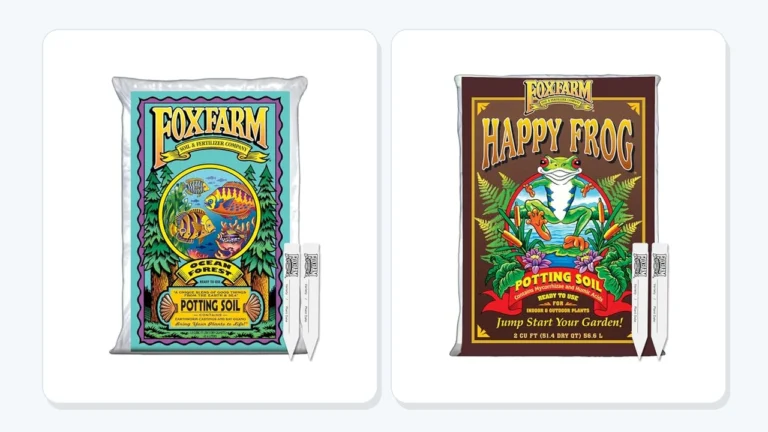
Foxfarm Happy Frog Vs Miracle Gro Potting Soil: Detailed Comparison
For foxfarm happy frog vs miracle gro potting soil, the short answer is that Happy Frog is the better fit if you want an amended blend described for indoor and outdoor containers, while Miracle-Gro makes a straightforward choice for outdoor pots with a stated feeding window of up to six months.
The biggest difference is what the listings tell you about the mix. Happy Frog lists peat moss, perlite, aged forest products, fertilizer, castings, and beneficial microbes; Miracle-Gro emphasizes outdoor container use and feeding, but its supplied listing doesn’t identify the mix’s ingredients.
There’s also a notable volume difference: Happy Frog comes as one 2-cubic-foot bag, while Miracle-Gro comes as two 16-quart bags. The first is more total volume by standard US volume conversion; the smaller bags may suit a modest planting day better.
Below, I’ll compare their listed ingredients, feeding information, intended settings, and pack sizes, then spell out who each one suits—and what to check before buying.
| Ready-to-Use Amended Container Blend | Miracle-Gro Potting Mix 16 Qt. 2-Pack |
 |
 |
Foxfarm Happy Frog Vs Miracle Gro Potting Soil Detailed Comparison
These products serve a similar basic purpose: filling containers for plants. But they give buyers different kinds of information to work with. Ready-to-Use Amended Container Blend, the Happy Frog listing, describes the soil’s components and biological additions. Miracle-Gro Potting Mix 16 Qt. 2-Pack puts more emphasis on outdoor container plants, its claimed feeding period, and how to fill a pot.
That distinction matters if you’re choosing for a particular planting setup. Say you’re potting up indoor houseplants alongside outdoor flowers. Happy Frog is explicitly described for both indoor and outdoor containers, so its stated use matches that plan. Miracle-Gro’s supplied listing is specifically framed around outdoor containers; don’t assume it’s the better match for indoor pots without checking the product label.
What’s in the listed blend?
Happy Frog’s listed ingredients include 50–60% aged forest products, sphagnum peat moss, perlite, and fertilizer. The listing also names earthworm castings, bat guano, oyster shell, and dolomite lime as fertilizer sources, and describes soil microbes and mycorrhizal fungi as part of the blend.
Those details give you a clearer picture of the mix than the supplied Miracle-Gro listing does. The latter doesn’t specify its ingredients or identify particular microbes or soil amendments. That’s a gap in the available product information, not proof that Miracle-Gro lacks any particular component. If a specific ingredient matters to you, check the current package details before ordering.
How much do you get?
Happy Frog comes in one 2-cubic-foot bag. Miracle-Gro comes in two 16-quart bags, for 32 quarts total. Using standard US volume conversion, 2 cubic feet is about 60 quarts, so the Happy Frog listing represents more total mix. Actual fill in a pot depends on its dimensions and the space taken up by the plant’s root ball.
Miracle-Gro also gives a useful container reference: each 16-quart bag is listed as filling one 12-inch container, with the amount varying according to root-ball size. Happy Frog’s listing doesn’t give a comparable pot count. If you have a few large containers to fill, the larger stated volume may be convenient; for a small project, two separate bags may be easier to portion and store.
Feeding and intended use
Miracle-Gro says its mix feeds potted plants for up to six months, and lists outdoor flowers, vegetables, herbs, shrubs, annuals, and perennials as uses. Its listing also makes a growth comparison against unfed plants. That is a manufacturer product claim, not a verified head-to-head result against Happy Frog, so it shouldn’t be read as proof that it will outperform the other mix in your garden.
Happy Frog’s listing describes fertilizer in the blend and lists several amendment sources, but the supplied information doesn’t state a feeding duration. If you want a specific schedule—or plan to add more fertilizer—check the bag directions for the plant you’re growing. Don’t treat a missing duration in the listing as proof that the product has no feeding value.
Key Differences That Matter
Ingredient detail versus a stated feeding period
Happy Frog gives you more ingredient detail in the supplied listing. For buyers who care about peat, perlite, forest products, castings, or microbial additions, those named components make it easier to judge whether the blend fits their preferences. The listing describes the role of the microbes and fungi in relation to roots, but that description isn’t independent testing or a guarantee of a particular harvest.
Miracle-Gro’s clearest advantage in the information provided is its stated feeding period: up to six months. That can be handy if you want a product with a listed feeding window and you’re planting outdoor containers. It doesn’t eliminate the need to follow the package instructions or consider your plant’s needs, but it gives you a straightforward detail to compare while shopping.
Indoor and outdoor containers versus outdoor focus
Happy Frog is described for indoor and outdoor container plants. That makes it the more clearly specified option if you’re using one bag across patio pots and indoor planters. It doesn’t mean every plant will do well in the same blend; plant type, pot, light, and watering still matter.
The Miracle-Gro listing focuses on outdoor containers and names a broad range of outdoor plant types. If your project is a row of patio flowers, herbs, or vegetables, that stated use lines up neatly. If you’re shopping for indoor use, the listing supplied here doesn’t confirm that setting, so check the label rather than assuming.
One larger bag versus two smaller bags
Happy Frog supplies 2 cubic feet in one bag, compared with Miracle-Gro’s two bags of 16 quarts each. The Happy Frog package represents more total volume by standard conversion, which can mean fewer bags to manage for a larger potting project. The trade-off is practical: a larger bag may be less convenient to move or store, depending on your space and how much soil you plan to use at once.
Miracle-Gro’s two-bag format gives you separate packages and a listed estimate for 12-inch containers. That can make planning a small project more intuitive. Its total stated volume is lower, though, so count your pots and consider their depth before deciding that two bags will cover the job.
How much can you know before buying?
Neither listing provides every detail a careful gardener might want. Happy Frog’s supplied information doesn’t state a feeding duration or a 12-inch-pot coverage estimate. Miracle-Gro’s doesn’t provide the mix’s ingredients in the supplied feature list or confirm indoor use. Those are questions to verify on the package or current product information, not grounds to assume a product is unsuitable.
If your decision hinges on a particular plant’s needs or a specific ingredient, pause before purchasing and check the label. If your main questions are bag volume, outdoor use, or the listed feeding period, the available details make those comparisons easier.
Performance, Features, and Everyday Use
Setting up containers
Miracle-Gro provides a simple potting sequence: start by filling about a third of the container, position the plant, then add mix around it and press lightly. That is practical guidance for a routine repotting job, especially if you’re new to filling containers. Its listed estimate of one 16-quart bag per 12-inch container offers a starting point, not a guarantee; the root ball and pot shape change how much mix you need.
Happy Frog’s supplied listing doesn’t offer a comparable fill procedure or pot-count estimate. Its larger stated volume may be useful when you’re handling several containers, but you’ll need to estimate the amount for your pots. As with either product, leave room for the plant and follow the directions on the bag rather than packing mix down hard.
Watering and feeding decisions
The verified details don’t establish how quickly either mix drains or how often your particular plants will need water. Happy Frog lists perlite and sphagnum peat moss among its components, but that alone isn’t enough to predict watering intervals in every pot or location. Container size, weather, plant growth, and watering habits all affect how quickly soil dries.
Miracle-Gro’s stated feeding window may be useful if you’re looking for a mix marketed to provide feeding for a period after planting. The listing says “up to” six months, so don’t treat that as an exact calendar for every plant or growing condition. Check package directions before adding fertilizer, especially if you’re trying to avoid overlapping feeding products.
For Happy Frog, the listing identifies fertilizer sources but doesn’t supply a duration. If you need to know when to feed again, check the bag’s instructions for your plant and situation. In either case, the product information doesn’t replace observing your plants or following their care requirements.
Planning a project and handling leftovers
Start with the containers you actually plan to fill. Miracle-Gro’s two separate 16-quart bags may be a convenient quantity for a few pots, and its listing gives one 12-inch container per bag as a rough reference. Happy Frog’s 2-cubic-foot bag is substantially more volume, so it may suit a larger planting session—but it may leave more soil to store if you only have a small balcony planter to refresh.
That leftover question is worth considering before you buy. Think about where an opened bag will go and whether you expect to use the remaining mix soon. The listings provided don’t specify storage life after opening, so keep the bag instructions rather than guessing about how long it stays suitable for planting.
Where each product has a clearer fit
Happy Frog has the clearer listing for someone choosing between indoor and outdoor container use or looking for named amendments and microbial additions. Miracle-Gro has the clearer listing for outdoor containers when a stated feeding window, two-bag format, and basic pot-filling directions are useful. Neither description proves one will produce better results in every home or garden.
For herbs or vegetables, both listings include those plant categories in their stated uses—Happy Frog broadly names vegetables, while Miracle-Gro specifically names outdoor vegetables and herbs. Match the product to your setting and read the full package directions. If you’re growing a plant with special soil needs, don’t choose based on a general container label alone.
Pros and Cons
Ready-to-Use Amended Container Blend
Pros
- ✓Indoor and outdoor use: Fits mixed container projects across both settings.
- ✓Named ingredients: Helps ingredient-conscious buyers assess the blend.
- ✓Larger stated volume: Provides more mix than the 32-quart Miracle-Gro pack.
Cons
- –No listed feeding duration: Check the bag if you need a schedule.
- –No pot-count estimate: Buyers must estimate coverage for their containers.
- –Single large bag: May be less convenient for small projects or tight storage.
Miracle-Gro Potting Mix 16 Qt. 2-Pack
Pros
- ✓Feeding window stated: The listing says up to six months.
- ✓Two separate bags: Easier to portion across smaller planting jobs.
- ✓Container guidance: Includes a 12-inch-pot estimate and filling steps.
Cons
- –Less total volume: The 32-quart pack is smaller than 2 cubic feet.
- –Outdoor focus: Verify the label if you need indoor-use guidance.
- –Ingredients not specified here: Check the package if composition matters.
Which One Should You Buy?
Choose Ready-to-Use Amended Container Blend if you want a container mix whose listing names its components and describes it for indoor and outdoor use. It’s also the more practical choice if you need more total volume than the Miracle-Gro two-pack provides. The listing includes microbes, mycorrhizal fungi, several fertilizer sources, and perlite, but you should still check the bag for plant-specific directions and a feeding schedule.
Who Should Skip This: Skip Happy Frog if you only need a modest amount for a couple of small pots and don’t want to deal with a larger single bag. It may still suit you, but you’d be buying more stated volume than the Miracle-Gro pack offers. Also look elsewhere or verify the label if a specific feed duration or pot-coverage estimate is essential to your decision.
Pick Miracle-Gro Potting Mix 16 Qt. 2-Pack if your project is outdoor containers and you value having two smaller bags, a listed 12-inch-container estimate, and a stated feeding period of up to six months. That combination makes the amount and intended setting easier to plan around. Its listing also names flowers, vegetables, herbs, shrubs, annuals, and perennials among the outdoor uses.
Who Should Skip This: Skip Miracle-Gro if your priority is a clearly stated indoor-and-outdoor blend or if you need more mix than 32 quarts. The supplied listing doesn’t detail its ingredients, so buyers who need to confirm particular amendments should check the product label before ordering. Don’t assume the outdoor-focused listing answers questions about indoor use.
Match the bag to the job
Before clicking buy, count your containers and estimate their volume. For Miracle-Gro, use the listed 12-inch-pot estimate as a guide, then allow for the size of your plants’ root balls. For Happy Frog, use the larger 2-cubic-foot figure to judge whether you have enough—and where you’ll put any leftovers.
Then decide which unknowns matter. If you want an ingredient list, Happy Frog’s supplied listing is more informative. If the feeding window is the deciding factor, Miracle-Gro states one and Happy Frog’s supplied listing doesn’t. When a missing detail could change your choice, checking the current package is better than filling in the blank with an assumption.
FAQS About Foxfarm Happy Frog Vs Miracle Gro Potting Soil
Which product comes with more potting mix?
Ready-to-Use Amended Container Blend contains 2 cubic feet, while Miracle-Gro includes two 16-quart bags, or 32 quarts total. By standard US volume conversion, the Happy Frog listing represents more volume.
Does Happy Frog or Miracle-Gro state a feeding duration?
The Miracle-Gro listing says its mix feeds plants for up to six months. The supplied Happy Frog listing doesn’t state a feeding duration, so check the bag for instructions.
Which is listed for indoor container plants?
Happy Frog is described for indoor and outdoor containers. The supplied Miracle-Gro listing focuses on outdoor containers and doesn’t confirm indoor use.
Does the supplied listing identify Miracle-Gro’s ingredients?
No ingredients are specified in the supplied Miracle-Gro listing. Check the current package if you need to confirm the mix’s composition.
Final Verdict: Which One Wins?
Happy Frog wins for buyers who want a larger stated volume, named amendments, and a product described for indoor as well as outdoor containers. It’s the more informative listing if ingredient details shape your choice. Its supplied information doesn’t provide a feeding duration or a pot-count estimate, so verify those if they matter.
Miracle-Gro wins for a smaller outdoor container project where two separate bags, a 12-inch-pot estimate, and a stated feeding period of up to six months fit your needs. It’s not a universal winner, and the feeding claim isn’t a comparison against Happy Frog. Choose based on the setting, amount, and product details you can confirm—not on a promise that either soil will outperform the other in every pot.

I’m Maya L. Greenwood, a lifelong plant lover who believes anyone can grow something beautiful with the right guidance. After years of testing soil mixes, pruning methods, irrigation tricks, and pest-safe solutions, I started EasyGardenTips.com to turn hard-won lessons into step-by-step advice. From seed starting and container gardens to composting and seasonal checklists, my goal is to make gardening simple, sustainable, and fun.