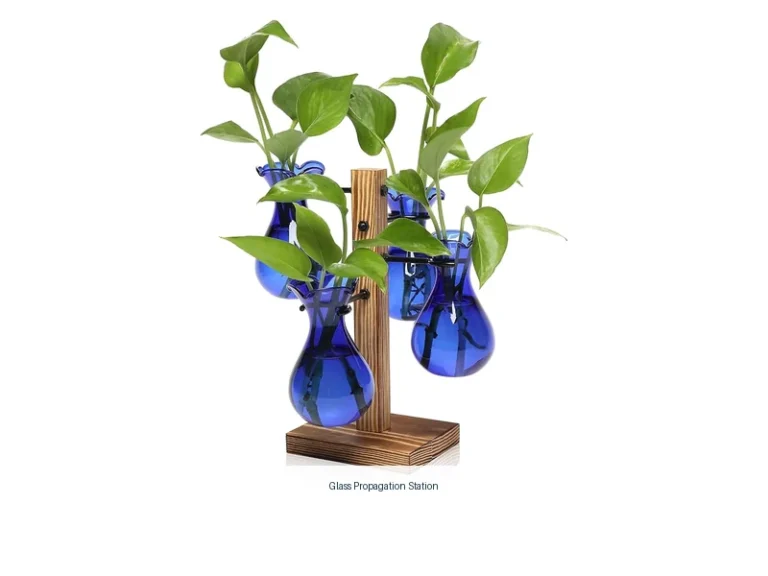
Top Rated Vintage Propagation Station: Top Picks and Buying Guide
As an Amazon Associate, I earn from qualifying purchases. Learn more
Choosing a vintage propagation station can be harder than it looks. Beginners need to balance appearance, vase capacity, stability, cleaning access, and the type of cuttings they want to grow, rather than choosing only by the most decorative photo.
My first choice is Renmxj Plant Propagation Stations. Its five separate borosilicate glass vases provide useful capacity without taking up much tabletop space, while the open C-shaped holders make individual water changes and cleaning more convenient.
My second choice is Mkono Plant Propagation Station. My alternative is Mkono Plant Propagation Station. It suits anyone who wants a much larger display, vertical storage, or a wall-friendly arrangement, especially when propagating many small cuttings at the same time.
This comparison covers five distinct propagation displays, from compact desktop stands to a tall 15-tube design and a six-piece jar set. The buying guidance also explains how to match vase openings, placement, cleaning routines, capacity, and plant types to your space and habits.
5 Best Vintage Propagation Station
I selected these products by comparing their intended use, construction details, vase capacity, maintenance access, dimensions, and suitability for common water-rooted plants. Customer-feedback evidence was considered where supplied, along with product relevance and brand variety so the list includes useful alternatives rather than five nearly identical designs.
| # | Image | Product | Price on Amazon |
|---|---|---|---|
| 1 |  |
Renmxj Plant Propagation Stations | Check Price |
| 2 |  |
Mkono Plant Propagation Station | Check Price |
| 3 |  |
XXXFLOWER Plant Propagation Station Terrarium Wooden Stand 2 Love Bulb Vase | Check Price |
| 4 |  |
YIBOT Propagation Stations | Check Price |
| 5 |  |
Anboliwb 6 Pcs Plants Propagation Stations Glass Planter Terrariums | Check Price |
Renmxj Plant Propagation Stations

The Renmxj station earns the top position because it combines practical capacity with a compact footprint. Five individual bulb-shaped vases let you root several cuttings at once, and the transparent glass keeps both water levels and developing roots visible. That makes it useful for beginners who want a clear way to learn when a cutting needs attention.
Its natural wood, black metal, and glass create a rustic look that can work on a windowsill, desk, shelf, kitchen counter, or office surface. The wooden frame measures 16.1 by 4 by 5.5 inches, so it provides a noticeable display without requiring the wall space of a tiered hanger.
The open C-shaped supports are especially helpful during ownership. Each vase can be lifted out separately for cleaning, water replacement, or cutting changes, meaning one neglected plant does not require dismantling the entire arrangement. The included cleaning brush is another small but meaningful convenience for the narrow bulb shapes.
This set works well for pothos, philodendron, ivy, lucky bamboo, herbs, flowers, and other small stems that root in water. Plants are not included, and the relatively narrow vase style may be less suitable for thick cuttings or large root systems.
Pros
- Five separate vases support several cuttings at once.
- Open holders simplify water changes and cleaning.
- Compact tabletop size with clear root visibility.
- Includes a cleaning brush and assembly components.
Cons
- Plants are not included.
- Small bulb openings may limit thicker stems.
- Requires assembly before use.
My Opinion
This is the most balanced option for a beginner who wants a decorative centerpiece that remains practical to maintain. Choose it over a wall-mounted design when easy tabletop access and moderate capacity matter more than maximum vertical display.
Mkono Plant Propagation Station

The Mkono takes a different approach from the compact tabletop models: it turns an otherwise unused wall area into a tall propagation display. Its three-tier wooden frame holds 15 removable glass test tubes, giving plant enthusiasts substantially more spaces for cuttings, herbs, flowers, or small water-grown plants.
This capacity is the main reason to choose it. Someone who regularly trims pothos, lucky bamboo, African violet, coin grass, moss, or herbs may prefer having many narrow tubes ready instead of rotating a few larger vases. The test tubes are 4.3 inches high with a 1-inch diameter, which makes them well suited to slim stems and small cuttings.
The wall-hanging format can add visual interest in a living room, kitchen, dormitory, bedroom, or office. The three-tier wooden holder measures 14.2 inches long, while the total height is listed as 35 inches, so placement deserves more planning than a low desktop station. It needs a suitable wall location and enough clearance for removing the tubes.
Each tube can be removed for water changes and cleaning. The supplied cleaning brush helps with routine care, but the design is more dependent on correct balance than a solid tabletop frame. The instructions note that rope adjustment may be necessary if the received unit is not balanced.
Pros
- Holds 15 individual test tubes.
- Uses vertical wall space efficiently.
- Removable tubes simplify cleaning and refilling.
- Works with plants, flowers, herbs, and decorative fillers.
Cons
- Requires suitable wall placement.
- Long 35-inch height may not fit every room.
- Rope adjustment may be needed for balance.
- Plants and props are not included.
My Opinion
This is the strongest choice for high-capacity propagation in a narrow footprint. It ranks second because the wall-mounted setup and balance adjustment demand more installation planning, but it may be the better purchase for serious hobbyists with many small cuttings.
XXXFLOWER Plant Propagation Station Terrarium Wooden Stand 2 Love Bulb Vase
XXXFLOWER’s two-vase station emphasizes decorative presentation as much as propagation. The pair of heart-shaped bulb terrariums gives the display a playful, retro-inspired appearance that can suit a desk, windowsill, office cubicle, or small shelf. It is a particularly natural fit for someone who wants a giftable plant accessory rather than a large rooting system.
The frame uses natural wood, while the vases are made from high-boron-silicon heat-resistant glass according to the supplied product information. Clear walls allow the owner to see the water and root development, and the vases can also hold flowers, mixed bouquets, artificial stems, decorative stones, or other small display elements.
Each vase measures about 3.93 inches high and 2.95 inches wide, with a 1-inch opening. That shape offers a broad visual profile but still favors modest cuttings and small arrangements. Pothos vines and similar water-rooted stems are specifically compatible, while larger plants may outgrow the available space quickly.
The overall stand measures 7.9 by 3.9 by 2.8 inches, making it one of the easier choices for a crowded desktop or narrow shelf. Assembly accessories, including a hex driver and screws, are supplied. The trade-off is capacity: two vases provide a focused display, but not the flexibility of a five- or 15-vessel system.
Pros
- Distinctive heart-shaped vases create a decorative focal point.
- Compact dimensions suit desks and small shelves.
- Clear glass supports easy observation of water and roots.
- Can display flowers, stones, artificial stems, or cuttings.
Cons
- Only two vases are included.
- One-inch openings may not suit thick stems.
- Plants are not included.
- Requires screw assembly.
My Opinion
This is a charming choice when style, gifting, and limited-space decorating are more important than propagation volume. Pick it for a small curated arrangement, but choose Renmxj or Mkono if you expect to root many cuttings simultaneously.
YIBOT Propagation Stations
YIBOT offers a straightforward middle ground: three glass vases on a compact wooden stand. It provides more room than a two-vase display without becoming as large as the five-vase Renmxj or the wall-mounted Mkono. That makes it suitable for a beginner who wants variety but does not need a full collection of propagation tubes.
The three vases are made from high-boron-silicon heat-resistant glass and measure approximately 4 inches high by 2.3 inches wide. Their listed openings are 2 inches, with a 0.8-inch bottleneck, giving users a little more flexibility at the top than narrow test tubes while still keeping stems organized.
Open C-shaped metal brackets allow each vase to be removed independently. This is useful when one cutting needs fresh water before the others, or when a single container needs cleaning without disturbing the full display. The stand is also described as easy to assemble without tools, which may appeal to gift buyers and first-time plant keepers.
YIBOT’s design suits pothos vines, scindapsus, African violets, herbs, flowers, aquatic plants, and mixed arrangements. It can sit on a windowsill, coffee table, kitchen counter, bedroom surface, or office desk. The main limitation is that the supplied information does not provide an overall stand dimension, so buyers with an unusually tight shelf should confirm the current listing measurements before ordering.
Pros
- Three removable vases offer moderate propagation capacity.
- Open holders make water changes easier.
- Listed as tool-free and quick to assemble.
- Broad use for cuttings, flowers, and decorative arrangements.
Cons
- Overall stand dimensions are not supplied here.
- Plants are not included.
- Three vessels may feel limiting for larger collections.
- Decorative display may not suit thick or mature plant material.
My Opinion
YIBOT is a sensible compromise for buyers who want a clean, gift-friendly station with room for three projects. Its removable vases and tool-free setup are appealing, though shoppers with strict space limits should verify the complete footprint first.
Anboliwb 6 Pcs Plants Propagation Stations Glass Planter Terrariums
Anboliwb’s six-piece set is best understood as a collection of small propagation jars rather than one conventional rack. The varied shapes and sizes let a plant enthusiast experiment with different cuttings, decorative arrangements, and hydroponic displays while placing the pieces together or separately around a room.
Each clear planter is made from borosilicate glass, allowing water quality and root development to remain visible. The cork lids and bamboo tray bases add a natural accent while helping the individual jars stay stable. Those lids can also make the pieces look more finished when they are being used as decorative containers rather than active rooting vessels.
The set is designed for pothos, monstera, herbs, lucky bamboo, succulents, small flowers, and other suitable water-grown plants. Its versatility is a major advantage for buyers who like to rearrange displays or use the containers for a mixture of living cuttings and decor. It can fit windowsills, desks, shelves, kitchen counters, coffee tables, offices, weddings, and other decorative settings.
Because the containers have varied designs, they may not provide the uniform look of a dedicated stand with matching vases. The supplied information also does not list each jar’s dimensions, so buyers needing a precise fit for a shelf or a specific cutting should check the current size details carefully. Plants are not included.
Pros
- Includes six varied glass planter terrariums.
- Bamboo bases help stabilize the individual jars.
- Cork lids add decorative flexibility.
- Useful for propagation, hydroponics, flowers, and DIY displays.
Cons
- Varied shapes may look less uniform than a matching station.
- Individual dimensions are not supplied here.
- Requires more separate pieces to monitor.
- Plants are not included.
My Opinion
This set is a good fit for creative decorators who value flexibility over a single coordinated frame. It ranks fifth because its scattered-jars format may require more organization, but it could be the most adaptable option for changing displays and mixed plant projects.
How I Selected These Propagation Displays
The shortlist was built around what makes a vintage propagation station useful beyond its appearance. I compared the number of vessels, the way each container is held, ease of removal, stated glass and wood construction, footprint, placement style, plant compatibility, and the amount of maintenance information available. Customer feedback was used as supporting evidence where a supplied rating and count were available, not as a substitute for examining the practical specifications.
The ranking also reflects different buyer priorities. Renmxj leads because its five-vase tabletop format offers a strong balance of capacity, access, and size. Mkono follows for its impressive 15-tube capacity, while the remaining products serve narrower needs such as decorative gifting, moderate three-vase capacity, or a flexible collection of individual jars.
Selection takeaway: The highest-ranked option is not automatically the largest one. A balanced holder that is easy to clean may be more useful than a display that holds more cuttings but needs complicated placement.
What the available customer feedback suggests
Renmxj is listed with a 4.6 rating from 4,326 customer ratings, giving that product the strongest supplied volume of customer-feedback evidence in this group. Mkono is listed at 4.8 from 3,190 ratings, which supports its position as a well-regarded alternative, particularly for shoppers interested in a large wall display.
The other three products are also listed at 4.6 or 4.7, but no customer count was supplied in the research data. For those options, the ranking relies more heavily on the stated construction, capacity, dimensions, setup details, and how clearly the design matches a particular use.
How to Choose a Propagation Display for Your Space
Start with the way you actually plan to propagate. A single favorite houseplant may need only two or three vessels, while frequent pruning or plant swaps can make a five-vase or 15-tube design more convenient. Also consider whether the display will live on a surface or hang on a wall, because placement affects access, stability, and cleaning.
- Match capacity to your routine: Two or three vases suit occasional propagation, while five or more make sense for frequent cuttings.
- Measure the location: Check width, depth, height, and removal clearance before choosing a tall or wall-mounted model.
- Inspect the opening: Narrow openings favor slim stems; wider openings provide more flexibility for cuttings and small arrangements.
- Prioritize removable vessels: Individual removal makes it easier to clean one container or replace one cutting without disturbing the rest.
- Choose a visual style you will maintain: A decorative station works best when water levels and plant health remain easy to see.
Tabletop, wall-mounted, or separate jars?
Tabletop stations are generally the simplest starting point because they can be moved as light changes and do not require wall installation. They also keep water changes within easy reach. Renmxj, XXXFLOWER, and YIBOT fall into this general category, although their capacities and shapes differ considerably.
A wall-mounted format can save desk space and create a dramatic display, but it needs a secure location and careful attention to balance. Mkono’s three-tier design is the clearest example. A separate-jar set such as Anboliwb gives the most freedom to rearrange the display, though it may look less unified and require more individual upkeep.
How to Set Up a New Propagation Station
Assemble the frame or tray on a level surface before adding water. Confirm that every holder, rope, base, or support is sitting correctly, then rinse the glass vessels to remove dust from packaging and assembly.
Prepare cuttings with a clean cut below a node when the plant type calls for node-based rooting. Remove leaves that would sit underwater, because submerged foliage can deteriorate and make the water cloudy. Keep at least one suitable node in the water while leaving the remaining leaves above the opening.
Fill each vessel only enough to cover the useful rooting area. Overfilling increases the chance that leaves or decorative materials stay wet. Place the finished station in bright, indirect light unless the plant has different care requirements, and avoid treating decorative colored water or stones as a replacement for basic plant care.
Setup notes for each design
- Renmxj: Assemble the wooden stand and support rod, then use the open holders to position the five bulb vases individually.
- Mkono: Mount or position the three-tier frame carefully and adjust the rope if the structure is not balanced.
- XXXFLOWER: Use the supplied hex driver and screws, and allow enough surface space for the two wider heart-shaped vases.
- YIBOT: Take advantage of the stated tool-free assembly, but still check that each C-shaped bracket supports its vase evenly.
- Anboliwb: Arrange the six jars and bamboo bases before filling them so the final grouping is stable and easy to reach.
Water and Light Tips for New Cuttings
Water propagation is simple, but it is not maintenance-free. Use clean water and observe the level rather than waiting until a vessel is empty. Roots need access to moisture, while leaves generally should remain above the waterline.
Bright, indirect light is a broadly useful starting point for many common houseplant cuttings. Direct hot sunlight through glass can warm small vessels quickly and may stress tender cuttings, while a very dark location can slow root development and encourage stagnant water.
Rooting speed varies by plant, stem condition, temperature, light, and season. Avoid pulling on a cutting repeatedly to check progress. Clear glass already provides a way to monitor roots without disturbing the developing plant.
Which plants fit these vessels?
Pothos, philodendron, scindapsus, ivy, lucky bamboo, many herbs, and some flowers are natural candidates for water propagation when the cutting is prepared appropriately. The listed products also mention options such as African violets, coin grass, moss, monstera, succulents, and aquatic plants, but suitability still depends on the specific cutting and the plant’s normal propagation method.
Small test tubes are best for slender stems and compact cuttings. Wider bulb vases or jars can accommodate broader arrangements, but a larger opening does not guarantee that a mature plant can live in water indefinitely. Think of these products primarily as rooting displays and decorative water planters, not as universal replacements for potting containers.
Cleaning and Maintenance That Prevents Problems
Clean glass helps you see roots and water quality, so maintenance is part of the display rather than an optional chore. Remove a vessel from its holder when possible, empty old water, rinse away residue, and use the supplied brush for narrow tubes or bulb-shaped interiors.
Wipe the wooden stand or bamboo base with a lightly damp cloth rather than soaking it. Dry splashes promptly, especially around joints and the bottom of containers. Natural wood and bamboo can remain attractive longer when they are not left in standing moisture.
Change water when it becomes cloudy, develops an odor, or contains visible debris. If only one vessel is affected, clean that container rather than disturbing every cutting. This is one reason removable vases and test tubes are more practical than permanently sealed displays.
Signs that a cutting needs attention
- Cloudy or foul-smelling water suggests the container should be emptied and rinsed.
- Soft, dark, or collapsing stem tissue may indicate decay rather than healthy rooting.
- Leaves sitting below the waterline should be repositioned or removed.
- Roots coated in residue should be handled gently during a water change.
- A cutting that outgrows the opening may need to move to a larger vessel or growing medium.
How to Make the Display Last Longer
Choose a stable location away from high-traffic edges, pets, and areas where the station can be knocked over. A level surface is especially important for multi-vase frames, because uneven weight can place extra stress on supports or make water levels appear inconsistent.
Do not lift a full wooden stand by a single vase, holder, rope, or decorative piece. If the display must be moved, remove the water or vessels first and carry the frame with both hands. This reduces strain on joints and lowers the chance of glass breaking.
Keep the glass free from mineral buildup by rinsing regularly. If a product’s supplied care information does not specify a particular cleaner, start with water and gentle manual cleaning rather than assuming that harsh chemicals are appropriate for the glass, wood, cork, or bamboo components.
Capacity, Sizing, and Placement Planning
Capacity is more than the number printed in a product name. A 15-tube station provides many rooting spots, but each tube is narrow and short. A five-vase station offers fewer positions but may create a more substantial tabletop focal point. Six separate jars provide capacity with a less uniform layout.
Measure the complete area in three directions: width, front-to-back depth, and height. Then add room above or beside the station for removing vessels, trimming stems, adding water, and wiping spills. A display that fits exactly into a shelf may still be inconvenient if there is no hand clearance.
Placement by room
- Windowsill: Check depth, direct-sun exposure, and whether the window can still open safely.
- Desk: Favor compact stands and keep water away from electronics and paper.
- Kitchen counter: Avoid heat sources, splashing areas, and locations where food preparation can disturb the display.
- Bedroom or dorm: A smaller two- or three-vase design may be easier to keep stable and tidy.
- Wall display: Confirm secure mounting and enough clearance to remove every tube for cleaning.
Common Mistakes to Avoid
Most problems come from treating a propagation station as decoration only. The glass makes plant growth visible, but it also makes poor water habits, overcrowding, and unsuitable placement easy to notice.
- Overcrowding one vessel: Too many stems can reduce airflow and make individual root development harder to monitor.
- Submerging leaves: Keep foliage above the waterline whenever possible.
- Ignoring balance: Check a tiered or hanging design after adding water, especially when vessels are filled unevenly.
- Choosing by appearance alone: A heart-shaped vase may be attractive but still have limited capacity for larger cuttings.
- Skipping measurements: Tall or deep designs need more room than product photos may suggest.
- Letting water sit indefinitely: Replace cloudy or stale water and clean residue before it becomes difficult to remove.
- Assuming every plant roots in water: Confirm that the specific plant and cutting are suitable for this method.
Important caution: Keep glass vessels and standing water away from unstable edges, children, and pets. The supplied products are decorative plant accessories, so safe placement remains the owner’s responsibility.
When to Move Cuttings Into Soil
A cutting does not need to remain in a glass vessel forever. Once it has developed a useful root system and the plant is ready for the next stage, moving it into an appropriate growing medium can provide more long-term support than a small vase.
Transition gradually when possible. Handle new roots gently, avoid forcing a tangled root mass through a narrow opening, and select a container that gives the plant room to continue growing. For a cutting that has outgrown a test tube or bulb vase, moving it sooner can also make removal less disruptive.
Some owners will keep plants in water for display, while others will use the station only for rooting. Either approach can work when the water remains clean and the plant is suited to continued hydroponic growth, but the small dimensions of these products place practical limits on mature specimens.
Gift and Display Considerations
Propagation stations make appealing gifts because they combine home decor with an activity. The best choice depends on whether the recipient is likely to prefer a small decorative centerpiece, a high-capacity plant project, or a flexible collection that can be arranged in several ways.
- For a compact desk gift: XXXFLOWER’s two heart-shaped vases have a distinctive decorative identity.
- For a balanced beginner gift: YIBOT provides three removable vases and a simple setup.
- For an active plant hobbyist: Renmxj offers five vessels in one tabletop display.
- For a wall-decor enthusiast: Mkono provides 15 test tubes in a tall tiered format.
- For a creative decorator: Anboliwb supplies six varied jars for flexible arrangements.
Remember that the listed products do not include plants. A gift recipient may appreciate a few suitable cuttings, fresh flowers, decorative stones, or care instructions, but any additions should match the vessel openings and the recipient’s ability to maintain water-grown plants.
FAQS About Vintage Propagation Station
What is the best vintage propagation station for a beginner?
Renmxj Plant Propagation Stations is the strongest all-around starting point in this comparison. It offers five separate vessels, clear root visibility, removable C-shaped holders, and a compact tabletop footprint.
Are these propagation stations suitable for pothos?
Yes. Pothos is specifically listed as compatible with several products, including Renmxj, XXXFLOWER, YIBOT, and Anboliwb. Use suitable cuttings with an appropriate node in the water and keep leaves above the waterline.
Which option holds the most cuttings?
Mkono Plant Propagation Station holds 15 removable test tubes. Its narrow 4.3-inch tubes are best suited to small stems and compact cuttings rather than thick or mature plant sections.
Can a propagation station stay on a windowsill?
Several of these products can sit on a windowsill, but measure the sill depth and check direct sunlight before placing one there. Glass containers can heat up in strong sun, and a crowded sill may not leave enough clearance for removing vessels.
Are plants included with these stations?
No. The supplied product information states that plants are not included. Buyers need to provide suitable cuttings, flowers, herbs, or other decorative materials separately.
How often should water be changed?
There is no single schedule for every cutting. Check the water regularly and replace it when it becomes cloudy, smells stale, or contains visible debris. Clean the vessel during the change when residue is present.
Which station is best for a small desk?
XXXFLOWER’s two-vase desktop holder has a listed footprint of 7.9 by 3.9 by 2.8 inches, making it a strong option for a small surface. YIBOT may also work well, but its overall stand dimensions were not supplied here and should be confirmed before purchase.
Can these products be used for flowers?
Yes. The supplied descriptions mention fresh flowers, artificial flowers, mixed bouquets, and small blooms for several designs. Keep in mind that a decorative flower arrangement may require different water and cleaning care than a rooting cutting.
Final Thoughts
For most beginners, Renmxj Plant Propagation Stations is the best overall choice because it combines useful capacity, clear visibility, compact placement, and easy-access holders. Choose Mkono Plant Propagation Station instead if wall space and maximum tube capacity matter more than a simple tabletop setup. Either can be a strong vintage propagation station when its size and maintenance needs match your plants and space.

I’m Maya L. Greenwood, a lifelong plant lover who believes anyone can grow something beautiful with the right guidance. After years of testing soil mixes, pruning methods, irrigation tricks, and pest-safe solutions, I started EasyGardenTips.com to turn hard-won lessons into step-by-step advice. From seed starting and container gardens to composting and seasonal checklists, my goal is to make gardening simple, sustainable, and fun.