Which Is the Best Queen Grafting Tool: Top Picks and Buying Guide
As an Amazon Associate, I earn from qualifying purchases. Learn more
Choosing the right queen grafting tool can be surprisingly difficult when several inexpensive options look nearly identical. The best choice depends on how much control you want over delicate larvae, whether you prefer a spring-loaded design or a simple metal tool, and how many spare tools you need for regular queen-rearing work.
My first choice is Lucky Farm Queen Bee Grafting Tool 10-Piece Beekeeping Larva Transfer Set. Its built-in spring, non-slip grip, flexible bamboo tongue, and generous 10-piece quantity make it a practical starting point for beginners who need room to practice and replace individual tools when necessary.
My second choice is Fdit Retractable Queen Bee Grafting Tool 11cm 2-Pack. Its retractable body and compact two-tool format appeal to beekeepers who want controlled larva handling without carrying a large set, especially when a backup tool is more important than maximum quantity.
This comparison covers five distinct designs, from flexible spring-loaded grafting tools to stainless steel double-ended models. You will also learn how to match the working tip to your technique, prepare a grafting station, clean and store the tool, avoid common handling mistakes, and decide which option makes the most sense for your apiary.
5 Best Queen Grafting Tool
I selected these products by comparing their intended queen-rearing use, construction, tip design, quantity, handling features, and available customer-feedback evidence. I also included different styles and brands so beginners can compare flexible reed tools, retractable pickers, and durable stainless steel alternatives without relying on a single design.
| # | Image | Product | Price on Amazon |
|---|---|---|---|
| 1 |  |
Lucky Farm Queen Bee Grafting Tool 10-Piece Beekeeping Larva Transfer Set | Check Price |
| 2 | 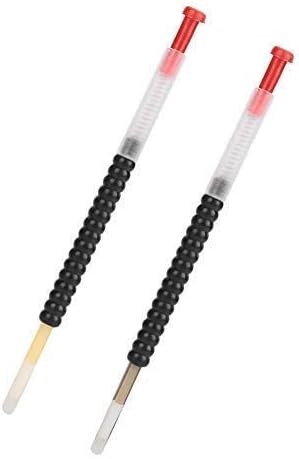 |
Fdit Retractable Queen Bee Grafting Tool 11cm 2-Pack | Check Price |
| 3 |  |
lasenersm Stainless Steel Double-Head Beekeeping Grafting Tool 2-Piece Set | Check Price |
| 4 |  |
Kafuty-1 Chinese Beekeeping Grafting Tool 10-Piece Set | Check Price |
| 5 |  |
LESKY Amazon.com Queen Bee Grafting Tools 2PCS Stainless Steeel Professional | Check Price |
Lucky Farm Queen Bee Grafting Tool 10-Piece Beekeeping Larva Transfer Set

The Lucky Farm set earns the top position because it combines a beginner-friendly operating design with enough pieces to support practice. A built-in spring helps return the plunger after each transfer, while the non-slip grip is intended to keep the tool steady during a task that requires gentle, measured pressure.
Its thin reed and soft bamboo tongue are particularly useful for working beneath young larvae. Rather than forcing a stiff tip into the cell, the flexible tongue can bend underneath the larva and support a more careful lift. That design may feel more forgiving for someone still learning the angle and pressure needed for successful grafting.
The 10-piece quantity is another practical advantage. Queen rearing can involve repeated transfers, and having several tools available means a beekeeper can set aside a damaged or contaminated piece instead of stopping immediately. The tools can also be sanded, disassembled, or adjusted, although that flexibility means they may need individual fine-tuning.
There is a clear learning curve. The supplied information specifically notes that perfecting the technique takes practice, and some users may need to modify the tools to suit their hands or preferred transfer motion. The 4.5-star rating from 305 customer ratings provides stronger feedback evidence than most options in this group, though it does not remove the need to learn proper larva handling.
Pros
- 10-piece set provides useful spares for practice and routine work.
- Spring-loaded action and non-slip grip can improve handling control.
- Flexible bamboo tongue is designed to work beneath delicate larvae.
- Tools can be adjusted or modified to suit individual technique.
Cons
- Beginners still need practice before transfers become consistent.
- Some pieces may require personal adjustment or light modification.
- The larger set may be unnecessary for very occasional queen rearing.
My Opinion
This is the strongest all-around choice for a beginner or small apiary that wants a forgiving design and multiple backups. Choose it over a stainless steel double-ended tool when flexible support and quantity matter more than a rigid, easily sanitized body.
Fdit Retractable Queen Bee Grafting Tool 11cm 2-Pack
The Fdit retractable set takes second place for its compact format and emphasis on controlled handling. Each tool measures about 11 cm, or 4.33 inches, which gives it a reasonably portable profile for an apiary kit without making it excessively long or cumbersome.
The retractable body is intended to help guide the working end during larva transfer. That can be useful for a beekeeper who prefers a protected, controlled motion rather than leaving a fine picking tip fully exposed when moving between the hive and the grafting area. A retractable design may also feel more comfortable for someone who is concerned about accidentally catching the tip on clothing or equipment.
Because the package contains two tools, it offers a straightforward backup arrangement. One can be ready for use while the other is being cleaned, or both can be kept in separate locations. That convenience is valuable for routine queen-rearing sessions, although it does not provide the same replacement depth as the 10-piece Lucky Farm set.
The available customer feedback is limited to 19 ratings, so the 4.5-star score should be treated as encouraging rather than conclusive. The listing describes the tool as suitable for beginners and experienced beekeepers, but the retractable mechanism adds another moving part that should be kept clean and operated gently. Buyers who prefer the simplest possible construction may favor a stainless steel double-ended model instead.
Pros
- Retractable design offers a controlled and protected working format.
- Two-piece quantity provides a useful backup for routine sessions.
- Compact 11 cm length is convenient for an apiary tool case.
- Designed for both beginner and experienced queen-rearing work.
Cons
- Only two tools are included, so there are fewer spares.
- Retractable mechanisms require attention to cleanliness and movement.
- Customer-feedback volume is relatively limited.
My Opinion
The Fdit set is a sensible alternative for beekeepers who value portability and a retractable body more than a large quantity. It is especially appealing as a compact backup kit, while high-volume queen rearers may prefer the broader supply of the Lucky Farm package.
lasenersm Stainless Steel Double-Head Beekeeping Grafting Tool 2-Piece Set
The lasenersm set changes direction from the spring-loaded reed style by using a stainless steel double-head format. Each tool is approximately 6.3 inches long, and the metal construction is intended to provide a durable surface that is easy to clean after handling bees or royal jelly.
A double-ended layout can make one tool more versatile during queen-rearing tasks. Instead of carrying separate implements for different transfer movements, the beekeeper has two working ends available on each piece. The design is described for breeding, grafting, transplanting, royal jelly work, and queen feeding, so it may suit someone who wants one compact metal tool for several related jobs.
Stainless steel brings an important ownership advantage: it is less dependent on delicate reed material and can be wiped or cleaned without treating the body as fragile. That does not mean the working ends can be handled roughly. Larvae remain delicate, and a rigid metal tip generally requires the user to be more precise about angle, pressure, and how deeply the tool enters the cell.
The set includes two pieces, which is enough for a spare but not for extensive practice. Its 4.7-star score from 16 ratings is positive, although the smaller feedback pool gives less evidence than the larger Lucky Farm sample. This option is likely a better fit for a beekeeper who already understands the transfer motion and wants a simple, durable format rather than a flexible bamboo tongue.
Pros
- Stainless steel construction is durable and straightforward to clean.
- Double-ended design supports more than one related apiary task.
- Two-piece package provides a basic backup.
- Useful for grafting, transplanting, royal jelly, and feeding work.
Cons
- Rigid metal ends may be less forgiving for beginners.
- Only two tools are supplied for practice and replacement.
- Users must control pressure carefully around delicate larvae.
My Opinion
This is the best fit among the middle-ranked options for someone who values a cleanable metal body and multi-purpose double-ended design. I would choose it for established technique, but a first-time grafter may find the flexible reed of the Lucky Farm or Kafuty-1 easier to learn with.
Kafuty-1 Chinese Beekeeping Grafting Tool 10-Piece Set

The Kafuty-1 set is a traditional Chinese-style grafting option built around a simple pencil-like plastic body, a thin flexible reed, and a spring-loaded plunger. That combination keeps the operating idea easy to understand: the reed supports the larva, and pressing the plunger helps release it into the queen cell cup.
Its flexible reed is the main reason to consider this set. Delicate larvae can be difficult to lift with a rigid point, while a bendable reed can follow the bottom of the cell more naturally when the user approaches at the right angle. The plunger then reduces the need to scrape or shake the larva off, which may help preserve a controlled transfer motion.
Ten tools are included, making this a practical quantity for learning, group work, or keeping replacements nearby. A large set can also reduce interruptions during a grafting session because a tool can be removed from service if its reed bends too far, becomes contaminated, or no longer performs smoothly.
The limitation is that the available rating evidence is very small: the product shows a 5.0-star score from only three ratings. That is positive, but it should not be interpreted as broad confirmation of long-term consistency. The plastic body and thin reed may also require gentler storage than a solid stainless steel tool, especially if the pieces are kept loose in a crowded equipment box.
Pros
- Flexible reed is designed to support delicate larvae.
- Spring-loaded plunger helps release the larva into the cup.
- 10-piece set is useful for practice and replacement needs.
- Simple pencil-like format is approachable for beginners.
Cons
- Only three customer ratings are available as feedback evidence.
- Thin reeds may bend or require careful storage.
- Plastic construction may feel less substantial than stainless steel.
My Opinion
Kafuty-1 is a strong value-oriented choice for someone who wants many flexible tools and a straightforward spring-plunger action. It ranks below Lucky Farm because the feedback base is much smaller and the supplied information gives less detail about adjustment, but its design is well suited to practice.
LESKY Amazon.com Queen Bee Grafting Tools 2PCS Stainless Steeel Professional
The LESKY set is aimed at buyers who prefer a professional-style stainless steel tool in a compact two-piece package. Each tool is listed at 6.3 inches long with a needle thickness of 0.12 inches, and the double-headed construction is intended for queen larva transplanting from the hive into a cell cup.
Stainless steel makes this design appealing from an ownership perspective. A metal body can be easier to wipe clean and store than a flexible reed instrument, and the two-piece format gives the beekeeper a spare without filling an equipment box with multiple tools. The double-ended arrangement may also reduce the need to switch between separate implements during a grafting session.
This product has a stated 5.0-star score and six customer ratings. The listing also identifies it within beekeeping supplies, but the small feedback sample means buyers should focus more on the stated construction and intended use than on the perfect score alone. No specific spring, retractable body, or flexible bamboo tongue is described, so users should not assume it will feel like the first two ranked designs.
The rigid stainless steel format is likely most suitable for a beekeeper who already has a steady hand and wants a compact reusable tool Someone learning the basic motion may prefer a flexible reed that can support the underside of the larva more gently Setup is simple but careful handling and prompt cleaning remain important because.
Pros
- Stainless steel body is durable and suitable for repeated cleaning.
- Double-headed construction provides two working ends per tool.
- Two-piece quantity includes a practical spare.
- Compact 6.3-inch length is easy to store and carry.
Cons
- Small customer-feedback sample limits confidence in the score.
- Rigid construction may be less forgiving for a new grafter.
- No flexible reed, spring, or retractable feature is specified.
My Opinion
LESKY is a reasonable stainless steel alternative for experienced users who want a compact double-ended pair. It is not my first recommendation for a beginner because the supplied details do not indicate a flexible larva-supporting tip, but it may be attractive when cleanability and simple storage are priorities.
How I Selected These Queen-Rearing Tools
The ranking balances practical design, available evidence, quantity, and the needs of a beginner rather than treating the highest stated star score as the only deciding factor. A grafting tool must be judged by how its tip approaches the larva, how easily the user can control release, and how manageable the tool is to clean and store afterward.
Lucky Farm leads because it combines a flexible working tongue, spring-assisted action, non-slip grip, adjustment potential, and a 10-piece quantity. Fdit follows with a more compact retractable format and a useful two-tool backup. The stainless steel options rank lower not because metal is unsuitable, but because their rigid double-headed designs may demand more precision from someone still developing the technique.
Customer feedback was considered according to both score and sample size. Lucky Farm has the broadest supplied feedback base at 305 ratings, while the other products have much smaller samples, so a perfect or near-perfect score on those listings should be read with appropriate caution.
The most useful comparison is not simply “flexible versus metal.” It is whether the tool gives you the amount of control, forgiveness, and cleanup convenience your current skill level requires.
Brand variety also mattered. Including several manufacturers makes it easier to compare a full practice set, a portable retractable pair, and stainless steel double-ended tools without pretending that one construction style suits every beekeeper.
How to Choose a Queen-Rearing Grafting Tool
Start with the transfer method you are most likely to use and the amount of practice you expect to need. A flexible reed with a spring-loaded plunger may be easier to learn, while a stainless steel double-ended tool can appeal to an experienced beekeeper who values durability and straightforward cleaning.
- Choose the tip for control: Flexible reeds can support young larvae from beneath, while rigid metal ends require more deliberate positioning.
- Consider quantity: Two tools provide a basic backup; 10 pieces are more useful for practice, multiple grafting sessions, or replacement needs.
- Look at the release action: A spring-loaded plunger can help move the larva from the reed into the cell cup without scraping it off.
- Match the body to storage: Retractable and metal designs can be convenient in compact kits, while thin reeds need protection from bending.
- Use ratings carefully: A high score supported by only a few ratings is encouraging but less informative than a similar score with a larger feedback sample.
Flexible reed or stainless steel?
Flexible reed tools are generally the more approachable style when the main concern is getting beneath a delicate larva. The reed can bend slightly with the cell shape, but that advantage comes with a need for careful storage and occasional replacement or adjustment.
Stainless steel tools offer a solid, cleanable body and may last well when handled properly. Their rigidity can make them less forgiving, however, so they are better matched to a user who already understands how much pressure to apply.
How many tools do you need?
A two-piece set is enough for occasional queen rearing, especially when one tool is kept as a clean backup. A 10-piece set is more practical for beginners who expect repeated practice, for beekeepers managing several grafting sessions, or for anyone who does not want a bent reed to end the day’s work.
More pieces do not automatically mean better performance. Quantity is useful only when the individual tools still match your preferred transfer technique and can be stored without damage.
Preparing a Grafting Station
Good preparation reduces the time a larva spends exposed and helps the beekeeper maintain a consistent rhythm. Set up the cell cups, grafting tool, donor comb, receiving colony materials, and a clean place to put the tool before beginning.
Keep the work area organized so the tool does not touch wax scraps, propolis, dirty gloves, or other equipment between transfers. A clean, stable surface also makes it easier to notice whether a reed has bent or whether a metal tip has picked up debris.
Work in conditions that protect the comb and larvae from unnecessary drying or rough handling. The tool itself cannot compensate for a rushed station, poor visibility, or long pauses between removing a larva and placing it in the receiving cup.
Using the Tool for the First Time
Before attempting a live transfer, become familiar with the plunger, retractable body, or double-ended tip. Operate the mechanism several times away from the hive so your fingers learn how much movement is needed and you do not accidentally press too far during the first graft.
Hold the tool lightly rather than squeezing it tightly. Excess grip can make small movements harder to control, particularly when the tip is flexible and responds to pressure from the hand.
Approach the larva at a shallow, controlled angle. The goal is to support it from beneath rather than pierce, drag, or crush it. With a spring-plunger model, use the release function gently after the larva is positioned over the cell cup.
Practice is part of the process. The supplied information for the Lucky Farm set specifically acknowledges that perfecting the technique takes time, so early inconsistency is not necessarily evidence that the tool is defective.
Cleaning and Maintenance
Clean the working end after each session and remove visible wax, royal jelly, or other residue before storing the tool. A dirty tip can interfere with smooth movement and may transfer unwanted material between cells.
Metal tools are generally convenient to wipe clean because their bodies do not depend on a thin reed. Flexible and spring-loaded tools deserve extra care around the reed, plunger, and return spring; forcing stuck parts can bend the working end or affect the release action.
Do not file or sand a tool simply because another model uses a different shape. The Lucky Farm information notes that modification may help some users, but any adjustment should be gradual and limited to what is necessary for your technique. An overly thin or rough tip may be harder to control and more likely to damage larvae.
Storage Tips for Longer Ownership
Store grafting tools in a protected container rather than loose among hive tools, smokers, wire, or other heavy equipment. This is particularly important for flexible reed models, whose working ends can bend before the next session even if the body appears intact.
Retract the Fdit tool when its design allows and keep spring-loaded mechanisms free from debris. For double-headed stainless steel tools, use a sleeve, divided case, or small pouch so the ends do not scrape against one another or become buried in wax.
Label clean tools separately from tools waiting to be cleaned. A simple separation system prevents a beekeeper from reaching for a contaminated tool during a time-sensitive transfer.
Compatibility and Technique Considerations
These products are intended for queen rearing, larva transfer, grafting, royal jelly work, or closely related beekeeping tasks, but they are not interchangeable in feel. The Lucky Farm and Kafuty-1 designs emphasize a reed and plunger approach, Fdit emphasizes retractable control, and lasenersm and LESKY use stainless steel double-headed formats.
That difference matters more than the label on the package. A beekeeper who prefers a flexible support under the larva should begin with one of the reed-based designs, while a user who wants a rigid tool for repeated cleaning may lean toward stainless steel.
Cell cup size, comb position, lighting, and the age and condition of the larva also affect the result. Since those conditions are not specified for these products, do not assume that a tool alone will solve transfer problems caused by poor visibility or unsuitable material.
Common Mistakes to Avoid
Most early problems come from pressure, timing, or poor preparation rather than from choosing the wrong brand. Avoiding a few predictable errors can protect both the larva and the working tip.
- Pressing too hard: A plunger should release the larva gently, not force it into the cup.
- Dragging the tip: Support from beneath instead of scraping along the cell bottom.
- Working with a dirty tip: Clean residue before moving to another cell or session.
- Leaving flexible tools unprotected: A bent reed may no longer approach the larva evenly.
- Assuming a perfect score proves everything: Check the number of ratings and the actual design details.
- Modifying too aggressively: Small adjustments may help, but removing too much material can reduce control.
Never compensate for an awkward technique by increasing pressure. Stop, reset the tool and your hand position, and approach the larva again with a lighter motion.
When to Replace or Set Aside a Tool
There is no universal replacement schedule for these tools. Set one aside when the reed is permanently bent, the tip becomes rough, the plunger no longer moves smoothly, or the metal end is damaged in a way that could harm a larva.
A tool that merely feels unfamiliar may need more practice rather than replacement. Try it on several sessions, compare it with a tool whose motion you understand, and determine whether the problem is the design or the technique.
For a 10-piece set, rotating tools can make ownership easier because no single piece receives all the wear. For a two-piece set, inspect the backup before beginning a session so a problem does not appear only when the primary tool is already in use.
Which Style Fits Different Beekeepers?
New beekeepers may appreciate the flexible tongue and spring-assisted action of the Lucky Farm or Kafuty-1 sets. Their larger quantities also make it less stressful to practice without treating one individual tool as irreplaceable.
Mobile or occasional users may prefer the Fdit two-pack because the retractable format and compact length suit a smaller equipment kit. A two-tool arrangement is also convenient when one piece is being cleaned.
Experienced users who value a durable, cleanable body may favor lasenersm or LESKY. The stainless steel double-headed designs are compact and versatile, but their rigid working ends call for controlled handling around larvae.
These are practical matches rather than strict rules. Any beekeeper can prefer a different format depending on hand comfort, visibility, storage habits, and the technique being practiced.
FAQS About Queen Grafting Tool
What is a queen grafting tool used for?
It is used to lift and transfer young bee larvae from donor comb into queen cell cups during queen-rearing work. Some of the listed designs are also described for royal jelly production, queen feeding, breeding, and related larva-transplanting tasks.
Is a flexible reed better for beginners?
A flexible reed may be easier for some beginners because it can bend beneath a delicate larva instead of requiring a rigid tip to enter at exactly the right angle. It still requires practice and gentle pressure.
Should I choose a spring-loaded or retractable model?
Choose a spring-loaded model if you want a plunger to help release the larva into the cup. Choose a retractable model if protecting the working end and carrying a compact tool are higher priorities.
Are stainless steel grafting tools easy to clean?
Stainless steel bodies are generally straightforward to wipe clean, but the tip still needs careful attention after contact with wax, royal jelly, or other residue. Cleanability does not make the rigid end safe to use with excessive pressure.
How many grafting tools should a beginner buy?
A two-piece set can be enough for occasional practice, while a 10-piece set offers more useful backups when learning. Extra pieces are especially helpful if a thin reed bends or a tool needs to be removed for cleaning.
Can these tools be modified?
The Lucky Farm information indicates that users may modify the tools to suit their technique. Any adjustment should be conservative, because an overly thin, rough, or uneven tip may make larva transfer more difficult.
What should I do if the larva will not release?
Do not increase pressure sharply. Check that the plunger or retractable mechanism is moving correctly, confirm that the tip is positioned over the cup, and reset your hand position before trying again.
Final Thoughts
The Lucky Farm Queen Bee Grafting Tool 10-Piece Beekeeping Larva Transfer Set is my top recommendation because it combines flexible larva support, spring-assisted handling, adjustment potential, and plenty of spare tools. The Fdit Retractable Queen Bee Grafting Tool 11cm 2-Pack is the better alternative for buyers who want a compact, controlled two-tool kit with a retractable format. Either is a sensible starting point when choosing a queen grafting tool for practical queen-rearing work.

I’m Maya L. Greenwood, a lifelong plant lover who believes anyone can grow something beautiful with the right guidance. After years of testing soil mixes, pruning methods, irrigation tricks, and pest-safe solutions, I started EasyGardenTips.com to turn hard-won lessons into step-by-step advice. From seed starting and container gardens to composting and seasonal checklists, my goal is to make gardening simple, sustainable, and fun.