5 Best Coco Coir Mix: Top Products and Complete Buying Guide
Finding the best coco coir mix is not simply a matter of choosing the largest compressed block or the product with the highest customer score. You also need to match the coir’s texture, expansion volume, drainage, intended plant use, and preparation requirements to your growing setup.
My first choice is Kempf Compressed Coco Coir Pith Block. Its 10-pound block expands to 18 gallons, while the fibrous structure holds moisture and preserves air space for roots.
My second choice is Jiffy Seed Starting Mix. The compressed 100% coir expands to 10 quarts and offers the light, airy texture seedlings need without forcing a buyer to manage a very large block.
My third choice is ZeeDix 2 Pcs Coco Coir Brick. ZeeDix 2 Pcs Coco Coir Brick earns my third position because its two compact bricks are easy to store and expand to about 15 quarts together. It is a practical middle-ground option for houseplants, propagation, raised beds, and small gardening projects, although the preparation is less convenient than buying a ready-made blend.
This guide compares all five products by capacity, format, plant compatibility, moisture behavior, drainage, and ease of use. You will also learn how to hydrate compressed coir, when to add nutrients or perlite, which mistakes commonly cause problems, and how to choose a mix that fits your actual growing routine.
Best Coco Coir Mix
I selected these products for their direct relevance to coconut-coir growing, the usefulness of their supplied specifications, the range of formats and applications, and available customer-feedback evidence where it was provided. The ranking also considers whether each option gives beginners a clear practical advantage, while keeping the limitations of compressed bricks and ready-to-use media visible.
| # | Image | Product | Price on Amazon |
|---|---|---|---|
| 1 |  |
Kempf Compressed Coco Coir Pith Block | Check Price |
| 2 | 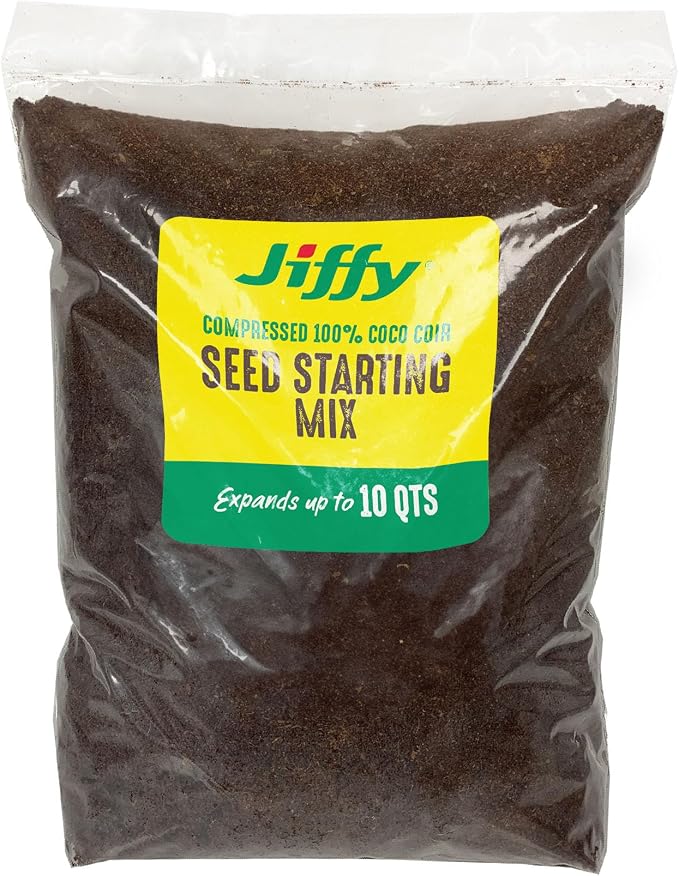 |
Jiffy Seed Starting Mix | Check Price |
| 3 |  |
ZeeDix 2 Pcs Coco Coir Brick | Check Price |
| 4 |  |
FoxFarm Cultivation Nation 70:30 Growing Media | Check Price |
| 5 |  |
CJGQ Coco Coir Brick | Check Price |
Kempf Compressed Coco Coir Pith Block
Kempf stands out as the most capable all-purpose option in this group. Its 10-pound compressed block expands to as much as 18 gallons, giving container gardeners, raised-bed growers, and propagation projects plenty of material without storing a bulky bag of loose medium.
The coir is described as pre-rinsed, triple-filtered, and screened, which matters when you want a cleaner medium with fewer rocks, pieces of debris, or unwanted residue. Its stated pH range of 5.5 to 6.5 is suitable for many plants, and the low electrical conductivity makes it a reasonable starting point for seedlings and plants that can be sensitive to excess salts.
In use, the fibrous texture offers a useful balance: it can hold up to 10 times its weight in water while still creating air pockets around roots. That makes it useful for seed starting, orchids, succulents, vegetables, houseplants, hydroponic applications, and soil amendment. It can also be used as mulch or in composting, so one purchase may serve several gardening jobs.
Pros
- Expands to a substantial 18 gallons.
- Pre-rinsed, triple-filtered, and screened.
- Useful pH range and low stated EC.
- Works as a medium, amendment, mulch, or compost ingredient.
Cons
- Requires hydration and mixing before use.
- A 10-pound block may be more capacity than a small apartment gardener needs.
- Plants may still need a separate nutrient program.
My Opinion
This is the strongest overall pick for buyers who want one clean, high-capacity coir product with the flexibility to support several types of growing. Plan a suitable mixing container and storage area before opening it; the large expansion volume is its biggest advantage, but also its main practical drawback for small projects.
Jiffy Seed Starting Mix
Jiffy takes a more focused approach than Kempf. The compressed material expands to 10 quarts, a manageable amount for seed trays, indoor propagation, and a few containers. Its smaller capacity makes it easier to hydrate in a household bucket or tub and less likely to leave a beginner with a large quantity of unused medium.
Because it is made from 100% coconut coir, the mix provides a light structure with good aeration and drainage. That texture can help young roots receive oxygen instead of sitting in dense, compacted soil. It also retains moisture, which is useful for germination, but the grower still needs to check trays regularly because a small seedling container can dry faster than a deep pot.
Jiffy lists the product for indoor seed-starting trays, hydroponic systems, houseplants, and containers. It is therefore more versatile than a single-purpose germination pellet, although buyers should remember that plain coir is not automatically a complete fertilizer. Once seedlings establish roots, they may need appropriate nutrition or transplanting into a more nutrient-supplying medium.
Pros
- Convenient 10-quart compressed quantity.
- 100% coir offers lightweight aeration and drainage.
- Well suited to seed trays and indoor propagation.
- Stores more easily than a large loose bag.
Cons
- Smaller total volume than the leading block options.
- Plain coir may require added nutrition for continued growth.
- Hydration is still necessary before filling trays or pots.
My Opinion
Jiffy is the sensible choice for a beginner whose immediate goal is starting seeds rather than filling a garden bed. Its capacity is approachable, its format is easy to store, and its airy texture supports early root development. Choose another product if you need enough medium for many large containers.
ZeeDix 2 Pcs Coco Coir Brick
ZeeDix offers two compact bricks weighing about 1.4 pounds each, with a combined expansion of approximately 15 quarts. Splitting the material into two bricks gives buyers some flexibility: you can hydrate one brick for a smaller project and keep the other compressed until it is needed.
The bricks absorb roughly eight to ten times their weight in water and expand relatively quickly. Mixing the hydrated material with a tool helps break apart remaining compressed sections. That extra preparation step is not difficult, but it means this product suits gardeners who do not mind doing a little setup before planting.
Its low EC and suitable pH are presented as appropriate for flowers, herbs, seedlings, potted plants, grow bags, raised beds, succulent propagation, and vermicomposting. The coir can improve the structure of heavier soil by adding a more open, moisture-holding component. On its own, however, it should not be treated as a complete source of plant nutrition; supplemental fertilizer or a richer blend may be needed for sustained growth.
Pros
- Two separate bricks provide flexible portioning.
- Expands to about 15 quarts.
- Lightweight and convenient to store.
- Suitable for propagation, containers, beds, and soil amendment.
Cons
- Needs soaking and breaking apart before planting.
- Plain coir may need added nutrients.
- Capacity is not ideal for large-scale bed filling.
My Opinion
ZeeDix is a useful compromise between a small seed-starting package and a large block. I would choose it for several houseplants, a modest propagation project, or occasional garden amendments. Its two-brick format is particularly helpful when you want to avoid hydrating an entire supply at once.
FoxFarm Cultivation Nation 70:30 Growing Media
FoxFarm is the most convenient choice for buyers who want a prepared growing medium rather than a pure compressed brick. The 2-cubic-foot bag contains a 70:30 blend of buffered coconut coir and perlite, so the water-holding and air-space components are already combined.
That ratio gives the mix a clearer purpose than plain coir. Coconut fiber helps retain moisture, while perlite creates larger air spaces and encourages excess water to move away from roots. This can be valuable in containers where stagnant water is a recurring concern. The blend is intended for indoor and outdoor container gardens, and plants can be placed directly into the bag for a particularly simple setup.
The trade-off is flexibility. A ready-made 70:30 mix eliminates much of the measuring and blending work, but it is less compact to store and offers less control than buying coir and perlite separately. It may also be more medium than a small indoor gardener needs. Since the supplied information identifies the ingredients but does not describe a complete fertilizer program, plan to manage plant nutrition separately according to the crop.
Pros
- Ready-made 70:30 coir-to-perlite blend.
- Strong emphasis on aeration and drainage.
- Suitable for indoor and outdoor containers.
- Can be planted directly into the bag.
Cons
- Loose 2-cubic-foot packaging needs more storage space.
- Less convenient to portion and transport than compressed bricks.
- Not as adaptable as mixing your own ratios.
My Opinion
FoxFarm is the practical pick for container growers who value convenience and predictable drainage over compact storage. It is especially appealing when you do not want to hydrate, fluff, and blend a brick. For a small seed-starting project or a gardener who wants maximum control, a pure coir product may make more sense.
CJGQ Coco Coir Brick
CJGQ supplies two compressed bricks weighing about 1.4 pounds each. Together, they expand to approximately 4.6 gallons, making this a relatively modest-capacity option for herbs, flowers, microgreens, potted plants, and a few raised-bed additions.
The compact format is its clearest everyday benefit. Two bricks take up much less room than a loose bag, and adding water creates a lighter, fluffier medium with useful moisture retention and drainage. That makes storage easier for apartment gardeners or anyone who only grows seasonally. The two-pack also lets you use part of the supply without opening everything at once.
CJGQ presents the coir as low in EC with a balanced pH and suitable for seedlings, vegetables, fruits, herbs, and flowers. It can help retain moisture and nutrients in a container mix, but buyers should be cautious about interpreting the listing’s “high nutrition” language as a replacement for plant food. Coconut coir is primarily a structure and moisture medium, so ongoing feeding may still be necessary depending on the plant.
Pros
- Compact two-brick package is easy to store.
- Expands to about 4.6 gallons.
- Useful for herbs, microgreens, seedlings, and containers.
- Provides a breathable, moisture-holding texture.
Cons
- Lower capacity than the other brick options.
- Requires soaking and fluffing before use.
- May not provide complete nutrition by itself.
My Opinion
CJGQ fits gardeners with modest space and modest planting plans. I would select it for a balcony herb collection, a few propagation pots, or microgreens rather than a substantial raised bed. Its compactness is attractive, but buyers needing volume will get better efficiency from Kempf or FoxFarm.
How I Selected These Coco Coir Products
The ranking begins with format and intended use. Compressed blocks are judged by expansion volume, storage efficiency, preparation demands, and versatility. The ready-made FoxFarm blend is considered differently because its advantage is immediate use and built-in perlite rather than compact shipping.
I also compared the supplied information about pH, EC, water retention, aeration, drainage, filtration, and compatibility. These details help distinguish a cleaner, more predictable medium from a basic brick that mainly offers convenience and moisture-holding fiber.
Selection takeaway: A large block is not automatically the best option. The right capacity is the amount you can hydrate, use, and store without creating unnecessary waste or handling difficulty.
Customer-feedback volume was another useful signal, but it was not treated as proof of performance in every garden. The available feedback is much deeper for some products than others, so I used it as supporting evidence alongside the stated construction and use cases rather than as the sole ranking factor.
Practical takeaway: Pure coir provides structure, air space, and moisture management. It should be evaluated as part of a growing system, not assumed to be a complete fertilizer or universal potting soil.
How to Choose a Coco Coir Growing Medium
Start with the plants and the size of the project. Seedlings often benefit from a fine, airy medium in small cells, while mature container plants may need more volume and a blend that drains freely. If you dislike preparation, a ready-made coir-and-perlite product can be worth the extra storage space.
- Choose compressed blocks for compact storage and lower handling volume.
- Choose a prepared blend when drainage and immediate use matter most.
- Check expansion volume against the number and size of your containers.
- Look for low EC or rinsed material when growing sensitive seedlings.
- Plan nutrition separately unless the product clearly supplies it.
Match the Format to Your Space
Compressed bricks are convenient before hydration but become much larger afterward. A small two-brick package is easier to manage in an apartment, while a 10-pound block makes sense for multiple pots, beds, or repeated propagation. A loose two-cubic-foot bag requires more permanent storage but avoids the soaking stage.
Consider Water Retention and Drainage Together
Coir can hold a substantial amount of water, which reduces the risk of immediate drying in many containers. That benefit becomes a problem if the pot has poor drainage or if watering is frequent and heavy. Perlite, coarse amendments, drainage holes, and sensible watering intervals all help keep the root zone from remaining saturated.
Understand pH and EC
pH affects how easily plants can access nutrients, while electrical conductivity indicates the level of dissolved salts in the medium. The listed low-EC and balanced-pH characteristics are encouraging for seedlings, but they do not remove the need to monitor plant response. Water quality, fertilizer, and the other ingredients in a potting mix can change the final growing conditions.
Decide Whether You Need Pure Coir
Pure coir gives you control over the final recipe. You can use it alone for certain applications, combine it with perlite for extra air space, or add compost and other amendments for container growing. A prepared blend is easier, but it limits your ability to adjust the ratio for a plant with unusual moisture or drainage needs.
How to Hydrate Compressed Coir
Place the brick or block in a clean bucket, tub, or mixing container with enough room for expansion. Add water gradually rather than flooding the container all at once. As the coir softens, break it apart with gloved hands or a hand tool and continue adding water until the fibers are evenly hydrated.
After expansion, fluff the material thoroughly. Look for hard, dry sections in the center of the block, because these can leave inconsistent moisture pockets in a seed tray or pot. The finished coir should feel evenly damp and springy, not muddy or dripping.
Use the product’s stated expansion amount as a planning estimate rather than a guarantee for every setup. Water temperature, compression, mixing, and the amount of water added can affect the final texture and volume. Prepare only what you can use soon, especially if you do not have a clean, dry place to store the hydrated medium.
A Simple First-Time Setup
- Choose a container several times larger than the compressed brick.
- Add a modest amount of water and allow it to soak in.
- Break apart softened sections as the block expands.
- Fluff and inspect the entire batch for dry cores or dense clumps.
- Blend in perlite, compost, or potting soil only if your plants require it.
- Fill clean containers and plant at the appropriate depth.
Using Coir for Seed Starting
For seeds, use a fine, evenly fluffed texture that fills cells without being packed tightly. Pressing too firmly removes the air spaces that young roots need. Moisten the medium before sowing so you do not disturb seeds with a strong stream of water afterward.
Coir’s moisture retention can support germination, but seed trays still need observation. Warm indoor conditions, small cells, and bright lights can dry the surface quickly. Conversely, a covered tray with excessive water can remain too wet. Provide drainage and use a light watering method that keeps the medium damp rather than saturated.
Once seedlings emerge and begin developing roots, pay attention to nutrition. Plain coir is useful as a physical growing medium, but it may not supply everything needed for vigorous long-term growth. Follow the requirements of the crop and avoid applying strong fertilizer to very young seedlings unless the plant specifically tolerates it.
Mixing Coir for Containers and Raised Beds
For mature plants, pure coir may be only one ingredient in the final medium. Combining it with perlite can improve air space and drainage, while compost or an appropriate potting soil can contribute organic matter and nutrients. The ideal recipe depends on the plant, container depth, local humidity, and how frequently you can water.
Heavy clay soil can benefit from a fibrous amendment that opens its structure, but mix coir thoroughly rather than leaving a separate layer. A distinct layer can create uneven water movement. In raised beds, calculate the expanded volume first so you do not underestimate how many bricks or blocks are required.
For succulents and other plants that dislike wet roots, use coir carefully and pair it with enough coarse, draining material. For moisture-loving plants, a larger coir proportion may be more appropriate. The goal is not to maximize water retention; it is to create a root environment that stays evenly moist while still allowing excess water to leave.
When to Add Perlite, Fertilizer, or Compost
Perlite is useful when containers drain slowly or when the plant needs more air around its roots. FoxFarm already includes it at a 70:30 coir-to-perlite ratio, while the compressed products give you the freedom to choose whether additional perlite is necessary.
Fertilizer becomes important when coir is used for continued plant growth rather than brief seed germination. Use a plant-appropriate feeding plan and avoid assuming that a low-EC product contains all essential nutrients. If the mix includes compost or a nutrient-rich potting soil, reduce the chance of overfeeding by considering the ingredients together.
Compost can make a coir-based medium more biologically active and nutrient-supportive, but too much may reduce the airy structure that makes coir useful. Add amendments gradually and observe how quickly the container dries, how heavy it becomes, and whether roots appear healthy during later transplanting.
Watering and Maintenance Tips
Check moisture below the surface instead of judging only by the color of the top layer. Coir can look dry on top while remaining damp farther down, particularly in deep containers. Lift small pots when possible, or use a finger to assess moisture at root depth.
Always use containers with drainage holes. If water collects in a decorative outer pot, empty it rather than allowing the planted container to stand in a puddle. Good drainage protects the benefits of coir’s aeration and reduces the chance of stagnant conditions around roots.
As plants grow, the medium may settle slightly. Top up carefully if roots become exposed, but do not bury stems that are vulnerable to rot. Replace or refresh the medium when it becomes compacted, breaks down noticeably, develops an unpleasant odor, or no longer drains consistently.
Storage and Ownership Tips
Keep unused compressed bricks and blocks dry, protected from standing water, and away from contamination. Their compact shape is an advantage only while the material remains dry and intact. A sealed storage tote can help protect opened packages from humidity and pests.
Hydrated coir is much less convenient to store. If you prepare too much, spread it in a clean, airy location and let it dry before placing it in a suitable container. Do not store wet material in a sealed bag for an extended period, because trapped moisture can create unpleasant odors and reduce its usefulness.
Keep separate tools for mixing growing media if possible. A clean bucket and hand tool reduce the chance of introducing soil-borne problems, residues, or household chemicals into a fresh batch. Wash reusable containers before preparing new coir, especially when switching from a diseased plant.
Common Mistakes to Avoid with Coco Coir
Most problems come from treating coir as a complete solution rather than as a moisture- and structure-focused medium. Beginners also commonly underestimate expansion volume or assume that good drainage means a container cannot be overwatered.
- Do not pack hydrated coir tightly into seed cells or pots.
- Do not skip drainage holes because coir absorbs water well.
- Do not hydrate a large block in a container that cannot hold its expansion.
- Do not assume plain coir supplies complete long-term nutrition.
- Do not add large amounts of water without breaking apart dry compressed sections.
- Do not mix coir into a separate soil layer and expect uniform drainage.
- Do not leave saturated containers standing in runoff.
When a plant stays wet for too long, first inspect drainage, container size, compaction, and watering frequency before adding more amendments.
Which Product Fits Your Growing Situation?
For the broadest use across many containers and garden projects, Kempf offers the most capacity and the strongest supplied preparation details. For a focused seed-starting setup, Jiffy is easier to manage. ZeeDix suits buyers who want two medium-sized bricks, while CJGQ is better for smaller planting plans and limited storage.
FoxFarm is the simplest path when you want to skip hydration and receive coir and perlite in one ready-made blend. It is particularly appealing for indoor or outdoor container growers who value drainage without needing to measure a custom recipe.
Think about the full ownership process: carrying the package, finding a hydration container, storing leftovers, feeding plants, and managing runoff. A product that matches those daily tasks is more useful than one that looks ideal only by its capacity or format.
FAQS About Best Coco Coir Mix
Is compressed coir better than a loose coir blend?
Compressed coir is easier to store and transport before hydration, while a loose blend is faster to use and may already contain drainage ingredients such as perlite. The better option depends on whether convenience, storage, customization, or immediate planting matters most.
What is the best coco coir mix for seedlings?
Jiffy is the most focused choice among these products because its 10-quart compressed format is intended for seed starting and provides an airy 100% coir medium. Kempf can also work well when you need more volume or want one product for both seedlings and larger projects.
Does coconut coir need fertilizer?
Often, yes, especially when plants remain in coir beyond early germination. Coir mainly provides moisture management and physical support. Use a suitable nutrient plan for the plant rather than assuming a low-EC or “natural” product is a complete food source.
Should coir be mixed with perlite?
Perlite can improve air space and drainage in containers, particularly for plants that dislike consistently wet roots. It is not always necessary, and FoxFarm already includes perlite in its 70:30 blend. Adjust the recipe according to the plant and your watering habits.
How much water does a coir brick need?
The required amount varies by brick size and compression. Add water gradually while the block expands, then continue until the material is evenly soft and hydrated. Use the stated expansion volume as a guide and provide plenty of room for the finished medium.
Can coco coir be used by itself?
It can be used by itself for some seed-starting, propagation, hydroponic, and container applications, but its suitability depends on the plant and feeding plan. Many gardeners combine it with perlite, compost, or potting soil to achieve a better balance of drainage, nutrients, and moisture.
Final Thoughts
The best coco coir mix depends on how much you need and how much preparation you want to do. Kempf is the strongest overall choice for capacity and versatility, Jiffy is the better focused option for seedlings, and ZeeDix is a practical middle-ground for modest projects. Choose FoxFarm for ready-made drainage or CJGQ for a compact supply of coir for herbs, microgreens, and small containers.

I’m Maya L. Greenwood, a lifelong plant lover who believes anyone can grow something beautiful with the right guidance. After years of testing soil mixes, pruning methods, irrigation tricks, and pest-safe solutions, I started EasyGardenTips.com to turn hard-won lessons into step-by-step advice. From seed starting and container gardens to composting and seasonal checklists, my goal is to make gardening simple, sustainable, and fun.