5 Best Quality Self Propelled Lawn Mower: Top Choices Compared
Finding the best quality self propelled lawn mower means balancing cutting performance, drive control, maintenance, and the kind of power source that fits your yard. A mower that works well on a flat suburban lawn may feel very different on slopes, thick grass, or a property approaching half an acre.
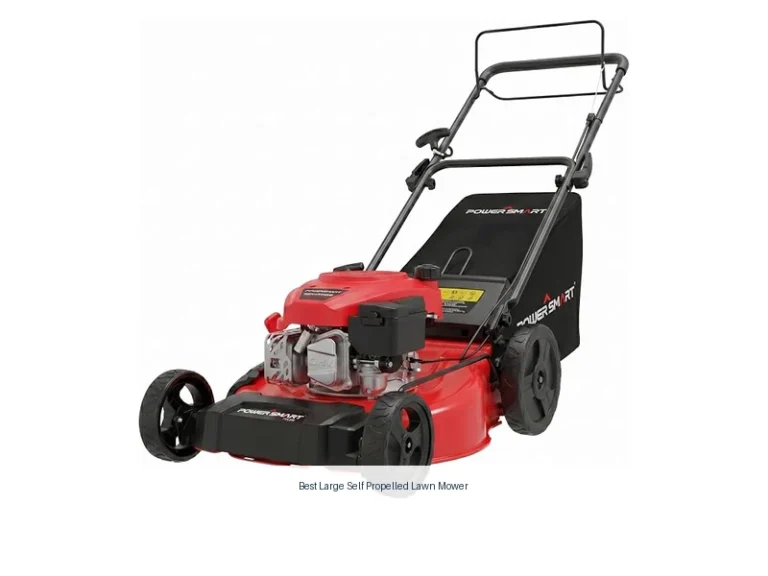
My first choice is PowerSmart 21-Inch Self-Propelled Gas Lawn Mower. It stands at the top of this 5-product list because it offers the strongest overall fit for the buying priorities covered below.
My second choice is Greenworks 80V 21-Inch Self-Propelled Lawn Mower. It is the option I would compare next when a buyer has slightly different priorities from my first pick.
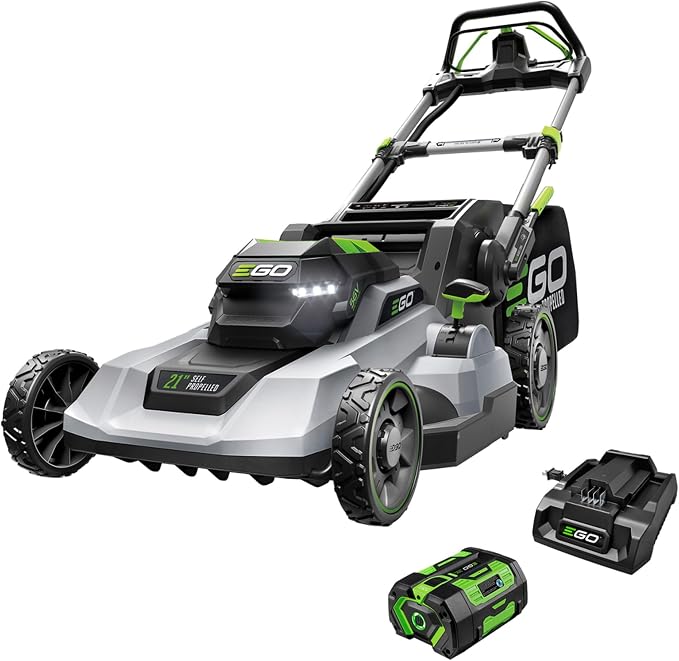
My third choice is EGO Power+ LM2114SP 21-Inch Self-Propelled Cordless Lawn Mower. It rounds out my top three with a useful alternative for buyers whose priorities differ from the first two choices.
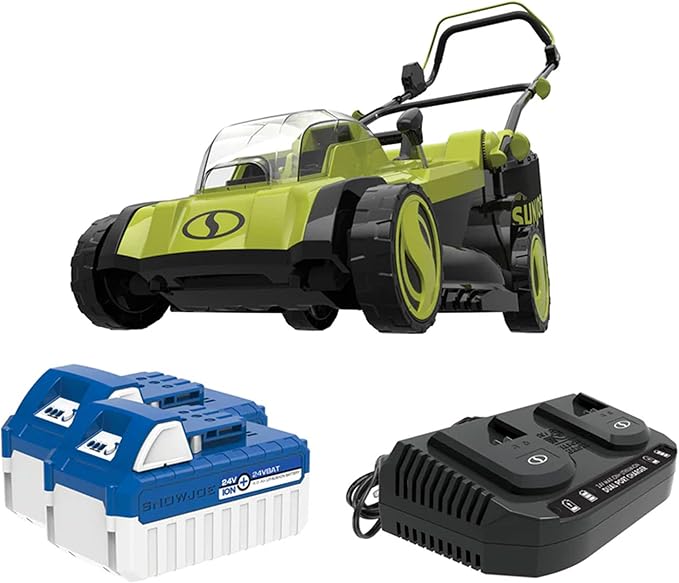
The Greenworks 80V 21in Self-Propelled Lawn Mower 4.0 Ah Battery is my second choice because it offers strong cordless capability without the noise, fuel, and routine engine care associated with gas. The brushless motor, variable-speed rear-wheel drive, LED headlight, and stated ability to cover up to half an acre make it a compelling alternative for homeowners already using the Greenworks 80V system.
.amz-product-card:hover{transform:translateY(-3px)!important;box-shadow:0 10px 26px rgba(20,70,110,.12)!important;border-color:#bdd7ea!important;}
Best Quality Self Propelled Lawn Mower
I selected these mowers for their direct relevance to self-propelled residential mowing, useful feature detail, and available customer-feedback evidence. The selection also represents both gas and cordless designs, different drive approaches, varied cutting-height ranges, and several established product platforms rather than treating one power source as right for every yard.
| # | Image | Product | Price on Amazon |
|---|---|---|---|
| 1 |  |
PowerSmart 21-Inch Self-Propelled Gas Lawn Mower | Check Price |
| 2 | 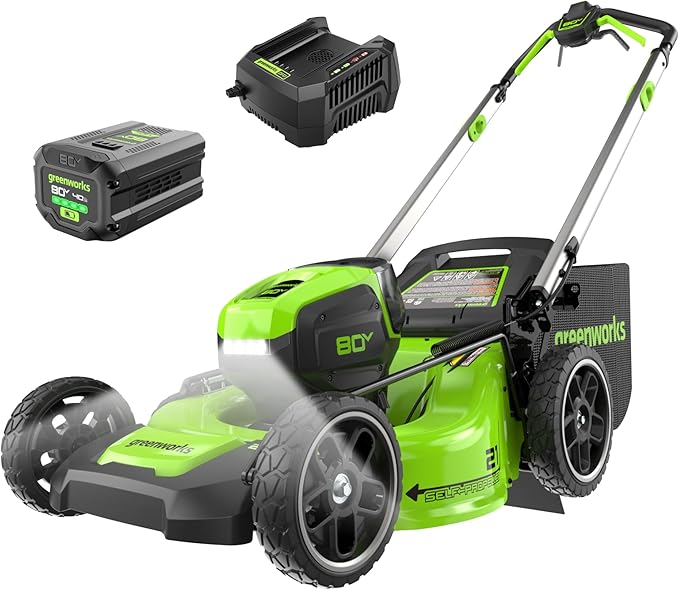 |
Greenworks 80V 21-Inch Self-Propelled Lawn Mower | Check Price |
| 3 |  |
EGO Power+ LM2114SP 21-Inch Self-Propelled Cordless Lawn Mower | Check Price |
| 4 |  |
YARDMAX 22-Inch 201cc Select PACE Self-Propelled Gas Lawn Mower | Check Price |
| 5 |  |
BILT HARD 21-Inch 201cc OHV Self-Propelled Gas Lawn Mower | Check Price |
PowerSmart 21-Inch Self-Propelled Gas Lawn Mower
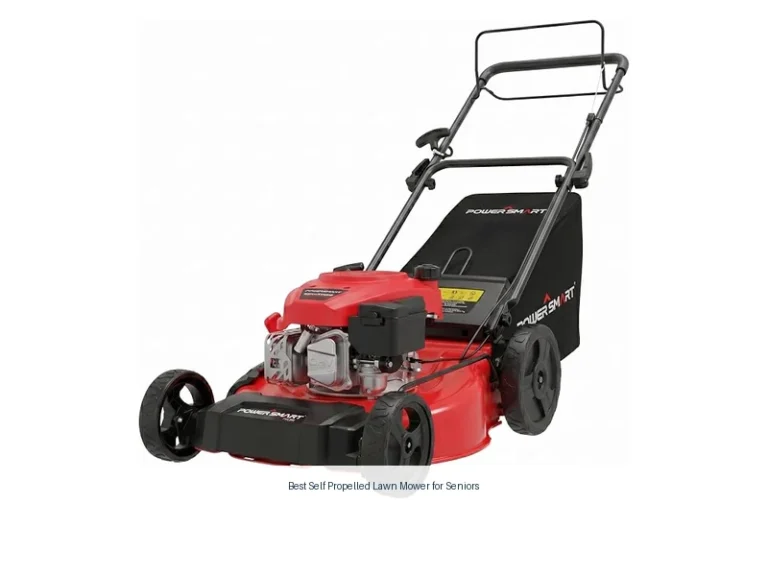
The PowerSmart earns the top position by offering a balanced set of capabilities for a typical medium-sized property. Its 170cc OHV engine supplies the familiar always-ready advantage of gas power, while the 21-inch steel deck covers a useful path without becoming excessively wide for gates, landscaping, or tighter passages.
Rear-wheel drive is an important detail here. It generally suits lawns with slopes or uneven ground because the drive wheels remain useful when the front of the mower rises slightly over changing terrain. The large 10-inch rear wheels should also help the machine move more confidently across rougher sections than a small-wheeled design.
Three-in-one functionality gives the owner a choice between collecting clippings in the 1.4-bushel bag, returning finely cut material to the lawn through mulching, or using rear discharge when speed matters more than collection. A single lever adjusts the cutting height through six positions from 1.5 to 3.9 inches, so the mower can accommodate shorter summer cuts or taller grass when conditions call for it.
The main trade-off is that gas ownership brings engine-related upkeep and operating noise that cordless buyers avoid. The available 3.5-star customer rating across 1,877 ratings also suggests a more mixed ownership picture than the highest-ranked cordless alternatives, so buyers should value the capability and price category rather than expect a universally flawless experience.
Pros
- Rear-wheel drive and 10-inch rear wheels suit slopes and uneven ground.
- Steel 21-inch deck balances coverage with residential maneuverability.
- Bagging, mulching, and rear discharge support different mowing conditions.
- Six height settings cover 1.5 to 3.9 inches.
Cons
- Gas power requires more routine care and produces more operating noise.
- The available customer rating is more mixed than some cordless competitors.
My Opinion
This is the strongest all-around pick for a homeowner who wants a conventional gas mower with useful slope traction and flexible clipping management. It is particularly sensible for medium yards where battery range is a concern, provided the buyer is comfortable with gas maintenance.
Greenworks 80V 21-Inch Self-Propelled Lawn Mower
Greenworks takes second place by delivering a powerful cordless setup with the convenience many homeowners want from electric equipment. The included 4.0Ah battery and charger mean the buyer can begin with a complete mowing system rather than purchasing the energy source separately, while the 80V platform can also support more than 75 compatible tools.
The brushless motor is a practical advantage rather than just a technical label It is intended to provide strong torque quiet operation and long service life making this mower a better fit for neighborhoods where noise matters or for owners who prefer not to handle fuel and engine starting Greenworks states that the battery can cover up to half an acre although grass condition and operator technique.
Variable-speed control lets the operator match the mower’s pace to walking speed, and rear-wheel drive adds traction when the lawn is not perfectly flat. The durable steel deck should withstand normal residential use, while the LED headlight adds flexibility for early or late mowing sessions. A four-year limited warranty for the tool and battery is also meaningful ownership support.
Its primary limitation is dependence on battery capacity and conditions. Dense, wet, tall, or frequently neglected grass can reduce practical coverage, and buyers outside the Greenworks 80V ecosystem may not care about the broader tool compatibility. It also costs the owner more downtime if the battery needs charging before the whole property is finished.
Pros
- 80V brushless system offers quiet cordless operation and strong torque.
- Battery and charger are included.
- Variable-speed rear-wheel drive improves control on changing terrain.
- Works with more than 75 Greenworks 80V tools.
- Four-year limited tool and battery warranty adds ownership confidence.
Cons
- Actual mowing area varies with grass conditions and technique.
- Charging needs can interrupt a long or demanding mowing session.
My Opinion
This is my preferred alternative for a homeowner who wants serious cordless performance and expects to expand into other Greenworks 80V equipment. It offers a strong mix of power, lower noise, and platform value, but the buyer should consider battery range before choosing it for a larger or heavily overgrown property.
EGO Power+ LM2114SP 21-Inch Self-Propelled Cordless Lawn Mower
The EGO LM2114SP is an appealing middle ground between simple cordless convenience and demanding mowing performance. Its included 56V 6.0Ah ARC Lithium battery provides up to 50 minutes of stated runtime on one charge, giving many typical residential users enough time to finish routine mowing without a gas engine.
EGO specifies up to 6.0 foot-pounds of cutting torque, a figure intended to communicate strong cutting capability when grass becomes thicker. The brushless motor should also help keep vibration and routine motor wear lower than on a conventional gas design. Push-button starting makes the beginning of each session straightforward, with no fuel preparation or engine warm-up procedure.
Small control details improve its appeal. The dual-toggle handleset allows the self-propel function to be engaged with either hand, which may feel more natural when changing grip or navigating around obstacles. Seven cutting-height positions cover 1.25 to 4 inches, and the mower can mulch, bag, or side-discharge clippings. That range gives owners more flexibility than a basic fixed-purpose cordless mower.
The biggest consideration is runtime. “Up to” 50 minutes is not a promise for every lawn, and thick grass, frequent self-propel use, or a high cutting setting can affect how long the battery lasts. Buyers with larger properties may need additional battery planning, while those who already own compatible EGO equipment may find the included battery especially valuable.
Pros
- Included 56V 6.0Ah battery provides up to 50 minutes of stated runtime.
- Up to 6.0 ft-lbs of stated cutting torque supports demanding grass.
- Dual-toggle handle allows self-propel engagement with either hand.
- Seven height settings span 1.25 to 4 inches.
- Supports mulching, bagging, and side discharge.
Cons
- Actual runtime can vary with grass, terrain, and drive use.
- Larger yards may require additional charging or battery planning.
My Opinion
The EGO is a well-rounded cordless choice for buyers who want easy starting, broad cutting adjustments, and strong stated torque. It ranks behind Greenworks mainly because its listed platform and coverage details are less generous for a buyer focused on a full-yard cordless ecosystem, not because it lacks useful mowing capability.
YARDMAX 22-Inch 201cc Select PACE Self-Propelled Gas Lawn Mower
YARDMAX approaches self-propelled mowing differently with its Select PACE six-speed continuously variable transmission. Instead of forcing the operator to accept one fixed travel speed, the shift lever lets the pace be adjusted to match walking speed. That can be particularly helpful for users who find many self-propelled mowers too fast on flat ground or too slow when covering open areas.
The 22-inch cutting width is slightly broader than the 21-inch decks used by the other top entries. It may reduce the number of passes across an open lawn, although the extra width can be less convenient around narrow gates, beds, or closely spaced obstacles. High wheels with aggressive spiked tread are intended to improve traction and maneuverability, which supports the mower’s focus on changing terrain.
Starting is simplified by an automatic choke system, so the operator does not need to manually prime or choke the engine. A single-lever deck adjustment makes height changes quicker, while the deck cleanout port can make underside cleaning more convenient after mowing. These are small ownership details, but they matter when the mower is used regularly.
This model uses front-wheel drive, unlike the rear-wheel-drive choices above. Front drive can be easy to maneuver and useful when lifting the front slightly to turn, but it may not feel as planted on slopes as rear drive. The available 4.0-star rating from 428 ratings is encouraging, though buyers should still prioritize terrain and preferred walking pace when deciding whether its drive layout suits them.
Pros
- Six-speed CVT allows more precise pace matching.
- 22-inch deck can reduce passes across open lawn areas.
- Spiked high-wheel tread supports traction and maneuverability.
- Automatic choke simplifies starting.
- Deck cleanout port helps with underside cleaning.
Cons
- Front-wheel drive may be less suitable for some sloped lawns.
- The wider deck may be awkward in narrow or obstacle-heavy spaces.
My Opinion
YARDMAX is the best fit here for buyers who care most about adjustable walking pace and a wider cutting path. I would favor it for relatively open yards with mild terrain, while homeowners dealing with significant slopes may prefer a rear-wheel-drive alternative.
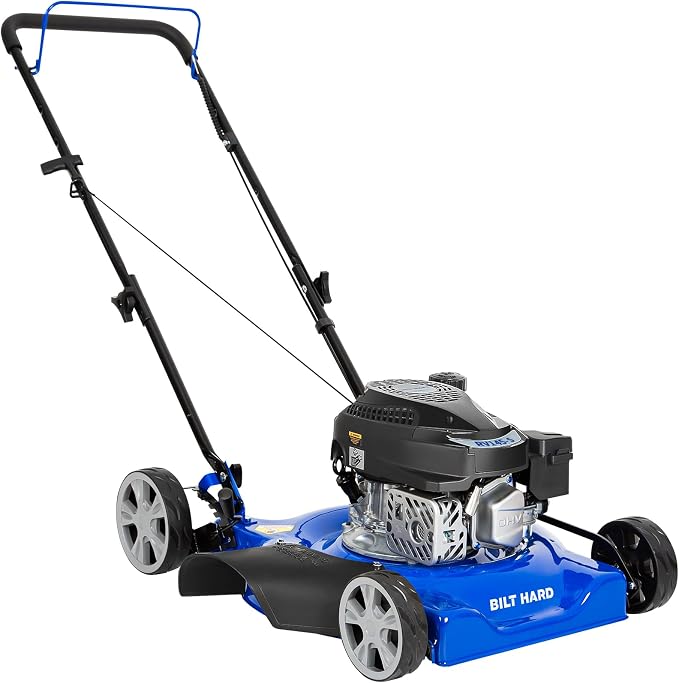
BILT HARD 21-Inch 201cc OHV Self-Propelled Gas Lawn Mower
The BILT HARD offers a straightforward gas-powered configuration with a 201cc four-cycle OHV engine and stated 9.0 foot-pounds of torque. That engine size and torque specification make it an appealing candidate for homeowners who want a conventional mower with plenty of stated output for ordinary residential grass and occasional tougher patches.
Its 21-inch steel deck supports three clipping choices: rear bagging, mulching, and side discharge. The side-discharge option is useful when the goal is simply to keep moving through a large area, while bagging gives a tidier finish near sidewalks or landscaped beds. Eight height positions cover 1.2 to 3.75 inches, and one lever adjusts all four wheels together.
Rear-wheel drive and single-speed self-propulsion keep the controls uncomplicated. The foam-wrapped angled handle is intended to reduce hand fatigue, an especially useful consideration for longer mowing sessions. Starting is also described as no-choke and no-primer, which removes two common manual steps from gas mower operation.
There are limits to the simple approach. A single-speed drive does not let every operator fine-tune the pace, and gas ownership still involves fuel, storage, and engine maintenance. The product has 118 available ratings with a 4.2-star average, a useful but smaller feedback pool than the higher-volume entries. Buyers should also confirm that the mower’s support and parts availability meet their expectations before committing.
Pros
- 201cc OHV engine provides substantial stated torque.
- Three-in-one mowing supports bagging, mulching, and side discharge.
- Eight height settings span 1.2 to 3.75 inches.
- No-choke, no-primer starting is beginner-friendly.
- Rear-wheel drive and angled foam-wrapped handle support easier handling.
Cons
- Single-speed propulsion offers less pace control.
- Gas operation requires fuel and engine upkeep.
- The available customer-feedback pool is smaller than several competitors.
My Opinion
BILT HARD is a sensible value-oriented choice for buyers who want strong stated engine output and uncomplicated controls. It is less flexible than YARDMAX for speed adjustment, but its broad height range and no-choke starting make it easy to understand for a homeowner who prefers a traditional gas mower.
How I Selected These Self-Propelled Lawn Mowers
For this best quality self propelled lawn mower comparison, I prioritized features that affect daily results instead of simply collecting the longest specification lists. Cutting width, propulsion layout, height adjustment, discharge options, engine or battery design, and starting procedure all received attention because each one changes how the mower behaves in a real yard.
I also considered the type of property each model appears best suited to handle. Rear-wheel drive can be attractive for slopes, adjustable speed matters when walking pace varies, and a wider deck can save time in open spaces. For cordless models, battery size, stated coverage, charging implications, motor design, and compatibility with a wider tool family were important parts of the comparison.
Customer-feedback evidence helped provide context rather than acting as the only ranking factor. The available ratings range from 3.5 to 4.4 stars, and the number of ratings varies considerably, so those figures should be read as signals rather than guarantees. A mower can fit one owner’s terrain and habits much better than another’s.
Prioritize the mower’s drive system and power source before focusing on small convenience features. A perfect bagging setup cannot compensate for a drive layout that feels unstable on your slopes or a battery that cannot cover your normal mowing area.
“Self-propelled” does not automatically mean effortless. The operator still needs to guide the mower, choose a suitable pace, keep the blade maintained, and avoid asking the machine to cut too much grass in one pass.
How to Choose a Quality Self-Propelled Lawn Mower
The right choice depends on yard size, surface shape, grass condition, storage arrangements, and tolerance for engine maintenance or charging. Use the following quick priorities before comparing individual features.
- Match the power source to the property: Gas suits longer, less predictable sessions, while cordless power reduces noise and engine upkeep.
- Choose drive layout by terrain: Rear-wheel drive is often more reassuring on slopes; front-wheel drive can be convenient for turning and flatter lawns.
- Use deck width strategically: A 21-inch deck is versatile, while a 22-inch deck may save passes in open spaces but need more room around obstacles.
- Check cutting-height range: More positions make it easier to adapt to seasonal growth and preferred grass length.
- Think beyond the mower: Battery ecosystem, charger access, storage space, fuel handling, and replacement-part support all affect ownership.
Gas or Battery Power
Gas mowers remain useful when mowing time is uncertain. Refueling is quicker than waiting for a battery, and an engine can be a practical match for thick growth or a property that takes a long time to finish. The trade-off is more noise, exhaust, fuel storage, and routine care.
Battery models are easier to start and generally quieter. They are attractive for early morning mowing, close neighborhoods, and owners who already have compatible outdoor tools. Their practical limitation is energy planning: the stated maximum runtime or coverage can decrease when grass is tall, wet, dense, or cut while using self-propel continuously.
Rear-Wheel Drive Versus Front-Wheel Drive
Rear-wheel drive places powered traction near the operator and often feels more secure when the mower is climbing or crossing a slope. It can be a strong choice for uneven yards, though the mower may not pivot quite as casually as a front-drive design.
Front-wheel drive can make turning and repositioning simple, especially on flatter lawns with many trees or garden borders. It may be less confidence-inspiring on steeper ground because the front wheels can become lighter when the handle is lifted. Neither layout is universally superior; terrain should decide.
Deck Width, Wheels, and Maneuverability
A wider deck cuts more grass with each pass, but it also needs more clearance. Measure narrow gates and consider the space between shrubs before choosing the broadest option. Large or aggressively treaded wheels can help with uneven ground, yet they do not eliminate the need to slow down around roots, holes, or soft soil.
Cutting Height and Clipping Management
Adjustable height matters because cutting too low can stress grass, while leaving grass too tall can make the next session harder. A mower with one synchronized height lever is usually easier for beginners than a design requiring individual wheel adjustments.
Mulching is convenient when the grass is dry and the cutting schedule is regular. Bagging creates a cleaner appearance and is useful near hard surfaces, but the bag fills faster in heavy growth. Discharge saves time when cleanup is not important, although clippings should be directed away from paths, beds, and nearby property.
Setup Tips Before the First Mow
Begin by reading the supplied instructions and confirming which parts must be installed before starting. Gas models may require handle, bag, discharge, or safety-control assembly, while cordless models need the battery charged and seated correctly. Do not assume a mower is ready simply because the box is open.
- Inspect the deck, wheels, handle, and discharge components for loose hardware.
- For gas models, use the fuel type and oil procedure specified in the instructions.
- For battery models, charge the battery fully and learn the charger indicators.
- Set the deck high for the first pass if the grass is long or unfamiliar.
- Walk the lawn and remove stones, sticks, toys, wire, and other hidden objects.
- Test the drive control in a clear area before approaching slopes or obstacles.
Keep the first session conservative. Mow a small section, check the cut quality, and confirm that the drive speed feels manageable. This is also a good time to determine whether the bag fills too quickly or whether the chosen height leaves an even finish.
How to Mow More Efficiently
Self-propulsion should assist your walking rather than pull you off balance. Hold the handle securely, keep both hands available when possible, and use a slower pace around trees, edging, and uneven transitions. Avoid pushing the mower sideways across a steep slope if the terrain makes the machine difficult to control.
Follow a regular schedule so the mower removes a manageable amount of grass. Cutting very tall growth in one pass can overload the blade, fill a bag rapidly, and reduce battery range. When the lawn has grown substantially, raise the deck and make a second pass later instead of forcing a low cut immediately.
Alternate mowing direction from one session to the next when practical. This can reduce repeated wheel tracks and produce a more consistent appearance. Keep discharge pointed away from people, pets, vehicles, windows, and garden beds.
Maintenance and Storage That Matter
Maintenance requirements vary by power source, but every mower benefits from a clean deck and a sharp, properly installed blade. Disconnect the spark plug wire on applicable gas equipment or remove the battery before working near the blade. Never rely only on the drive-control handle or start button to prevent accidental operation.
Gas Mower Care
Check the oil according to the instructions, keep the air filter and cooling areas clean, and inspect the spark plug and fuel system as part of the recommended service schedule. At the end of the season, follow the manufacturer’s storage guidance for fuel. Store the machine upright only when the instructions permit it, since incorrect tilting can move fluids into areas where they do not belong.
Battery Mower Care
Let the battery and mower cool before charging when the instructions call for it. Keep battery contacts dry and clean, use the supplied or approved charger, and store the battery in a dry location away from extreme conditions. Do not leave a removable battery loose where metal objects can contact its terminals.
Deck and Blade Care
Grass buildup underneath the deck can affect airflow, mulching, and cutting consistency. Remove buildup after the mower is safely disabled, using the cleaning method appropriate for that model. Inspect the blade for bends, cracks, or excessive dullness; sharpening or replacement is preferable to continuing with a damaged cutting component.
Common Mistakes to Avoid
Many disappointing purchases come from choosing a mower by engine size, battery voltage, or deck width alone. Those specifications matter, but they do not answer whether the machine fits the property, storage space, walking pace, or maintenance habits.
- Do not choose a battery mower without considering actual yard size and grass density.
- Do not assume rear-wheel drive is necessary for every flat lawn.
- Do not buy the widest deck if it will not pass through gates or around landscaping.
- Do not cut wet, tall grass at the lowest setting in one aggressive pass.
- Do not store gas or batteries without following the relevant safety instructions.
- Do not ignore the condition of the blade, wheels, bag, or discharge cover.
Safety caution: Stop the mower, remove the battery or disconnect the spark plug as appropriate, and wait for moving parts to stop before clearing a blockage or inspecting the deck.
FAQ About Self-Propelled Lawn Mowers
What is the best quality self propelled lawn mower for a medium yard?
The PowerSmart 21-Inch Self-Propelled Gas Lawn Mower is the strongest overall match in this comparison for a medium yard. Its 21-inch steel deck, rear-wheel drive, six height settings, and three clipping modes cover the needs of many typical residential properties.
Is a cordless self-propelled mower better than a gas model?
Neither is automatically better. Cordless models are quieter, easier to start, and require less engine maintenance, while gas models avoid battery-range concerns and can be refueled quickly. Choose based on yard size, grass conditions, storage, and whether you already own compatible batteries.
Which self-propelled mower is best for slopes?
Rear-wheel-drive models are generally the most logical choices among these products for sloped ground. The PowerSmart, Greenworks, EGO, and BILT HARD models use rear-wheel drive, while the YARDMAX uses front-wheel drive. Terrain steepness, surface condition, and operator control still matter.
How much battery runtime is enough for a lawn mower?
That depends on lawn size, grass density, cutting height, and how often self-propel is engaged. The EGO lists up to 50 minutes of runtime, while Greenworks states up to half an acre with a fully charged 4.0Ah battery. Treat both as maximum-style guidance rather than a guarantee for every yard.
Is a 21-inch deck large enough for most homeowners?
A 21-inch deck is a versatile residential size that balances coverage and maneuverability. It is usually easier to guide around trees, beds, and gates than a wider deck. A 22-inch model can save passes on an open lawn, but the difference may be less important than drive control and power-source fit.
Final Thoughts
The best quality self propelled lawn mower depends on the yard as much as the machine. The PowerSmart 21-Inch Self-Propelled Gas Lawn Mower is my top all-around choice, followed by the Greenworks 80V 21-Inch Self-Propelled Lawn Mower with Battery and Charger for cordless platform value, and the EGO POWER+ LM2114SP for flexible, capable battery-powered mowing. Choose among them by prioritizing terrain, coverage, maintenance preferences, and the controls you will actually enjoy using.

I’m Maya L. Greenwood, a lifelong plant lover who believes anyone can grow something beautiful with the right guidance. After years of testing soil mixes, pruning methods, irrigation tricks, and pest-safe solutions, I started EasyGardenTips.com to turn hard-won lessons into step-by-step advice. From seed starting and container gardens to composting and seasonal checklists, my goal is to make gardening simple, sustainable, and fun.