10 Best Soaker Hose for Flower Beds: Top Picks and Buying Guide
Choosing the best soaker hose for flower beds depends on more than hose length. The right model should distribute water evenly, fit the shape of your beds, connect securely to your faucet or timer, and survive regular exposure to sun, soil, mulch, and foot traffic.
My top recommendation is the Gilmour 25′ Black Flat Weeper Soaker Hose because its compact length, recycled-vinyl construction, flexible flat profile, and above- or below-ground installation make it a practical match for many flower beds. The Rocky Mountain Goods Soaker Hose is the clear alternative if you need a longer 50-foot hose and prefer a heavy-duty recycled-rubber design with reinforced fittings.
The products below were compared for flower-bed suitability, watering consistency, construction, connection options, storage, length flexibility, and the setup details that affect real-world use. The ranking also considers how well each hose fits common residential watering layouts rather than treating length alone as the deciding factor.
Best Soaker Hose for Flower Beds Picks at a Glance
| Product | Name | Price |
|---|---|---|
 |
Gilmour 25′ Black Flat Weeper Soaker Hose | Check Price |
 |
Rocky Mountain Goods Soaker Hose | Check Price |
 |
15 FT 1/2″ Round Soaker Hose For | Check Price |
 |
Short Soaker Hose 25ft -5/8 Round Rubber | Check Price |
 |
LINEX Flat Soaker Hose 1/2″ X 50 | Check Price |
 |
Hlinker Flat Soaker Hose 75 150 FT | Check Price |
 |
4-Pack Flat Soaker Hose 25FT for Garden | Check Price |
 |
Flat Soaker Hose 100FT for Garden | Check Price |
 |
Gilmour 75′ Black Flat Weeper Soaker Hose | Check Price |
 |
Gilmour 50′ Black Flat Weeper Soaker Hose | Check Price |
1. Gilmour 25′ Black Flat Weeper Soaker Hose
The Gilmour 25′ Black Flat Weeper Soaker Hose earns the top spot because it balances easy handling with the features most flower beds need. Its 25-foot length is manageable for a front-yard border, small planting island, raised bed, or a section of foundation landscaping without leaving a large coil to hide or store. The flat profile can be snaked around plants and rolled up when the season ends, which is helpful when storage space is limited.
Made from 100% recycled vinyl, the hose has a clog-resistant fabric cover designed to promote consistent soaking. Water is delivered along the hose instead of being sprayed into the air, helping place moisture closer to plant roots while reducing evaporation and runoff. The supplied product information indicates potential water savings of up to 80% compared with traditional watering methods, although actual results depend on pressure, soil, layout, and watering time.
Another advantage is installation flexibility. It can be placed above ground or lightly buried, and it can be linked with additional hoses to create a larger DIY irrigation arrangement for flowers, herbs, vegetables, or shrubs. Its UV-resistant construction is intended for repeated outdoor use across multiple seasons.
The trade-off is that a flat weeper hose may need to be unrolled and positioned carefully before it waters evenly. It also may not be the right choice for a very large bed that requires a single long run. Use a compatible garden-hose connection, begin with moderate water pressure, and check the soil beneath several points of the hose rather than judging moisture from the surface. For compact flower beds and gardeners who value simple storage, this is the most versatile starting point.
2. Rocky Mountain Goods Soaker Hose
The Rocky Mountain Goods Soaker Hose is a strong alternative to the shorter Gilmour model, particularly when a 50-foot run is more useful than a compact hose. Its heavy-duty recycled-rubber construction is designed for repeated outdoor use and gives it a more substantial feel than lightweight flat vinyl options. That added material can be useful around established beds, foundation plantings, and longer borders where the hose may remain in place for much of the watering season.
This model is promoted as reducing water use by up to 70% compared with traditional sprinkling systems. Its porous construction allows water to seep gradually along the hose, helping moisture reach the soil instead of being lost to wind or surface evaporation. In flower beds, that can be especially helpful when plants are arranged in rows or groups that benefit from slow, low-level watering.
Reinforced fittings are included, and the hose comes with an end cap. The fittings make it possible to connect another soaker hose when the original 50-foot length is not enough. The capped end is also useful when the hose is used as a single run because it directs water through the porous section instead of allowing an open outlet to waste water.
Its main trade-off is size and weight. Recycled rubber generally takes more effort to move, straighten, and store than a flat hose, and a 50-foot length may be excessive for a small flower bed. Avoid sharp bends and inspect the connections before burying or covering the hose with mulch. This is a practical choice for gardeners who need longer coverage, want a durable rubber-style hose, and may expand their irrigation layout later.
3. 15 FT 1/2″ Round Soaker Hose For
The 15 FT 1/2″ Round Soaker Hose For ranks third because its short length and round design suit small, defined planting areas. A 15-foot hose can fit around a compact flower border, patio bed, or a few rows of plants without requiring excessive looping. That makes it easier to keep the water path close to the root zones instead of watering walkways or bare soil.
According to the supplied information, small droplets emerge evenly from beginning to end, supporting gradual soaking above or below ground. The hose is promoted as saving more than 70% of water compared with traditional watering methods. As with any porous hose, the actual result will depend on how long it runs and whether the soil absorbs water faster than it is delivered.
The round shape offers a different type of flexibility from a flat hose. It can be positioned around curves and lightly covered with soil or mulch, while the stated solid-brass joint should provide a sturdy connection point. The hose is also made from recycled materials and includes a seven-year warranty, which adds useful ownership reassurance for a product intended to remain in service over multiple seasons.
Its limitation is coverage. Fifteen feet is convenient for small beds but may require an additional hose for larger borders, and linking hoses can make pressure management more important. Measure the bed before buying, then place the hose near the plant root zones rather than directly against stems. Start with a moderate flow and watch for dampness at both ends. This model is a good fit when a compact, round hose and a stated long warranty matter more than maximum reach or flat storage.
4. Short Soaker Hose 25ft -5/8 Round Rubber
The Short Soaker Hose 25ft -5/8 Round Rubber is designed for small to medium-sized gardens, making its 25-foot length a useful middle ground between compact 15-foot models and much longer runs. Its round rubber profile can be laid directly on the ground or lightly buried under soil or mulch, so it can work in flower beds, raised garden boxes, vegetable beds, and lawn-edge landscaping.
The hose is made from 100% recycled rubber and is described as lead-free. Tiny pores along the length allow water to seep gradually, supporting consistent hydration while reducing waste from evaporation and runoff. The manufacturer states that it can reduce water usage by up to 70% compared with conventional watering. Solid connectors are intended to resist leaks, cracks, and oxidation, while universal 3/4-inch garden-hose-thread connectors should fit most standard outdoor faucets and garden-hose accessories.
A notable detail is its stated operating pressure of around 60 PSI, with a steady flow rate described in the product information. Because the listing’s flow description is truncated, shoppers should treat the pressure guidance as the more useful setup reference and avoid assuming that every faucet will produce identical results. Multiple hoses can be connected for wider coverage, but longer linked runs may water less evenly if pressure is inadequate.
The round shape is durable and versatile, but it does not store as flat or as compactly as a flat weeper hose. Before installation, straighten it and check every connector for seepage. Covering it lightly can protect the hose and improve appearance, but avoid deep burial that makes inspection difficult. Choose this model when you want recycled rubber, standard connections, and a moderate 25-foot run for a defined planting area.
5. LINEX Flat Soaker Hose 1/2″ X 50
The LINEX Flat Soaker Hose 1/2″ X 50 is a useful long-run option for flower beds that need broad, continuous coverage. Its flat design is easy to unfold and can be positioned beneath plants or lightly under soil, mulch, or ground cover. A 50-foot length can follow a long border or make several passes through a larger bed, although the layout should be planned so the hose does not cross areas where it will be frequently stepped on.
The supplied specifications state a leak rate of 1.8 gallons per minute at 50 PSI and describe water distribution as even along the hose. A high-tensile-strength fabric and kink-resistant plastic inner core are intended to help the hose withstand hot summer conditions while maintaining a consistent flow. The inner core is also described as having two ridges that help the hose roll tightly for storage.
Water is released through the fabric gradually rather than sprayed upward, making this style appropriate for delicate plants and root-level watering. The hose is promoted as a water-saving alternative to conventional watering, and its two-year guarantee provides some support if a material or manufacturing problem develops during ownership.
There is one important buying detail to verify: the product title identifies a 50-foot model, while one supplied feature references a 15-foot hose. Confirm the exact length and package variant on the retailer’s current listing before ordering. Also match the hose to an appropriate faucet connector and test it above ground before covering it. The LINEX is a sensible choice for gardeners who want a flat, storable hose with stated flow information, but shoppers should verify the configuration because the supplied listing details are not completely consistent.
6. Hlinker Flat Soaker Hose 75 150 FT
The Hlinker Flat Soaker Hose 75 150 FT is aimed at gardeners building a larger DIY watering layout. The listing presents it in 75- and 150-foot options, with a 1/2-inch linkable design intended for garden beds and other tight spaces. That range can be useful when a single compact hose is not enough, but the correct length should be selected carefully to avoid unnecessary coils and uneven coverage.
Its recycled-vinyl hose body uses a double-layer design with a PVC interior and extra-strength fabric covering. The cover is described as clog resistant and intended to help water seep consistently over the hose’s full length. The fabric also provides protection from sun exposure compared with an unprotected weeping hose. The flat shape lies beneath existing plant growth more easily than a bulky round hose and rolls up for storage when the season is finished.
End-to-end connections use garden-hose threads, and rust-resistant end caps allow multiple sections to be linked. The system is also described as compatible with timers, which makes scheduled watering more convenient once the pressure and timing are adjusted. It can be installed above ground or buried beneath up to three inches of mulch or soil.
Pressure is especially important with a long, linked system. The supplied guidance recommends 40–90 PSI for best results and says hot water is not suitable. Even within that range, a 150-foot run may require testing at several points to confirm that the far end is receiving adequate moisture. Start with the shortest practical configuration, keep the hose free from sharp kinks, and use the one-year warranty as an ownership resource if a covered issue appears. This is a better fit for expandable beds than for a small flower border.
7. 4-Pack Flat Soaker Hose 25FT for Garden
The 4-Pack Flat Soaker Hose 25FT for Garden earns its position through flexibility rather than a single standout specification. Four 25-foot sections give gardeners more control over separate flower beds, vegetable rows, containers, or narrow landscaping strips. Instead of forcing one long hose through an irregular yard, you can position individual sections where plants actually need water and connect only the runs required for a particular zone.
Like other flat soaker hoses, this model releases water slowly and evenly along its length. That root-level delivery can reduce water lost to evaporation, runoff, or overspray compared with traditional sprinkling. The listing describes the material as heavy duty and resistant to punctures, tears, kinks, sunlight, outdoor exposure, and heavy foot traffic. Those claims make it suitable for active garden areas, though it is still wise to avoid dragging it across sharp stones or cutting tools.
The flat construction also helps with storage. Each section can be rolled up compactly when not in use, and installation does not require specialized tools. The product is described as compatible with existing watering systems and suitable for garden beds, flower beds, and vegetable patches. Available size variations are mentioned in the listing, so check whether the selected package includes the 25-foot sections and the connection hardware needed for your layout.
The main trade-off is that a multi-pack can require more planning than a single hose. Connecting all four sections may create pressure or flow differences, particularly if the faucet is weak or the runs are arranged in series. For consistent watering, divide the garden into zones or test the farthest section first. This pack is a strong choice for gardeners with several separate beds who value modular coverage more than the simplicity of one continuous hose.
8. Flat Soaker Hose 100FT for Garden
The Flat Soaker Hose 100FT for Garden provides 100 feet of total coverage through a two-pack of 50-foot hoses. That arrangement can serve a large flower border, multiple beds, or a developing drip-irrigation layout without requiring one uninterrupted 100-foot section. The two hoses can also be used independently, which is helpful when different beds need separate watering schedules.
The hose uses a heavy-duty double-layer construction with a thickened inner PVC layer and high-density outer fabric sheathing. The design is described as flexible, leakproof, kink resistant, and better protected against daily wear and weather. Anodized aircraft-aluminum inlet and outlet connectors are intended to resist rust and leaks, while the 360-degree rotating inlet can make installation easier when the faucet or timer is positioned awkwardly.
Both ends use standard 3/4-inch threaded fittings, allowing connection to faucets, timers, and additional garden equipment. The manufacturer states that the hose can save up to 80% water by delivering moisture through numerous small openings directly toward plant roots. It can be laid flat on the ground or used as part of a broader DIY irrigation system. The recommended operating pressure is 40–60 PSI, and the listing suggests pairing it with a pressure-regulating valve for more stable distribution.
Large coverage is also its main challenge. A 100-foot total system can be excessive for a small bed, and long runs should be tested before they are hidden under mulch. Use the pressure range as a guide, connect the regulator if needed, and confirm that both sections receive water evenly. This model makes the most sense for gardeners who need substantial coverage, want corrosion-resistant connectors, and are comfortable dividing or extending their watering layout.
9. Gilmour 75′ Black Flat Weeper Soaker Hose
The Gilmour 75′ Black Flat Weeper Soaker Hose is a longer version of the same general flat weeper design used by the top-ranked Gilmour model. Its 75-foot length is useful for extensive foundation plantings, long flower borders, orchards, or several connected sections of a larger garden. It ranks below the 25-foot version mainly because its reach is less convenient for small beds and can make positioning, pressure management, and storage more demanding.
The hose is made from 100% recycled vinyl and uses a clog-resistant fabric cover for consistent soaking. Water is intended to seep through the hose near the root zones rather than spray broadly across leaves and pathways. The product information indicates that it can be installed above or below ground and may save up to 80% water compared with traditional watering. Actual water use will still depend on local pressure, soil type, run time, and whether the hose is covered.
Its UV-resistant construction is designed for continuous outdoor use over multiple seasons. The flat profile remains flexible and lightweight for a hose of this length, and it can be linked to other sections for a custom drip-irrigation arrangement. That makes it practical for gardeners who expect their beds to expand or who want one hose to follow a long, winding border.
The limitation is that longer flat hoses can be harder to lay evenly, especially around mature plants or tight corners. Before burying it, run a short test and check moisture at the beginning, middle, and far end. Use compatible fittings and avoid leaving sharp folds that can restrict flow. Select this 75-foot model when coverage matters more than compact handling; for a small flower bed, the shorter Gilmour version is easier to control and store.
10. Gilmour 50′ Black Flat Weeper Soaker Hose
The Gilmour 50′ Black Flat Weeper Soaker Hose sits at number ten because it offers a useful in-between length but faces strong competition from the shorter and longer versions in the same family. Fifty feet can be enough for a medium flower bed, a long foundation planting, or several passes through a larger garden. It is less cumbersome than a 75-foot hose while providing more reach than a 25-foot model.
Its 100% recycled-vinyl construction and clog-resistant fabric cover are designed to support consistent soaking. The flat hose can be laid above ground or installed below ground, allowing gardeners to conceal it beneath a light layer of soil or mulch after confirming that water is distributing properly. The product information states that the hose can deliver water directly to roots while saving up to 80% water compared with traditional watering methods.
UV-resistant materials are intended to support repeated outdoor use across multiple seasons. The hose is also linkable, so it can become part of a larger DIY drip-irrigation system for flower beds, vegetables, herbs, lawns, or orchards. Because it is lightweight and flexible, it should be easier to move and store than a comparable heavy rubber hose.
Its practical trade-off is coverage precision. Fifty feet may be too much for a compact bed and too little for a large property, leaving the gardener to coil excess hose or add another section. Measure the bed’s actual path before buying, and avoid placing the hose directly against delicate stems. Test the hose with the intended faucet, timer, or connector first, then roll it without tight kinks for seasonal storage. It is a reasonable general-purpose choice when a mid-length flat hose fits the layout better than the 25- or 75-foot alternatives.
How to Choose the Best Soaker Hose for Flower Beds
A soaker hose works by releasing water gradually through porous material or small openings along its length. Instead of throwing water into the air like a sprinkler, it places moisture near the soil surface and plant roots. That approach is particularly useful in flower beds because it limits leaf wetting, reduces overspray onto paths, and makes it easier to water a defined planting area.
Match the length to the bed layout
Measure the route the hose will follow, not merely the width or square footage of the bed. A hose should sit close to the plants without creating large loops over walkways. For a compact border or small raised bed, 15 or 25 feet may be easier to control. Medium beds often suit 50 feet, while 75- to 100-foot systems are more appropriate for long borders or multiple zones.
More hose is not automatically better. Excess length can create kinks, make storage harder, and contribute to uneven watering if the water pressure is not sufficient. A multi-pack can be more practical than one very long run when beds are separated or need to be watered independently.
Choose between flat and round construction
Flat soaker hoses are generally lightweight, easy to roll, and convenient to snake beneath plants or store in tight spaces. They can be a good match for seasonal flower beds and irregular borders. Their flat shape may need careful positioning after storage, and sharp folds can restrict water flow.
Round rubber hoses tend to feel more substantial and can hold their shape around curves. They are often suitable for beds where the hose will remain in place for long periods. The trade-off is greater weight and less compact storage. Whichever shape you choose, place it close to root zones and avoid burying it deeply enough that inspection or repairs become difficult.
Consider the material and outdoor exposure
Recycled vinyl, fabric-covered vinyl, and recycled rubber appear throughout these options. Look for UV resistance or an exterior cover when the hose will remain exposed to direct sun. A fabric layer can help protect the inner hose and may support more consistent seepage, while rubber can offer a durable, substantial construction for permanent layouts.
Material claims do not eliminate ordinary care. Keep hoses away from sharp pruning tools, rough gravel, and repeated vehicle traffic. If a hose is placed under mulch, use a light covering and confirm that the bed drains well. Standing water around roots can be as harmful as insufficient watering.
Check fittings and connection compatibility
Most garden soaker hoses use standard garden-hose threads, but the included fittings, end caps, and connection quality vary. A capped end is useful for a single run because it keeps water moving through the porous section. Linkable models can expand coverage, but every additional connection is another place where leaks or pressure loss can occur.
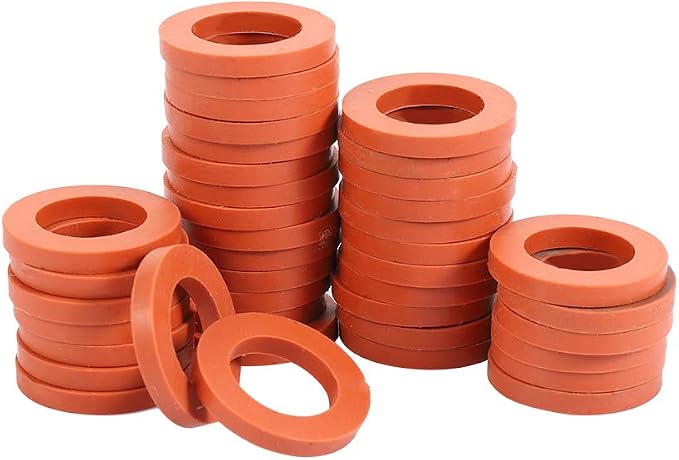
If you plan to use a timer, pressure regulator, splitter, or quick-connect accessory, verify that the hose fittings match your existing equipment. Models with reinforced, solid, anodized, or rust-resistant connectors may be preferable for installations that are assembled and disassembled frequently. Hand-tighten connections first, then inspect for leaks before reaching for tools; over-tightening can damage washers or threads.
Understand water pressure and flow
Soaker hoses need enough pressure to distribute water along their length, but excessive pressure may cause uneven flow, leaks, or premature wear. The supplied products provide different guidance: Hlinker recommends 40–90 PSI, the 100-foot flat hose lists 40–60 PSI, and the 25-foot round rubber hose references operation around 60 PSI. These figures are product-specific, so use the instructions for the model you buy rather than assuming all soaker hoses behave alike.
Run a new hose above ground before covering it. Check whether the beginning, middle, and far end are all producing moisture. If the faucet side is saturated while the far end is dry, reduce the total length, split the system into zones, or use a suitable pressure-control component if the product supports one. A pressure regulator can help stabilize delivery, but it cannot compensate for an unsuitable connection or an overly long run.
Place the hose correctly in a flower bed
Lay the hose with the seepage side facing the soil as directed by the product instructions. Position it near the root areas rather than directly against plant stems or crowns. For rows of flowers, a gentle serpentine pattern can provide more even coverage than a single line along the edge. Leave enough space between parallel runs for the soil to absorb moisture without creating saturated strips.
Mulch can help hide the hose and reduce surface evaporation, but do not cover it until the watering pattern has been tested. Keep connectors accessible where possible. If you change the bed’s plant arrangement, reposition the hose rather than relying on one fixed location for every season.
Set watering time by soil condition
There is no universal run time for every flower bed. Sandy soil drains faster than dense clay, raised beds may dry more quickly than established in-ground beds, and newly planted flowers can have different needs from mature perennials. Begin with a short test cycle and inspect the soil several inches below the surface near multiple plants. Extend the next cycle if the deeper soil remains dry, or shorten it if water pools or the bed stays saturated.
A timer can make regular watering easier, particularly for long or buried hose layouts. However, automation should be adjusted after rain, during heat waves, and when seasonal temperatures change. Do not assume that a timer guarantees even watering; first confirm that the hose is distributing moisture uniformly.
Maintain and store the hose
At the end of the season, disconnect the hose and drain it before storage. Rinse away soil or debris when appropriate, let it dry, and coil it loosely without tight bends. Flat models should be rolled carefully so they do not develop permanent folds. Store the hose in a protected area away from freezing temperatures, rodents, sharp tools, and direct sunlight.
During the season, inspect connectors, end caps, and exposed sections for leaks or cracking. A clog-resistant cover can reduce blockage, but clean water and a clean faucet connection are still helpful. If flow changes suddenly, check for a kink, crushed section, blocked fitting, loose washer, or damaged connector before replacing the entire hose.
FAQ About Soaker Hoses for Flower Beds
What is the best type of soaker hose for a flower bed?
A flat soaker hose is often convenient for flower beds because it is lightweight, flexible, and easy to position around plants or store between seasons. A round recycled-rubber hose may be preferable when durability and a fixed layout matter more than compact storage. The best type depends on the bed’s shape, required length, pressure, and whether the hose will stay above ground or be lightly buried.
Should a soaker hose go above or below mulch?
Either placement can work when the product supports it. Test the hose above ground first, confirm that water reaches the full bed, and then cover it lightly with mulch. Avoid deep burial that makes leaks difficult to find, and keep connectors accessible for inspection.
How long should a soaker hose run in a flower bed?
Run time depends on soil, weather, plant maturity, hose length, and water pressure. Start with a short cycle, then check moisture below the surface near the beginning, middle, and end of the hose. Adjust the schedule based on the soil rather than using a fixed time copied from another garden.
Can soaker hoses be connected to a timer?
Yes, many soaker hoses can connect to standard garden timers, provided the fittings are compatible. Test the system manually first, then use the timer after confirming even watering. Long linked runs may need pressure management or separate zones for consistent results.
Why is the end of my soaker hose dry?
A dry far end can result from a kink, excessive hose length, low pressure, a blocked fitting, or too many connected sections. Straighten the hose, inspect the inlet and connections, and test a shorter run. Checking several points along the hose helps identify whether the problem is localized or affects the entire system.
Can I leave a soaker hose outside all winter?
Seasonal storage is safer. Drain the hose, rinse it if needed, allow it to dry, and coil it loosely in a protected location. Freezing water, prolonged sun exposure, sharp bends, and contact with tools or rodents can shorten its useful life.
Final Verdict
The Gilmour 25′ Black Flat Weeper Soaker Hose is the best overall fit for many flower beds because it combines manageable length, flexible recycled-vinyl construction, root-level watering, and easy storage. Choose the Rocky Mountain Goods Soaker Hose when a durable 50-foot recycled-rubber run and expandable fittings better match your garden. Whichever model you select, measure the bed, test water distribution before covering the hose, and adjust watering time to the soil and plants.

I’m Maya L. Greenwood, a lifelong plant lover who believes anyone can grow something beautiful with the right guidance. After years of testing soil mixes, pruning methods, irrigation tricks, and pest-safe solutions, I started EasyGardenTips.com to turn hard-won lessons into step-by-step advice. From seed starting and container gardens to composting and seasonal checklists, my goal is to make gardening simple, sustainable, and fun.