3 Best String Trimmer for Cemetery: Precision Trimming Picks
Are you looking for the best string trimmer for cemetery maintenance? Trimming around headstones, monuments, flower arrangements, curbing, trees, and narrow spaces requires more precision than ordinary open-lawn trimming, so a lightweight cordless string trimmer with variable speed and good debris control is usually the most practical choice.
My primary recommendation is the STIHL FSA 60 R Battery-Powered String Trimmer. Its 13.8-inch cutting width, brushless motor, variable-speed trigger, bump guard, adjustable loop handle, and quiet battery operation provide an excellent balance of productivity and precise control around headstones.
For larger cemeteries or longer trimming sessions, I would consider the DEWALT DCST922P1 20V MAX 14-Inch Brushless String Trimmer. Its 14-inch swath, 5.0Ah battery, Hi/Lo speed control, variable trigger, QuickLoad spool, and folding shaft make it particularly useful for crews moving between large sections of cemetery grounds.
For maximum maneuverability, the WORX WG163 GT 3.0 20V 12-Inch Cordless String Trimmer is my lightweight choice. At roughly 5.5 pounds, with a 12-inch cutting path, telescoping shaft, pivoting head, Command Feed line system, and flower guard, it is exceptionally easy to control around closely spaced monuments and decorative landscaping.

Best String Trimmer for Cemetery
| Image | Product Name | Check Price |
|---|---|---|
Best Choice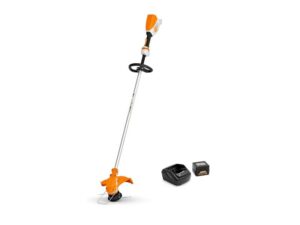 | STIHL FSA 60 R Battery-Powered String Trimmer | Check Price |
Second Best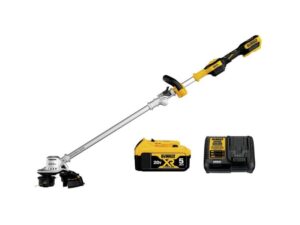 | DEWALT 20V MAX 14-Inch Brushless String Trimmer | Check Price |
Third Choice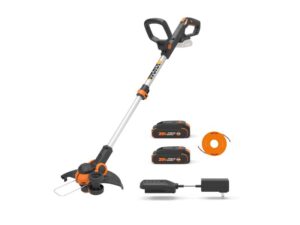 | WORX WG163 GT 3.0 20V 12-Inch Cordless String Trimmer | Check Price |
1. STIHL FSA 60 R Battery-Powered String Trimmer- Best Overall
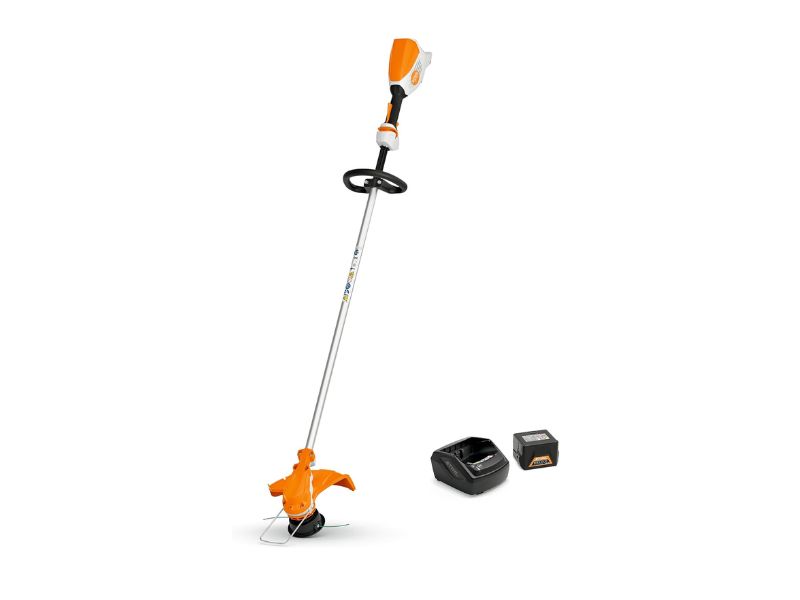
Key Features
- 13.8-inch cutting width
- Brushless electric motor
- Variable-speed trigger
- Adjustable loop handle
- Protective bump guard
- AutoCut C 6-2 mowing head
- EasySpool line-loading system
- Optional compatible cutting heads
- Up to approximately 25 minutes runtime with the recommended AK 20 battery
- Quiet, low-maintenance battery operation
The STIHL FSA 60 R is my first choice because cemetery trimming is primarily about control rather than maximum cutting width.
A commercial mower can handle the open turf between rows, but the string trimmer has to finish everything the mower cannot safely reach.
That includes grass directly around:
- Headstones
- Flat grave markers
- Monuments
- Curbs
- Trees
- Benches
- Flower holders
- Fences
- Memorial decorations
These areas demand a machine that responds precisely to small trigger movements and does not feel cumbersome as the operator repeatedly changes direction.
The FSA 60 R fits that job particularly well.
Variable Speed Is Critical Around Headstones
One of the strongest features is the variable-speed trigger.
There is rarely a good reason to trim around a granite monument at maximum line speed.
Higher speed makes the line more aggressive and can increase the amount of:
- Grass clippings
- Dirt
- Small stones
- Mulch
- Other debris
thrown from the cutting head.
Around open turf, that may not be a major concern.
Around a headstone, decorative vase, visitor, vehicle, or nearby glass ornament, it matters considerably.
With variable speed, the operator can slow the trimmer as the head approaches the monument and increase speed when moving back into heavier grass.
That level of control is one reason I prefer the STIHL over a simple single-speed budget trimmer for cemetery work.
13.8-Inch Cutting Width
The 13.8-inch cutting swath provides a useful compromise.
A 16- or 17-inch head can clear open grass more quickly, but cemeteries contain many tight obstacles.
A moderately sized head is easier to position between markers and along narrow strips of grass.
At 13.8 inches, the STIHL still covers enough area to avoid feeling like a tiny detail trimmer.
For cemetery maintenance, I would rather have slightly more control than one extra inch of cutting radius.
Bump Guard Helps Protect Obstacles
The bump guard is another feature that directly matches this use case.
A string trimmer can damage more than grass.
Repeated line contact may mark:
- Tree bark
- Painted surfaces
- Soft edging
- Decorative objects
and it can rapidly wear trimmer line against stone.
The guard helps the operator maintain spacing from solid obstacles.
Around expensive headstones, that is particularly useful.
I would still train operators to keep the cutting line itself away from monuments rather than relying entirely on the guard.
The guard should be considered an additional control aid, not permission to run the tool directly against stone.
Brushless Motor
The FSA 60 R uses a brushless motor.
Compared with a traditional brushed electric motor, brushless technology eliminates the carbon brushes used for motor commutation.
That provides advantages such as:
- Reduced routine motor maintenance
- Efficient power delivery
- Responsive speed control
- Lower wear
- Good power-to-weight performance
For cemetery crews, low maintenance has practical value.
Gas equipment introduces additional service requirements such as:
- Fuel mixing
- Carburetor care
- Spark plugs
- Air filters
- Exhaust-system maintenance
- Pull-start systems
A battery trimmer removes most of those concerns.
Quiet Operation
Noise is unusually important in cemetery maintenance.
A cemetery is not simply another commercial property.
Visitors may be:
- Attending a service
- Visiting family members
- Participating in a burial
- Spending quiet time at a grave
A loud two-stroke engine can be disruptive even when the landscaping work itself is necessary.
Battery-powered string trimmers are not silent because the line and cutting head still create noise, but eliminating the gasoline engine dramatically changes the character of that noise.
The operator can also release the trigger and the machine immediately becomes quiet rather than leaving a gas engine idling.
That makes cordless equipment particularly appropriate for this environment.
EasySpool Mowing Head
The included AutoCut C 6-2 head with EasySpool lets replacement line be loaded without taking the entire mowing head apart.
For a groundskeeping crew, line-loading convenience matters.
Cemetery trimming involves enormous amounts of edging around hard surfaces.
String repeatedly contacts:
- Stone
- Concrete
- Curbs
- Marker edges
which means line consumption can be higher than when trimming only grass.
A head that reloads quickly reduces downtime.
Runtime Considerations
With the recommended AK 20 battery, STIHL states up to approximately 25 minutes of runtime, depending on use.
That may sound modest compared with oversized battery systems, but cemetery trimming is frequently intermittent.
The operator:
Trims one marker.
Releases the trigger.
Walks to the next.
Trims again.
The motor is not necessarily running continuously.
For a small cemetery, one suitable battery may be enough.
For professional grounds maintenance, I would keep multiple charged batteries available.
What I Like
- Excellent variable-speed control
- Useful 13.8-inch cutting swath
- Bump guard helps around obstacles
- Quiet enough for sensitive properties
- Brushless motor
- Adjustable loop handle
- Easy line replacement
- Low routine maintenance
- Good balance between precision and productivity
What I Do Not Like
- One battery may not cover a large cemetery
- Narrower than commercial 16- to 18-inch trimmers
- Additional batteries increase system cost
- Line can still throw debris if operated too aggressively
The STIHL FSA 60 R is my Best Overall choice because it emphasizes exactly what cemetery grounds require: control, low noise, manageable cutting width, obstacle protection, and comfortable repetitive operation.
2. DEWALT DCST922P1 20V MAX 14-Inch Brushless String Trimmer- Best for Large Cemeteries
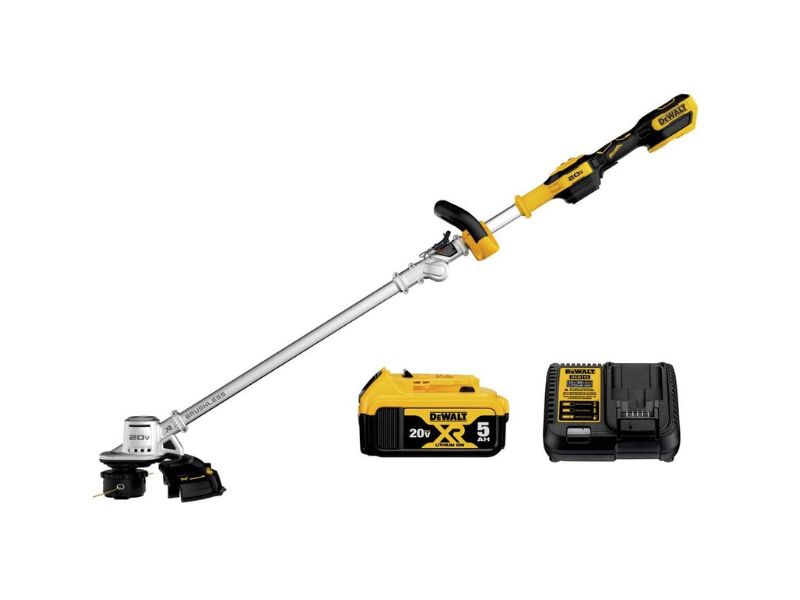
Key Features
- 14-inch cutting swath
- 20V MAX battery platform
- Brushless motor
- 5.0Ah battery included with kit
- Variable-speed trigger
- High/Low speed control
- Approximately 6,000 RPM maximum speed
- QuickLoad spool
- Uses 0.080-inch line
- Folding hinge reduces storage length
- Straight-shaft design
The DEWALT DCST922P1 is my second recommendation and the model I would favor when cemetery acreage and daily operating time become more important.
The 14-inch head remains controllable around markers but offers slightly more working coverage than compact 12-inch trimmers.
More importantly, DEWALT pairs it with a large 5.0Ah 20V MAX battery, brushless motor, and two-stage speed control.
High/Low Speed Control
The DEWALT gives operators both a Hi/Lo selector and variable-speed trigger.
That is an excellent combination for cemetery work.
Low mode can become the normal setting around:
- Headstones
- Curbs
- Trees
- Flower beds
- Decorative borders
The operator can then use higher output in:
- Thick grass
- Open areas
- Fence lines
- Overgrown sections
This is preferable to a trimmer that automatically runs at maximum speed whenever the trigger is pressed.
Controlled line speed improves precision and can reduce unnecessary line wear.
14-Inch Cutting Swath
A 14-inch swath is large enough for productive trimming without creating an oversized cutting circle.
For a cemetery crew moving through hundreds of markers, even small improvements in working width can add up.
At the same time, it remains manageable when trimming narrow grass strips between grave markers.
I consider approximately 13 to 14 inches an especially useful size for this kind of landscaping.
0.080-Inch Line
The DCST922 uses 0.080-inch trimmer line.
For heavy brush, I would prefer 0.095-inch professional line.
For cemetery turf, 0.080 inch can actually be an advantage.
Most cemetery trimming involves:
- Maintained turf
- Lawn edges
- Young grass around monuments
- Light weeds
rather than woody brush.
Lighter line is easier to control and can be less aggressive around sensitive obstacles.
That does not mean contact with monuments is acceptable. Operators should still maintain clearance from stone and decorations.
Brushless Motor
The brushless motor improves efficiency and reduces maintenance.
The DEWALT is well suited to crews that do not want the routine engine servicing associated with gasoline equipment.
There is no:
- Gasoline
- Two-cycle oil
- Choke
- Carburetor
- Pull cord
- Spark plug
Starting is immediate.
Insert a charged battery, engage the required controls, and pull the trigger.
For a crew that repeatedly stops trimming while visitors pass or services take place, instant restart is useful.
Folding Shaft
The DCST922 has a folding hinge that reduces its stored length by approximately 40%.
This may not affect cutting performance, but it is extremely useful for grounds-maintenance crews.
Cemetery equipment often travels in:
- Utility vehicles
- Pickup beds
- Maintenance vans
- Small storage sheds
A folding trimmer occupies less space and is easier to transport beside blowers, hand tools, batteries, and mowing equipment.
QuickLoad Spool
DEWALT’s QuickLoad spool simplifies replacement line installation.
Again, this matters because trimming around hard obstacles tends to consume line.
Rather than disassembling a complicated spool, operators can reload the head relatively quickly.
For commercial-style maintenance, small reductions in downtime can improve productivity over an entire season.
DEWALT Battery Ecosystem
The 20V MAX platform is also useful beyond lawn equipment.
Compatible batteries can support a broad range of tools.
For a cemetery maintenance department, that may include:
- Drills
- Impact drivers
- Reciprocating saws
- Lights
- Blowers
- Hedge trimmers
- Other maintenance equipment
A shared battery platform can simplify charging and inventory.
What I Like
- Brushless motor
- 14-inch swath balances speed and control
- Large 5.0Ah battery supplied in kit
- Variable trigger
- Hi/Lo speed modes
- QuickLoad spool
- 0.080 line suits maintained turf
- Folding shaft improves transportation
- Broad battery ecosystem
What I Do Not Like
- Heavier than ultra-light trimmers
- No dedicated monument-style bump guard like the STIHL
- 0.080 line is not ideal for serious brush
- Large properties will still need spare batteries
The DEWALT DCST922P1 is my choice for a larger cemetery or maintenance crew that values battery capacity, storage convenience, and versatile speed control.
3. WORX WG163 GT 3.0 20V 12-Inch Cordless String Trimmer- Best Lightweight
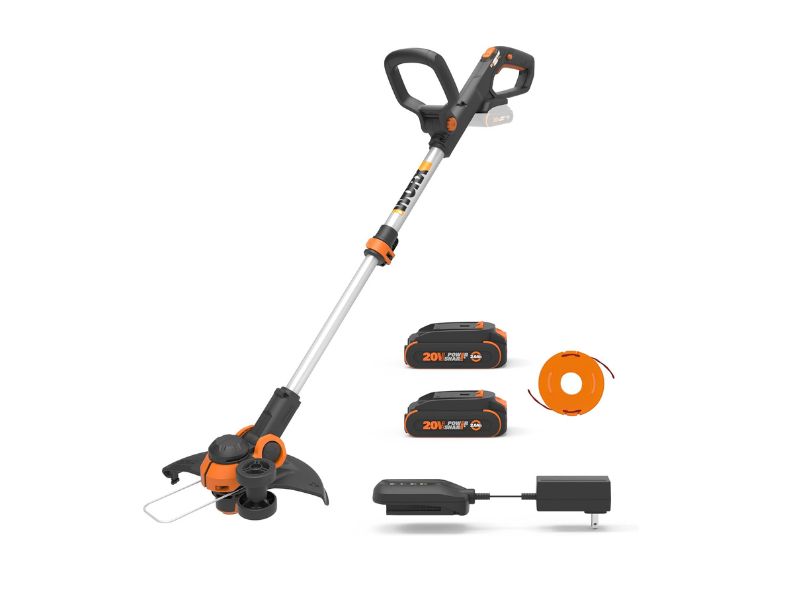
Key Features
- Approximately 5.5-pound machine weight
- 20V PowerShare battery system
- 12-inch cutting diameter
- 0.065-inch trimmer line
- Approximately 7,600 RPM no-load speed
- Telescoping shaft
- Adjustable auxiliary handle
- Pivoting cutting head
- Command Feed line advancement
- Flower/space guard
- Converts to wheeled edging configuration
- Common kit includes two batteries and charger
The WORX WG163 is my third recommendation because cemetery trimming often involves hundreds of small precision movements rather than long periods of heavy cutting.
At approximately 5.5 pounds, the WORX is substantially easier to maneuver than many full-size trimmers.
That lightweight design can become a major advantage when workers need to trim around rows of headstones for several hours.
12-Inch Cutting Width
The 12-inch cutting diameter is the smallest in this comparison.
For an open field, that is a disadvantage.
For tightly spaced cemetery markers, it can be beneficial.
A smaller cutting circle lets the operator position the head precisely without bringing as much spinning line close to:
- Stone
- Flowers
- Flags
- Vases
- Memorial decorations
The trimmer will require more passes in open grass, which is why it ranks behind STIHL and DEWALT overall.
But open grass should normally be handled by a mower anyway.
The trimmer’s job is finishing the difficult areas.
Extremely Low Weight
At around 5.5 pounds, the WG163 is exceptionally manageable.
Repeated cemetery trimming involves constant acceleration and deceleration of the tool with your arms.
You sweep around one monument, lift the head slightly, turn your body, walk to the next marker, and repeat.
A few pounds of weight difference becomes significant after hundreds of repetitions.
For older employees, smaller operators, or anyone prioritizing fatigue reduction, this could be the most comfortable model of the three.
Telescoping Shaft
The telescoping shaft allows the trimmer length to be adjusted to suit the operator.
That matters because proper trimming posture varies according to height.
If the shaft is too short, the operator bends forward.
If it is too long, controlling the head can become awkward.
The adjustable design helps position the cutting head naturally while keeping the back more upright.
Pivoting Head
The cutting head angle can also be adjusted.
This becomes useful around:
- Sloped grave plots
- Curbs
- Raised borders
- Drainage edges
- Decorative beds
Cemetery grounds are rarely completely flat.
The ability to alter head angle lets the operator maintain an appropriate cutting position rather than twisting the entire tool.
Flower Guard
The flower guard, sometimes used as a spacing guard, is particularly appropriate here.
It helps create physical separation between the rotating line and nearby objects.
In a cemetery, those nearby objects may include:
- Flowers
- Memorial decorations
- Small plants
- Monument edges
Again, the operator remains responsible for safe clearance, but an additional visual and physical guide can improve precision.
Command Feed
The Command Feed system lets the operator advance line without repeatedly bumping the head hard against the ground.
This can be useful around polished surfaces and monuments where aggressive bumping is undesirable.
It also keeps operation simple.
0.065-Inch Line
The WG163 uses 0.065-inch line.
This is light-duty line.
For thick weeds, it wears relatively quickly.
For maintained cemetery turf, however, the lighter line provides very controlled trimming.
It is sufficient for regular grass as long as the property is maintained consistently rather than allowed to become heavily overgrown.
What I Like
- Extremely lightweight
- Small 12-inch head provides excellent precision
- Telescoping shaft
- Pivoting head
- Flower/spacing guard
- Command Feed system
- Converts to edging
- Very easy to maneuver between headstones
- Multiple batteries commonly supplied with kit
What I Do Not Like
- 12-inch head is slow in large open areas
- 0.065-inch line wears quickly on rough obstacles
- Less powerful than STIHL and DEWALT
- Not intended for thick commercial overgrowth
The WORX WG163 is the trimmer I would choose when minimum weight and maximum maneuverability around closely spaced monuments matter more than raw cutting power.
String Trimmer for Cemetery Comparison
| Product | Cutting Width | Line Size | Speed Control | Key Precision Feature | Best For |
| STIHL FSA 60 R | 13.8 in. | Medium-duty | Variable | Bump guard | Best overall cemetery maintenance |
| DEWALT DCST922P1 | 14 in. | 0.080 in. | Variable + Hi/Lo | Controlled power + folding shaft | Larger cemetery grounds |
| WORX WG163 | 12 in. | 0.065 in. | Trigger control | Flower guard + pivoting head | Lightweight precision work |
For most cemetery grounds, the STIHL FSA 60 R provides the strongest balance.
The DEWALT offers more battery capacity and transportation convenience, while the WORX provides exceptional maneuverability when monuments are closely spaced.
What Makes a Good String Trimmer for Cemetery Maintenance?
Cemetery grounds present a very specific trimming environment.
Maximum horsepower is rarely the priority.
The best machine should provide:
- Fine speed control
- Moderate cutting width
- Low operating noise
- Good balance
- Lightweight handling
- Reliable line feeding
- Protection around obstacles
- Sufficient battery runtime
Why I Prefer Cordless Over Gas for Cemeteries
Gas string trimmers remain powerful and can be refueled quickly.
However, battery trimmers have several advantages in this environment.
Lower Noise
A cemetery benefits from quiet equipment more than almost any other landscaped property.
Battery power dramatically reduces engine noise.
Instant Stop and Start
If visitors approach or a service begins nearby, an operator can simply release the trigger.
There is no gas engine continuing to idle.
No Exhaust Around Visitors
Cordless equipment eliminates small-engine exhaust directly around graves and gathering areas.
Lower Routine Maintenance
Battery equipment eliminates:
- Carburetor cleaning
- Fuel mixing
- Spark-plug replacement
- Pull-start repairs
For a maintenance department managing several tools, that reduction in service requirements adds up.
Cutting Width: Smaller Can Be Better
For commercial open-area trimming, wider heads increase productivity.
Cemetery work is different.
A 12- to 14-inch cutting swath provides enough productivity while maintaining good control around obstacles.
Very wide 17- or 18-inch heads increase the radius of spinning line around the operator.
That can be unnecessarily difficult around tightly spaced headstones.
Why Variable Speed Matters
A cemetery trimmer should not operate at maximum power everywhere.
Use reduced speed when working close to:
- Headstones
- Trees
- Flowers
- Flags
- Vases
- Decorative fencing
Increase speed only when moving into thicker grass.
Variable speed improves both precision and debris control.
Protecting Headstones While Trimming
A string trimmer should not be used as if the headstone were a guide rail.
Avoid repeated direct line contact with monuments.
Even if granite itself is difficult to damage, rotating line can:
- Mark surfaces
- Damage softer decorative materials
- Wear painted lettering
- Cut flowers
- Throw grit against polished stone
Leave a small margin whenever possible.
A guard such as the STIHL bump guard or WORX flower guard can help maintain that distance.
Avoid Throwing Debris
String trimmers can launch objects at high speed.
Before trimming around a grave, look for:
- Gravel
- Decorative stones
- Metal objects
- Glass
- Wire
- Loose decorations
If loose gravel surrounds the marker, reduce line speed and approach carefully.
The goal is trimming grass, not turning the cutting head into a debris launcher.
Trimmer Line Choice
For regularly maintained cemetery turf, extremely heavy line is unnecessary.
0.065 Inch
Good for light grass and maximum control.
0.080 Inch
A useful middle ground for maintained grass and light weeds.
Around 0.095 Inch
Better for heavier growth and rough areas, but more aggressive around obstacles.
Always use only the line diameters approved for the exact trimmer head.
Battery Planning for Cemetery Crews
Battery runtime claims alone do not determine whether a trimmer can maintain a cemetery.
Professional operations should think in terms of continuous crew productivity.
A practical system might include:
- One battery in use
- One charged spare
- One battery charging
For larger grounds, standardizing several tools on one battery platform can simplify operations considerably.
Ergonomics Matter More Than Maximum Power
Cemetery trimming involves enormous amounts of repetitive movement.
A worker may circle hundreds of monuments.
For that reason, pay attention to:
- Tool weight
- Front-handle adjustment
- Shaft length
- Trigger pressure
- Balance
- Head visibility
A very powerful trimmer that causes rapid fatigue can reduce productivity compared with a slightly smaller machine that is comfortable all day.
How to Trim Around Headstones Safely
Approach the monument with the head at a controlled speed.
Keep the cutting line away from the stone rather than intentionally striking it.
Work around the perimeter with small, controlled sweeps.
For extremely tight grass directly beside a delicate marker, consider using a manual trimming tool rather than forcing the string trimmer into the gap.
Afterward, clear clippings from the monument and surrounding area.
Common Cemetery Trimming Mistakes
Running Full Speed Around Every Marker
This increases debris and reduces precision.
Hitting Headstones With the Line
Maintain clearance instead of using the monument to control cutting distance.
Using Excessively Heavy Line
Heavy line can be unnecessary on maintained turf.
Ignoring Decorations
Check carefully for flowers, flags, solar lights, and other objects before trimming.
Buying the Most Powerful Trimmer Available
Cemetery maintenance rewards control and ergonomics more than maximum output.
Frequently Asked Questions
What is the best string trimmer for cemetery maintenance?
The STIHL FSA 60 R is my primary recommendation for most cemetery grounds.
Its combination of a 13.8-inch cutting width, brushless motor, variable-speed trigger, bump guard, adjustable handle, and quiet cordless operation makes it particularly well suited to precision trimming around headstones.
Is a battery trimmer better than gas for a cemetery?
Battery power is usually preferable where quiet operation and frequent stopping around visitors are priorities.
Gas models still offer fast refueling, but cordless trimmers produce less engine noise, require less maintenance, and stop immediately when the trigger is released.
What cutting width is best around headstones?
Approximately 12 to 14 inches provides an excellent balance of precision and productivity.
Larger heads cover more grass but can become harder to control around closely spaced markers.
Will string trimmer line damage a headstone?
Repeated direct contact should be avoided regardless of the monument material.
Trimmer line can mark surfaces, damage paint or softer decorative materials, and throw grit against polished stone.
What trimmer line is best for cemetery grass?
0.065- to 0.080-inch line works well for regularly maintained cemetery turf.
Heavier line may be useful in rough perimeter areas but is not necessary around every monument.
How do I prevent grass clippings from covering headstones?
Use lower line speed near the monument and direct the cutting head so debris moves away from the stone.
A blower can be used afterward to leave markers and pathways clean.
Is the WORX WG163 powerful enough for cemetery work?
Yes for regularly maintained grass and precision trimming around closely spaced monuments.
Its main strengths are low weight and control rather than heavy overgrowth performance.
Is the DEWALT DCST922 good for large cemetery grounds?
Yes, its 14-inch swath, brushless motor, 5.0Ah battery, and speed controls make it well suited to longer trimming sessions.
Additional charged batteries are still advisable for professional all-day work.
Should I use maximum trimmer speed around headstones?
No, use only enough line speed to cut the grass cleanly.
Lower speed improves control and reduces the amount of dirt and debris thrown toward nearby monuments.
How many batteries does a cemetery crew need?
That depends on acreage, crew size, battery capacity, charging speed, and daily trimming time.
For continuous work, keep enough charged packs available so employees are never waiting for a battery to finish charging.
Conclusion
Choosing the best string trimmer for cemetery maintenance is less about maximum power and more about precision, noise, operator fatigue, debris control, battery management, and safe operation around valuable monuments.
My primary recommendation is the STIHL FSA 60 R Battery-Powered String Trimmer. Its 13.8-inch cutting path is large enough for productive groundskeeping without becoming cumbersome around headstones, while its variable-speed trigger and bump guard provide particularly useful control near obstacles.
The DEWALT DCST922P1 20V MAX String Trimmer is the better option for larger cemeteries where crews need a full 14-inch cutting width, a large 5.0Ah battery, Hi/Lo speed control, and a folding design that is easy to transport between maintenance areas.
For the lightest and most maneuverable setup, I would choose the WORX WG163 GT 3.0. Its 12-inch head, roughly 5.5-pound weight, telescoping shaft, pivoting head, and flower guard make it especially easy to guide around closely spaced memorials.
For most cemetery maintenance crews, I would start with the STIHL FSA 60 R and add enough spare batteries to support the actual daily trimming schedule.

I’m Maya L. Greenwood, a lifelong plant lover who believes anyone can grow something beautiful with the right guidance. After years of testing soil mixes, pruning methods, irrigation tricks, and pest-safe solutions, I started EasyGardenTips.com to turn hard-won lessons into step-by-step advice. From seed starting and container gardens to composting and seasonal checklists, my goal is to make gardening simple, sustainable, and fun.