5 Best Professional String Trimmer: Top Picks and Buying Guide
Finding the best professional string trimmer means looking beyond cutting width. A dependable model should match your yard’s size, weed density, terrain, power source, comfort needs, and willingness to handle line or blade changes. For most homeowners who want a straightforward, capable tool, the BLACK+DECKER Weed Wacker with Auto Feed is the strongest overall starting point.
The BLACK+DECKER earns the top position because it combines a 6.5-amp motor, 14-inch cutting path, automatic line feeding, and a wheeled edging function in a relatively lightweight design. The Husqvarna Titanium Force 0.095 String Trimmer Line is the clear alternative for readers who already own a compatible trimmer and need a durable commercial-grade line rather than a complete machine.
The five selections below were compared by examining power delivery, cutting width, line system, adjustment options, edging or multi-tool versatility, included equipment, compatibility, and ownership considerations. Because the list includes both complete trimmers and a replacement line spool, the rankings reflect different ways to improve professional-style yard maintenance rather than treating every item as the same type of product.
My top recommendation is BLACK+DECKER Weed Wacker with Auto Feed because it provides the strongest overall fit among the 5 options compared below.
Best Professional String Trimmer at a Glance
| Product | Name | Price |
|---|---|---|
 |
BLACK+DECKER Weed Wacker with Auto Feed | Check Price |
 |
Husqvarna Titanium Force 0.095 String Trimmer Line | Check Price |
 |
Makita XRU15PT1 36V LXT® Brushless String Trimmer | Check Price |
 |
SEESII 13″ String Trimmer Electric Weed Wacker | Check Price |
 |
13″ Electric Weed Wacker | Check Price |
1. BLACK+DECKER Weed Wacker with Auto Feed
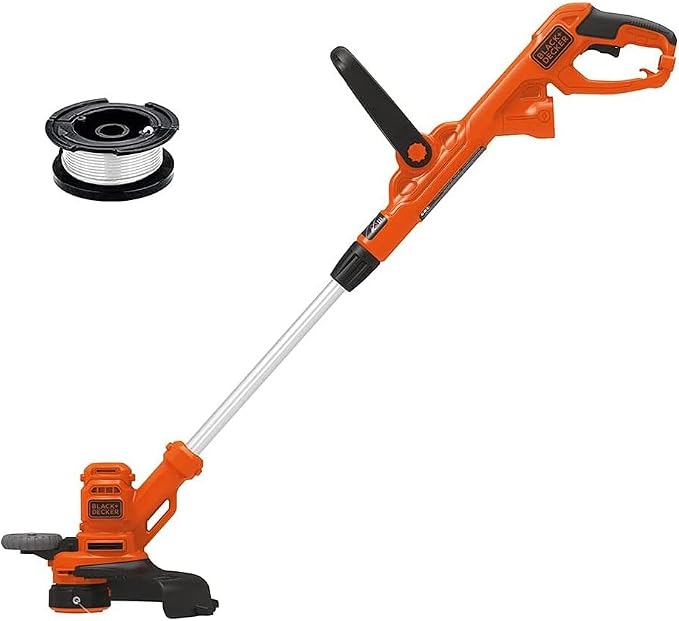
The BLACK+DECKER Weed Wacker with Auto Feed holds the top spot because it offers the most balanced combination of control, convenience, and everyday versatility in this group. Its 6.5-amp motor and POWERDRIVE Transmission are designed to maintain performance while cutting through tough weeds, grass, and overgrowth. That makes it a practical choice for regular property maintenance when you want more capability than a very basic light-duty trimmer.
Its 14-inch cutting path helps cover ground quickly, while the 2-in-1 design lets you rotate the tool from a string trimmer into a wheeled lawn edger. The edge guide is useful along sidewalks, flower beds, borders, and other areas where a mower cannot reach cleanly. Automatic feed spool technology is another meaningful advantage: line advances without the repeated bumping associated with a traditional bump-feed head, helping keep work moving.
Comfort is addressed through an adjustable handle and adjustable height positions. The lightweight construction should make it easier to maneuver around landscaping, and the cord retention system helps prevent accidental disconnection during use. Those details matter when trimming for extended periods or working around multiple obstacles.
The main limitation is that this is a corded electric tool. You will need access to a suitable outdoor extension cord and must manage that cord carefully around plants, fencing, and walkways. It is not the most convenient choice for distant areas of a large property. Before buying, confirm that an extension cord can reach your work zone safely. Keep the automatic-feed head clear of debris, inspect the line regularly, and choose this model over a cordless option when consistent plug-in power and simple edging are more important than unrestricted movement.
2. Husqvarna Titanium Force 0.095 String Trimmer Line
The Husqvarna Titanium Force 0.095 String Trimmer Line ranks second because it is not a complete trimmer, but it can be a highly useful upgrade or replacement for owners whose machines already accept standard line. The spool contains 140 feet of 0.095-inch line, giving regular users a substantial supply for ongoing trimming rather than a small emergency refill.
Husqvarna describes this round, dimpled, co-extruded line as a commercial-grade polymer product built for durability, cutting performance, and energy efficiency. Its undulated surface is intended to support precise cutting while reducing operating noise. The manufacturer also states that the design can reduce noise by 50 percent, a potentially welcome benefit when maintaining residential areas or working for longer sessions.
Resistance to abrasion and reduced breakage are important practical strengths. The line uses co-polymer engineered resins for a combination of durability and flexibility, which may help it hold up better around ordinary grass, weeds, and hard landscape edges than a more fragile line. It is manufactured in the United States and is compatible with all standard string trimmer heads according to the supplied product information.
Compatibility still deserves attention before purchase. A 0.095-inch line may be unsuitable for a head or trimmer that specifies a different diameter, and no replacement line can compensate for an underpowered machine or an incorrectly loaded spool. This is a particularly sensible choice when your existing trimmer works well but consumes line quickly or suffers frequent breakage. Follow the trimmer manufacturer’s loading instructions, keep the spool dry and protected from unnecessary heat, and select a different diameter only when your tool’s manual specifically permits it.
3. Makita XRU15PT1 36V LXT® Brushless String Trimmer
The Makita XRU15PT1 36V LXT® Brushless String Trimmer takes third place as the most substantial complete cordless kit in the ranking. It uses two 18V LXT batteries to produce a 36V system and includes four 5.0Ah batteries, giving buyers a ready-to-use battery package rather than requiring an immediate separate battery purchase. For users already invested in Makita’s LXT ecosystem, that included battery capacity can also make the kit easier to integrate into a broader outdoor-tool setup.
A Makita-built Outer Rotor BL Brushless Motor uses a direct-drive system to deliver high power and increased torque. The automatic torque-drive mode adjusts speed from 3,500 to 6,500 RPM, shifting toward longer runtime or added power as conditions change. Three manual speed settings—low at 3,500 RPM, medium at 5,300 RPM, and high at 6,500 RPM—give the operator more control over power management.
The 15-inch cutting swath is the widest among the complete trimmers listed here, which can improve productivity over open areas. Its bump-and-feed head arrives loaded with 0.080-inch twisted quiet line. That setup is familiar to many trimmer users, although it requires bumping the head to release more line rather than relying on the automatic feed used by the BLACK+DECKER and SEESII models.
The trade-off is a more involved cordless system: batteries must be charged, and the operator must manage line advancement manually. The supplied information also does not state a precise runtime, so actual working time will depend on speed setting, vegetation, and technique. Confirm that your preferred replacement line is appropriate for the head, keep the cutting head free of wrapped grass, and use the lower speed setting when conditions allow. This model makes the most sense for users who value power management, a wide swath, and Makita battery compatibility over the simplest possible controls.
4. SEESII 13″ String Trimmer Electric Weed Wacker
The SEESII 13″ String Trimmer Electric Weed Wacker earns fourth place by offering an unusually broad set of adjustments and a useful cordless package at a relatively light stated weight of 4.5 pounds. It includes two 21V, 4.0Ah batteries and a fast charger. The supplied information states up to 40 minutes of continuous power with both batteries, or about 20 minutes from a single battery, giving the buyer a clearer runtime reference than many compact cordless trimmers provide.
A 6,500-RPM brushless motor is designed to handle dandelions, crabgrass, perennial weeds, and dense overgrowth. The 13-inch cutting width provides a reasonable balance between coverage and maneuverability. Its 2mm dual-line trimming mode is intended to withstand heavier impacts, while the automatic-feed spool advances line without the sharp interruption of bump feeding. A manual advance option is also included according to the product information.
Ergonomic adjustability is a major reason to consider this model. The telescopic pole extends from 42 to 56 inches, the handle has 11 positions, and the head pivots through seven positions. Supportive guide wheels allow it to transition among string trimming, lawn edging, and a mini-mower-style function. These features can be particularly helpful around sloped ground, ditches, sidewalks, and flower beds.
Its limitations are equally important. The product has a smaller review count than the established models in this ranking, and the stated runtime is not unlimited; a large or heavily overgrown property may require battery planning. The 13-inch path is also narrower than the Makita’s 15-inch swath. Charge both batteries before a full perimeter job, use the telescoping shaft to maintain an upright posture, and inspect the auto-feed head for line jams. Choose it when light weight, extensive adjustment, and compact cordless convenience matter more than maximum cutting width or a long-established platform battery system.
5. 13″ Electric Weed Wacker
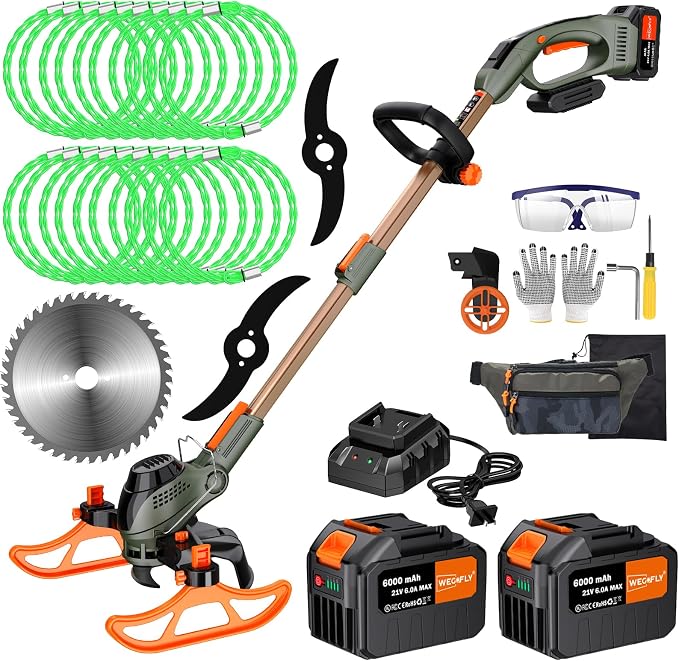
This 13″ Electric Weed Wacker places fifth because it offers the broadest cutting-tool concept but comes from a product listing with a relatively small review base. It is presented as a 4-in-1 garden tool that functions as a string trimmer, lawn edger, mini lawn mower, and brush cutter. That flexibility may appeal to homeowners who want one compact machine for varied cleanup tasks instead of a trimmer limited to nylon line.
The tool includes three cutting options: trimmer line, metal blades, and saw blades. Its two 21V, 6.0Ah batteries and matched charger are intended to support longer work sessions without frequent charging. A stated 15,000-RPM brushless motor and steel gear set provide the central power-system claims, with reinforced construction intended to reduce jamming and motor burnout. The 13-inch cutting width is suited to maneuvering around corners, slopes, and tighter areas.
Adjustable head positioning and a telescopic pole help accommodate users of different heights. At a stated 5.2 pounds, it remains relatively light on paper despite the expanded cutting functionality. The package also includes replacement blades, trimmer line, a storage bag, and installation tools. A three-year warranty for the main machine and two-year battery warranty are additional ownership details that may reduce concern about long-term support.
Multi-function equipment requires more setup and judgment than a line-only trimmer. Switching to metal or saw blades introduces different handling and safety considerations, and users should verify that the selected attachment is appropriate for the vegetation and installed correctly. Battery charging and storage will also affect readiness between jobs. Consider this model when attachment flexibility and the included accessories are priorities. If your work mainly involves edging grass and trimming ordinary weeds, a simpler automatic-feed design may be easier to operate and maintain.
How to Choose the Best Professional String Trimmer
A professional string trimmer should be selected according to the work it must perform, the conditions in which it will be used, and the amount of time an operator will spend holding it. The most powerful option is not automatically the best choice. A trimmer that is too heavy, difficult to start, poorly balanced, or incompatible with the cutting heads and line already used by a crew can reduce productivity even when its engine or motor is capable of heavy work.
Match the power source to the workload
Gas-powered trimmers remain useful for long workdays, remote properties, and situations where refueling is more practical than recharging. They can be a suitable choice when work is spread across large areas or when an operator cannot depend on access to electrical outlets. Their ownership requirements include fuel storage, fresh fuel management, engine maintenance, and attention to starting procedures.
Battery-powered trimmers can simplify daily operation by reducing fuel handling, engine noise, and routine engine maintenance. They are especially convenient for properties where lower operating noise is important or where many short jobs are completed in succession. The practical question is not only how long one battery lasts, but how many charged batteries and chargers are available for the entire workday. A battery system can be efficient when it is shared with other compatible outdoor tools, but purchasing several batteries can affect the overall cost and logistics.
Corded electric models may be appropriate for limited areas close to a suitable outlet, although a power cord can restrict movement and introduce a trip or cutting hazard. They are generally less convenient for professional work that covers large properties, steep ground, roadside areas, or several locations. Consider the work route before choosing a power source rather than relying only on the trimmer’s advertised power.
Choose a shaft and handle arrangement for control
Straight-shaft designs are commonly favored for professional landscaping because they can provide useful reach beneath shrubs, around fences, and along edges. Curved-shaft designs may feel comfortable for lighter trimming and shorter sessions, but the best geometry depends on the operator’s height, posture, and typical work area. A straight shaft is not automatically better for every user; balance and control matter more than appearance.
Handle configuration affects stability, especially when using thick line or a blade-capable cutting system. A loop handle can be maneuverable in confined spaces, while a bike-style or bicycle-style handle may provide more leverage during extended work or heavy vegetation. If the trimmer accepts a harness, verify that the attachment point, handle position, and cutting head allow the machine to hang in a balanced position. The cutting head should not constantly pull away from the intended cutting path.
Look for controls that can be reached without releasing the main grip. A throttle or speed control should operate smoothly, and the stop switch should be easy to identify in an emergency. Excessive vibration, awkward trigger placement, or a grip that forces the wrist into an uncomfortable angle can become increasingly important over a full workday.
Consider weight, balance, and operator comfort
Published weight may not tell the whole story. A trimmer’s working weight can change after adding fuel, a battery, a guard, a cutting head, or a harness attachment. Battery placement also affects balance: a rear-mounted battery and a shaft-mounted battery can feel very different even if the total weight is similar.
When possible, assess whether the machine hangs naturally from its intended support point. A well-balanced trimmer should not require constant upward pressure from the arms. Adjustable handles and harness points are valuable when a tool will be shared by operators of different heights. Comfort features cannot eliminate fatigue, but they can make it easier to maintain a consistent cutting angle and avoid unnecessary strain.
For crews, standardizing on a manageable class of trimmer can be more useful than choosing the maximum available power. A lighter machine may be preferred for routine grass trimming, while a heavier model may be reserved for dense weeds and rough growth. Matching the equipment to the task lets operators avoid carrying more weight than necessary.
Check cutting capacity and head compatibility
Cutting capacity depends on more than motor or engine output. It also involves the line diameter, line material, head design, guard, speed control, and the density of the vegetation. Thicker line can improve durability in demanding conditions, but it may require more power and can increase energy use or fuel consumption. Use only line sizes approved for the specific trimmer and cutting head.
A bump-feed head can let an operator advance line while working, whereas a fixed-line head may be useful when quick reloading and consistent line lengths are priorities. Some systems require pre-cut lengths, and others use a spool or winding procedure. Before purchasing, identify whether replacement spools, pre-cut segments, and compatible heads are readily available through normal suppliers.
Do not assume that every professional trimmer can use a metal blade, brush blade, or other attachment. Attachment capability depends on the shaft, gearbox, guard, handle configuration, and manufacturer’s instructions. If heavier brush cutting is part of the intended work, confirm the complete approved setup rather than focusing on whether an attachment physically fits the shaft.
Evaluate controls and operating flexibility
A variable-speed trigger or throttle can help an operator reduce speed for delicate edging and increase it for dense grass. This may provide better control around trees, walls, and landscape beds than running continuously at maximum speed. A speed-limiting feature can also help manage battery consumption or reduce unnecessary wear, but it should not be treated as a substitute for proper technique.
Starting convenience is important for gas models, particularly when a machine will be stopped and restarted frequently. Examine the location of the primer, choke, decompression control, and stop switch, and follow the specified starting sequence. For battery models, confirm how the battery locks into place and whether the controls remain accessible while wearing gloves.
Professional users should also consider transport. A long shaft may provide good reach but require more room in a vehicle or trailer. A split-shaft design can simplify storage if its connection is secure and compatible with the intended attachments. Any coupling should be kept clean and checked according to the instructions, since dirt or incomplete engagement can affect operation.
Account for noise, debris, and the work environment
Every string trimmer can throw grass, stones, broken line, and other debris. The work environment should influence both the trimmer and the operating plan. Along gravel, curbs, driveways, and roadsides, inspect the area before cutting and use a controlled speed that reduces unnecessary contact with hard surfaces.
Noise may matter near homes, schools, hospitals, offices, and public spaces. Battery power can be attractive in noise-sensitive locations, but it does not make hearing protection unnecessary. Gas models may be appropriate for remote or extensive work, while battery models may be more convenient for scheduled work in occupied areas. Local rules, site requirements, and employer procedures should take priority over general preferences.
Dust and dry vegetation can also affect operation. Avoid directing debris toward people, vehicles, windows, animals, or freshly finished surfaces. In dusty conditions, inspect air-intake areas and filters more often, and allow hot components to cool before cleaning or transporting the machine.
Confirm the complete system before buying
The trimmer itself is only one part of ownership. Determine whether the required guard, harness, cutting head, line, battery, charger, shoulder strap, and tools are included or must be obtained separately. A machine that appears suitable may be less practical if essential operating equipment is unavailable or if replacement parts are difficult to source.
For battery equipment, check compatibility across the intended tool platform. Batteries and chargers are generally designed for particular systems, and physical similarity does not guarantee compatibility. Confirm voltage or platform requirements, battery fit, charger requirements, and the supplier’s instructions before combining components.
For gas equipment, plan for the correct fuel, storage container, mixing procedure where applicable, and disposal of old fuel. Do not improvise fuel mixtures or use unapproved additives. Fuel should be stored and handled in accordance with local requirements and the engine instructions.
Professional ownership also benefits from a parts and service plan. Identify where to obtain line, filters, spark plugs, heads, guards, fasteners, and other wear items. If a trimmer is essential to daily work, downtime can be more costly than the initial difference between two otherwise similar options.
Set up the trimmer before the first job
Read the operating instructions before installing line, attaching a battery, adding fuel, or fitting a cutting head. Verify that all guards and handles are installed in the prescribed positions. A guard is part of the cutting system, not an optional accessory to be removed for additional reach or cutting width.
Adjust the handle and harness while the machine is switched off. The controls should be reachable with relaxed hands, and the shaft should remain at a comfortable angle when the head is near the ground. If the unit uses a shoulder harness, practice releasing the trimmer quickly and learn the emergency-release method before working near obstacles or traffic.
Inspect the head for correct line installation and make sure the line is not wound unevenly or extended beyond the permitted length. Confirm that all fasteners are secure, but do not overtighten components that require a specified torque. A short, controlled test in a clear area can reveal balance, vibration, line-feed issues, or control problems before the tool reaches a customer’s property.
Use a consistent cutting technique
Keep both hands on the intended grips and maintain a stable stance. Move the trimmer in a smooth side-to-side motion rather than forcing the head into thick growth. Let the line do the cutting, and avoid striking hard surfaces because impacts can damage the head, shorten line life, and send debris in unpredictable directions.
For edging, use a controlled angle and proceed slowly around curbs, paving, tree trunks, and ornamental borders. Avoid allowing the line to scrape repeatedly against masonry or metal. When trimming tall grass, work in stages if necessary instead of trying to cut the entire height in one pass. This can reduce tangling and keep the motor or engine from being overloaded.
Do not use a string trimmer to clear material that exceeds the machine’s intended capacity. Wet, tangled, woody, or exceptionally dense growth can create resistance and may require a different tool or cutting method. Stop immediately if the head strikes a solid object, begins to vibrate unusually, loses power, or becomes clogged. Shut the machine down using the appropriate procedure before investigating.
Maintain the cutting system
Line is a wear item, so keep the correct replacement size and type available. Store replacement line away from excessive heat and direct sunlight, and replace line that has become brittle or damaged. Clean the head before reloading, and follow the specified winding direction. Uneven winding can cause poor feeding, excess vibration, or line jams.
Inspect the guard regularly for cracks, missing fasteners, or accumulated debris. Check the head, spool, eyelets, retaining hardware, and shaft for damage. If a metal attachment is approved, inspect it for cracks, bends, excessive wear, or damaged mounting holes. Never continue using a cutting component that appears compromised.
Battery models should be stored with the battery removed when instructed, and batteries should be protected from moisture, extreme temperatures, impact, and unauthorized charging equipment. Keep contacts clean and do not use a battery that is swollen, leaking, cracked, unusually hot, or otherwise damaged. Follow the battery maker’s storage and charging guidance rather than leaving packs in a hot vehicle or exposed outdoor area.
Gas models require routine attention to the air filter, spark plug, cooling passages, fuel system, and muffler area. Grass and dust should not be allowed to build up around cooling surfaces. Perform maintenance only after the engine has cooled, and keep ignition sources away from fuel. If a problem involves the carburetor, clutch, gearbox, or other specialized component, use qualified service rather than making uncertain adjustments.
Prioritize personal and site safety
Wear eye protection, substantial footwear, long trousers, and hearing protection appropriate to the work environment. Gloves can improve grip and help protect the hands, but they do not make it safe to reach near a moving head. Tie back long hair and avoid loose clothing that could catch on rotating or hot components.
Inspect the work area before starting. Remove stones, wire, glass, toys, and other objects that could be thrown or wrapped around the head. Identify people, pets, windows, vehicles, ponds, steep slopes, and hidden obstacles. Keep bystanders at a safe distance and stop work when someone enters the hazard area.
Never operate a trimmer while impaired, excessively fatigued, or unable to maintain firm control. Use extra caution on slopes and wet ground, where footing can change quickly. Keep the trimmer away from electrical lines and equipment, and do not assume that line or a plastic head provides protection from electrical hazards.
Turn the machine off before clearing wrapped grass, changing line, installing an attachment, inspecting the head, or carrying it between work areas. For battery models, remove the battery when the instructions call for it. For gas models, follow the specified shutdown and transport procedure, and allow hot parts to cool before placing the machine in a vehicle.
Understand practical limitations
A professional designation does not mean a trimmer is suitable for every type of vegetation or every uninterrupted work period. Runtime, fuel capacity, heat buildup, line consumption, operator fatigue, and site access all place limits on productivity. A realistic work plan includes pauses for refueling or charging, head cleaning, inspection, and safe relocation.
Battery performance can vary with workload, line size, vegetation density, temperature, battery age, and the selected speed. Gas performance can vary with fuel condition, filter cleanliness, altitude, temperature, and maintenance. Treat runtime or work-area estimates as planning information rather than a guarantee for every job.
String trimmers are also not a replacement for a mower, brush cutter, edger, or clearing saw in every situation. Use the tool that matches the material and terrain. Forcing a light trimmer through woody stems or heavy brush can damage the equipment and create a loss-of-control hazard.
Plan long-term ownership
Keep a simple maintenance record for commercial equipment. Note line changes, filter cleaning, battery condition, unusual vibration, starting problems, and any replacement parts. Records can help identify recurring issues before they interrupt a workday and can make it easier to keep several machines in similar operating condition.
Clean the trimmer after use without directing high-pressure water at electrical, fuel, bearing, or control components. Remove grass from the head and guard, wipe down accessible surfaces, and store the machine in a dry, secure location. Keep cutting tools away from children and unauthorized users, and transport them so the head cannot contact people or other equipment.
For a business or maintenance crew, consistency can be valuable. Standardizing line sizes, charging routines, inspection steps, and replacement parts simplifies training and reduces setup errors. Even when different trimmers are necessary for different jobs, clear procedures help every operator recognize when equipment should be removed from service.
Professional String Trimmer FAQ
What line size should be used in a professional string trimmer?
Use the line diameter and material specified for the particular trimmer and cutting head. Thicker line may last longer in some demanding applications, but it can increase load and may not feed correctly in a head designed for a smaller size. The correct choice is the approved size that provides reliable feeding and cutting without overloading the machine.
Is a battery trimmer suitable for a full professional workday?
It can be suitable when the workload, battery capacity, charging access, and number of spare batteries are planned together. Consider the amount of dense growth, the chosen operating speed, and the time available for charging. For continuous remote work, carry enough charged batteries or evaluate whether another power source better matches the route and schedule.
Can any string trimmer use a metal blade?
No. Blade use depends on the machine’s design, approved attachments, guard, handle arrangement, shaft, and operating instructions. A blade should be used only when the complete configuration is specifically approved. If blade capability is important, verify it before purchase rather than assuming an aftermarket part will be safe.
Should the trimmer be used at full speed all the time?
Not necessarily. Use the speed appropriate for the vegetation and cutting task, provided the operating instructions permit adjustment. Lower speed can help with delicate edging and may reduce unnecessary consumption, while dense growth may require more speed. Avoid forcing the head through material that remains too heavy for the machine.
Why does a trimmer vibrate excessively?
Possible causes include unevenly wound line, a damaged spool, debris in the head, a bent attachment, loose hardware, or a damaged cutting component. Stop the machine, disconnect its power source as directed, and inspect it. Do not continue operating until the cause is found and corrected. Persistent vibration should be addressed by qualified service.
How often should a professional string trimmer be serviced?
Inspection should occur before each use, while detailed maintenance should follow the schedule in the operating instructions and become more frequent in dusty, wet, or heavy-use conditions. Line, guards, heads, filters, batteries, fuel systems, and cooling areas all need different forms of attention. Commercial use may justify more frequent checks than occasional residential use.
What safety gear is appropriate?
Eye protection, hearing protection, long trousers, substantial footwear, and suitable work gloves are common starting points. Additional protection may be appropriate for dense debris, steep terrain, or prolonged work. Clothing and equipment should allow secure movement and should not hang loose near the rotating head or hot engine components.
How should a trimmer be stored between seasons?
Clean and inspect the machine, remove grass and debris, and store it in a dry, secure place. Follow the instructions for battery storage, including temperature and charge guidance. For gas models, use the prescribed fuel-storage or fuel-draining procedure, and do not leave questionable fuel in the system. Store replacement line and cutting components away from heat, moisture, and direct sunlight.
Conclusion
The best professional string trimmer is the one that matches the vegetation, work schedule, power access, operator, and maintenance resources. Prioritize balanced handling, compatible cutting components, dependable controls, proper safety equipment, and a realistic plan for fuel, batteries, line, and service. A well-matched trimmer will be easier to operate consistently and more useful over the long term than a machine chosen on power alone.

I’m Maya L. Greenwood, a lifelong plant lover who believes anyone can grow something beautiful with the right guidance. After years of testing soil mixes, pruning methods, irrigation tricks, and pest-safe solutions, I started EasyGardenTips.com to turn hard-won lessons into step-by-step advice. From seed starting and container gardens to composting and seasonal checklists, my goal is to make gardening simple, sustainable, and fun.