5 Best Brushless String Trimmer: Powerful Cordless Picks
Are you looking for the best brushless string trimmer for cutting grass, cleaning fence lines, edging sidewalks, and knocking down tougher weeds without maintaining a gas engine?
A good brushless motor can provide strong torque, efficient battery use, lower maintenance, and responsive power, but cutting swath, trimmer line, battery platform, shaft design, and line-feed system still determine how well the tool fits your yard.
My primary recommendation is the DEWALT DCST922P1 20V MAX 14-Inch Brushless Folding String Trimmer Kit. Its 14-inch cutting swath, 5.0Ah battery, variable-speed trigger, high/low speed control, QuickLoad spool, and folding shaft make it a versatile residential option, especially for homeowners already using the 20V MAX battery platform.
I would consider the EGO POWER+ ST1623T 56V 16-Inch Brushless String Trimmer when maximum cutting width and easier line management matter more. Its 16-inch swath, POWERLOAD technology, LINE IQ automatic line management, .095-inch line, carbon-fiber shaft, and 56V battery system make it a more premium solution for demanding yards.
The Greenworks ST60L254 60V 16-Inch Brushless Cordless String Trimmer is my other leading option for thicker grass and larger residential properties. Its wide cutting path, .095-inch line, 60V brushless power system, Load N’ Go head, and strong runtime capability suit homeowners who need more than a lightweight grass edger.
Best Brushless String Trimmer
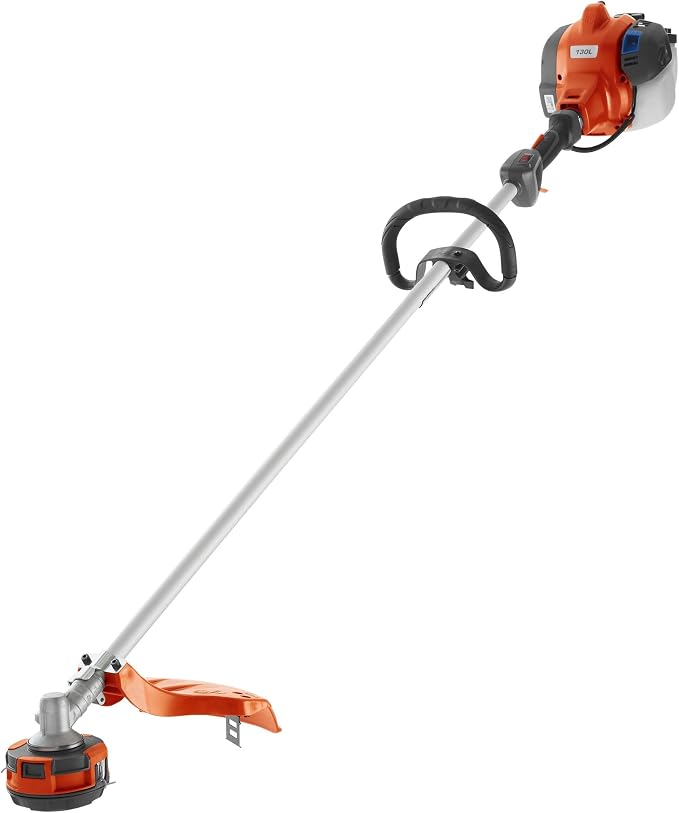
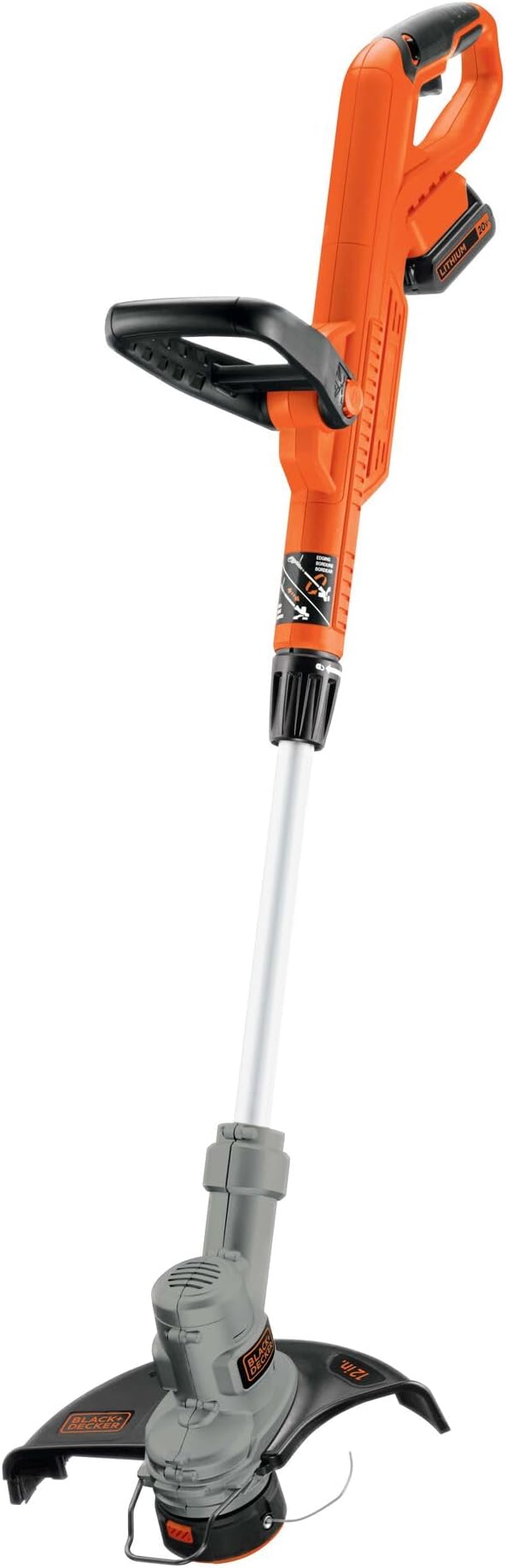
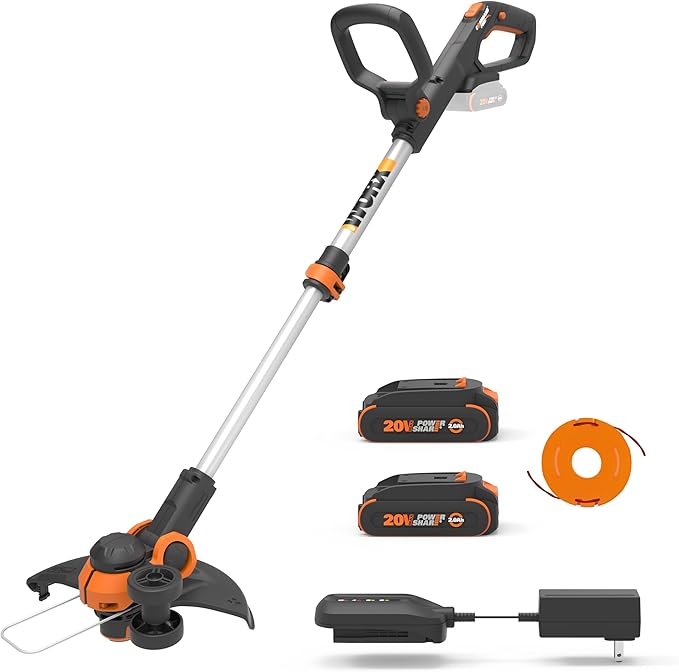
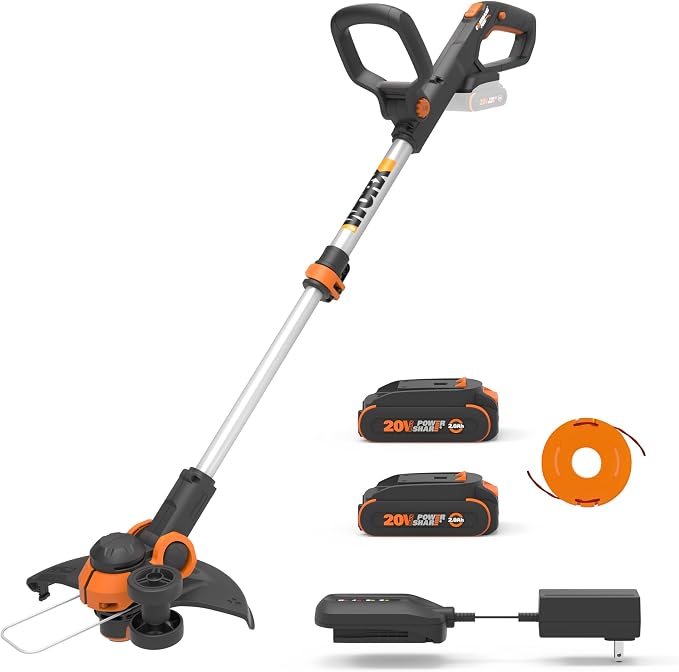
| Image | Product Name | Check Price |
|---|---|---|
Best Choice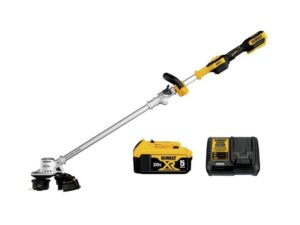 | DEWALT 20V MAX 14-Inch Brushless Folding String Trimmer Kit | Check Price |
Second Best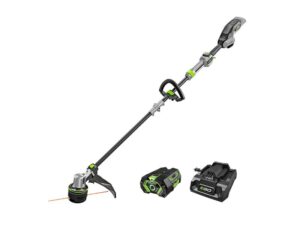 | EGO POWER 56V 16-Inch Brushless String Trimmer | Check Price |
Third Choice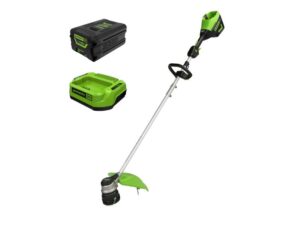 | Greenworks 60V 16-Inch Brushless Cordless String Trimmer | Check Price |
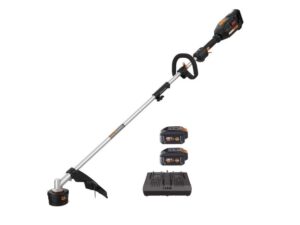 | WORX 40V Nitro 15-Inch Brushless String Trimmer | Check Price |
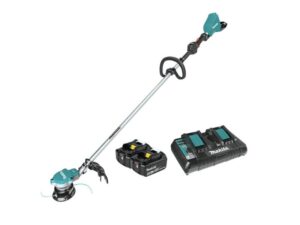 | Makita 15-Inch Brushless String Trimmer Kit | Check Price |
1. DEWALT DCST922P1 20V MAX 14-Inch Brushless Folding String Trimmer Kit- Best Overall
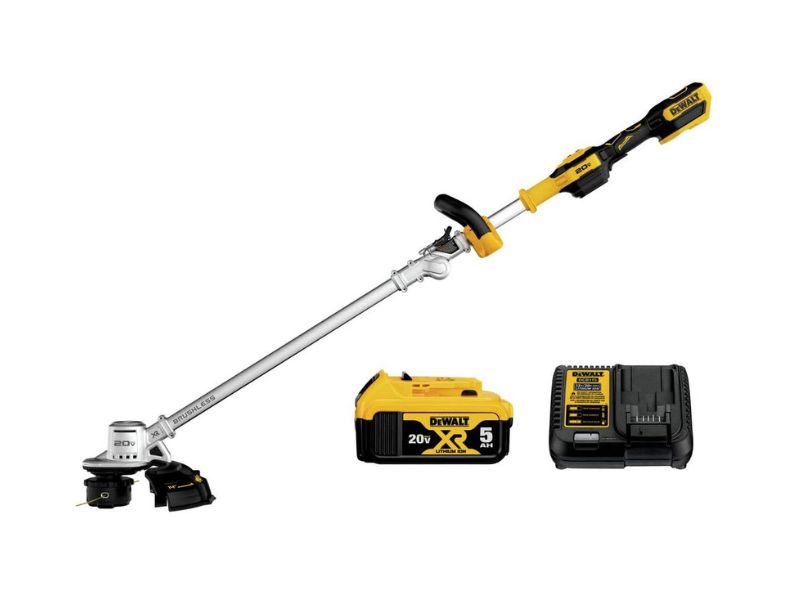
Key Features
- Brushless motor
- 20V MAX battery platform
- Included 5.0Ah lithium-ion battery
- 14-inch cutting swath
- Variable-speed trigger
- High/low speed selector
- QuickLoad spool
- Uses 0.080-inch trimmer line
- Folding shaft design
- Approximately 40% shorter when folded
- Straight-shaft layout
The DEWALT DCST922P1 takes my first position because it combines the characteristics most residential buyers actually need without becoming excessively large or complicated.
A brushless string trimmer should provide more than raw motor output. It needs enough cutting width to finish normal yard maintenance efficiently, enough battery capacity to complete common trimming sessions, and enough control to work around landscaping without constantly throwing debris.
The 14-inch cutting swath is a practical middle ground.
A very small 10- or 12-inch trimmer may be comfortable around flower beds, but it covers less grass with every pass. On the other hand, a 16-inch professional-style head can feel unnecessarily large for someone whose main jobs are trimming around a driveway, fence, mailbox, trees, and lawn borders.
Fourteen inches works well for typical residential properties.
Brushless Motor Efficiency
The brushless motor is one of the most important reasons to choose this model over a basic cordless weed eater.
Traditional brushed electric motors use carbon brushes as part of the commutation system. Those brushes create friction and eventually wear.
A brushless motor uses electronic controls instead.
For a string trimmer, the practical benefits can include:
- Improved energy efficiency
- Strong torque response
- Reduced internal motor wear
- Better power management
- Lower routine motor maintenance
Battery efficiency matters because the trimmer needs to keep the cutting head rotating at several thousand RPM while grass and weeds continually resist the line.
Variable-Speed Control
DEWALT gives you both a variable-speed trigger and a high/low selector.
That combination is more useful than simply running at maximum output every second.
Low speed makes sense for:
- Routine lawn edges
- Light grass
- Delicate landscaping
- Extending battery runtime
High speed is more appropriate for:
- Thick grass
- Overgrown fence lines
- Dense weeds
- Sections where the head begins to bog down
Variable speed also improves control around tree trunks and garden beds.
There is rarely a good reason to attack a few blades of grass beside a flower bed at full power.
5.0Ah Battery
The kit includes a 5.0Ah battery, giving it much more useful capacity than tiny entry-level packs.
Amp-hours describe battery capacity within a given platform, but they should not be compared across voltages without context.
For this trimmer, the important point is that 5.0Ah provides a sensible balance between runtime and weight.
Larger batteries can extend working time but make the rear of the tool heavier.
Because a string trimmer is supported in your hands rather than rolling on wheels, every additional pound becomes noticeable during a long session.
QuickLoad Spool
Replacing string can be one of the most frustrating parts of using a weed eater.
The QuickLoad spool simplifies line replacement compared with manually dismantling and winding some older heads.
This model uses .080-inch line, which is particularly appropriate for normal residential grass and lighter weeds.
.080 line also produces less drag than heavier .095- or .105-inch cord, helping keep the tool manageable on a 20V platform.
The tradeoff is durability in extremely heavy vegetation.
If your property is regularly filled with coarse weeds and thick stalks, the .095-inch systems on the EGO, Greenworks, or WORX may be better suited.
Folding Shaft
The folding mechanism is one of the DEWALT’s most distinctive features.
When folded, the trimmer is substantially shorter, which makes it easier to:
- Store on a garage shelf
- Fit into a small shed
- Transport in a vehicle
- Carry between properties
A full-length straight-shaft trimmer can be awkward because it may approach six feet long.
The folding hinge does not eliminate the need for storage space completely, but it makes transportation much easier.
Best Use Case
I prefer the DEWALT for small-to-medium residential yards where the trimmer performs routine maintenance rather than commercial brush clearing.
It is particularly attractive for homeowners who already own 20V MAX drills, saws, impact drivers, blowers, or other cordless tools.
Battery-platform compatibility often matters more over several years than a small difference in cutting width.
What I Like
- Strong overall residential performance
- Brushless motor
- 14-inch cutting swath
- Included 5.0Ah battery
- Useful variable-speed control
- QuickLoad line system
- Folding design simplifies storage
- Large battery ecosystem
What I Do Not Like
- .080-inch line is less aggressive than .095
- Not attachment capable
- Bump-head components experience normal wear
- High speed reduces runtime noticeably
The DEWALT DCST922P1 is my primary recommendation for homeowners who want an efficient brushless weed eater without moving into an oversized professional platform. Its combination of power control, portability, cutting width, line loading, and battery compatibility makes it the most broadly useful choice here.
2. EGO POWER+ ST1623T 56V 16-Inch Brushless String Trimmer- Best Premium
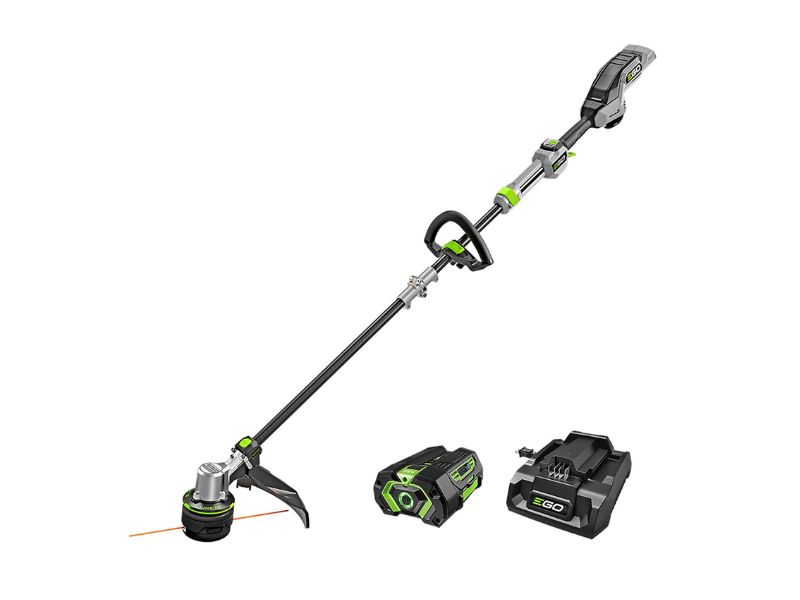
Key Features
- High-efficiency brushless motor
- 56V ARC Lithium platform
- Included 4.0Ah battery
- 16-inch cutting swath
- .095-inch dual line
- POWERLOAD automatic line winding
- LINE IQ automatic line feeding
- Telescopic carbon-fiber shaft
- Variable-speed operation
- Adjustable shaft length
- Approximately 60-minute maximum runtime under favorable conditions
The EGO ST1623T is the most technologically advanced trimmer in this group.
Its advantage is not simply the 56V label. The entire tool is designed around making a high-output cordless trimmer easier to operate.
The 16-inch cutting swath is wide enough for substantial residential properties and helps reduce the number of sweeping passes required along large fence lines or open sections of weeds.
POWERLOAD Technology
Reloading trimmer line can become frustrating when you need to manually open the head, measure two equal lengths, wind them in precisely the correct direction, and reinstall everything.
EGO’s POWERLOAD system simplifies this considerably.
Feed the line through the trimmer head and activate the loading system so the tool winds the cord internally.
For someone who trims frequently, this convenience is more meaningful than it sounds.
String is a consumable part.
If you regularly edge against rough concrete, fences, stone, and hard landscaping, you will eventually reload it many times.
LINE IQ
EGO also uses LINE IQ to manage line length without the traditional bump-feed process.
A conventional bump head requires you to tap the spinning head against the ground when additional string is needed.
LINE IQ is designed to sense and maintain usable line length automatically.
In theory, this lets you concentrate on cutting instead of thinking about the spool.
Automatic systems do introduce more complexity than a basic bump-feed head, so buyers who prefer the simplest possible mechanism may still favor a traditional design.
But when the system is operating properly, it creates an exceptionally convenient trimming experience.
.095-Inch Trimmer Line
The EGO uses .095-inch line, which is substantially more capable in thick vegetation than many .065- or .080-inch homeowner systems.
Thicker line normally provides:
- Better durability
- More mass at the cutting tip
- Greater resistance to breakage
- Better performance on coarse weeds
The tradeoff is additional aerodynamic drag and rotating mass.
EGO’s higher-powered brushless platform is designed to handle that heavier line.
Carbon-Fiber Shaft
The carbon-fiber shaft is another premium feature.
Shaft material matters because the motor, trimmer head, guard, battery, and line all create weight distributed across a long lever.
Keeping the shaft light helps reduce unnecessary mass in the middle of the tool.
The telescopic adjustment also lets users change length for a more comfortable working position.
Proper trimmer length is important.
If the shaft is too short, you may bend forward throughout the job.
If it is too long, the cutting head can become difficult to position close to the ground.
Runtime
With its 4.0Ah battery, EGO rates the system for substantial residential runtime under suitable conditions.
Actual duration depends on:
- Trigger speed
- Weed density
- Grass thickness
- Line length
- Ambient temperature
- Battery age
- How often the trimmer operates at full load
For normal trimming after mowing, runtime can be generous.
Clearing a neglected property at maximum speed is far more demanding.
What I Like
- Powerful 56V brushless platform
- Wide 16-inch swath
- Strong .095-inch line
- POWERLOAD greatly simplifies line replacement
- LINE IQ eliminates routine bump feeding
- Carbon-fiber telescopic shaft
- Excellent battery ecosystem
What I Do Not Like
- Heavier and more substantial than compact trimmers
- More complex head technology
- Large battery can contribute to fatigue
- Premium features may be unnecessary for tiny yards
The EGO ST1623T is the option I would choose when I want high cutting capacity and minimum line-management hassle. It is particularly well suited to medium and larger residential lawns, thicker weeds, long fence lines, and buyers already using 56V outdoor equipment.
3. Greenworks ST60L254 60V 16-Inch Brushless Cordless String Trimmer- Best for Thick Weeds
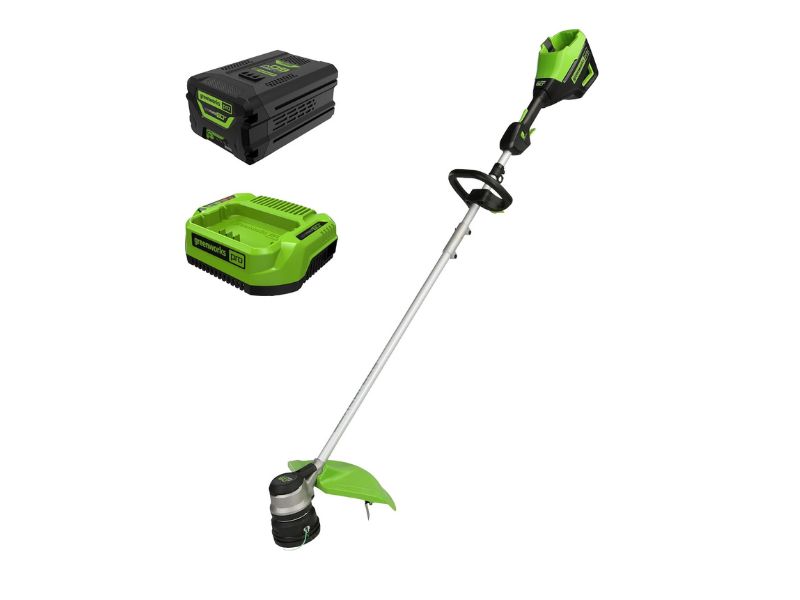
Key Features
- 60V brushless motor
- 2.5Ah battery configuration
- 16-inch cutting path
- .095-inch trimmer line
- Up to approximately 6,000 RPM
- Load N’ Go bump-feed head
- Variable-speed operation
- Designed for demanding grass and weeds
- Approximately 11-pound operating weight depending on battery configuration
- Compatible with Greenworks 60V outdoor equipment
The Greenworks ST60L254 is the model I would choose when cutting performance matters more than obtaining the lightest possible trimmer.
Its combination of 60V power, 16-inch cutting width, and .095-inch line puts it firmly into serious residential weed-eater territory.
Wide 16-Inch Cutting Swath
A 16-inch head covers noticeably more vegetation during every sweeping motion than a compact 12- or 13-inch trimmer.
This becomes valuable on:
- Long fence lines
- Larger lawns
- Drainage areas
- Tall grass around outbuildings
- Open sections of weeds
The wider cutting diameter does require more power because the line tips travel farther from the center of rotation.
That is why wide-swath trimmers generally appear on stronger battery platforms.
60V Brushless Motor
The brushless motor reaches approximately 6,000 RPM and is designed to maintain useful power through demanding vegetation.
RPM should not be treated as the only measure of cutting strength.
Actual performance depends on:
- Motor torque
- Line diameter
- Cutting swath
- Battery output
- Controller programming
- Vegetation type
Still, combining high rotational speed with .095-inch line gives the Greenworks enough capability for conditions that can overwhelm lightweight entry-level tools.
.095-Inch Spiral Line
The larger line diameter is particularly helpful in coarse vegetation.
When a thin line hits tough weeds, it may fray or break rapidly.
A .095-inch line has more material available to absorb impact.
It also carries more energy at the tip.
This is useful when trimming:
- Thick fescue
- Dense fence-line grass
- Mature broadleaf weeds
- Coarse roadside-type vegetation
For woody brush, though, even .095 line has limits.
A brush cutter or blade attachment may be more appropriate when stems become hard and substantial.
Load N’ Go Head
Greenworks uses a Load N’ Go bump-feed head.
This retains the mechanical simplicity of bump feeding while making line loading easier than older spool designs.
Bump feed has one major advantage over automatic line-management systems: control.
You decide when additional string comes out.
If the current line remains long enough, there is no need for the mechanism to feed more.
Some experienced users prefer this predictable setup.
Battery Platform
The 60V battery can be used across compatible Greenworks 60V outdoor tools.
That can include categories such as:
- Lawn mowers
- Leaf blowers
- Chainsaws
- Hedge trimmers
- Snow equipment
- Other lawn tools
Always confirm voltage-platform compatibility before buying because Greenworks also offers other battery families.
A 40V battery does not substitute for a 60V battery simply because the brand name matches.
What I Like
- Wide 16-inch cutting swath
- Strong 60V brushless power
- Durable .095-inch line
- Good for thick grass
- Load N’ Go line head
- Useful outdoor-tool ecosystem
- Good performance for larger residential yards
What I Do Not Like
- Heavier than compact 20V models
- 2.5Ah battery offers less capacity than some larger packs
- Full-width head can feel large in tight landscaping
The Greenworks ST60L254 is my choice for homeowners who regularly deal with dense grass and heavier weeds but still want battery convenience instead of fuel mixing, carburetor maintenance, and pull starting.
4. WORX WG186 40V Nitro 15-Inch Brushless String Trimmer- Best Attachment Capable
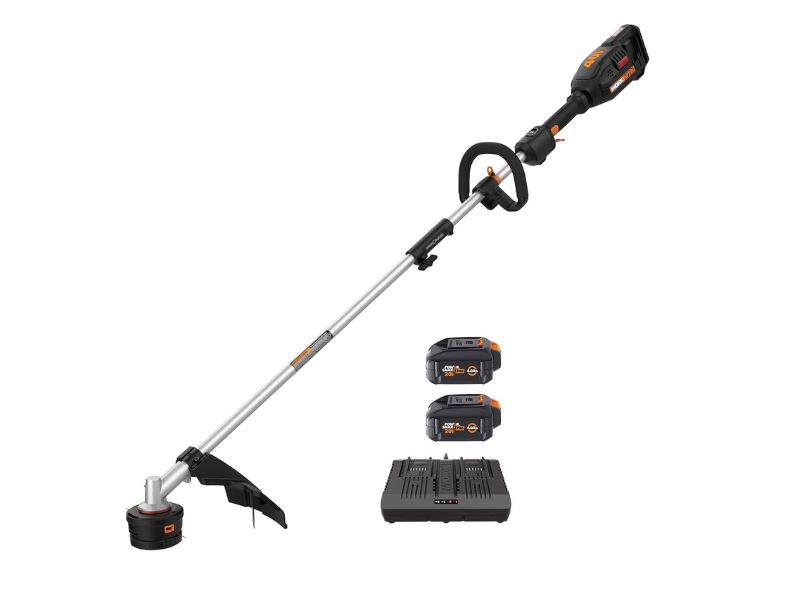
Key Features
- 40V Nitro brushless motor
- Powered by two 20V batteries
- 15-inch cutting swath
- .095-inch line
- Dual-exit cutting head
- DriveShare attachment-capable shaft
- Variable-speed control
- ECO mode
- Easy-load trimmer head
- Compatible with multiple yard attachments
- Power Share battery platform
The WORX WG186 is the most versatile product here if you want the power head to perform jobs beyond normal string trimming.
Its DriveShare attachment-capable design allows the power unit to work with compatible attachments for other landscaping tasks.
Depending on the attachment system, that can reduce the number of separate gas or battery motors you need to own.
Brushless Nitro Platform
WORX positions the Nitro series around higher-output cordless performance.
The brushless motor improves efficiency while the 40V system uses two 20V batteries.
This approach has an interesting battery-platform advantage.
Instead of owning a single specialized high-voltage pack, you use batteries that can also fit compatible 20V tools individually.
That can be convenient for homeowners already invested in the Power Share ecosystem.
15-Inch Dual-Line Head
The 15-inch cutting swath sits between the DEWALT and the two 16-inch options.
I consider that an excellent compromise.
It is wide enough for serious trimming but slightly easier to position around landscaping than the largest heads.
The dual-exit head uses two pieces of line spinning opposite sides of the spool.
This improves cutting coverage and balance.
.095-Inch Line
WORX supports .095-inch line in this model, placing it above lightweight consumer trimmers in vegetation capability.
It can therefore handle more than manicured lawn edges.
For someone who occasionally lets fence-line growth become heavy, this is a useful upgrade.
DriveShare Attachments
Attachment compatibility is the biggest reason to choose the WG186.
One power head can potentially support jobs such as:
- Edging
- Hedge trimming
- Brush cutting
- Other compatible shaft-driven tasks
This reduces storage space compared with owning a complete motor and battery system for every yard tool.
There is a tradeoff.
A split-shaft attachment system normally adds some weight and mechanical complexity compared with a dedicated fixed-shaft trimmer.
If you will never use attachments, a simpler dedicated machine may be preferable.
ECO Mode
ECO mode allows you to prioritize runtime when full cutting performance is unnecessary.
This is useful after mowing when you are simply cleaning soft grass around edges.
Switch to higher output when you encounter heavier vegetation.
Managing power this way can significantly affect battery duration.
What I Like
- Brushless 40V system
- 15-inch cutting swath
- Strong .095-inch line
- Attachment-capable DriveShare design
- Variable-speed control
- ECO mode
- Uses Power Share batteries
What I Do Not Like
- Split-shaft design adds weight
- Battery and kit configuration must be checked carefully
- Attachment capability is unnecessary for some homeowners
The WORX WG186 makes the most sense for buyers who want a multi-function cordless yard platform rather than a dedicated weed eater. Its cutting specifications are strong enough for demanding residential work while DriveShare gives it room to expand.
5. Makita XRU15PT 36V LXT 15-Inch Brushless String Trimmer Kit- Best Speed Control
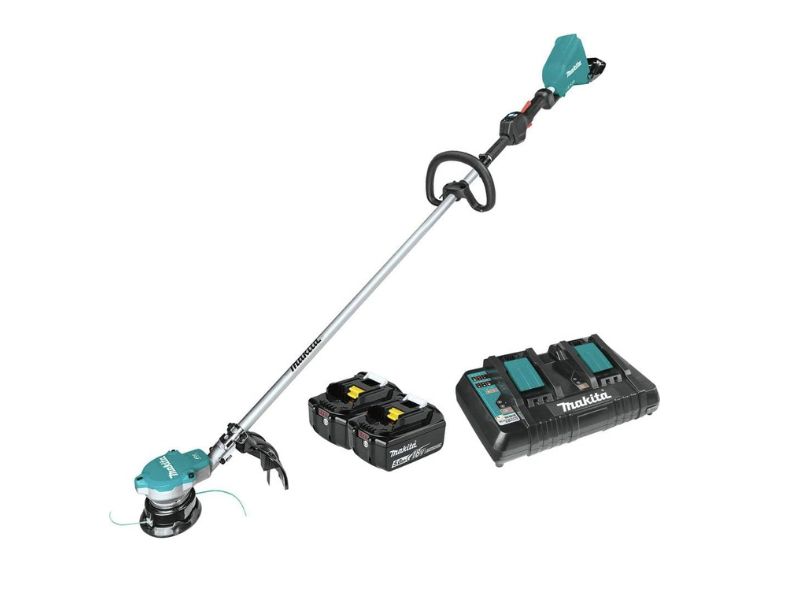
Key Features
- Outer Rotor BL brushless motor
- 36V operation using two 18V LXT batteries
- Two 5.0Ah batteries included
- 15-inch cutting swath
- Three speed settings
- Approximately 3,500 / 5,300 / 6,500 RPM
- Automatic Torque Drive Technology
- .080-inch twisted trimmer line
- Bump-and-feed head
- Reverse rotation function
- Approximately 10.4-pound operating weight with batteries
- XPT protective sealing
The Makita XRU15PT is the most control-oriented option in this comparison.
Instead of simply providing high and low settings, it offers three manually selectable speeds plus Automatic Torque Drive Technology.
That allows the motor to adjust performance based on workload.
Three Speed Settings
The three ranges are approximately:
- 3,500 RPM
- 5,300 RPM
- 6,500 RPM
Low speed is useful for light grass, precision trimming, and conserving battery.
Medium handles normal lawn maintenance.
High gives you additional cutting speed when grass becomes dense.
This level of control is useful for professional-style lawn work where the same trimmer handles very different areas of a property.
Automatic Torque Drive Technology
Makita’s Automatic Torque Drive Technology can change motor speed according to cutting demand.
When the line moves through easy grass, the tool does not need maximum output.
When resistance increases, the system can provide additional performance.
This improves the relationship between runtime and cutting power rather than forcing the operator to manually change settings constantly.
Two 18V Batteries
The trimmer operates at 36V using two 18V LXT batteries simultaneously.
The kit includes two 5.0Ah packs.
The major advantage is ecosystem compatibility.
Makita’s 18V LXT platform includes a huge range of power tools and outdoor equipment.
A contractor or serious DIY owner may already have several compatible batteries.
The downside is battery management.
You need two charged packs of similar condition for the trimmer rather than one battery.
15-Inch Cutting Swath
The 15-inch cutting path makes it efficient enough for medium and larger residential yards without becoming excessively wide.
Makita includes .080-inch twisted quiet line.
Twisted line can reduce aerodynamic noise and drag compared with some aggressive line shapes.
It also keeps rotating mass lower than .095-inch cord.
This contributes to the XRU15PT’s emphasis on efficiency and controlled operation.
Reverse Rotation
The reverse function is especially interesting.
String trimmers can become wrapped with tall grass and fibrous vegetation around the head.
Momentarily reversing rotation can help clear some entanglement without immediately stopping to pull vegetation away by hand.
Always follow the manufacturer’s safe operating procedure and stop the machine before physically touching the cutting head.
What I Like
- Excellent three-speed control
- Automatic Torque Drive Technology
- Strong brushless direct-drive system
- Two 5.0Ah batteries included
- 15-inch cutting width
- Reverse function
- Large LXT battery ecosystem
- Good balance of power and efficiency
What I Do Not Like
- Requires two batteries simultaneously
- .080-inch line is less aggressive than .095
- Heavier battery arrangement
- More expensive and sophisticated than simple residential needs require
The Makita XRU15PT is an excellent fit for buyers who value precise speed management, battery-platform compatibility, and professional-style control more than automated line features.
Brushless String Trimmer Comparison
| Product | Battery Platform | Cutting Swath | Line Diameter | Speed Control | Line System | Attachment Capable | Main Strength |
| DEWALT DCST922P1 | 20V MAX, 5.0Ah | 14 in. | .080 in. | Variable + Hi/Lo | QuickLoad bump spool | No | Best overall balance |
| EGO ST1623T | 56V, 4.0Ah | 16 in. | .095 in. | Variable | POWERLOAD + LINE IQ | No | Premium convenience |
| Greenworks ST60L254 | 60V, 2.5Ah | 16 in. | .095 in. | Variable | Load N’ Go bump feed | No | Thick grass and weeds |
| WORX WG186 | 40V, dual 20V | 15 in. | .095 in. | Variable + ECO | Easy-load dual head | Yes | Attachment versatility |
| Makita XRU15PT | 36V, dual 18V 5.0Ah | 15 in. | .080 in. | 3-speed + automatic | Bump feed | No | Precise power control |
The DEWALT provides the most straightforward residential balance, while EGO and Greenworks give you wider cutting swaths and heavier line.
WORX makes the most sense when attachment compatibility matters, and Makita is especially attractive when detailed speed control or the LXT battery platform influences the decision.
Why Choose a Brushless String Trimmer?
The major difference between brushed and brushless motors is how electrical power is switched through the motor.
Brushed motors use physical carbon brushes.
Brushless designs rely on electronic commutation.
That can improve several aspects of cordless outdoor equipment.
Better Energy Efficiency
Every watt-hour in a cordless battery is limited.
A more efficient motor can convert a greater percentage of stored battery energy into useful mechanical work rather than heat and friction.
That does not guarantee a specific runtime because battery size and workload still matter, but efficiency is especially valuable in a high-RPM tool such as a weed eater.
Less Motor Maintenance
Because there are no carbon brushes to replace, there is one less wear component inside the motor.
Other parts of the trimmer still require maintenance.
The spool, trimmer head, shaft, bearings, line cutter, battery contacts, and guard all experience normal wear.
Brushless simply reduces one maintenance category.
Strong Torque Response
Electronic motor control can respond quickly when vegetation becomes thicker.
This helps maintain cutting speed instead of bogging down as easily.
The result is particularly noticeable with:
- Dense grass
- Tall weeds
- Heavy fence-line growth
- Larger cutting swaths
What Cutting Swath Do You Need?
The cutting swath describes the diameter of the circle created by the spinning line.
Common cordless sizes include roughly:
- 10–12 inches
- 13–14 inches
- 15 inches
- 16 inches or larger
12 to 14 Inches
Best for small-to-medium yards, tight landscaping, and lower weight.
The DEWALT’s 14-inch setup fits this category well.
15 Inches
A versatile size for medium properties.
WORX and Makita use this balanced approach.
16 Inches
Best when efficiency over larger areas matters.
EGO and Greenworks reduce the number of sweeping passes required across larger sections.
The downside is additional motor load and a larger cutting footprint.
.080 vs. .095 Trimmer Line
The two primary diameters in these five models are .080 and .095 inch.
.080-Inch Line
Advantages:
- Lower rotational mass
- Lower aerodynamic drag
- Good for lawn grass
- Works well for edging
- Efficient for many cordless tools
Best for normal residential maintenance.
.095-Inch Line
Advantages:
- Better impact resistance
- More cutting mass
- Better for coarse grass
- Handles thicker weeds
Best when vegetation is more demanding.
Always use a diameter approved by the trimmer manufacturer.
Installing oversized line does not automatically increase cutting power. It can reduce RPM, shorten battery runtime, and interfere with the feed mechanism.
How Much Battery Voltage Do You Need?
Voltage is one of the most heavily marketed specifications in cordless lawn equipment, but it should not be evaluated alone.
These trimmers demonstrate several different architectures:
20V: DEWALT uses one 20V MAX battery.
36V: Makita combines two 18V batteries.
40V: WORX combines two 20V packs.
56V: EGO uses a dedicated high-voltage pack.
60V: Greenworks uses its 60V outdoor platform.
A higher voltage number does not automatically mean a better trimmer.
You also need to consider:
- Amp-hours
- Motor efficiency
- Controller electronics
- Line diameter
- Cutting width
- Tool weight
- Battery discharge capability
Choose the complete system rather than the biggest number printed on the battery.
Straight Shaft vs. Curved Shaft
Most higher-performance brushless cordless trimmers use a straight shaft.
A straight shaft provides longer reach and can make it easier to trim under:
- Shrubs
- Fences
- Decks
- Benches
- Landscaping
It also works naturally with larger professional-style cutting heads.
Curved shafts can feel lighter and easier for shorter users, but they are less common among high-output cordless models.
Bump Feed vs. Automatic Line Feed
Bump Feed
The operator taps the head on the ground while it is spinning.
Advantages include:
- Simple mechanism
- Operator controls line use
- Easy troubleshooting
- Widely available replacement heads
DEWALT, Greenworks, WORX, and Makita use variations of conventional line-management systems.
Automatic Feed
The trimmer manages line without routine bumping.
EGO’s LINE IQ takes this approach.
It is convenient but mechanically more complex.
The better choice depends on whether you prioritize simplicity or automation.
How Much Runtime Do You Need?
Most homeowners do not run a string trimmer continuously for the entire lawn-care session.
You may trim for several seconds, walk to another area, trim again, stop to move something, then continue.
That means actual battery duration can feel longer than a continuous-load laboratory number suggests.
For a normal residential lawn, I prefer enough capacity to complete:
- Fence lines
- Trees
- Garden borders
- Driveway edges
- Sidewalks
without a battery change.
For larger properties, a second battery is often more useful than buying an excessively heavy single pack.
Battery Ecosystem Matters
A cordless string trimmer is rarely the only battery-powered yard tool a homeowner eventually buys.
You may later add:
- Leaf blower
- Lawn mower
- Hedge trimmer
- Chainsaw
- Pole saw
- Edger
Owning compatible batteries across these tools can reduce charger clutter and total battery investment.
This is one reason DEWALT, EGO, Greenworks, WORX, and Makita all have compelling use cases even when one individual trimmer specification favors another model.
Brushless String Trimmer for Thick Weeds
For thick weeds, I prioritize:
- .095-inch line
- 15- to 16-inch cutting swath
- Strong brushless motor
- Variable-speed control
- High-capacity battery
EGO and Greenworks stand out here.
WORX also deserves consideration because its .095-inch line and attachment system provide additional options for demanding vegetation.
Remember that string trimmers have limits.
When stems become woody or extremely thick, a brush cutter or dedicated cutting blade may be safer and more efficient.
Brushless String Trimmer for Edging
For edging, control matters more than maximum line diameter.
I like:
- Variable speed
- Manageable tool weight
- Good balance
- Clear guard visibility
- Easy line feeding
DEWALT performs particularly well for routine residential edging because the 14-inch .080-line configuration feels more manageable than the largest heavy-duty systems.
Keep the line tip close to the turf edge rather than grinding long sections of nylon against concrete.
Concrete will rapidly wear even premium trimmer line.
How to Use a String Trimmer Efficiently
Hold the cutting head approximately parallel to the grass for normal trimming.
Use only the outer portion of the line.
The tips travel fastest and perform most of the cutting.
Do not bury the entire trimmer head into dense vegetation.
That increases resistance, wastes battery power, and can wrap grass around the shaft.
Instead, sweep gradually through heavy growth.
For tall vegetation, begin near the top and work downward in stages.
Common Mistakes When Buying a Brushless String Trimmer
Buying by Voltage Alone
A 60V trimmer is not automatically better for your lawn than a well-designed 20V tool.
Consider the entire system.
Choosing Too Much Trimmer
A heavy 16-inch .095-line machine can be exhausting if your yard requires only ten minutes of light edging.
Buy enough tool without dramatically oversizing.
Ignoring Battery Compatibility
A slightly less powerful trimmer may be the smarter purchase if you already own several compatible batteries.
Using Oversized Line
Always respect the manufacturer’s approved diameter.
Ignoring Tool Weight
The battery sits at the end of a long shaft.
A difference of only two pounds can become significant during a 30-minute session.
Forgetting Line-Head Design
Motor performance gets most of the attention, but you interact with the spool regularly.
A frustrating feed system can make an otherwise excellent trimmer unpleasant to own.
Brushless String Trimmer Maintenance
Brushless motors require relatively little routine servicing, but the rest of the tool still needs attention.
Keep the Head Clean
Remove packed grass and string from around the trimmer head after disconnecting the battery.
Wrapped vegetation can increase friction.
Inspect the Guard
The guard helps protect the operator from debris and normally contains the line-cutting blade that maintains correct cord length.
Do not operate without the manufacturer-approved guard.
Use Fresh Trimmer Line
Old nylon stored in extreme heat or sunlight may become brittle.
Keep bulk line protected from unnecessary UV and heat exposure.
Maintain Battery Contacts
Battery terminals should stay clean and dry.
Do not store batteries where conductive metal objects can short the contacts.
Store the Tool Properly
Hang or support the shaft so unnecessary weight is not placed on the cutting head.
Folding models such as the DEWALT can reduce storage length substantially.
Frequently Asked Questions
What is the best brushless string trimmer?
The DEWALT DCST922P1 offers the strongest overall balance for typical residential trimming.
Its brushless motor, 14-inch cutting swath, variable-speed controls, 5.0Ah battery, QuickLoad spool, and folding shaft make it versatile without becoming excessively heavy. EGO is better when you prioritize wider cutting and automated line management.
Is a brushless string trimmer better?
Yes, brushless motors generally provide better efficiency, reduced motor wear, and responsive electronic power control.
The benefit is especially valuable in battery-powered trimmers because motor efficiency affects usable runtime. However, line diameter, battery capacity, cutting swath, and tool balance remain equally important.
What does brushless mean on a string trimmer?
Brushless means the electric motor uses electronic commutation instead of physical carbon brushes.
Removing brushes reduces friction and eliminates one wear component. Electronic motor control can also respond dynamically to changing cutting loads.
Is brushless worth paying extra for?
Brushless technology is usually worth considering if you trim frequently or need stronger cordless performance.
Occasional users with tiny yards can still be satisfied with a basic brushed trimmer. For larger lawns, thick grass, and long-term battery-platform ownership, brushless designs are generally more attractive.
What voltage brushless string trimmer is best?
There is no single best voltage because motor efficiency, battery capacity, and cutting design matter together.
A quality 20V machine can be excellent for normal residential work, while 40V–60V systems better support larger swaths and thicker line for more demanding vegetation.
Is .095 line better than .080?
.095-inch line is more durable and aggressive, while .080-inch line is lighter and often more efficient.
Choose .095 for coarse grass and thicker weeds when the trimmer supports it. Use .080 for standard grass, edging, and compatible lighter-duty systems.
What size cutting swath should I get?
A 14- to 16-inch cutting swath works well for most serious residential cordless trimming.
Fourteen inches favors maneuverability. Fifteen inches provides a strong compromise. Sixteen inches covers more ground quickly and suits larger properties.
Are battery string trimmers powerful enough for thick weeds?
Yes, modern brushless battery trimmers with .095-inch line can handle substantial grass and many non-woody weeds.
Very thick woody vegetation may require a brush cutter or blade-capable attachment rather than ordinary nylon line.
Which brushless string trimmer is best for thick weeds?
The Greenworks ST60L254 and EGO ST1623T are particularly strong choices for heavier residential vegetation.
Both use 16-inch cutting swaths and .095-inch line backed by high-output brushless battery systems.
Which brushless trimmer is best for small yards?
The DEWALT DCST922P1 is particularly well suited to small and medium residential yards.
Its 14-inch swath is easier to maneuver than the largest heads, and the folding shaft simplifies storage in compact garages or sheds.
What is the best attachment-capable brushless string trimmer?
The WORX WG186 is the most versatile attachment-capable option in this comparison.
Its DriveShare split shaft can support compatible landscaping attachments, reducing the need to own a separate power unit for every yard task.
How long does a cordless string trimmer battery last?
Runtime can range widely depending on battery capacity, speed, line size, vegetation density, and cutting technique.
Light edging at low speed uses far less energy than continuously cutting thick weeds at maximum power. A spare battery is useful for larger properties.
Does a bigger battery make a trimmer more powerful?
A larger-capacity battery mainly increases stored energy, although high-output battery designs can also support greater motor demand.
More amp-hours do not automatically increase cutting power. They primarily extend runtime within a compatible battery platform.
Can I use a higher Ah battery in my trimmer?
Usually yes when the battery is part of the same compatible platform, but always verify manufacturer guidance.
Higher-capacity packs often provide longer runtime but add weight. That extra weight is particularly noticeable on handheld outdoor equipment.
Should I buy a 15-inch or 16-inch string trimmer?
Choose 15 inches for a balance of maneuverability and coverage, or 16 inches when mowing efficiency matters more.
One inch sounds small, but the larger diameter increases the area covered by each sweeping pass and also increases the load on the motor.
How often should string trimmer line be replaced?
Replace or reload line whenever the usable length becomes too short, damaged, brittle, or repeatedly breaks.
Consumption depends on how often you contact concrete, fencing, stones, and other abrasive objects. Correct technique can significantly extend line life.
Conclusion
Choosing the best brushless string trimmer requires more than comparing battery voltage. The correct tool balances brushless motor efficiency, cutting swath, trimmer-line diameter, battery capacity, speed control, ergonomics, line loading, and battery-platform compatibility with the actual size and condition of your yard.
My primary recommendation is the DEWALT DCST922P1 20V MAX 14-Inch Brushless Folding String Trimmer Kit. Its 14-inch swath, variable-speed operation, included 5.0Ah battery, QuickLoad spool, and folding design make it the most versatile option for everyday residential lawn maintenance.
The EGO POWER+ ST1623T is the better premium option for homeowners who want a wider 16-inch cutting path, .095-inch line, automatic LINE IQ feeding, POWERLOAD line winding, and a carbon-fiber shaft.
Choose the Greenworks ST60L254 when thick grass and heavier weeds are regular problems. The WORX WG186 is more attractive when attachment capability matters, while the Makita XRU15PT stands out for three-speed control, automatic torque adjustment, and compatibility with the broad LXT battery ecosystem.
For a typical homeowner who wants a powerful but manageable brushless weed eater, I would start with the DEWALT DCST922P1.

I’m Maya L. Greenwood, a lifelong plant lover who believes anyone can grow something beautiful with the right guidance. After years of testing soil mixes, pruning methods, irrigation tricks, and pest-safe solutions, I started EasyGardenTips.com to turn hard-won lessons into step-by-step advice. From seed starting and container gardens to composting and seasonal checklists, my goal is to make gardening simple, sustainable, and fun.