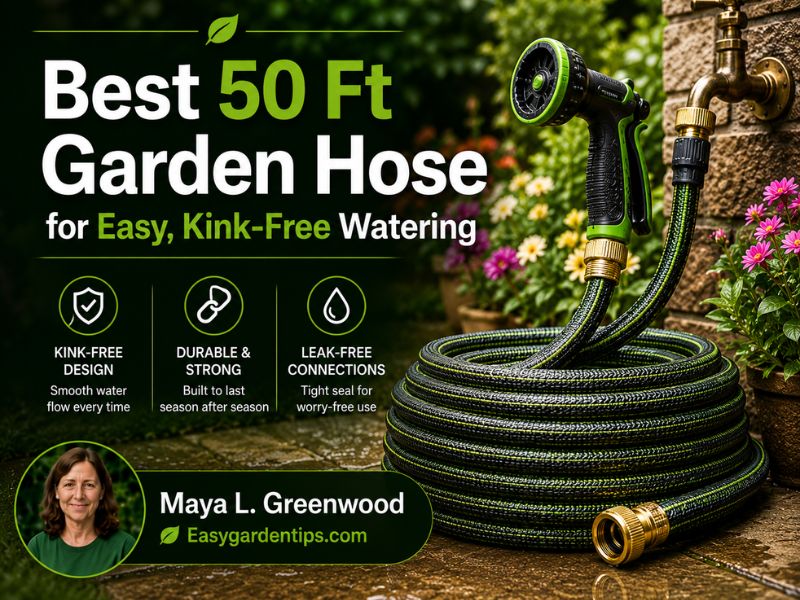
5 Best 50 Ft Garden Hose Picks for Easy, Kink-Free Watering
Are you looking for the best 50 ft garden hose for watering plants, washing your car, running a sprinkler, or handling everyday outdoor cleanup? A poorly made hose can turn a simple watering job into a struggle with kinks, leaking fittings, stiff material, weak water flow, and a heavy coil that is difficult to move or store.
A 50-foot hose is a practical size for many residential properties because it provides useful reach without the weight and pressure loss of an unnecessarily long 75- or 100-foot hose. I compared hose material, 5/8-inch flow capacity, kink resistance, flexibility, fittings, durability, pressure capability, weight, and all-weather performance and selected five products for different types of homeowners.
My top overall recommendation is the Flexzilla Garden Hose 5/8 in. x 50 ft. HFZG550YW. Its hybrid-polymer construction, all-weather flexibility, kink-resistant design, crush-resistant aluminum fittings, and drinking-water-safe inner tube create an excellent combination of durability and everyday handling. Flexzilla itself identifies the 5/8-inch, 50-foot version as its general-purpose choice for most homeowners.
For gardeners who frequently move the hose around corners and landscaping, the Giraffe Tools 5/8-Inch x 50-Foot Hybrid Garden Hose is my second pick. Its three-layer hybrid polymer body, rotating handgrip, solid fittings, low-memory construction, and all-weather flexibility help reduce twisting while connecting and moving the hose.
If reducing weight is your main concern, the zero-G 4001-50 5/8-Inch x 50-Foot Garden Hose is my lightweight recommendation. Its compact woven construction is designed to be up to 50% lighter than conventional garden hoses while remaining kink resistant, abrasion resistant, puncture resistant, and lead safe for drinking water.
Best 50 Ft Garden Hose for Easy, Kink-Free Watering
| Image | Product Name | Check Price |
|---|---|---|
Best Choice | Flexzilla Garden Hose 5/8 in. x 50 ft. HFZG550YW | Check Price |
Second Best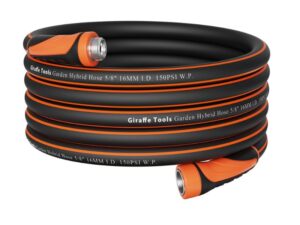 | Giraffe Tools 5/8-Inch x 50-Foot Hybrid Garden Hose | Check Price |
Third Choice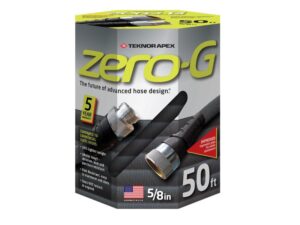 | Zero-G 4001-50 5/8-Inch x 50-Foot Garden Hose | Check Price |
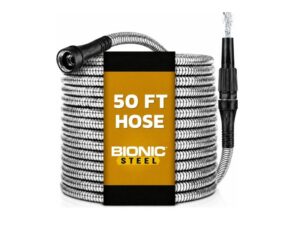 | Bionic Steel 50 Ft Stainless Steel Garden Hose | Check Price |
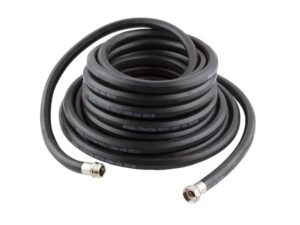 | Briggs & Stratton 50-Foot Heavy-Duty Rubber Garden Hose | Check Price |
1. Flexzilla Garden Hose 5/8 in. x 50 ft. HFZG550YW- Best Overall
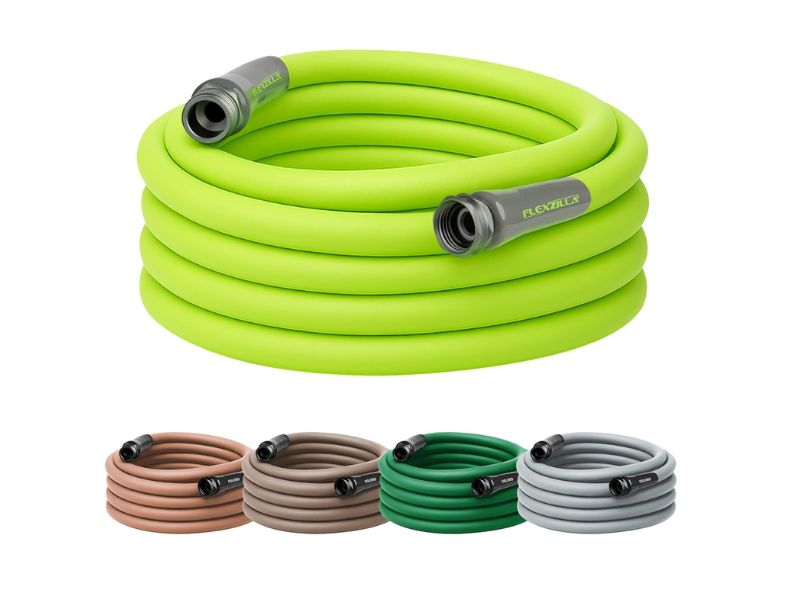
Flexzilla gets the top position because it avoids many of the compromises that make conventional garden hoses frustrating.
The hose uses a hybrid polymer rather than traditional heavy rubber or stiff inexpensive vinyl. Flexzilla designed the material to remain flexible across a wide temperature range, lie relatively flat with low memory, and resist kinking while under pressure.
Its dimensions also make sense for general residential watering. The hose has a 5/8-inch inside diameter and 50-foot length, with standard 3/4-inch GHT fittings. That 5/8-inch diameter provides much better water volume than many lightweight 1/2-inch hoses while avoiding much of the bulk associated with 3/4-inch commercial hose.
Flexzilla specifically describes 5/8 inch as the practical all-around diameter for tasks such as garden watering, pressure nozzles, sprinklers, and washing vehicles. Larger 3/4-inch hose is more useful when very high flow or much longer runs are required.
The fittings are another reason I prefer it.
Flexzilla uses anodized aircraft-aluminum fittings designed to resist crushing, with an O-ring that helps maintain a watertight connection. The inner tube material is also rated as drinking-water safe.
That makes the hose useful around vegetable gardens, RV-style outdoor activities, pets, and other situations where users may care about the material contacting the water.
Flexibility is its strongest practical advantage. A flexible hose is easier to pull around trees, patio furniture, vehicles, and garden beds and is less likely to fight you when coiling it after use.
It is not impossible to kink. No flexible hose can honestly guarantee that under every possible condition. But compared with stiff vinyl designs, the combination of low memory and hybrid construction makes Flexzilla considerably easier to manage.
One cosmetic consideration is the bright ZillaGreen finish. It is highly visible on a lawn, which reduces the chance of accidentally running over it, but buyers wanting an unobtrusive hose may prefer black, gray, or stainless steel.
Best for: Everyday residential watering, gardens, sprinklers, car washing, homeowners prioritizing flexibility, and anyone wanting one versatile hose.
Key specs: 50 ft, 5/8-in. I.D., hybrid polymer, 3/4-in. GHT fittings, all-weather flexibility, drinking-water-safe inner tube.
Verdict: Flexzilla provides the best overall balance of flow, handling, kink resistance, fitting quality, and flexibility for typical home use.
2. Giraffe Tools 5/8-Inch x 50-Foot Hybrid Garden Hose- Best for Easy Handling
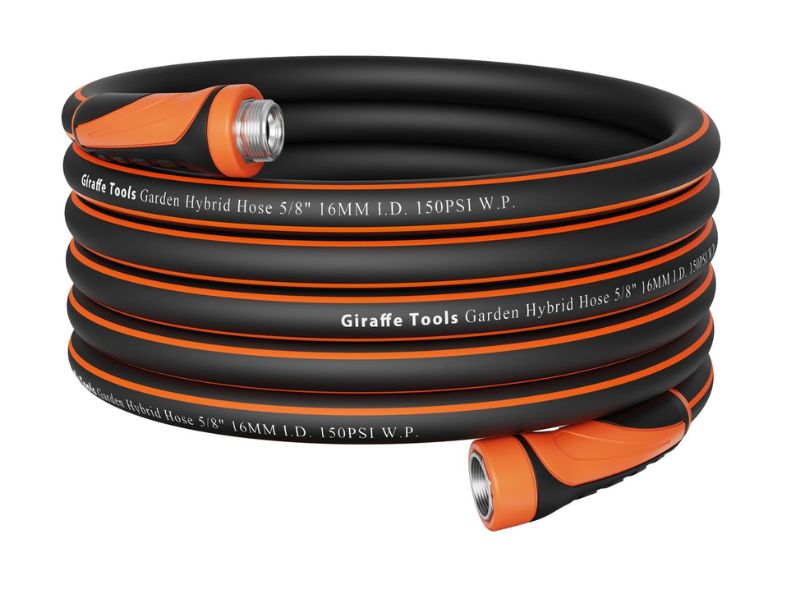
Giraffe Tools is another hybrid-polymer hose, but its design puts additional emphasis on handling at the fittings.
The hose uses a three-layer hybrid polymer construction designed to combine the lighter feel of synthetic hose material with the flexibility normally associated with rubber. Giraffe also describes the body as abrasion resistant and low memory, helping it coil and uncoil without retaining as much twist.
The movable handgrip around the fitting is particularly useful.
When attaching a normal hose to a faucet, rotating the fitting can sometimes cause the entire hose to twist with it. Giraffe’s grip allows the hose to rotate more naturally while you tighten or loosen the connection.
That is a small feature until you regularly move a hose between:
- A wall faucet.
- A hose reel.
- A sprinkler.
- A pressure nozzle.
- A watering wand.
- A wash brush.
Frequent connection changes are much less frustrating when you are not fighting fifty feet of twisting hose.
The 50-foot version uses the versatile 5/8-inch diameter, and product information lists solid fittings and a protective sleeve near the male end to reduce stress where the hose meets the connector.
Current specifications for this configuration list a weight around seven pounds, so it is not the lightest option in this guide.
That extra mass is reasonable considering its relatively substantial hybrid construction.
The hose also remains flexible across changing outdoor temperatures. If you live somewhere with cool spring mornings and hot summer afternoons, that flexibility can be more useful than a lightweight hose that becomes stiff in cold weather.
Best for: Gardens with obstacles, homeowners frequently changing attachments, hose reels, general watering, and anyone who values an easy-to-grip connection.
Key specs: 50 ft, 5/8-in. diameter, three-layer hybrid polymer, rotating handgrip, solid fittings, abrasion-resistant construction.
Verdict: Giraffe Tools is an excellent alternative to Flexzilla when connection handling and low-memory flexibility are major priorities.
3. Zero-G 4001-50 5/8-Inch x 50-Foot Garden Hose- Best Lightweight Pick
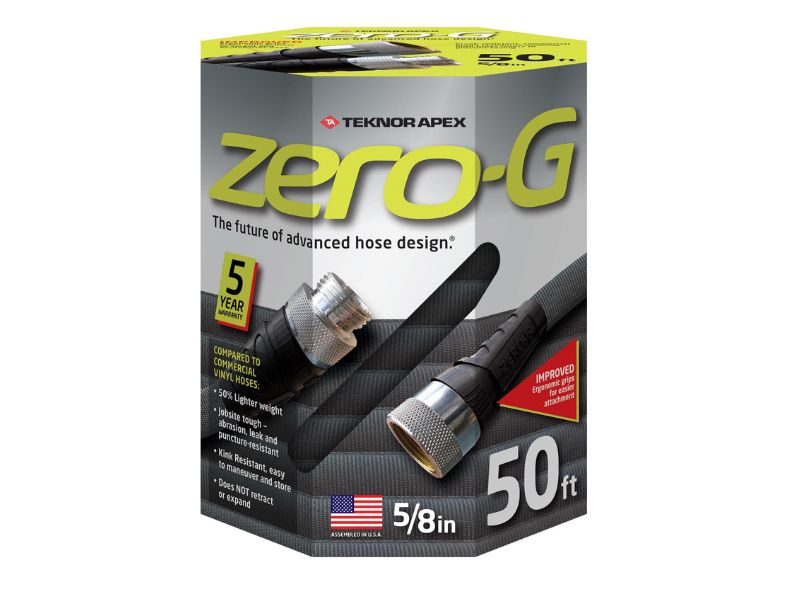
zero-G is the hose I would choose for someone who dislikes carrying and coiling a conventional garden hose.
Its design is very different from heavy rubber.
The hose uses a high-density woven jacket around a flexible inner structure, allowing the hose to flatten for compact storage when it is not pressurized.
The manufacturer says zero-G is up to 50% lighter than standard garden hoses. Despite the reduced weight, it is designed to resist leaking, abrasion, punctures, and kinking.
That difference matters for users who routinely drag a hose around a large patio, move it between the front and back yard, or lift it onto a wall hook after every use.
The 4001-50 version measures 5/8 inch by 50 feet, preserving the general-purpose flow capacity I prefer for a residential hose.
It works with normal hose accessories, including nozzles, sprayers, and sprinklers.
The hose is also listed as lead safe, making it appropriate when drinking-water safety matters.
Storage is another advantage.
Because the body collapses flatter than conventional round rubber or hybrid hose, it occupies less space on a hanger or reel.
There is a tradeoff.
A fabric-jacket hose does not feel or behave exactly like a conventional rubber hose. It performs best when pressurized and generally should be fully uncoiled before use.
Some users may also prefer the substantial feel of a traditional round hose when repeatedly dragging it across concrete or construction environments.
For home gardeners prioritizing low weight, zero-G remains exceptionally compelling.
Best for: Seniors, smaller users, compact storage, decks, patios, gardens, and anyone tired of lifting heavy rubber hose.
Key specs: 50 ft, 5/8 in., woven jacket, up to 50% lighter than conventional hoses, kink resistant, lead safe.
Verdict: zero-G is the strongest choice when easy carrying and compact storage matter more than having a traditional thick hose body.
4. Bionic Steel 50 Ft Stainless Steel Garden Hose- Best Metal Hose
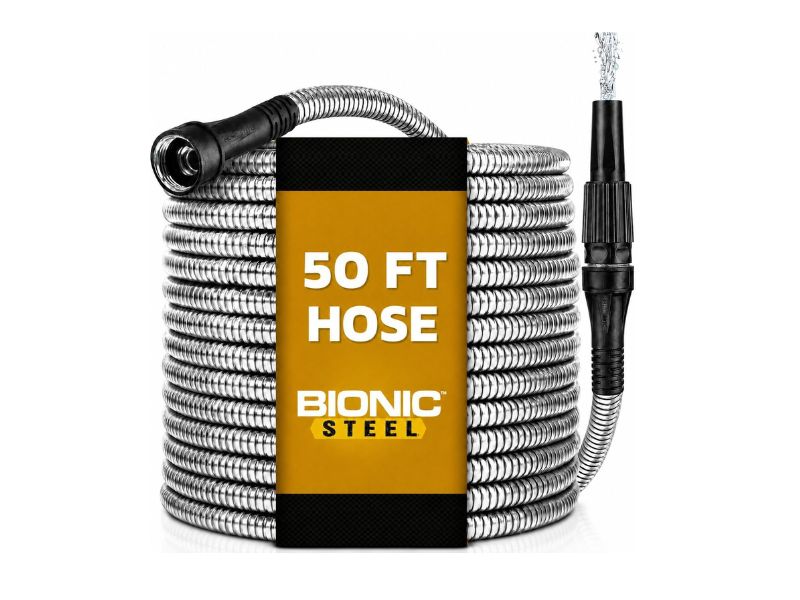
Bionic Steel takes durability in a completely different direction by surrounding the water line with 304 stainless steel.
The interlocking steel exterior protects against many of the things that damage soft hoses: rough concrete, abrasive surfaces, dragging around corners, punctures, and weather exposure.
The manufacturer describes the hose as corrosion resistant, rust resistant, and capable of remaining flexible because the steel outer shell uses an interlocking design rather than a rigid solid tube.
It also has one of the highest advertised pressure specifications in this group.
The 50-foot version is rated around 500 PSI burst pressure, although normal residential water pressure is far lower than that.
The hose does not expand under pressure like a conventional expandable hose.
That helps maintain consistent water delivery and gives it more predictable handling when connected to sprinklers or nozzles.
Another advantage is kink resistance.
A segmented metal shell physically cannot fold into the same tight pinch that occurs with soft vinyl tubing. That makes Bionic Steel appealing to people who have destroyed several conventional hoses by repeatedly folding or crushing them.
There are disadvantages.
Metal hose behaves differently across hard landscaping and can be noisier when dragged over concrete.
It can also become hot after sitting in strong direct sunlight, so I would not leave it exposed unnecessarily before grabbing it with bare hands.
The standard version is also less soft and comfortable to coil than Flexzilla.
For a rough environment, however, those compromises can be worthwhile.
Best for: Concrete patios, rough surfaces, homeowners concerned about punctures, pets, abrasion, and demanding outdoor use.
Key specs: 50 ft, 5/8 in., 304 stainless-steel exterior, kink-resistant construction, approximately 500 PSI burst rating.
Verdict: Bionic Steel is the most compelling option when abrasion and puncture resistance matter more than having a soft traditional hose.
5. Briggs & Stratton 50-Foot Heavy-Duty Rubber Garden Hose- Best Heavy-Duty Rubber Hose
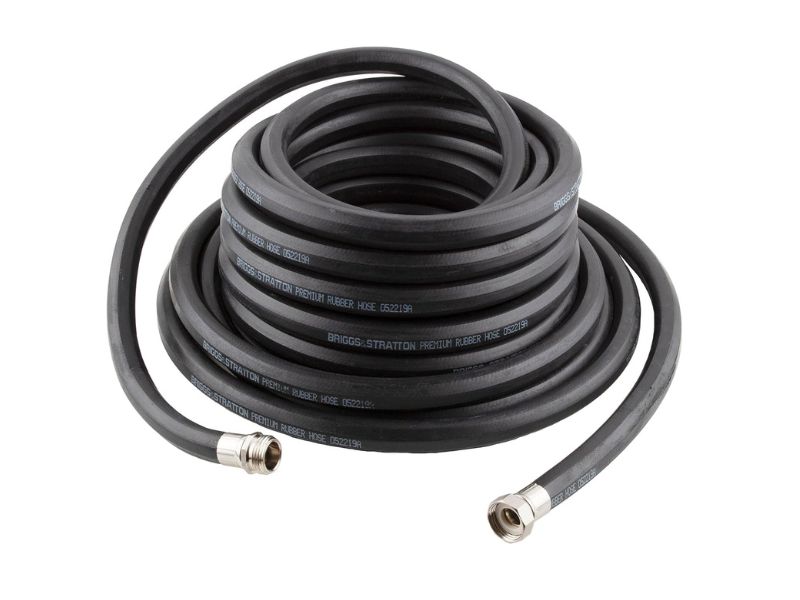
The Briggs & Stratton 8BS50 represents the traditional approach to building a long-lasting hose: use 100% rubber, substantial reinforcement, and heavy-duty metal couplings.
This is not the hose to buy if minimum weight is your first priority.
At roughly 9.7 pounds, it is substantially heavier than lightweight woven alternatives.
That weight comes with useful durability.
The hose uses industrial-style reinforcement and nickel-plated brass male and female couplings designed to resist crushing and corrosion. A rubber washer provides the sealing surface inside the female connector.
Rubber is also excellent across temperature extremes.
Product specifications indicate that the hose remains flexible to approximately -25°F and can handle hot water up to about 200°F, making it much more suitable for demanding utility work than many basic residential hoses.
That does not mean most gardeners need those capabilities.
If you only water a few tomato plants every evening, carrying a nearly ten-pound empty hose provides little benefit.
But if the hose sees regular workshop cleanup, commercial-style use, cold-weather conditions, or frequent dragging, the substantial rubber construction makes more sense.
The 5/8-inch diameter still provides the general-purpose water flow expected from a 50-foot residential hose.
Its greatest drawback is simply handling.
Rubber is heavy, particularly when the hose contains water.
People with limited grip strength or shoulder mobility may be much happier with zero-G.
Best for: Workshops, demanding outdoor jobs, cold climates, commercial-style use, and buyers prioritizing durability over low weight.
Key specs: 50 ft, 5/8 in., 100% rubber cover, nickel-plated brass couplings, industrial reinforcement, approximately 9.7 lb.
Verdict: Briggs & Stratton is the traditional heavy-duty choice for users who would rather carry additional weight than compromise on rubber construction and substantial fittings.
Best 50 Ft Garden Hose Comparison
| Product | Material | Diameter | Main Strength | Best For |
| Flexzilla HFZG550YW | Hybrid polymer | 5/8 in. | Flexibility + all-around balance | Best overall |
| Giraffe Tools Hybrid Hose | 3-layer hybrid polymer | 5/8 in. | Easy handling and swivel grip | Gardens with obstacles |
| zero-G 4001-50 | Woven high-density jacket | 5/8 in. | Very lightweight | Easy carrying/storage |
| Bionic Steel | 304 stainless steel | 5/8 in. | Abrasion and puncture resistance | Rough surfaces |
| Briggs & Stratton 8BS50 | Rubber | 5/8 in. | Heavy-duty durability | Demanding use |
Why 50 Feet Is a Good Garden Hose Length
A garden hose needs to be long enough to reach your watering areas without forcing you to stretch the hose or move between multiple faucets.
But buying the longest hose available is not automatically better.
Every additional foot adds:
Weight, storage bulk, friction loss, and more material to drag around the yard.
A 50-foot hose strikes an excellent balance for many suburban properties.
It can comfortably handle a garden bed, driveway, patio, vehicle, and many front or backyard watering layouts without becoming difficult to manage.
If your farthest watering location is only 20 feet from the spigot, choose 25 feet instead.
If you routinely need to reach 60 or 70 feet, a 75-foot hose makes more sense than stretching a 50-footer.
Is 5/8 Inch the Best Diameter for a 50 Ft Garden Hose?
For most homeowners, yes.
A 5/8-inch hose provides an excellent combination of flow rate, pressure retention, weight, and compatibility.
Flexzilla specifically recommends its 5/8-inch, 50-foot configuration as the all-around size for ordinary residential work.
A 1/2-inch hose is lighter but carries less water.
It is fine for containers, balconies, light hand watering, and short distances.
A 3/4-inch hose carries substantially more water but also weighs more and takes up additional storage space.
It becomes worthwhile for high-flow irrigation, filling large tanks, or very long hose runs.
For sprinklers, washing, and garden watering around a normal home, 5/8 inch remains the sweet spot.
Hybrid Polymer vs. Rubber Garden Hose
Both can be excellent.
Hybrid Polymer
Modern hybrid-polymer hoses combine properties associated with rubber and synthetic materials.
Good versions remain flexible while reducing weight.
Flexzilla and Giraffe Tools are strong examples.
They are easier to carry and coil than traditional heavy rubber while still feeling more substantial than inexpensive vinyl.
For most homeowners, hybrid polymer is my preferred hose material.
Rubber
Rubber remains one of the strongest materials for demanding garden hoses.
It handles temperature extremes well and can provide excellent abrasion resistance and long service life.
The downside is weight.
The Briggs & Stratton hose weighs nearly twice as much as some lightweight alternatives.
Choose rubber when durability matters more than effortless handling.
Are Metal Garden Hoses Worth It?
They can be.
A stainless-steel garden hose is especially attractive when conventional hoses are routinely damaged by:
Dogs.
Rough concrete.
Sharp landscaping.
Dragging.
Punctures.
Crushing.
Bionic Steel’s 304 stainless exterior protects the inner water line while remaining flexible through its segmented construction.
Metal hose is not automatically superior.
It can be noisier on hard surfaces, may become hot in direct sunlight, and feels different from a flexible polymer hose.
For ordinary garden watering, I still prefer Flexzilla.
For harsh conditions, metal becomes much more compelling.
What Does Kink Resistant Actually Mean?
A kink occurs when a flexible hose folds sharply enough to collapse the internal water passage.
Flow drops or stops entirely.
Better hoses resist this through:
Material flexibility, reinforcement, wall construction, low memory, and fitting strain relief.
But “kink resistant” should not be interpreted as physically impossible to kink.
Even premium hose can fold if tightly twisted, pulled around a sharp corner, or stored badly.
To reduce kinks, fully unwind the hose before pressurizing it and avoid creating tight loops while pulling it around the yard.
Does Hose Material Affect Water Pressure?
Diameter and length affect usable flow more directly than material.
A 50-foot, 5/8-inch hose typically provides much better volume than a 50-foot, 1/2-inch hose.
Longer hoses also create more friction loss.
Your garden hose cannot increase the pressure supplied by your home.
What a good hose can do is minimize unnecessary restriction.
Kinks, undersized tubing, long runs, restrictive fittings, and poor connectors can all reduce useful flow at the nozzle.
Brass vs. Aluminum Hose Fittings
Both can work well when manufactured correctly.
Brass fittings are durable, substantial, and widely used on traditional heavy-duty hoses.
Briggs & Stratton uses nickel-plated brass couplings.
Aluminum fittings reduce weight and resist rust.
Flexzilla uses anodized aircraft aluminum.
The connection should also include a good washer or O-ring.
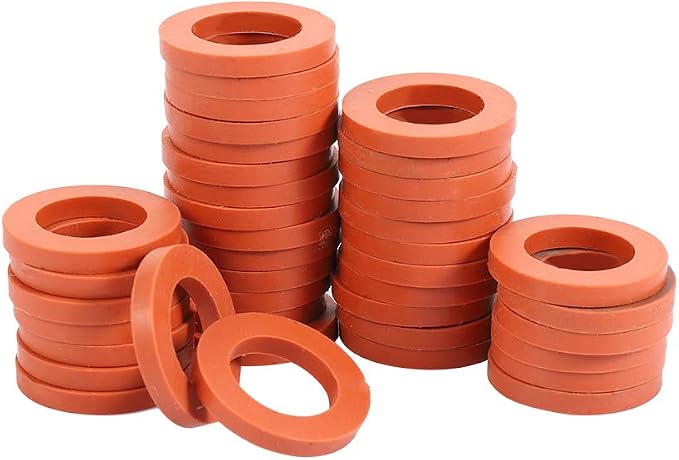
A surprisingly large percentage of hose leaks occur because the washer has worn out or disappeared rather than because the threads themselves have failed.
Drinking-Water-Safe Garden Hose
Not every garden hose is designed for potable water.
If you may fill:
Pet bowls.
RV tanks.
Children’s water toys.
Camping containers.
Or use the hose in situations involving drinking water,
look specifically for lead-safe or drinking-water-safe materials.
Flexzilla specifies a drinking-water-safe inner tube, while zero-G is identified as lead safe.
Even with an approved hose, allow stagnant sun-heated water to flush before drinking.
Lightweight vs. Heavy-Duty Hose
There is no universally better choice.
A lightweight hose is easier to:
Carry.
Coil.
Hang.
Move around landscaping.
Load into a vehicle.
A heavy rubber hose generally provides a more substantial physical structure for demanding work.
Your use case should decide.
For most gardeners, I would prioritize handling because the hose is moved far more often than it experiences extreme abuse.
For commercial-style cleanup, workshops, farms, or severe climates, durability may deserve greater weight.
How to Stop a Garden Hose From Kinking
Start by uncoiling the hose completely.
Do not connect a tightly wound new hose and immediately pull the free end across the lawn.
Allow it to lie relatively straight.
When coiling after use, create large loops rather than tight twists.
A swivel-style grip such as the system used by Giraffe Tools can also help prevent twist from being transferred from the fitting into the full hose length.
Finally, avoid leaving heavy objects parked on the hose.
Even crush-resistant fittings do not mean every section of hose should be repeatedly flattened by vehicles.
Can You Leave a Garden Hose Outside?
You can, but proper storage extends its life.
UV radiation, freezing water, high temperatures, and continuous pressure all place stress on hose materials and fittings.
After use:
Turn off the spigot.
Release water pressure.
Drain the hose when freezing weather is expected.
Store it in loose coils.
Keep it out of intense sunlight whenever practical.
A high-quality hose can survive imperfect storage, but good habits help protect your investment.
Should You Leave a Hose Pressurized?
I do not recommend leaving an ordinary garden hose continuously pressurized unless the complete watering system is specifically designed for that purpose.
Even if the hose can tolerate far higher pressure than your home’s water supply, the connectors, washers, nozzle, and accessories are also under constant stress.
Turning off the faucet after use reduces the consequences of a failed fitting or damaged hose.
What Burst Pressure Means
Burst pressure refers to the pressure at which a hose is expected to fail under test conditions.
It should not be confused with recommended continuous working pressure.
For example, Bionic Steel lists around a 500 PSI burst rating, but normal residential water systems operate far below that level.
A large burst-pressure number can indicate useful structural strength, but it should not be the sole reason for choosing a garden hose.
Flexibility, fittings, abrasion resistance, and handling matter every time you use it.
How to Make a Garden Hose Last Longer
Do not drag the connectors rather than the hose body.
Avoid running over fittings.
Replace worn washers when connections begin dripping.
Do not leave a hose tightly kinked under pressure.
Drain it before severe freezing temperatures.
Store long hoses on a large-radius hanger or reel rather than creating tiny loops.
And do not leave the faucet on continuously after finishing your watering.
These simple habits can add years to a good hose.
Common Garden Hose Buying Mistakes
One common mistake is buying a 100-foot hose when the farthest watering point is only 35 feet away.
You end up carrying and storing twice as much hose for no benefit.
Another is focusing entirely on burst pressure.
A hose can have impressive pressure specifications but still be unpleasant to maneuver.
Choosing the wrong diameter can also reduce flow.
Finally, people often overlook fittings until they begin leaking.
For a 50-foot residential hose, look for 5/8-inch diameter, durable metal fittings, low-memory material, good flexibility, and appropriate drinking-water certification when required.
Frequently Asked Questions
What is the best 50 ft garden hose?
Flexzilla HFZG550YW is my best overall 50-foot garden hose for most homeowners.
Its 5/8-inch hybrid-polymer construction combines all-weather flexibility, relatively low weight, good water flow, kink resistance, durable aluminum fittings, and a drinking-water-safe inner tube.
Is a 50 ft garden hose long enough?
Yes, 50 feet is enough for many average residential yards and gardens.
Measure from your outdoor faucet to the farthest location you regularly water and add several feet for routing around obstacles. If the distance consistently approaches 50 feet, a 75-foot hose may be more comfortable.
Is 5/8 or 3/4 garden hose better?
A 5/8-inch hose is better for most homeowners, while 3/4 inch is useful for higher-flow applications.
A 3/4-inch hose can move more water but is generally heavier. Flexzilla notes that most typical homeowners do not need to move above 5/8 inch.
Which garden hose is the lightest?
zero-G is one of the best lightweight options in this guide.
The manufacturer describes its hose as up to 50% lighter than standard garden hoses while maintaining a 5/8-inch flow path and kink-resistant construction.
What garden hose does not kink easily?
Flexzilla, zero-G, and Bionic Steel all use designs intended to strongly resist kinking.
Flexzilla relies on flexible low-memory hybrid polymer, zero-G uses a collapsible woven structure, and Bionic Steel uses an interlocking stainless-steel exterior.
Is a rubber garden hose better?
Rubber is excellent for durability and temperature resistance, but it is significantly heavier.
The Briggs & Stratton 8BS50 weighs roughly 9.7 pounds while offering substantial reinforced construction and heavy-duty brass couplings.
Are stainless-steel garden hoses good?
Yes, particularly where abrasion and puncture resistance are important.
Bionic Steel surrounds the water line with 304 stainless steel, providing protection against rough surfaces and creating a hose that resists conventional folding-style kinks.
Can I drink water from a garden hose?
Only use a hose specifically identified as drinking-water or lead safe when potable water is required.
Flexzilla lists a drinking-water-safe inner tube, while zero-G is described as lead safe. Flush water that has been sitting in a warm hose before drinking.
Why does my garden hose leak at the faucet?
A worn or missing hose washer is one of the most common causes of faucet leaks.
Check the washer inside the female fitting before replacing the entire hose. Flexzilla similarly notes that washer problems commonly cause connector leaks.
What is the best garden hose for cold weather?
A quality rubber or all-weather hybrid hose is generally the safest choice for cold conditions.
Briggs & Stratton’s rubber hose is designed to remain flexible well below freezing, while Flexzilla’s hybrid construction is also engineered for extreme-temperature flexibility.
Final Verdict
The best 50 ft garden hose should provide enough water flow and reach for normal outdoor tasks without becoming unnecessarily heavy, stiff, or frustrating to store.
Flexzilla HFZG550YW is my primary recommendation because its 5/8-inch hybrid-polymer construction, excellent flexibility, kink resistance, durable fittings, and drinking-water-safe inner tube make it suitable for almost every normal residential watering task.
Giraffe Tools 50-Foot Hybrid Garden Hose is an excellent alternative when easy handling and reduced twisting at the connector are priorities.
zero-G 4001-50 is the option I would choose when low weight and compact storage matter most.
For unusually harsh environments, Bionic Steel 50 Ft Garden Hose brings the abrasion and puncture resistance of a stainless-steel exterior, while Briggs & Stratton 8BS50 provides the traditional durability of reinforced heavy-duty rubber.
For most gardens, driveways, lawns, and washing jobs, I would start with Flexzilla. Its combination of easy handling, useful 5/8-inch water flow, all-weather flexibility, and dependable fittings makes it the most balanced 50-foot hose of these five.

I’m Maya L. Greenwood, a lifelong plant lover who believes anyone can grow something beautiful with the right guidance. After years of testing soil mixes, pruning methods, irrigation tricks, and pest-safe solutions, I started EasyGardenTips.com to turn hard-won lessons into step-by-step advice. From seed starting and container gardens to composting and seasonal checklists, my goal is to make gardening simple, sustainable, and fun.