3 Best LED Grow Light Brands for Serious Indoor Growing
Choosing a grow light by wattage alone can be misleading because two fixtures using similar electrical power may deliver very different photon efficiency, canopy uniformity, controls, and build quality. The best LED grow light brands distinguish themselves through dependable full-spectrum fixtures, useful dimming, realistic coverage, efficient diode systems, and product lines that scale from seedlings to large indoor gardens.
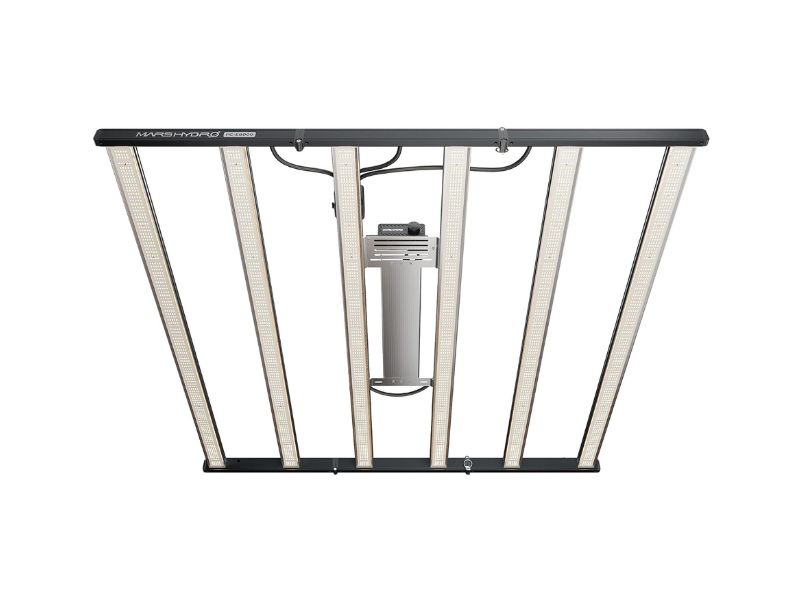
For most growers, my primary recommendation is MARS HYDRO FC-E8000 as the representative of MARS HYDRO. Its current U.S. Amazon listing specifies 800W actual power, 2.8 µmol/J system PPE, approximately 2,240 µmol/s PPF, Bridgelux 2835 diodes, Osram 660nm red LEDs, and maximum 5×5 coverage, illustrating why MARS HYDRO remains a strong choice across several grow-light power classes.
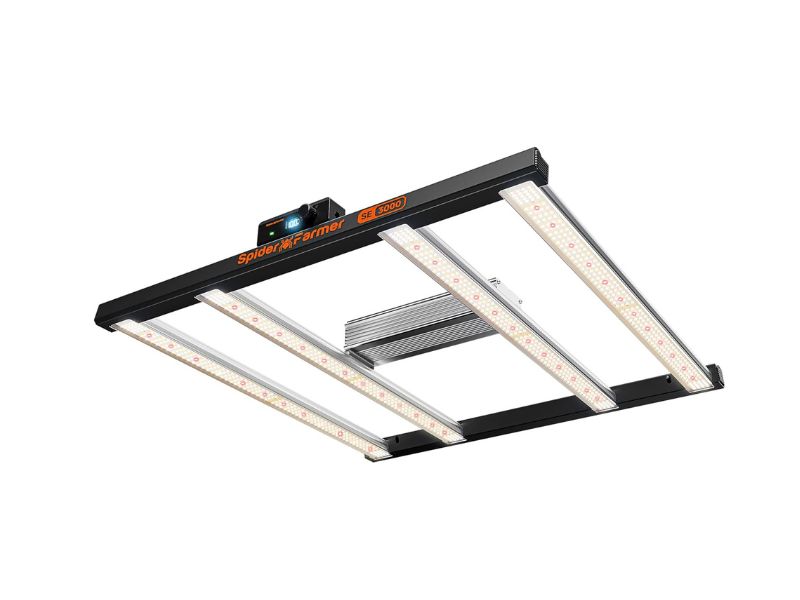
I would choose Spider Farmer SE3000 as the representative Spider Farmer model when efficient bar-style lighting and convenient controls matter. Its current listing specifies 300W actual consumption, approximately 826 µmol/s output, full-spectrum dimming, app control, daisy-chain capability, and 3×3 coverage.
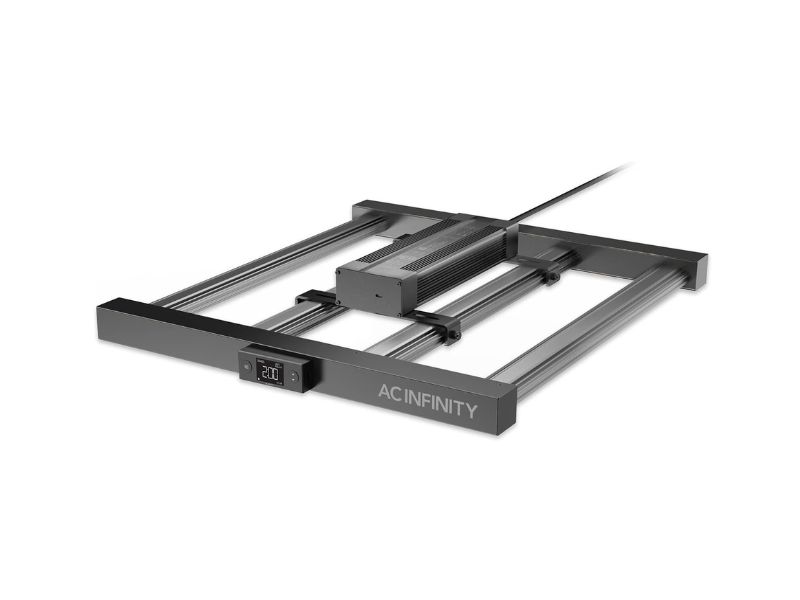
For buyers who want grow lighting integrated into a broader environmental-control system, I would choose AC Infinity IONFRAME EVO4. It uses 896 Samsung LM301H EVO diodes, offers programmed schedules, sunrise/sunset dimming and ten brightness levels, and integrates with AC Infinity’s UIS smart-control platform.
3 Best LED Grow Light Brands Reviewed
| Image | Product Name | Check Price |
|---|---|---|
Best Choice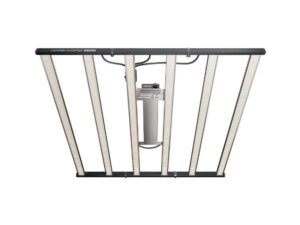 | MARS HYDRO FC-E8000 – MARS HYDRO | Check Price |
Second Best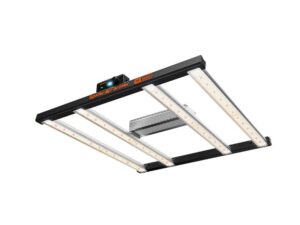 | Spider Farmer SE3000 – Spider Farmer | Check Price |
Third Choice | AC Infinity IONFRAME EVO4 – AC Infinity | Check Price |
1. MARS HYDRO FC-E8000 – MARS HYDRO
Key Features
- Broad product range from compact to commercial-class fixtures
- 800W representative FC-E8000
- 2.8 µmol/J system PPE
- Approximately 2,240 µmol/s PPF
- Bridgelux 2835 diode platform
- Osram 660nm deep-red LEDs
- Foldable multi-bar construction
- Full-spectrum output
- Up to 5×5-foot coverage
MARS HYDRO is my primary recommendation because the brand covers an unusually broad range of indoor-growing requirements.
Someone starting vegetable seedlings can choose a smaller TS-series fixture, while growers moving into 3×3, 4×4, or 5×5 spaces can step into larger FC and FC-E models without learning an entirely different lighting ecosystem.
The FC-E8000 demonstrates the higher end of that lineup.
Its current Amazon listing specifies 800W actual input, 2.8 µmol/J system PPE and approximately 2,240 µmol/s PPF.
Those specifications illustrate two reasons I consider MARS HYDRO one of the strongest LED grow-light brands.
First is photon efficiency.
PPE measures how efficiently the complete fixture converts electrical energy into photosynthetically useful photons.
This is considerably more informative than advertising a fixture as equivalent to an older light with some much larger wattage number.
Second is total photon output.
PPF measures how many photosynthetically active photons the fixture produces each second.
At approximately 2,240 µmol/s, the FC-E8000 sits firmly in serious large-canopy territory.
MARS HYDRO also uses several different fixture architectures across its lineup.
The TS series favors relatively compact board-style fixtures.
The FC and FC-E lines move toward distributed bars.
That gives buyers choices depending on canopy shape.
For a small seedling tray, compactness can matter.
For a 5×5 canopy, distributing LEDs over several bars generally makes more sense because it can improve:
- Edge coverage
- Corner illumination
- Heat distribution
- Airflow
- PPFD uniformity
The FC-E8000’s current configuration uses Bridgelux 2835 LEDs plus enhanced Osram 660nm red output.
I would not choose a grow-light brand merely because it names a specific diode manufacturer.
System design matters more.
A premium diode installed poorly does not automatically create a premium fixture.
What I like about MARS HYDRO is that its stronger models combine diode selection with useful fixture geometry, dimming, and published horticultural metrics.
The brand also works well for buyers who expect their grow area to change.
You might begin with:
- Vegetable seedlings
- Herbs
- Lettuce
- Houseplants
and later move into:
- Larger tomatoes
- Peppers
- Fruiting vegetables
- Dedicated grow tents
Having several power classes within the same brand makes that progression easier.
One caution is model naming.
Terms such as TS1000, FC3000, or FC-E8000 should never be interpreted as actual electrical wattage without checking the specifications.
Grow-light model numbers are marketing identifiers.
Always confirm actual wall draw before estimating electricity use, circuit load, or heat.
What I Like
- Very broad fixture selection
- Strong high-output options
- Published PPE and PPF on many models
- Multiple fixture formats
- Good choices from small tents to 5×5 setups
- Full-spectrum designs
- Strong current Amazon history on representative models
What I Do Not Like
- Model names can confuse actual wattage
- Product generations change frequently
- Large FC/FC-E fixtures require substantial installation space
- High-power models still require serious ventilation
MARS HYDRO is the brand I would start with when I want the widest practical path from modest indoor growing to a full high-output tent setup. The FC-E8000 shows the performance end of the lineup particularly well, combining high PPF with efficient bar-style distribution.
2. Spider Farmer SE3000 – Spider Farmer
Key Features
- Strong selection of board and bar fixtures
- 300W representative SE3000
- Approx. 826 µmol/s PPF
- Full-spectrum output
- Dimmable
- Bar-style architecture
- App control
- Daisy-chain functionality
- Approximately 3×3-foot coverage
Spider Farmer is the brand I would choose when I want a particularly strong balance between modern bar-style hardware and convenient controls.
The current SE3000 listing specifies 300W consumption and approximately 826 µmol/s photon output, along with full-spectrum dimming, app control, daisy chaining, and 3×3 positioning.
That makes the SE line representative of what Spider Farmer does well.
The company offers compact SF-series boards for smaller areas and larger distributed SE-series fixtures when canopy uniformity becomes more important.
Bar design is valuable because grow-light performance is not only about producing photons.
Those photons need to land on the plants.
A concentrated fixture may generate an impressive PPFD number directly beneath its center but substantially weaker readings near the edges.
Distributing LEDs over several bars can make the useful growing footprint more consistent.
That matters with crops such as:
- Tomatoes
- Peppers
- Herbs
- Lettuce
- Vegetable seedlings
If multiple plants share a tray or tent, you want similar development across the whole canopy.
The current SE3000 is also notable for its controls.
Amazon lists app control and dimming daisy-chain functionality on the present configuration.
Smart control does not directly make plants grow better.
A plant cannot tell whether its light schedule came from an app or a mechanical timer.
What smart controls can improve is consistency.
They can make it easier to:
- Maintain a repeatable photoperiod
- Adjust intensity
- Change settings as plants mature
- Coordinate multiple compatible lights
That can be particularly useful if the fixture is mounted high inside a tent and difficult to reach.
The SE3000 also publishes a total photon figure of approximately 826 µmol/s from 300W electrical input.
That is a more useful specification than comparing it with another fixture based solely on the number “300” in a product name.
Spider Farmer’s lineup also scales into substantially larger fixtures, which is useful if you prefer to remain with the same brand when moving from a small 3×3 setup to larger tents.
The main disadvantage is overlapping model names.
Spider Farmer has multiple SF1000, SF1000D, SE, G, and updated-generation products.
Always check the exact model and ASIN instead of assuming every listing with a familiar series name has identical specifications.
What I Like
- Strong bar-style SE lineup
- Useful app controls
- Dimming
- Published photon-output figures
- Good canopy distribution
- Several power classes
- Suitable for both seedlings and mature plants
What I Do Not Like
- Similar model names can become confusing
- App functionality is unnecessary for simple setups
- Exact specifications can change between generations
- Larger bar fixtures need more hanging space
Spider Farmer is the brand I would choose when bar-style canopy distribution and smart dimming are priorities. The SE3000 is a particularly useful middle-ground example because 300W fits many serious 3×3 indoor gardens without immediately moving into very high electrical loads.
3. AC Infinity IONFRAME EVO4 – AC Infinity
Key Features
- 300W representative IONFRAME EVO4
- 896 Samsung LM301H EVO diodes
- Diodes rated at 3.14 µmol/J
- Algorithmically spaced bar design
- 10 brightness levels
- Programmed schedules
- Sunrise/sunset dimming
- UIS Wi-Fi ecosystem compatibility
- Removable LED driver
- Daisy-chain support
AC Infinity is my choice when the grow light is part of a complete controlled indoor environment rather than an isolated fixture.
The IONFRAME EVO4 demonstrates that approach particularly well.
Its current Amazon listing specifies 896 Samsung LM301H EVO LEDs, each rated at 3.14 µmol/J, along with programmed scheduling, sunrise/sunset dimming, ten brightness levels, a removable driver, and UIS-platform Wi-Fi compatibility.
One technical distinction is important.
The 3.14 µmol/J figure applies to the diode specification given by AC Infinity, not necessarily total wall-to-photon system PPE.
It should therefore not be directly compared with a published complete-fixture PPE figure unless both numbers use the same measurement method.
That distinction is exactly the kind of detail worth watching when evaluating premium grow-light brands.
Marketing materials often place similar-looking efficiency numbers next to each other even when they describe different parts of the system.
AC Infinity’s real strength is not simply Samsung diodes.
It is integration.
The EVO4 provides:
- Ten brightness levels
- Programmed schedules
- Sunrise transitions
- Sunset transitions
- UIS compatibility
- Wi-Fi app control
That becomes valuable when your grow room also contains compatible environmental equipment.
Instead of treating the light as an independent device, you can build a system where lighting and other environmental controls are managed within the same ecosystem.
For growers who enjoy automation, this is much cleaner than maintaining several unrelated controllers.
The bar-style layout also deserves attention.
AC Infinity says the diode spacing is designed to improve even coverage, canopy penetration, and hotspot reduction.
That is particularly relevant with flat canopies such as:
- Seedling trays
- Lettuce
- Herbs
- Multiple vegetable plants
Uniform PPFD generally produces more consistent development than a very intense center combined with weak edges.
Another premium feature is the removable driver.
LED drivers produce heat.
Moving the driver away from the immediate canopy can help redistribute heat in a small enclosed tent.
This does not reduce the total energy entering the room, but it can make local thermal management easier.
The current listing also states that the fixture supports daisy chaining with multiple compatible grow lights.
That scalability is particularly attractive for larger installations.
The downside is that AC Infinity makes the most sense when you value its ecosystem.
If you only need a grow light connected to a basic outlet timer, much of its smart-control capability may go unused.
What I Like
- Samsung LM301H EVO diode platform
- Excellent built-in scheduling
- Ten brightness levels
- Sunrise/sunset dimming
- Wide bar-style distribution
- Removable driver
- Strong ecosystem integration
- Daisy-chain scalability
What I Do Not Like
- Premium controls may be unnecessary for basic growers
- Diode PPE should not be confused with complete-system PPE
- Greatest value comes when using other AC Infinity equipment
- More setup complexity than a simple manual fixture
AC Infinity is the brand I would choose for a highly controlled grow tent where lighting, environmental management, and automation need to work as one system. The IONFRAME EVO platform is less about one flashy specification and more about creating a well-integrated growing environment.
LED Grow Light Brands Comparison
| Brand | Representative Model | Actual Power | Fixture Style | Key Photon/Diode Spec | Smart Control | Main Strength |
| MARS HYDRO | FC-E8000 | 800W | Foldable multi-bar | 2.8 µmol/J system PPE; ~2,240 µmol/s PPF | Model/controller dependent | Broad lineup + high output |
| Spider Farmer | SE3000 | 300W | Multi-bar | ~826 µmol/s PPF | App control | Smart bar-style lighting |
| AC Infinity | IONFRAME EVO4 | 300W | Multi-bar | 896 LM301H EVO diodes | UIS/Wi-Fi | Integrated automation |
The comparison shows why there is no universal winner for every grower. MARS HYDRO offers particularly broad product depth and powerful large-canopy options, Spider Farmer balances strong horticultural output with convenient smart controls, and AC Infinity excels when the grow light is expected to integrate into a broader automated tent system.
How to Choose Among the Best LED Grow Light Brands
Compare Exact Models, Not Brand Reputation Alone
Even excellent brands make fixtures for very different jobs.
A 100W seed-starting panel and an 800W 5×5 bar fixture should not be compared directly.
Start with your actual canopy.
Then compare relevant models from each brand.
Check Actual Wattage
Model names are frequently misleading.
A name containing “1000,” “3000,” or “8000” rarely means that exact number of watts.
Always find the actual input specification before calculating electricity use.
Look for System PPE
PPE measures photosynthetic photon output per joule of electricity.
When comparing figures, confirm whether the manufacturer is publishing:
- Complete-system PPE
- LED-diode PPE
They are not interchangeable.
MARS HYDRO publishes 2.8 µmol/J system PPE for the FC-E8000, while AC Infinity’s 3.14 µmol/J figure refers to its individual LM301H EVO diodes.
Check PPF
PPF measures total photosynthetically active photon output.
For example, the FC-E8000 publishes approximately 2,240 µmol/s, while SE3000 publishes approximately 826 µmol/s—but they are dramatically different fixture sizes and power classes.
PPF should be evaluated relative to wattage and intended growing area.
PPFD Uniformity Is Crucial
PPF tells you how many photons leave the fixture.
PPFD tells you how much photon density reaches a particular part of your plant canopy.
Check PPFD maps when possible.
Do not judge a light by one impressive center reading.
The corners matter too.
Choose the Right Coverage
A quality grow-light brand usually offers different models for:
- 2×2
- 3×3
- 2×4
- 4×4
- 5×5
Buy for the actual active canopy rather than the maximum tent size you might own someday.
MARS HYDRO vs Spider Farmer
I would lean toward MARS HYDRO when I want the widest range of straightforward fixtures and strong high-output options.
I would lean toward Spider Farmer when modern bar lighting plus app-based control is particularly appealing.
Both brands provide multiple power classes.
Spider Farmer vs AC Infinity
Spider Farmer focuses heavily on horticultural fixtures themselves.
AC Infinity’s distinctive advantage is ecosystem integration.
If I already use AC Infinity controllers, exhaust equipment, or other UIS-compatible devices, I would give IONFRAME additional consideration.
MARS HYDRO vs AC Infinity
MARS HYDRO makes sense when output-per-fixture and broad model selection are priorities.
AC Infinity becomes more compelling when sophisticated programming and centralized environmental control justify the extra ecosystem focus.
Best Brand for Beginners
I would start with MARS HYDRO.
Its broad range makes it easier to find an appropriately sized fixture without immediately stepping into complicated automation.
A beginner should prioritize correct power and coverage before advanced controls.
Best Brand for Smart Grow Tents
I would choose AC Infinity.
The IONFRAME line is specifically attractive because lighting can operate within the broader UIS control environment.
This makes more sense as the number of controlled devices increases.
Best Brand for Bar-Style Grow Lights
All three offer strong bar-style options.
Spider Farmer’s SE series is particularly representative of this design philosophy, while MARS HYDRO FC/FC-E and AC Infinity IONFRAME also provide distributed bar layouts.
Best Brand for 3×3 Grow Tents
A fixture around the SE3000 or IONFRAME EVO4 class is a logical place to start.
Both are roughly 300W-class fixtures.
Always confirm the exact model’s current coverage map before purchasing.
Best Brand for 5×5 Grow Tents
MARS HYDRO has several compelling high-output options.
The representative FC-E8000 reviewed here is currently positioned for maximum 5×5 coverage with approximately 2,240 µmol/s PPF.
AC Infinity also offers larger IONFRAME models for this footprint.
Best Brand for Seedlings
You do not need a giant premium fixture for a single nursery tray.
Choose one of the smaller models offered by these brands and use dimming appropriately.
Seedlings generally benefit more from properly distributed moderate intensity than unnecessary maximum wattage.
Best Brand for Tomatoes and Peppers
All three brands offer enough power for tomatoes and peppers.
The real choice depends on canopy size.
For seedlings, use smaller dimmable fixtures.
For mature plants filling a large tent, move toward larger bar systems with strong PPFD uniformity.
Dimming Should Be a Priority
A dimmable fixture can remain useful across multiple growth stages.
Instead of buying separate lights for seedlings and mature plants, you can reduce intensity early and raise it as leaf area increases.
This is one of the most useful features offered across higher-quality grow-light brands.
Smart Control Is Useful but Optional
Plants do not require Wi-Fi.
Smart controls are useful because they make consistent operation easier.
They can simplify:
- Timers
- Intensity changes
- Sunrise/sunset routines
- Multi-light control
If you do not need those features, a manual dimmer and external timer remain perfectly functional.
Heat Management Still Matters
Efficient LEDs still add heat to the growing environment.
A 300W fixture contributes much less heat than an 800W fixture, but neither is heat-free.
Large setups may require:
- Exhaust ventilation
- Fresh-air intake
- Canopy circulation
- Temperature monitoring
Consider Driver Placement
Drivers create heat.
Removable drivers, such as the design used on the AC Infinity EVO4, can provide greater flexibility in where some of that localized heat is released.
Do Not Overvalue Spectrum Marketing
Full-spectrum white output with supplemental red works well for general indoor gardening.
Extra wavelength labels can be interesting, but I would prioritize:
- Proper PPFD
- Good coverage
- Correct photoperiod
- Efficiency
- Environmental control
before chasing unusual spectrum features.
Frequently Asked Questions
What are the best LED grow light brands?
MARS HYDRO, Spider Farmer, and AC Infinity are my three choices here.
MARS HYDRO provides a broad lineup and high-output options, Spider Farmer combines strong bar fixtures with smart control, and AC Infinity excels at ecosystem integration.
Which LED grow light brand is my primary recommendation?
MARS HYDRO is my primary recommendation for most indoor growers.
Its lineup spans small grow areas through commercial-style 5×5 fixtures, giving buyers room to scale without changing brands.
Is Spider Farmer a good grow light brand?
Yes, Spider Farmer offers efficient full-spectrum fixtures with strong bar-style options and smart controls.
The current SE3000 provides 300W input, approximately 826 µmol/s output, dimming, app control, and 3×3 positioning.
Is MARS HYDRO a good grow light brand?
Yes, especially when you want a broad range of fixture sizes and high-output options.
The FC-E8000 illustrates the upper end with 800W input, 2.8 µmol/J PPE and approximately 2,240 µmol/s PPF.
Is AC Infinity a good LED grow light brand?
Yes, particularly for growers who value integrated automation and environmental controls.
The IONFRAME EVO4 provides programmed schedules, ten brightness levels, sunrise/sunset dimming, and UIS-compatible Wi-Fi operation.
Which grow light brand is best for beginners?
I would start with MARS HYDRO because its product range covers many common grow sizes.
Choose the correct wattage for the actual canopy rather than automatically purchasing one of its largest fixtures.
Which brand is best for smart grow lights?
AC Infinity is my first choice when integrated smart control is the priority.
Its UIS ecosystem can coordinate compatible grow-room equipment rather than treating lighting as an isolated device.
Which brand is best for 3×3 tents?
Spider Farmer and AC Infinity both offer strong 300W-class options for compact serious gardens.
The SE3000 and EVO4 are good examples of the type of output and fixture geometry I would consider.
Which brand is best for 5×5 tents?
MARS HYDRO is my first choice when high 5×5 photon output is the priority.
The current FC-E8000 publishes roughly 2,240 µmol/s PPF and 5×5 maximum coverage.
Which brand uses Samsung LM301H EVO diodes?
AC Infinity uses Samsung LM301H EVO LEDs in its IONFRAME EVO series.
The EVO4 contains 896 diodes according to its current Amazon listing.
Which brand has app-controlled grow lights?
Spider Farmer and AC Infinity both offer app-controlled models.
Their ecosystems differ, so choose according to the other grow-room equipment you plan to use.
Are bar grow lights better than board lights?
Bars often improve canopy distribution and airflow, particularly at higher wattages.
Board fixtures remain attractive when compact size and simple installation matter more.
What is PPE in an LED grow light?
PPE measures photosynthetically useful photon output per joule of electrical energy.
Use system-level PPE when comparing complete fixtures whenever comparable measurements are available.
What is PPF?
PPF measures the total photosynthetically active photon output produced each second.
It helps compare total fixture output but does not show how evenly the photons reach the canopy.
What is PPFD?
PPFD measures photosynthetic photon density reaching a specific area of the plant canopy.
It changes with fixture height, dimmer setting, optics, reflectivity, and location beneath the light.
Is higher wattage always better?
No, wattage only describes electrical input and does not guarantee better plant-light performance.
Efficiency, PPFD distribution, coverage, and crop requirements are equally important.
Are expensive grow-light brands worth it?
They can be when better efficiency, controls, distribution, service, or scalability solve real needs.
A premium fixture is unnecessary when a modest low-power light already provides the required canopy intensity.
Do good LED grow lights need dimmers?
I strongly prefer dimming because it makes one fixture useful across several growth stages.
It is especially valuable when seedlings and mature plants use the same grow area.
Which grow-light brand is best for tomatoes?
All three can support tomatoes when the selected fixture matches the canopy size.
For mature large tomato plants, prioritize strong PPFD uniformity and adequate total PPF rather than brand name alone.
Which LED brand is best for vegetable seedlings?
Any of these brands can work, but choose one of their smaller dimmable fixtures.
A huge 5×5 light is unnecessary unless the seedlings will later remain under that same fixture as mature plants.
Should I choose a brand based on Amazon ratings alone?
No, rating counts are useful marketplace context but should not replace technical comparison.
Evaluate actual wattage, PPE, PPF, PPFD distribution, controls, canopy size, and the exact product generation.
Conclusion
The best LED grow light brands distinguish themselves through more than brand recognition. The strongest companies provide multiple fixture sizes, realistic coverage options, efficient photon production, useful dimming, solid thermal design, and models that can support growers as their indoor gardens expand.
MARS HYDRO remains my primary recommendation for most buyers. Its broad range makes it easy to move from compact indoor growing to large bar-style fixtures, while models such as the FC-E8000 demonstrate strong system-level performance with 2.8 µmol/J PPE and approximately 2,240 µmol/s PPF.
Spider Farmer is my alternative when modern bar-style construction and smart control are important. The SE3000 shows that balance particularly well with 300W input, approximately 826 µmol/s output, dimming, app control, and 3×3 coverage.
AC Infinity is the brand I would choose for deeper automation. Its IONFRAME EVO platform combines quality diode hardware with programmed schedules, ten brightness settings, sunrise/sunset control, removable drivers, and UIS integration.
For the broadest overall grow-light lineup, I would choose MARS HYDRO. For smart bar-style fixtures, I would choose Spider Farmer. For an integrated automated grow environment, AC Infinity is the strongest fit of these three.

I’m Maya L. Greenwood, a lifelong plant lover who believes anyone can grow something beautiful with the right guidance. After years of testing soil mixes, pruning methods, irrigation tricks, and pest-safe solutions, I started EasyGardenTips.com to turn hard-won lessons into step-by-step advice. From seed starting and container gardens to composting and seasonal checklists, my goal is to make gardening simple, sustainable, and fun.