Best Hydroponic Grow Tent: 5 Top Sizes for Indoor Grow Rooms
A productive hydroponic garden starts with more than reservoirs, pumps, nutrients, and grow lights. The enclosure surrounding that equipment determines how effectively you can control light, airflow, temperature, humidity, and access to the plants.
The best hydroponic grow tent should contain reflected light without trapping excessive heat, support the weight of ventilation equipment, provide sensible duct and cable openings, and leave enough floor space for both plants and the hydroponic system. A tent that works well for compact deep-water culture may be unsuitable for a large ebb-and-flow table or several buckets connected to one reservoir.
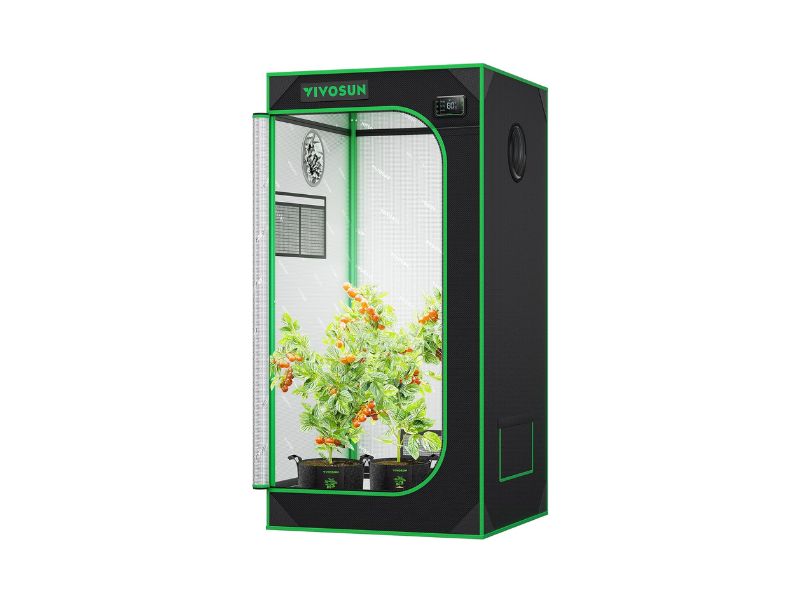
My primary recommendation is the VIVOSUN S224 2×2 Grow Tent. Its compact 24-by-24-inch footprint, reflective interior, accessible door, observation window, and removable floor tray make it a practical starting point for small hydroponic gardens. It is particularly suitable for growers who want a manageable enclosure without committing an entire room to equipment.
A larger system may require a different size. The AC Infinity CLOUDLAB 642 provides a narrow 2×4 layout, the Gorilla Grow Tent Pro offers extra vertical flexibility in a 3×3 footprint, the Spider Farmer 4×4 accommodates a substantial full-cycle system, and the Mars Hydro 5×5 provides room for larger reservoirs and multiple growing sites.
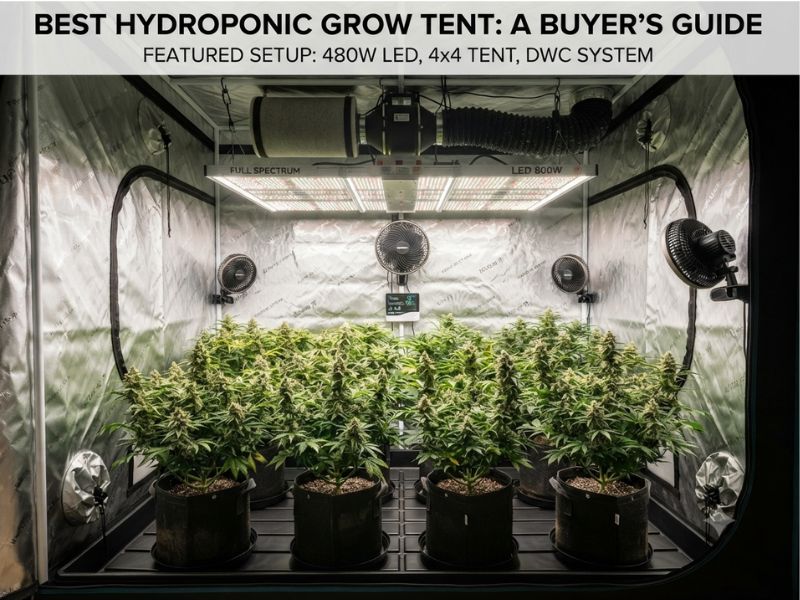
The correct choice is therefore not simply the largest or thickest tent. It is the tent whose footprint, height, ventilation layout, frame strength, and access points match the hydroponic equipment you plan to install.
5 Best Hydroponic Grow Tents
| Image | Product Name | Check Price |
|---|---|---|
Best Choice | VIVOSUN S224 2×2 Grow Tent | Check Price |
Second Best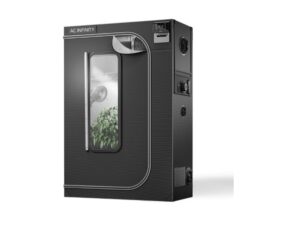 | AC Infinity CLOUDLAB 642 2×4 Grow Tent | Check Price |
Third Choice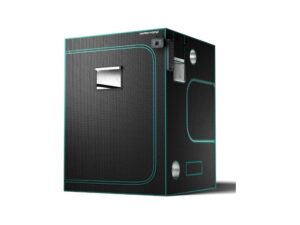 | Mars Hydro 5×5 Advanced Grow Tent | Check Price |
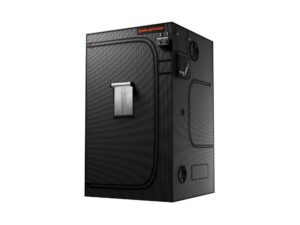 | Spider Farmer 4×4 Grow Tent | Check Price |
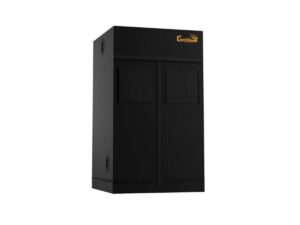 | Gorilla Grow Tent Pro 3×3 | Check Price |
1. VIVOSUN S224 2×2 Grow Tent
Key Features
- 24 × 24 × 48-inch dimensions
- Compact four-square-foot growing area
- Reflective Mylar interior
- Durable Oxford-fabric exterior
- Metal support frame
- Observation window
- Removable waterproof floor tray
- Duct, intake, and cable openings
- External tool organizer
- Tool-free frame assembly
The VIVOSUN S224 is a compact tent designed for growers who want to operate a small hydroponic system in a closet, corner, office, or spare room. Its two-foot-square floor provides enough space for a single reservoir, one larger plant, several compact plants, or a small propagation arrangement.
The 48-inch height is the most important limitation to understand. Hydroponic plants can grow quickly when their root zone receives consistent water, oxygen, and nutrition. Once the height of the reservoir, plant, grow light, suspension hardware, and safe canopy gap are subtracted, the usable vertical space becomes limited.
This means the S224 works best with low-profile equipment and controlled plant height. Compact LED boards, shallow reservoirs, small drip systems, and trained plants are easier to manage than tall buckets with large lids and bulky overhead filters.
The reflective interior helps redirect light that would otherwise strike the walls. This is useful in a small space because the canopy remains close to all four surfaces. Reflection does not replace a properly sized grow light, but it can reduce side losses and improve overall light utilization.
A viewing window allows the plants to be checked without opening the main door. This can help preserve temperature and humidity, although the window should remain securely covered when maintaining a strict dark period is important.
The removable floor tray provides a second layer of protection beneath the hydroponic equipment. It can contain small spills and simplifies cleanup after maintenance. It should not be treated as a substitute for a properly sealed reservoir or leak alarm.
Ventilation openings allow the tent to accept a compact inline fan, passive intake, and electrical cables. Because the enclosure is small, even a modest light, pump, and driver can raise the temperature quickly. Adjustable ventilation is therefore more useful than simply installing the largest available fan.
What I Like
- Compact footprint fits limited spaces
- Straightforward assembly
- Reflective interior supports efficient lighting
- Observation window reduces unnecessary door opening
- Floor tray simplifies cleanup
- Suitable for small hydroponic reservoirs
- Affordable entry point for indoor growing
- External organizer keeps small tools accessible
What I Do Not Like
- Limited 48-inch height
- Minimal space for large filters and ducting
- Not ideal for tall plants
- Reservoir access can become cramped
- Small temperature changes occur quickly
- Limited expansion space
The VIVOSUN S224 is a sensible first hydroponic tent for compact systems and controlled plant sizes. It offers a manageable starting point, but growers must plan vertical clearance carefully before installing the reservoir and light.
2. AC Infinity CLOUDLAB 642 2×4 Grow Tent
Key Features
- 48 × 24 × 72-inch dimensions
- Eight-square-foot rectangular footprint
- Heavy-duty 2000D Oxford canvas
- Highly reflective Mylar interior
- Reinforced steel poles
- Multiple hanging support bars
- Large observation window
- Controller mounting plate
- Light-resistant cable passthrough
- Multiple duct and equipment ports
- Removable floor tray
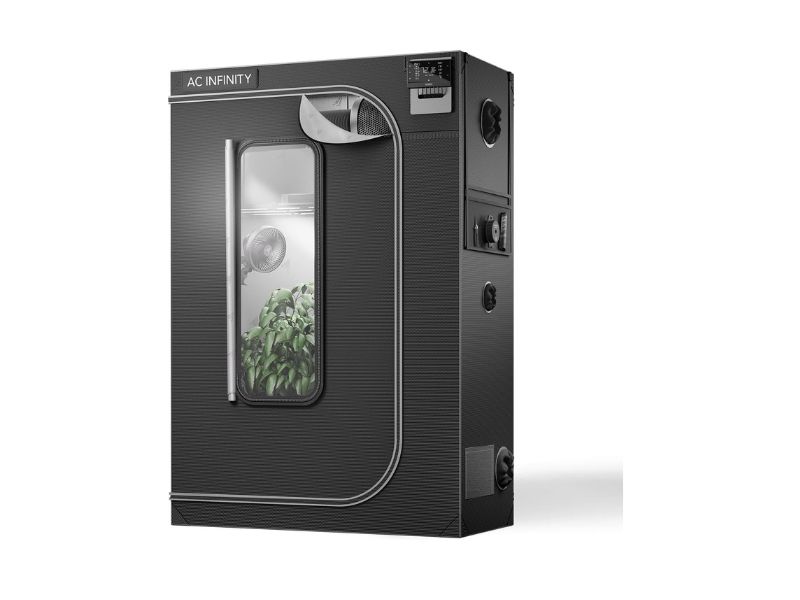
The AC Infinity CLOUDLAB 642 provides a useful step up from a compact square tent. Its 2×4 footprint fits against a wall while offering twice the canopy area of a 2×2 enclosure.
This rectangular layout works well for hydroponic systems arranged in a row. Two buckets, several small containers, a narrow nutrient-film system, or a rectangular flood tray can fit more naturally than they would inside a small square tent.
The 72-inch height provides substantially more room for reservoirs, plants, lights, filters, and ducting. It also allows growers to maintain a safer distance between the canopy and high-output LED fixtures.
Its thick canvas and reinforced frame are designed for heavier equipment loads. This matters in hydroponics because the upper support bars may need to carry an LED light, carbon filter, inline fan, circulation equipment, and sensors simultaneously.
The controller mounting plate and cable passthrough are useful for automated systems. A temperature, humidity, fan, or lighting controller can remain outside the humid enclosure while its probes and cables enter through a more organized opening.
Several duct ports make it possible to choose different ventilation arrangements. The exhaust fan and filter can be mounted inside, outside, or partly outside the tent depending on the available ceiling clearance.
The wide front access makes it easier to reach both ends of the canopy. However, placing the tent directly against a wall can make rear equipment difficult to service. Hydroponic tubing, air lines, and drainage routes should be arranged before the canopy becomes dense.
What I Like
- Narrow footprint fits against walls
- Strong 2000D canvas
- Reinforced frame supports substantial equipment
- Good height for hydroponic buckets and reservoirs
- Controller-ready cable management
- Multiple ventilation options
- Large viewing area
- Suitable for two growing zones or plant rows
What I Do Not Like
- Requires more floor space than a compact tent
- Rear plants can be difficult to reach
- Thick material makes assembly more demanding
- Large window adds another area that must remain sealed
- Premium construction may exceed basic requirements
The CLOUDLAB 642 is a strong option for growers who want more capacity without using a large square enclosure. Its rectangular footprint, reinforced structure, and controller-oriented design suit automated hydroponic systems particularly well.
3. Mars Hydro 5×5 Advanced Grow Tent
Key Features
- 60 × 60 × 80-inch dimensions
- Twenty-five-square-foot floor area
- Heavy-duty 1680D Oxford canvas
- Highly reflective Mylar lining
- Reinforced metal frame
- Multiple large access doors
- Observation window
- Removable floor tray
- Multiple duct sleeves
- Mesh intake openings
- Support for large lighting and filtration systems
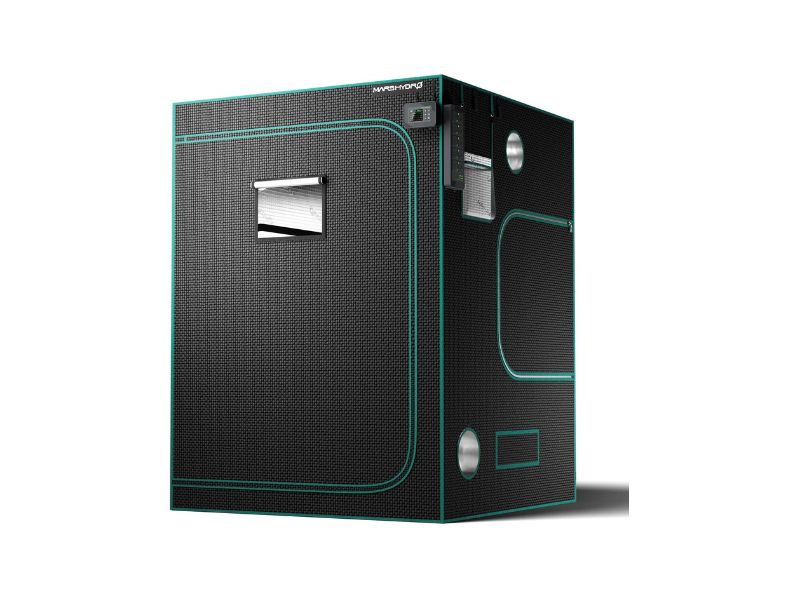
The Mars Hydro 5×5 is the largest tent in this comparison. Its 25-square-foot footprint provides enough room for multiple hydroponic growing sites, a central reservoir, larger flood tables, or interconnected deep-water-culture buckets.
The main advantage is working room. A hydroponic garden does not use floor space only for plants. Pumps, reservoirs, nutrient lines, drain fittings, air stones, meters, and maintenance access all require room.
A 5×5 tent makes it easier to separate wet equipment from power connections. It also provides more options for reservoir placement, although keeping the primary reservoir outside the enclosure can simplify temperature control and nutrient maintenance.
The 80-inch height supports larger LED fixtures and full ventilation systems. Growers can mount a substantial carbon filter and inline fan near the ceiling while preserving more plant height than a short tent would allow.
The 1680D canvas is intended to resist tearing and restrict light leaks. Its reflective interior improves light reuse across the wide canopy, although a properly sized grow light is essential for reaching the outer edges of a 5×5 footprint.
Multiple access points are important in a large enclosure. Reaching the back corner of a five-foot-deep canopy from one door can be difficult, especially after plants fill the space. Side access reduces the need to lean across reservoirs and nutrient lines.
This tent requires considerably more ventilation, lighting, and room-level climate control than the smaller alternatives. A large enclosure can still overheat when high-powered lighting and pumps operate continuously.
What I Like
- Large floor area for complex hydroponic systems
- Space for multiple reservoirs or growing sites
- Good height for powerful lights and filtration
- Multiple access points
- Heavy reflective canvas
- Removable floor tray
- Suitable for larger pumps and circulation equipment
- Easier separation of wet and electrical components
What I Do Not Like
- Requires substantial room space
- Higher lighting and ventilation requirements
- More difficult to assemble alone
- Large water volume increases spill risk
- Environmental equipment costs can rise quickly
- Reaching every plant still requires careful layout
The Mars Hydro 5×5 is best for growers who need capacity rather than compactness. It can accommodate a serious hydroponic installation, but the room, ventilation system, electrical circuit, and lighting plan must be prepared for the larger scale.
4. Spider Farmer 4×4 Grow Tent
Key Features
- 48 × 48 × 80-inch dimensions
- Sixteen-square-foot square footprint
- 1680D Oxford canvas
- Diamond-pattern reflective Mylar
- Reinforced metal frame
- Large front access
- Observation window
- Controller and power-strip mounting support
- Removable floor tray
- Ventilation and cable openings
- Tool-free frame construction
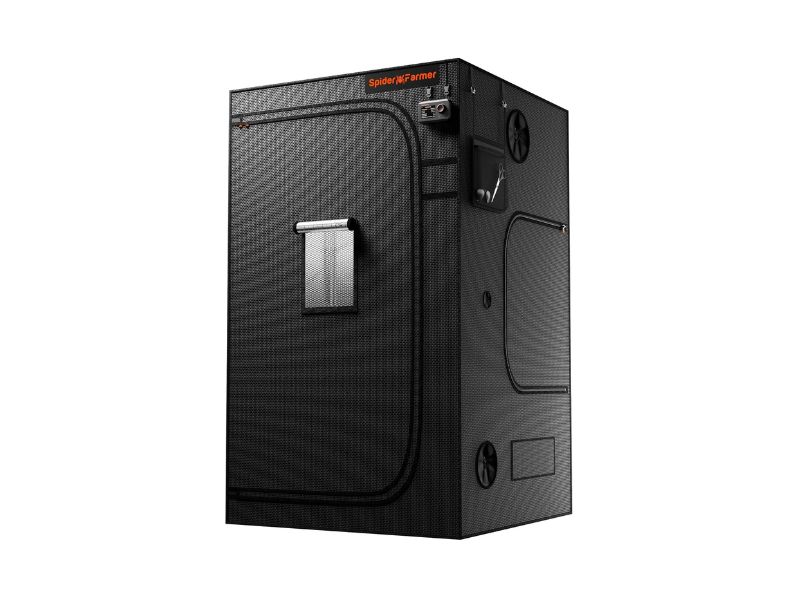
The Spider Farmer 4×4 offers a useful balance between compact personal tents and the large 5×5 Mars Hydro enclosure. Sixteen square feet provides enough room for several hydroponic modules without creating the environmental demands of a 25-square-foot canopy.
A square 4×4 layout works well for four-site deep-water culture, compact recirculating systems, flood trays, or several independent containers. Equipment can be arranged in quadrants around a central working area or reservoir connection.
The 80-inch height gives growers enough vertical room for buckets, taller plants, hanging hardware, and a full-size LED fixture. It also provides flexibility when plant-training plans do not produce a perfectly low canopy.
The reflective Mylar interior helps distribute light across the square footprint. Square grow lights and bar fixtures generally match this shape more naturally than narrow rectangular fixtures.
The frame is designed to support overhead equipment such as lights, filters, fans, and controllers. Load should still be distributed across suitable support bars rather than concentrated on one point.
A large viewing window allows quick checks without opening the tent, while controller-mounting features make it easier to keep environmental electronics outside the humid growing space.
The removable floor tray helps contain minor nutrient spills. For hydroponic applications, a larger waterproof base or leak sensor may still be worthwhile, especially when several gallons of solution circulate through the system.
What I Like
- Balanced size for medium hydroponic gardens
- Full 80-inch height
- Strong reflective canvas
- Square shape works with common hydroponic layouts
- Controller-mounting support
- Large viewing window
- Removable floor tray
- Suitable for powerful lighting and ventilation
What I Do Not Like
- Occupies a significant room footprint
- Large front canopy can restrict rear access
- Negative pressure may pull sidewalls inward
- Hydroponic tubing requires careful routing
- Assembly is easier with two people
The Spider Farmer 4×4 is suitable for growers who need more flexibility than a 2×4 tent but do not want the scale of a 5×5 enclosure. It provides a strong combination of working height, usable floor area, and equipment compatibility.
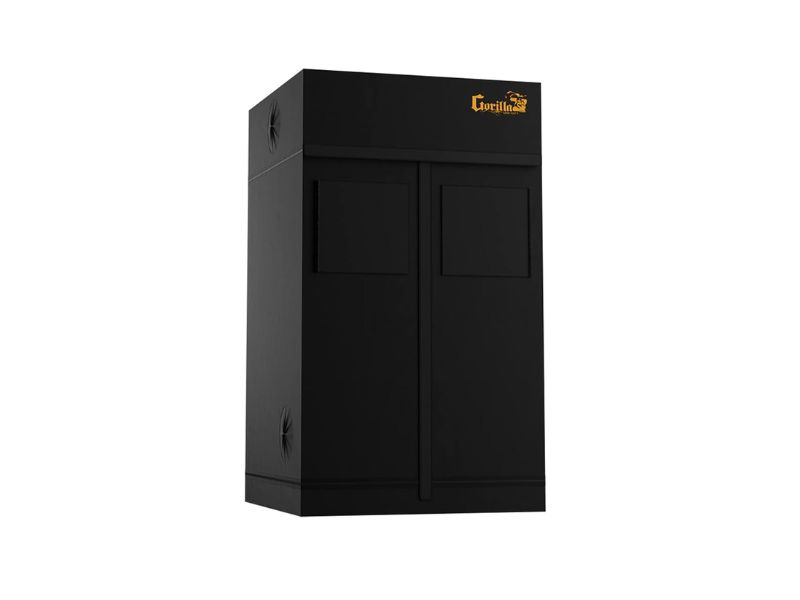
5. Gorilla Grow Tent Pro 3×3
Key Features
- 36 × 36-inch footprint
- Approximately 6 feet 11 inches of standard height
- Height-extension compatibility
- Heavy-duty 1680D canvas
- Diamond reflective interior
- Reinforced 19 mm steel frame
- High hanging-load capacity
- Multiple duct openings
- Electrical access ports
- Heavy-duty zippers
- Removable spill tray
The Gorilla Grow Tent Pro 3×3 is designed for growers who value vertical clearance and heavy-duty construction. Its nine-square-foot floor is smaller than a 4×4, but its standard height is greater than many compact alternatives.
Height is especially useful in hydroponics. Buckets, reservoir lids, net pots, and irrigation hardware raise plants above the floor before vertical growth begins. A taller tent preserves more room for lights, filters, and a safe canopy gap.
The frame is built to support substantial overhead equipment. This is useful when a carbon filter, inline fan, LED fixture, circulation fan, and hanging irrigation components must share the same structure.
Its height-extension capability gives growers additional flexibility when the room ceiling allows it. Extra height can reduce the need for aggressive plant training and create more options for filter and driver placement.
The 3×3 square footprint is suitable for a central hydroponic reservoir, several small buckets, a compact recirculating system, or a medium flood tray. It provides more working room than a 2×2 while remaining easier to fit into a small room than a 4×4.
The heavy canvas and zippers improve durability, but they also increase the tent’s weight and assembly effort. The cover should be installed carefully to avoid forcing the zipper or overstressing a seam.
What I Like
- Excellent vertical clearance
- Height-extension capability
- Heavy-duty canvas
- Strong steel frame
- Suitable for substantial hanging equipment
- Square footprint supports several system layouts
- Durable zippers and access ports
- Appropriate for taller plants and reservoirs
What I Do Not Like
- Heavier than many competing tents
- Requires careful assembly
- Higher cost than lighter 3×3 tents
- Smaller floor area than 4×4 options
- Extra height is useful only when the room allows it
The Gorilla Grow Tent Pro 3×3 is the strongest option for growers who need vertical room and a heavy-duty frame within a moderate floor area. It is particularly suitable for permanent installations where durability matters more than portability.
Hydroponic Grow Tent Comparison Table
| Product | Brand | Size | Floor Area | Height | Canvas | Best Use | Main Limitation |
| VIVOSUN S224 | VIVOSUN | 2×2 | 4 sq. ft. | 48 in. | Durable Oxford canvas | Compact starter system | Limited vertical space |
| CLOUDLAB 642 | AC Infinity | 2×4 | 8 sq. ft. | 72 in. | 2000D Oxford canvas | Two-site or rectangular systems | Rear access can be difficult |
| Mars Hydro Advanced | Mars Hydro | 5×5 | 25 sq. ft. | 80 in. | 1680D Oxford canvas | Large multi-site hydroponics | High climate-control demand |
| Spider Farmer Grow Tent | Spider Farmer | 4×4 | 16 sq. ft. | 80 in. | 1680D Oxford canvas | Medium full-cycle systems | Requires substantial room |
| Gorilla Grow Tent Pro | Gorilla Grow Tent | 3×3 | 9 sq. ft. | Approx. 83 in. | 1680D canvas | Tall or equipment-heavy setups | Heavy and more difficult to assemble |
The best size depends on the space occupied by the complete hydroponic system, not only the plants. Reservoirs, pumps, tubing, access paths, and ventilation equipment must be included in the calculation.
How to Choose the Correct Hydroponic Grow Tent Size
Start by measuring the actual floor space required by the hydroponic system.
A bucket listed as 12 inches wide may require additional room for:
- Air tubing
- Drain fittings
- Water-level indicators
- Recirculation lines
- Reservoir connections
- Plant branches
- Maintenance access
A hydroponic tray also requires access to pumps, drain outlets, and nutrient lines. Placing a tray tightly against every wall can make leaks and blockages difficult to repair.
Two-by-two tents
A 2×2 tent is appropriate for:
- One compact deep-water-culture bucket
- A small drip system
- Seedlings and clones
- Herbs and leafy greens
- One carefully trained plant
- A compact reservoir
Its main restriction is vertical and working space.
Two-by-four tents
A 2×4 tent works well for:
- Two hydroponic buckets
- A narrow flood tray
- A short NFT channel
- Plants arranged in one row
- Separate vegetative and propagation zones
The narrow depth makes it easier to reach plants from the front.
Three-by-three tents
A 3×3 provides a flexible square layout for:
- Four smaller containers
- One central reservoir
- A compact recirculating system
- Medium plant canopies
- Taller hydroponic plants
It offers more working room without requiring a full 4×4 area.
Four-by-four tents
A 4×4 is suitable for:
- Four-site recirculating systems
- Multiple independent buckets
- Medium flood tables
- Larger reservoirs
- Full-cycle indoor gardens
It requires stronger lighting and ventilation than smaller tents.
Five-by-five tents
A 5×5 tent is appropriate for:
- Large multi-site systems
- Wide flood-and-drain tables
- Several reservoirs
- Larger working paths
- High-output lighting systems
Room-level cooling and electrical capacity become major considerations at this size.
Matching Hydroponic Systems to Tent Shapes
Different hydroponic methods use floor space differently.
Deep-water culture
A deep-water-culture bucket occupies considerable vertical space because the plant begins above the reservoir lid. Short tents can become difficult to manage even when the bucket fits easily on the floor.
Recirculating deep-water culture
A recirculating system requires room for connecting pipes and a control reservoir. Square 3×3, 4×4, and 5×5 tents usually provide more routing options than narrow enclosures.
Nutrient film technique
NFT channels are long and narrow. A 2×4 or larger rectangular tent may match their shape more effectively than a compact square model.
Ebb and flow
Flood tables require enough clearance for drain fittings, pump connections, and a reservoir underneath or nearby. Confirm the table’s exterior dimensions rather than relying only on its advertised growing area.
Drip irrigation
Drip systems are flexible and can operate in almost any tent size. However, tubing should remain visible and accessible so blocked emitters or loose connections can be corrected quickly.
Aeroponics
Aeroponic chambers may be tall and contain high-pressure plumbing. Extra vertical clearance and reliable humidity control are particularly important.
Canvas Thickness, Seams, and Light Control
Canvas density is commonly expressed using a denier rating such as 600D, 1680D, or 2000D.
A higher number generally indicates a heavier textile, but thickness alone does not determine tent quality. Stitching, zipper design, inner coating, frame alignment, and material flexibility also matter.
Heavier canvas can provide:
- Better resistance to tearing
- Improved light containment
- Greater shape stability
- Better long-term durability
- More resistance to negative-pressure deformation
Potential disadvantages include:
- Greater weight
- More difficult assembly
- Higher cost
- Increased stress when forcing the cover over the frame
Check seams around:
- Zippers
- Observation windows
- Duct ports
- Cable openings
- Floor corners
- Door curves
A small amount of reflected light near a seam is different from a direct opening that disrupts a controlled dark cycle.
Frame Strength and Hanging Equipment
The frame may need to support:
- LED grow light
- Inline fan
- Carbon filter
- Ducting
- Circulation fans
- Sensors
- Irrigation tubing
- Plant-support netting
Do not assume the full advertised frame capacity can be placed on one crossbar. Weight should be distributed across several correctly installed support bars.
Hydroponic reservoirs should remain on the floor or on a stand designed for their filled weight. One gallon of water weighs more than eight pounds, so even a modest reservoir becomes heavy when full.
Never suspend a nutrient reservoir from the grow-tent frame.
Ventilation for a Hydroponic Grow Tent
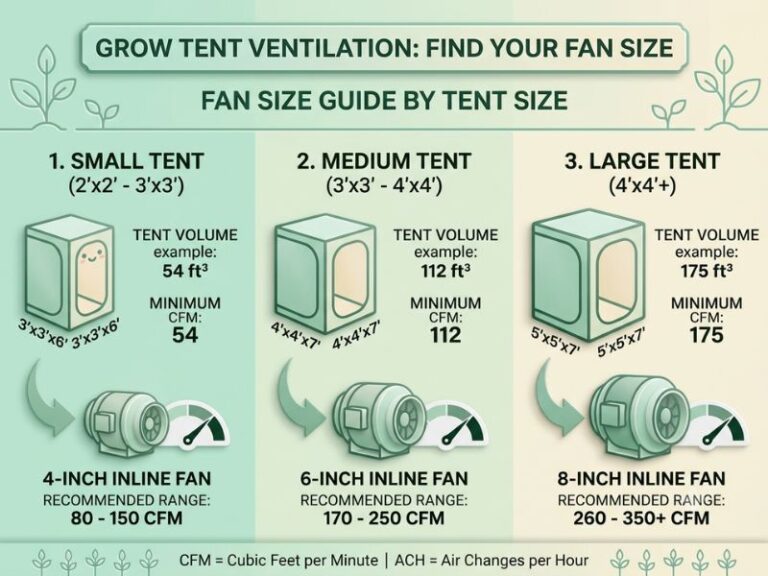
Tent volume can be calculated using:
Length × width × height = cubic feet
For example, a 4×4×6.7-foot tent contains approximately:
4 × 4 × 6.7 = 107 cubic feet
A fan rated above the basic tent volume may be needed because airflow is reduced by:
- Carbon filters
- Long duct runs
- Sharp bends
- Silencers
- Intake restrictions
- Dirty prefilters
- High room temperature
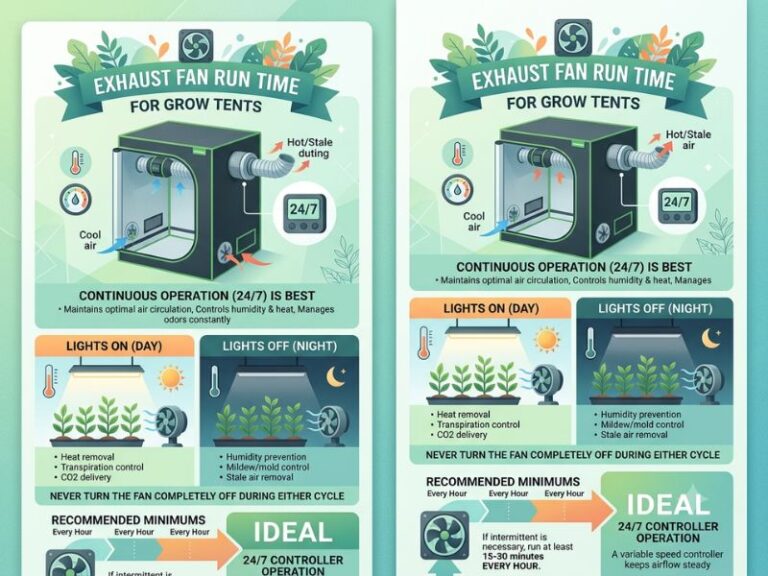
Hydroponic gardens may create additional humidity because open water surfaces and vigorous plants release moisture into the air.
The ventilation system should maintain controlled negative pressure without pulling the walls inward so aggressively that canopy space is lost.
Managing Water and Electrical Equipment Safely
Hydroponics places water, pumps, and electrical equipment inside the same small enclosure.
Use practical separation:
- Keep power strips above floor level
- Route cables away from drain fittings
- Use drip loops
- Keep controllers outside the tent when possible
- Secure air and water lines
- Inspect hose connections regularly
- Use reservoir lids
- Install a water alarm near the floor
- Do not place plugs beneath hanging tubing
A removable floor tray can contain minor spills. It cannot safely hold the complete contents of a large reservoir.
Test the hydroponic system for leaks before introducing plants or energizing high-powered lighting equipment.
Planning Reservoir Access
A reservoir that fits through the open tent door may become difficult to remove after the frame, plants, and equipment are installed.
Before setup, check:
- Door opening width
- Reservoir dimensions
- Lid clearance
- Pump access
- Drain location
- Nutrient-mixing space
- Water-change method
- Ability to inspect roots
An external reservoir can simplify maintenance and reduce heat transfer from the light. It requires safe hose routing through a suitable lower port.
Grow-Light Compatibility
The grow light should match the usable canopy, not simply the tent’s outer dimensions.
Common starting points include:
- 2×2 tent: compact 100–150W LED
- 2×4 tent: approximately 200–320W LED
- 3×3 tent: approximately 250–350W LED
- 4×4 tent: approximately 400–500W LED
- 5×5 tent: approximately 600–800W LED
These are broad ranges rather than fixed requirements.
Lighting decisions should also consider:
- Photon efficacy
- PPFD distribution
- Hanging height
- Dimming
- Plant stage
- Canopy density
- Room temperature
- Carbon-dioxide level
The tent must provide enough height for the reservoir, plant, light fixture, suspension system, and safe canopy gap.
Common Hydroponic Grow-Tent Mistakes
Choosing by plant count alone
Plant size and hydroponic equipment determine space requirements more accurately than the number of plants.
Forgetting reservoir height
Buckets and flood-table stands can remove a large portion of the usable vertical space.
Placing the reservoir where it cannot be serviced
Nutrient solution requires testing, adjustment, cleaning, and replacement.
Keeping power connections on the floor
Even a small leak can reach low electrical equipment.
Selecting too little ventilation
Hydroponic plants and exposed nutrient solution can increase humidity.
Blocking every duct port
Leave flexibility for future exhaust, intake, humidification, or cooling equipment.
Ignoring access to rear plants
A dense canopy can make the rear half of a large tent difficult to maintain.
Hanging too much from one bar
Distribute equipment weight across the frame.
Relying entirely on the floor tray
Use secure reservoirs, reliable fittings, and leak detection.
Purchasing the largest tent without checking the room
Measure doors, ceilings, baseboards, outlets, and ventilation routes before ordering.
Frequently Asked Questions
What is the best hydroponic grow tent?
The VIVOSUN S224 is my primary recommendation for a compact starter system because it provides reflective walls, useful access, ventilation ports, and a removable floor tray in a manageable 2×2 footprint.
Larger hydroponic systems may be better served by the AC Infinity CLOUDLAB 642, Spider Farmer 4×4, Gorilla 3×3, or Mars Hydro 5×5.
What size grow tent is best for hydroponics?
The best size depends on the reservoir, growing sites, plumbing, and required maintenance space.
A 2×2 tent suits compact systems, while 2×4 and 3×3 tents provide more flexible personal-growing layouts. A 4×4 or 5×5 tent is more appropriate for multi-site systems and large reservoirs.
Can any grow tent be used for hydroponics?
Most quality indoor grow tents can house hydroponic equipment when they provide sufficient space, ventilation openings, reflective walls, and a removable floor tray.
The tent must also support safe cable routing and allow convenient access to pumps, tubing, and reservoirs.
Is a 2×2 tent large enough for deep-water culture?
A 2×2 tent can accommodate one compact deep-water-culture bucket, but height may become the main restriction.
Calculate the combined height of the bucket, plant, light, hangers, and safe canopy gap before choosing a short model.
Is a 2×4 tent better than a 3×3 tent?
A 2×4 tent is better for narrow trays, plant rows, and systems placed against a wall.
A 3×3 tent provides a square layout with more depth, making it suitable for central reservoirs or containers arranged in quadrants.
Do hydroponic grow tents need a floor tray?
A removable floor tray is strongly recommended because it simplifies cleaning and contains small spills.
It should not be expected to hold the full capacity of a reservoir. Secure fittings and a leak alarm provide additional protection.
Should the hydroponic reservoir stay inside the tent?
It can remain inside when there is enough space for maintenance and temperature control.
An external reservoir may be easier to access and can remain cooler, but its tubing must pass safely through a suitable tent opening.
How much ventilation does a hydroponic tent require?
Ventilation depends on tent volume, light wattage, room temperature, humidity, ducting, and filter resistance.
Hydroponic gardens may need additional moisture removal because plants and open reservoirs add humidity to the enclosure.
Does thicker canvas improve plant growth?
Thicker canvas does not directly increase plant growth.
It can improve light containment, durability, and environmental stability. Lighting quality, root-zone conditions, nutrients, temperature, and airflow have a more direct influence on growth.
Is 2000D canvas better than 1680D?
A 2000D canvas is generally heavier, but the overall tent quality also depends on stitching, zippers, reflective lining, pole strength, and construction accuracy.
A well-built 1680D tent can provide excellent durability.
Can I hang a hydroponic reservoir from the tent frame?
No. Reservoirs become extremely heavy when filled with water.
They should remain on the floor or on a stand specifically designed for the complete filled weight.
What equipment should remain outside the tent?
Controllers, power strips, nutrient storage, and sometimes the main reservoir are often easier and safer to manage outside.
Drivers and exhaust equipment can also be mounted externally when the product design supports it.
How do I prevent humidity from becoming too high?
Use an appropriately sized exhaust fan, maintain internal air circulation, cover reservoirs, remove standing water, and monitor humidity continuously.
A dehumidifier may be needed when the surrounding room is already humid.
How many hydroponic plants fit in a 4×4 tent?
The number depends on plant size, system layout, training method, and reservoir design.
Four medium growing sites are common in a square layout, but several smaller containers or fewer large plants may use the space more effectively.
Is a viewing window necessary?
A viewing window is convenient but not essential.
It allows quick inspections without opening the main door, which helps preserve the controlled environment. The window cover must seal properly during dark periods.
Conclusion
Choosing the best hydroponic grow tent starts with measuring the complete system rather than counting plants. Reservoirs, pumps, tubing, grow lights, filters, and maintenance paths all consume usable space.
My primary recommendation is the VIVOSUN S224 2×2 Grow Tent for growers building a compact first system. Its manageable footprint, reflective lining, viewing window, and removable tray provide the basic features needed for a small hydroponic enclosure.
The AC Infinity CLOUDLAB 642 2×4 Grow Tent is more suitable for narrow plant rows and controller-based systems. The Gorilla Grow Tent Pro 3×3 provides additional height and a heavy-duty frame.
For medium installations, the Spider Farmer 4×4 Grow Tent offers a balanced sixteen-square-foot layout. The Mars Hydro 5×5 Advanced Grow Tent provides the most room for multi-site hydroponics, large reservoirs, and extensive equipment.
Whichever size you choose, confirm the room dimensions, reservoir access, ventilation route, electrical capacity, and vertical clearance before assembly. A carefully planned smaller tent is generally more effective than a large enclosure filled with inaccessible equipment.

I’m Maya L. Greenwood, a lifelong plant lover who believes anyone can grow something beautiful with the right guidance. After years of testing soil mixes, pruning methods, irrigation tricks, and pest-safe solutions, I started EasyGardenTips.com to turn hard-won lessons into step-by-step advice. From seed starting and container gardens to composting and seasonal checklists, my goal is to make gardening simple, sustainable, and fun.