
It was a bright Saturday morning when Emma stepped into her backyard, ready to tackle the overgrown grass with her electric lawn mower. As she started pushing the mower, she noticed uneven cuts and patches of grass left too long.
That’s when she realized the cutting height wasn’t set properly. Many homeowners overlook this simple adjustment, yet setting the correct cutting height is essential for a healthy lawn, efficient mowing, and protecting the mower’s motor.
Proper cutting height ensures that grass is trimmed evenly without stressing the plant. Mowing too short can scalp the lawn, leaving it vulnerable to heat, pests, and disease, while mowing too high may make the yard look untidy and result in uneven growth.
Adjusting the height correctly reduces strain on the mower, improves cutting efficiency, and minimizes electricity consumption for corded or battery-powered models.
In this guide, you’ll learn how to safely adjust the cutting height on your electric lawn mower. We’ll cover step-by-step instructions, tools and safety gear, tips for different grass types and seasons, and routine maintenance practices.
With this knowledge, you can achieve a uniform, healthy lawn while ensuring your mower operates safely and efficiently, season after season.
Why Adjusting Cutting Height Matters
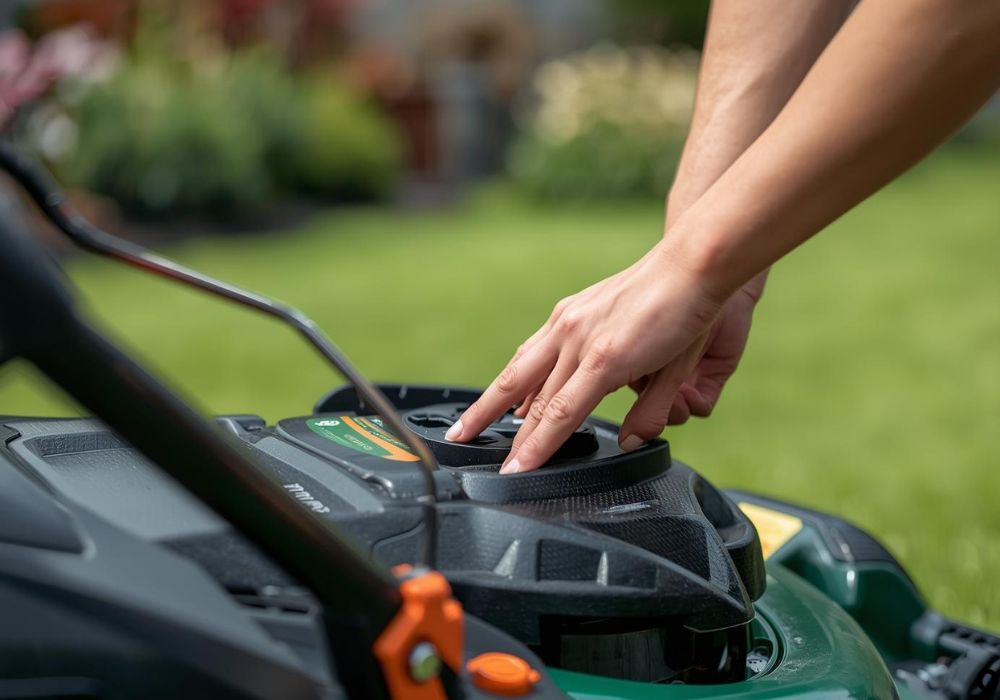
It was a warm Saturday morning when Sarah stepped into her backyard ready to mow. She noticed the grass had grown unevenly and wanted a cleaner, more uniform cut.
Her electric lawn mower was ready, but she realized she needed to adjust the cutting height. Many homeowners underestimate this small adjustment, yet proper cutting height is crucial for both lawn health and mower efficiency.
Cutting grass too short can damage the lawn, exposing soil to heat, pests, and disease. Conversely, mowing too high leaves the lawn untidy and can lead to uneven growth. Electric mowers rely on precise blade positioning to achieve the desired height.
Adjusting the height ensures blades cut evenly without overworking the motor, reducing energy consumption.
Proper cutting height also promotes healthy grass growth by allowing blades to remove only the tips rather than scalp the lawn. It minimizes stress on both the grass and the mower, prolonging blade life and preventing motor strain.
Regular adjustments according to grass type and season optimize energy efficiency while maintaining a lush, green yard.
By learning how to safely change cutting height, homeowners can protect their lawns, maintain efficient mowing, and extend the life of their mower. It’s a simple step that improves both safety and performance.
Why is cutting height important for my lawn?
Proper height ensures healthy grass and prevents soil exposure.
Can cutting too short damage the lawn?
Yes, it can stress grass, promote weeds, and expose soil.
Does height adjustment affect mower performance?
Yes, correct height reduces motor strain and energy use.
How often should I adjust cutting height?
Adjust based on grass growth, season, and desired lawn appearance.
Can improper cutting height affect energy use?
Yes, blades working too low or high can increase electricity consumption.
Is it necessary for all electric mowers?
Yes, height adjustment is essential for corded and battery-powered models.
Does grass type influence height settings?
Absolutely, different grass types require different cutting heights.
Tools and Safety Gear Needed
Before adjusting cutting height, safety is paramount. Unplug corded mowers or remove the battery from cordless models to prevent accidental startups. Wearing gloves protects your hands from sharp edges on blades or adjustment levers.
A flat, stable surface is ideal for adjusting height. For some models, a screwdriver or wrench may be required to loosen adjustment levers or bolts. A small step stool or mower lift is optional but can make the process easier and safer.
Using the proper tools ensures adjustments are precise and safe. Avoid improvising with incorrect tools, which can damage the mower or make adjustment difficult. Proper safety gear minimizes the risk of cuts, pinches, or accidental starts during the process.
Understanding the adjustment mechanism on your mower is also key. Some models have a single lever, while others feature multiple height settings. Familiarizing yourself with your mower’s manual ensures you perform adjustments correctly and safely.
Safety preparation protects both the user and the mower, ensuring cutting height adjustments are effective and efficient. Proper tools and protective gear make this simple maintenance task quick, safe, and accurate.
Do I need to unplug the mower?
Yes, always unplug or remove the battery before adjusting.
Should I wear gloves?
Yes, gloves protect your hands from sharp edges.
Are additional tools required?
Some models may require a wrench or screwdriver; check the manual.
Is a stable surface important?
Yes, it prevents mower tipping and ensures safe adjustments.
Can using the wrong tool damage the mower?
Yes, improper tools can strip bolts or misalign the blades.
Do all mowers have the same adjustment mechanism?
No, some use levers, others bolts—consult the manual.
Is a mower lift necessary?
Optional, but helpful for ease and safety during adjustments.
Step-by-Step Height Adjustment Process
Begin by locating the height adjustment lever or dial on your mower. Most modern mowers have a single lever for all wheels, while some older models may require adjustments for each wheel individually. Ensure the mower is on a flat surface to maintain stability.
Unplug or remove the battery to prevent accidental startups. If the mower uses a lever, pull or push it according to the manual’s instructions to set the desired height. For models with wheel adjustments, use a wrench or screwdriver as needed to reposition each wheel securely.
Double-check the height setting visually or with a measuring tool to ensure all sides of the mower are even. Uneven height can lead to scalping or inconsistent cutting. Once satisfied, securely lock the lever or fasten the bolts to prevent movement during mowing.
Test the mower by pushing it slightly to ensure the blades spin freely and the deck is stable. Never operate the mower immediately after adjusting if the battery or cord is still connected, as this can be dangerous.
Proper adjustment ensures a uniform cut, reduces motor strain, and enhances mowing efficiency. Regularly checking and adjusting cutting height maintains both the lawn’s appearance and the mower’s longevity.
Where is the height adjustment lever?
Typically near the wheels or the deck; consult your manual.
Do I adjust all wheels individually?
Some models do; most modern mowers use a single lever for all.
Should the mower be on a flat surface?
Yes, for stability and accurate adjustment.
Can I operate the mower while adjusting height?
No, always disconnect power before adjustments.
How do I check if the height is correct?
Visually inspect and measure for uniformity.
Do I need to lock the lever or bolts?
Yes, to prevent movement during mowing.
Does proper adjustment affect motor efficiency?
Yes, correct height reduces strain and energy consumption.
Maintenance Tips After Adjustment
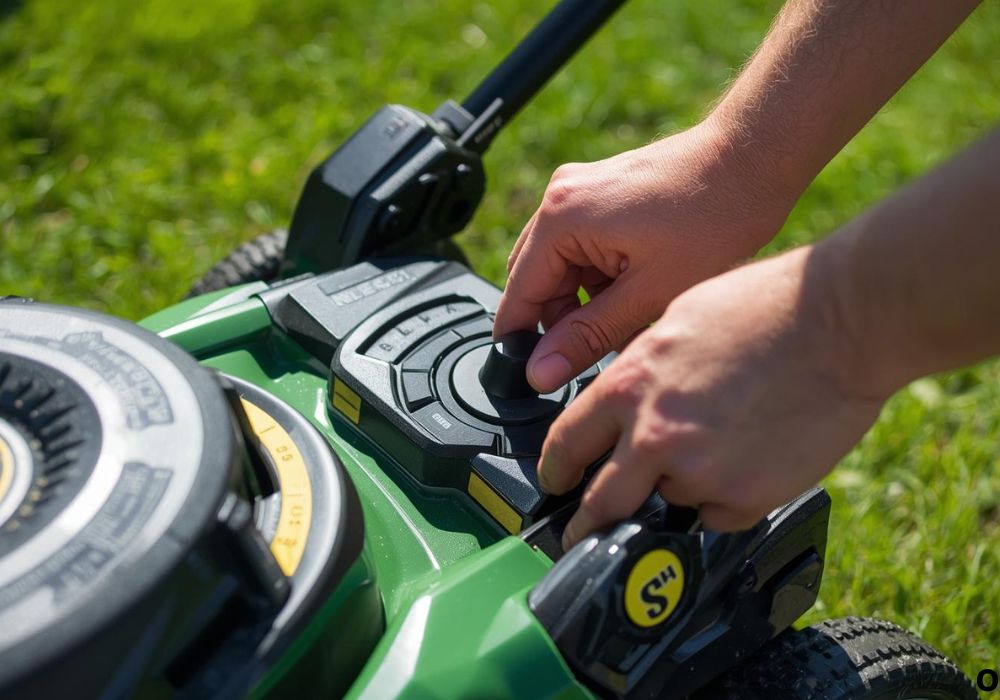
Once the cutting height is set, regular maintenance ensures the mower continues to operate efficiently. Inspect blades for sharpness; dull blades reduce cutting efficiency and force the motor to work harder.
Clean the underside of the mower to prevent debris buildup, which can interfere with the height mechanism.
Check that the adjustment lever or bolts remain secure before each mowing session. Loose components can shift during operation, resulting in uneven cuts and potential safety hazards. For battery mowers, ensure battery contacts are clean and corrosion-free.
Regular lubrication of moving parts, as recommended in your mower’s manual, helps maintain smooth adjustment and blade rotation. Documenting adjustment settings for different grass types or seasonal conditions makes future mowing faster and more consistent.
Incorporating these maintenance practices prolongs mower life, reduces electricity consumption, and ensures a healthy, attractive lawn. Paying attention to small details like height adjustments keeps mowing efficient, safe, and stress-free.
Should blades be checked after adjustment?
Yes, sharp blades improve cutting and reduce motor strain.
How often should the height mechanism be inspected?
Before each mowing session to ensure secure operation.
Does debris affect height adjustment?
Yes, buildup can interfere with levers or bolts.
Should moving parts be lubricated?
Yes, as per the manufacturer’s instructions for smooth operation.
Do battery contacts need maintenance?
Yes, keep them clean and corrosion-free.
Can proper maintenance improve efficiency?
Absolutely, it reduces energy consumption and improves cutting quality.
Is documenting settings helpful?
Yes, it speeds up adjustments and ensures consistent lawn care.
Tips for Optimal Cutting Height by Lawn Type
Different grass types and seasons require different cutting heights. For cool-season grasses like fescue or rye, a higher cut of 2.5–3 inches is ideal. Warm-season grasses like Bermuda or Zoysia are often cut slightly lower at 2–2.5 inches.
Adjust according to season; during summer, higher cuts help shade roots and retain moisture. Shorter cuts in spring or fall may help control weeds or promote growth. Always follow manufacturer recommendations for mower settings to prevent deck or motor strain.
Avoid scalping the lawn by lowering the height too much, as this can damage grass, expose soil, and increase water evaporation. Gradual adjustments are preferable to sudden height changes.
By aligning mower height with grass type and seasonal conditions, you maintain a healthier, more attractive lawn while maximizing mower efficiency and energy usage. Proper height settings prevent motor overwork and extend blade life.
Does grass type affect cutting height?
Yes, cool-season and warm-season grasses require different heights.
Should I adjust height seasonally?
Yes, higher in summer, lower in spring/fall.
Can mowing too low damage the lawn?
Yes, it can scalp grass and expose soil.
Are gradual adjustments better than large changes?
Yes, gradual changes reduce stress on the grass and mower.
Do height settings affect electricity use?
Yes, proper height reduces motor strain and energy consumption.
Should I follow manufacturer recommendations?
Absolutely, to prevent deck or motor damage.
Can optimal height improve lawn health?
Yes, it promotes stronger growth, moisture retention, and a uniform appearance.
Conclusion
Adjusting the cutting height on your electric lawn mower is essential for a healthy lawn, efficient operation, and safe mowing. Proper height ensures clean, uniform cuts, reduces motor strain, and minimizes electricity use.
By following safety precautions—unplugging or removing batteries, wearing gloves, and stabilizing the mower—you can adjust height confidently and safely. Regular maintenance, including blade inspection, deck cleaning, and lubrication, further enhances mower performance and longevity.
Incorporating routine height adjustments into your mowing schedule helps maintain a lush, healthy lawn while protecting your mower. Consistent attention to cutting height ensures energy-efficient operation, optimal blade performance, and a beautifully manicured yard every season.

I’m Maya L. Greenwood, a lifelong plant lover who believes anyone can grow something beautiful with the right guidance. After years of testing soil mixes, pruning methods, irrigation tricks, and pest-safe solutions, I started EasyGardenTips.com to turn hard-won lessons into step-by-step advice. From seed starting and container gardens to composting and seasonal checklists, my goal is to make gardening simple, sustainable, and fun.