
It’s a warm Saturday morning, and the grass has already reached ankle height. The mower sputters, the blades dull, and the lines on the lawn look uneven.
The question most homeowners face at this point is which brand delivers the perfect balance of power, precision, and reliability: Craftsman vs Husqvarna mower.
Both names are trusted in the world of outdoor tools, yet they cater to different kinds of users. Craftsman promises value, durability, and easy availability through big-box retailers, while Husqvarna focuses on advanced cutting systems, superior traction, and long-term performance.
The curiosity grows when both brands seem to offer nearly identical specs on paper but deliver different results on the lawn.
According to Statista, the global lawn and garden equipment market surpassed US$35 billion in 2024, with more homeowners investing in efficient and eco-friendly mowing solutions.
A Consumer Reports study also found that cut quality and reliability remain the top two deciding factors for mower buyers in 2025.
What “Craftsman vs Husqvarna Mower” Means in 2025

In 2025, the Craftsman vs Husqvarna mower debate represents more than just brand preference—it reflects two distinct approaches to lawn care engineering.
Craftsman, owned by Stanley Black & Decker and manufactured under MTD, continues to deliver reliable, affordable mowers that target the everyday homeowner.
Its models emphasize accessibility, straightforward maintenance, and consistent performance, making them a go-to choice for those who want dependable tools without high price tags.
Husqvarna, on the other hand, positions itself as a performance-driven brand. Known for premium cutting systems like Air Induction and ClearCut decks, Husqvarna mowers are designed for homeowners who prioritize advanced technology, strong traction, and long-term durability.
They also offer more professional-grade features in both walk-behind and riding mower categories, appealing to users with larger or more challenging yards.
While Craftsman focuses on practicality and cost efficiency, Husqvarna leans toward innovation and heavy-duty build quality.
This difference is most evident in their design philosophy—Craftsman favors simplicity and affordability, whereas Husqvarna emphasizes precision cutting and enhanced ergonomics.
Cutting Performance and Deck Technology
When comparing Craftsman vs Husqvarna mower, the first major difference shows up in how each brand approaches cutting performance and deck design.
Craftsman mowers are known for their reliable steel decks that offer stability and durability for everyday lawn care.
The decks are designed with simplicity in mind, providing a solid balance between airflow and grass lift. They handle weekly maintenance cuts efficiently, making them ideal for small to medium lawns that require consistent, even trimming.
Husqvarna takes deck performance a step further with its Air Induction and ClearCut technologies. These systems use a specialized airflow pattern to lift the grass before cutting, resulting in a more uniform and professional-looking finish.
The deeper deck design also helps with better discharge and mulching efficiency, particularly in thicker or wetter grass.
Where Craftsman focuses on reliable performance and ease of use, Husqvarna prioritizes precision and cut quality under more demanding conditions.
For homeowners who often mow damp grass, tall weeds, or uneven surfaces, Husqvarna’s superior deck engineering ensures cleaner cuts with fewer passes.
Craftsman models, meanwhile, remain an excellent choice for level lawns where durability and affordability matter more than advanced airflow systems.
Power, Drive, and Traction Performance
The Craftsman vs Husqvarna mower debate also extends into how each brand handles engine power and traction across different terrains.
Craftsman relies heavily on engines from Briggs & Stratton and Kohler, providing dependable starting performance and solid mid-range torque. These engines perform well for routine lawn care on level or gently sloped yards.
Craftsman’s self-propelled models typically feature front-wheel or rear-wheel drive options, giving users the flexibility to choose based on their yard’s layout and personal handling preference.
Husqvarna, by contrast, focuses on higher torque output and superior traction, especially in larger or uneven lawns.
Its riding and zero-turn mowers often come equipped with Kawasaki or Kohler engines, delivering professional-grade power suitable for hilly terrain and thicker grass.
The brand’s pedal-operated hydrostatic transmission offers smoother speed transitions, allowing precise control when mowing tight corners or climbing slopes.
In practical use, Craftsman’s lightweight build makes maneuvering around trees, fences, and garden beds easier, while Husqvarna’s traction and power give it the advantage on larger properties or damp, uneven ground.
If your yard requires frequent, heavy-duty mowing or has varying elevations, Husqvarna’s advanced drive systems outperform. For smaller suburban yards, Craftsman’s balanced power and simplicity make mowing faster and more effortless.
Battery vs Gas: Runtime, Noise, and Efficiency
In the modern Craftsman vs Husqvarna mower comparison, the choice between gas and battery power has become a defining factor for buyers.
Craftsman’s recent electric lineup, powered by V20 and 60V MAX lithium-ion batteries, appeals to homeowners seeking quieter, low-maintenance solutions.
These cordless mowers typically offer 30 to 50 minutes of runtime, enough for small to medium lawns. Their major advantages lie in instant startup, reduced vibration, and zero emissions, making them both eco-friendly and user-friendly.
Husqvarna, on the other hand, is leading the battery evolution with its BLi series and robotic Automower lineup. These models deliver longer runtimes and smarter power management through optimized brushless motors and efficient battery balancing systems.
For example, Husqvarna’s battery push mowers can handle up to 70 minutes per charge, while its advanced Automowers operate autonomously for hours, maintaining perfect grass height without user effort.
Gas models from both brands remain strong performers for those needing uninterrupted runtime and higher torque.
However, battery mowers are quickly catching up in both performance and convenience. In this category, Craftsman offers better affordability and availability, but Husqvarna stands out for innovation, efficiency, and cutting-edge robotic options suited for tech-driven homeowners.
Maintenance, Durability, and Reliability
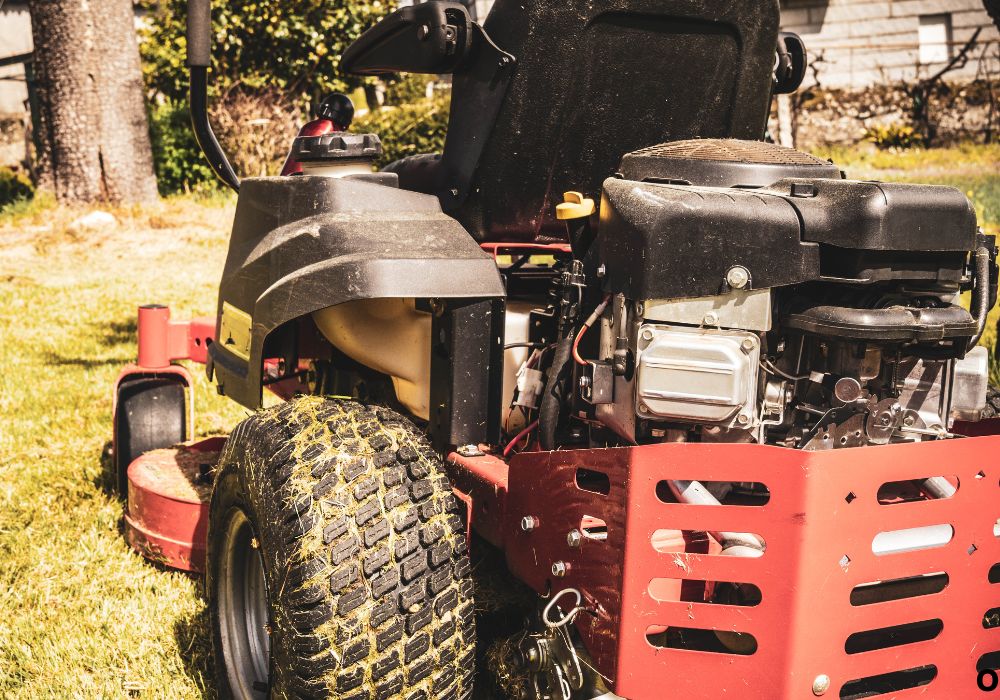
When evaluating Craftsman vs Husqvarna mower, long-term reliability and upkeep are critical factors that separate casual users from serious lawn care enthusiasts.
Craftsman mowers, produced under the MTD and Stanley Black & Decker umbrella, are built with simplicity in mind—making maintenance easy and affordable.
Replacement parts such as blades, filters, and belts are widely available through retail stores and online marketplaces.
Craftsman’s straightforward design ensures that even non-technical users can perform basic upkeep like oil changes and blade sharpening without professional help.
Husqvarna, however, is engineered for longevity and professional-grade reliability. Its mowers feature heavy-duty steel or reinforced composite decks, durable transmissions, and sealed bearings that hold up under tough conditions.
Many models include washout ports for deck cleaning and high-quality air filtration systems that extend engine life.
While parts may be more expensive than Craftsman’s, Husqvarna’s machines often outlast competitors due to their premium construction and better corrosion resistance.
In terms of service, Craftsman benefits from broad big-box retail access, while Husqvarna leverages a strong dealer network for maintenance and warranty support.
For those who prefer a plug-and-play mower with easy parts availability, Craftsman fits the bill. But for durability over years of heavy mowing, Husqvarna clearly leads the pack.
Price, Value, and Availability
Price often becomes the deciding factor in the Craftsman vs Husqvarna mower debate. Craftsman has built its reputation around affordability and accessibility.
Its mowers are widely available through major retailers like Lowe’s, Ace Hardware, and online marketplaces, making them easy to find and purchase.
With walk-behind models typically ranging from $300 to $700 and riding mowers starting near $1,500, Craftsman offers reliable performance at a budget-friendly cost. This makes it ideal for homeowners who want dependable results without overspending.
Husqvarna positions itself in the premium segment, emphasizing long-term value over upfront savings. Its walk-behind mowers generally start around $500, while riding and zero-turn models can range from $2,000 to over $5,000, depending on features.
However, that higher price brings advanced deck technology, stronger components, and superior cut precision.
Husqvarna’s extensive dealer network also adds value through professional setup, service, and extended warranty options, which are often included in the purchase.
Ultimately, Craftsman provides unbeatable accessibility and affordability for most homeowners, while Husqvarna targets those willing to pay more for professional-grade engineering.
The right choice depends on your priorities: short-term savings and ease of ownership favor Craftsman, while long-term performance and cutting excellence make Husqvarna worth the investment.
Real-World Performance and Buyer Scenarios
When deciding between a Craftsman vs Husqvarna mower, the best choice depends on the size, slope, and maintenance demands of your yard. Each brand delivers distinct advantages that shine under different conditions.
For small to medium-sized suburban lawns, Craftsman mowers excel in practicality and comfort. Their lightweight design makes them easy to maneuver around flower beds, trees, and fences.
The simple controls and low maintenance needs appeal to busy homeowners who mow weekly and prefer a dependable, easy-to-start machine. Craftsman’s gas and electric push mowers perform best on level ground, offering consistent cuts without overcomplicating the job.
In contrast, Husqvarna mowers dominate when faced with larger, sloped, or uneven terrains. Their superior traction, powerful engines, and reinforced decks handle thick grass and challenging soil conditions with ease.
For those maintaining half-acre or larger properties, Husqvarna’s riding and zero-turn mowers save time while maintaining precision and cut uniformity. Their battery and robotic models, like the Automower series, also appeal to homeowners seeking convenience and automation.
Simply put, Craftsman is the practical choice for budget-minded homeowners who prioritize simplicity and ease of use, while Husqvarna is designed for power users who value advanced technology, durability, and professional-grade results on demanding landscapes.
Future Trends and Innovation in Lawn Care
The Craftsman vs Husqvarna mower rivalry is evolving rapidly as the lawn care industry shifts toward smarter, greener, and more efficient solutions.
Both brands are adapting to meet new expectations driven by environmental regulations and consumer demand for automation and sustainability.
Craftsman is expanding its presence in the battery-powered segment with the V20 and 60V MAX systems, offering cross-compatibility with other power tools in its ecosystem.
This focus on versatility and affordability makes it easier for homeowners to transition from gas to electric without investing in entirely new accessories or maintenance routines.
Craftsman’s strategy centers on user convenience, lightweight builds, and mass-market accessibility through major retailers.
Husqvarna, on the other hand, continues to lead in technological innovation. Its Automower robotic lineup and advanced BLi battery systems are redefining how homeowners maintain their lawns.
Features like GPS-assisted navigation, weather sensors, and smart app control allow fully automated mowing with precision and efficiency.
The brand’s long-term vision is rooted in sustainability, aiming to reduce emissions while improving cutting intelligence and battery performance.
As 2025 unfolds, both brands will continue refining their strengths—Craftsman focusing on practical value for everyday users, and Husqvarna driving the future of high-performance, automated lawn care.
Conclusion
The Craftsman vs Husqvarna mower comparison in 2025 reveals two outstanding brands serving different types of homeowners.
Craftsman shines through accessibility, affordability, and reliability—making it an excellent choice for small to medium lawns and users who value simplicity and ease of maintenance.
Its wide availability and budget-friendly pricing ensure consistent performance without unnecessary complexity.
Husqvarna, in contrast, stands out for engineering precision and long-term durability. Its Air Induction and ClearCut deck technologies, strong traction systems, and advanced battery and robotic options make it ideal for large or demanding yards.
While it comes at a higher upfront cost, the premium build quality and superior cutting results justify the investment for serious lawn care enthusiasts.
Ultimately, choosing between Craftsman and Husqvarna depends on your priorities. If you want value, simplicity, and easy ownership, Craftsman delivers everything needed for a tidy, well-kept lawn. But if you seek power, innovation, and long-term reliability, Husqvarna remains the clear leader.
Either way, both brands continue to uphold their reputations for quality, ensuring homeowners can achieve the perfect cut every time they roll across the grass.

I’m Maya L. Greenwood, a lifelong plant lover who believes anyone can grow something beautiful with the right guidance. After years of testing soil mixes, pruning methods, irrigation tricks, and pest-safe solutions, I started EasyGardenTips.com to turn hard-won lessons into step-by-step advice. From seed starting and container gardens to composting and seasonal checklists, my goal is to make gardening simple, sustainable, and fun.