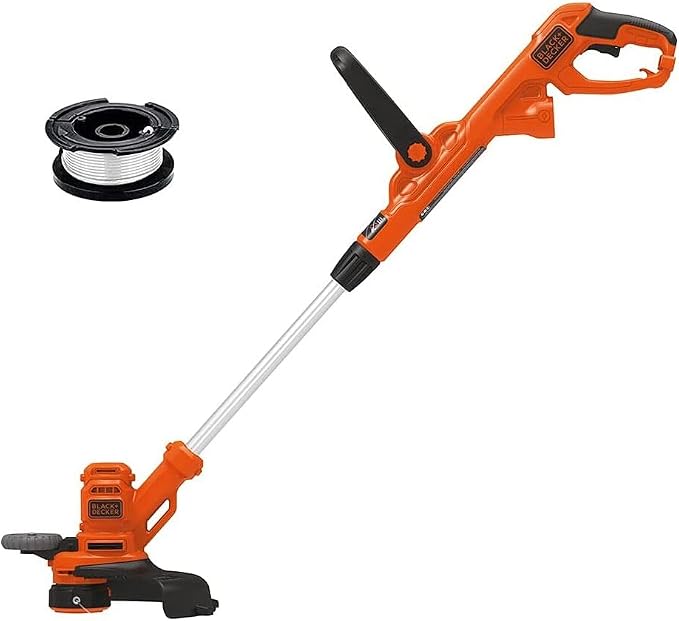
5 Best String Trimmer Replacement Head: Important Facts Explained
Finding the best string trimmer replacement head is less about choosing the most universal-looking attachment and more about matching the head to your trimmer’s shaft, thread direction, line size, and intended workload. A head that reloads quickly may be ideal for routine lawn edging, while a reinforced or steel-wire design may make more sense for weeds growing through cracks, gravel, or hard surfaces.
My primary recommendation is the Weed Warrior Pivotrim Universal Fixed Line Trimmer. Its pivoting-line design, support for both .080-inch and .095-inch line, and broad stated compatibility make it the strongest all-around choice in this group. The Husqvarna 966674401 T25 String Trimmer Head is the clear alternative, especially for owners of compatible Husqvarna models who want a pre-wound, easy-to-reload spool.
This roundup compares five replacement heads by compatibility, loading method, line or cutting material, construction, intended use, and the practical limitations indicated by the product information. The rankings favor useful lawn-care versatility first, then specialized designs for particular trimmer brands or difficult surfaces.
Best String Trimmer Replacement Head: Quick Comparison
| Product | Name | Price |
|---|---|---|
 |
Weed Warrior Pivotrim Universal Fixed Line Trimmer | Check Price |
 |
Husqvarna 966674401 T25 String Trimmer Head | Check Price |
 |
SKIL 14-Inch Replacement Rapid Reload String Trimmer | Check Price |
 |
Universal Weed Eater Head | Check Price |
 |
Nejeszoe 6 Inch Steel Wire Weed Trimmer | Check Price |
1. Weed Warrior Pivotrim Universal Fixed Line Trimmer
The Weed Warrior Pivotrim earns the top position because it combines broad compatibility with a practical fixed-line design that is easier to understand than many traditional spool systems. It accepts both .080-inch and .095-inch line, giving owners some flexibility when replacing worn cutting material. The head uses six pivoting lines, allowing the lines to move when they encounter resistance rather than remaining completely rigid. That design is intended to help prevent breakage during ordinary trimming.
For homeowners who maintain grass around trees, fences, garden borders, and landscaping, this is a useful balance between simplicity and capability. Premium pre-cut trimmer line is included, so the initial setup does not depend on winding a spool correctly. The supplied information also identifies the head as metal, which adds a more substantial construction element than a basic plastic replacement head. It is described as fitting most trimmer models, including gas and cordless machines, although the phrase “most” should not be treated as a guarantee for every shaft or thread pattern.
The main trade-off is that this is not a conventional bump-feed spool. Users who prefer feeding line from beneath the head while working may need to adjust to replacing or inserting fixed pieces of line instead. Pre-cut line is convenient, but ongoing ownership means keeping compatible .080-inch or .095-inch pieces available. The six-line design may also be more cutting capacity than a small, light-duty trimmer needs.
This head is the strongest fit for someone who wants one adaptable replacement for general yard maintenance without being locked into a single trimmer brand. Before ordering, verify the trimmer’s mounting hardware and shaft compatibility rather than relying only on the universal wording. Keep the head clear of wrapped grass and inspect the pivoting line points regularly, particularly after trimming dense weeds or rough edges.
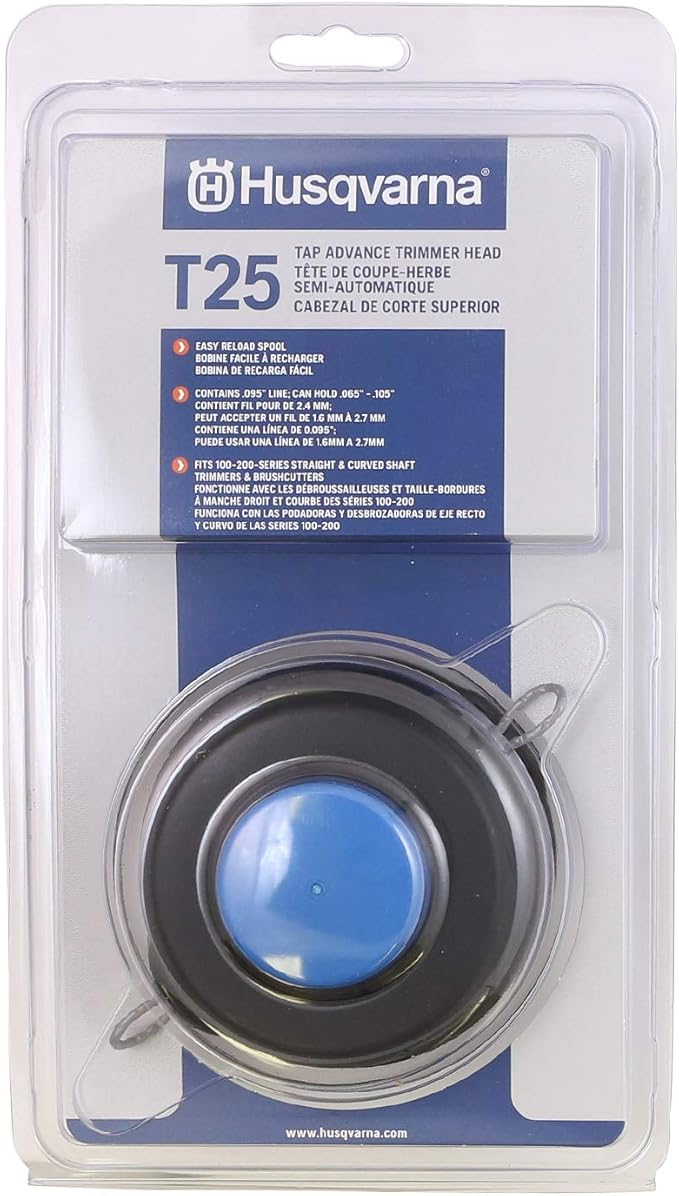
2. Husqvarna 966674401 T25 String Trimmer Head
The Husqvarna T25 takes second place because it is a highly specific and well-documented replacement for a long list of Husqvarna trimmer models. The listed compatibility includes models such as the 122C, 122LK, 125C, 128C, 128L, 128LD, 128R, 130C, 130L, 223L, 223R, 323C, 325C, 326CX, and 330LK. For an owner of one of those machines, that model-based fit can be more reassuring than a generic attachment advertised as universal.
Its strongest practical feature is the easy-reload spool. The spool comes off with the cap, eliminating the need to turn the trimmer upside down during reloading. Arrows indicate the correct winding direction, which reduces guesswork for users who do not frequently service a trimmer head. The split-spool design is intended to minimize tangling and line welding, two common frustrations when line layers become crossed or fuse together from heat.
The head arrives pre-wound with 16.5 feet of line. The T25 version uses .095-inch TitaniumForce line, while the related T25C configuration is associated with .080-inch line. The head is compatible with .065-inch to .095-inch trimmer line, according to the supplied information. That range gives owners room to choose replacement line based on their machine and cutting needs, but the exact pre-wound configuration still matters when ordering.
The principal limitation is brand and model dependence. It should not be assumed to fit a non-Husqvarna trimmer simply because the thread or appearance seems similar. It is an excellent choice for a compatible Husqvarna owner who values conventional spool operation and easy maintenance, but the Weed Warrior is a more flexible choice for mixed-brand households. Confirm the precise model number before purchase, then reload in the direction shown by the head’s arrows to preserve smooth feeding.
3. SKIL 14-Inch Replacement Rapid Reload String Trimmer
The SKIL replacement head holds third place because its value is closely tied to ownership of a compatible SKIL cordless trimmer. It is designed for the SKIL LT4818-10 and LT1400C-11-STH4818, along with SKIL Brushless PWR CORE 40 14-inch string trimmers and Brushless PWR CORE 20 13-inch string trimmers. Within that equipment family, the replacement is a straightforward way to restore the original trimming setup without adapting a generic head.
Its central convenience is rapid line loading. The product is also identified as a bump-feed head, so the user can advance line through the trimmer’s bump-feed operation rather than manually inserting short fixed pieces each time the cutting line wears down. That is a familiar arrangement for homeowners who already use a standard spool and want the replacement head to behave like the original component.
The SKIL head’s 4.5-star rating from 680 reviews in the supplied data suggests positive customer reception, although ratings alone cannot confirm fit on a particular machine. Its more limited position in this ranking is primarily about compatibility and use case rather than a lack of stated convenience. A homeowner with an eligible SKIL trimmer may reasonably prefer this direct replacement over a universal attachment, while someone with a gas trimmer or another cordless brand will need to consider a different option.
The trade-off is that the supplied specifications do not identify a broad range of supported line diameters, construction materials, or compatibility outside the named SKIL platforms. That makes careful model verification especially important. Installation should follow the trimmer’s instructions, and the bump-feed area should be kept free of grass, dirt, and fused line so the spool can rotate and advance properly. Choose this head when direct SKIL compatibility and familiar bump feeding matter more than cross-brand flexibility.
4. Universal Weed Eater Head
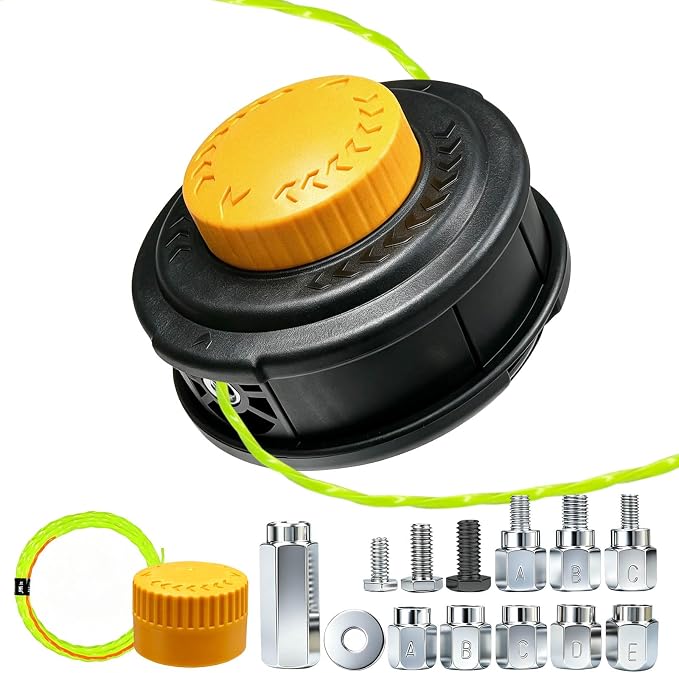
This universal weed eater head ranks fourth because it offers an unusually broad adapter package, but that flexibility also creates more compatibility details to check before installation. The package includes 13 pieces of hardware: five nuts, six bolts, a spacer, and a washer. The listed thread combinations include left- and right-hand patterns such as M8x1.25, M10x1.25, M10x1.0, 3/8-24, 5/16-24, M7x1.0, 5/16-18, and 1/4-20. That assortment is intended to cover many gas, cordless, and brush-cutting machines from brands including Echo, EGO, DEWALT, STIHL, Husqvarna, Ryobi, and Redmax.
The head accepts trimmer line from 2.0 to 3.0 millimeters in diameter and line pieces measuring 27 to 30 centimeters. It includes 12 pre-cut, one-foot, .095-inch triangular lines. Pre-cut pieces make loading quick, and the triangular shape is described as more durable and easier to install than ordinary loose line. The reinforced nylon, fiberglass, and alloy-strength construction is intended for low-height trimming around driveway cracks, mulch, fences, and similar areas.
This design may appeal to someone maintaining several trimmers or replacing a head on a machine with an uncommon mounting arrangement. The adapter range is its most important advantage, not merely the word “universal.” The limitation is that a large hardware kit can make setup more involved. The correct nut, bolt, spacer, washer, and thread direction must be selected, and a visual match does not prove that the attachment is secure.
Before buying, identify whether the trimmer shaft uses clockwise or counterclockwise thread engagement and compare it with the included hardware. Tighten and inspect the assembly before operating. This is a practical choice for low-height trimming and quick line replacement, but the Weed Warrior is simpler for general users who want fewer adapter decisions.
5. Nejeszoe 6 Inch Steel Wire Weed Trimmer
The Nejeszoe steel-wire head occupies fifth place because it is a specialized surface-cleaning attachment rather than a conventional grass-trimming replacement. Its six-inch steel-wire design is intended for weeds in corners, between bricks, along sidewalks, on sand and gravel, and around parking areas. The supplied information also describes uses such as moss and rust removal. Those applications are considerably different from routine grass trimming around a soft lawn.
The wire construction is promoted for contact with demanding surfaces including concrete, rocks, and hard blocks. It is also described as lightweight, with a listed weight of 10.9 ounces, and is designed for electric, battery-powered, cordless string trimmers with a 5.5-millimeter bore size. Installation requires connecting the head to a trimmer shaft punch with that 5.5-millimeter aperture. The package is a two-pack, which can be useful when one head becomes worn or when a second compatible machine needs an attachment.
Its major limitation is its narrow compatibility and specialized cutting action. A 5.5-millimeter bore requirement is not interchangeable with the many thread systems used by ordinary gas trimmer heads. The 3.2-star rating from 281 reviews also indicates a more mixed ownership experience than the higher-ranked options, so buyers should be especially careful about fit and intended use. A steel-wire head is not the natural choice for delicate lawn edging, ordinary grass maintenance, or a trimmer that is not approved for this kind of attachment.
Use the required safety glasses and appropriate protective clothing, as the manufacturer specifically calls for protective equipment. Clear bystanders and inspect the wire before each session. Choose this product when the actual job involves weeds or surface debris around hard materials and the trimmer’s bore matches the stated 5.5 millimeters. For normal lawn work, a line-based head is the safer and more suitable direction.
How to Choose the Best String Trimmer Replacement Head
A replacement head is a working component, not a universal accessory in the broad sense. Two heads can look nearly identical while using different thread directions, shaft openings, locking methods, or line-loading systems. The most reliable selection process begins with the trimmer, not the replacement head’s marketing name.
Start with the trimmer’s exact model and power system
Find the model number on the trimmer housing, handle, battery compartment, or original documentation. Brand names alone are not enough. A Husqvarna head designed for listed models may fit securely on one Husqvarna machine but not another. The SKIL replacement is even more dependent on the named LT4818-10, LT1400C-11-STH4818, and compatible PWR CORE platforms.
Also note whether the trimmer is gas-powered, corded electric, or battery-powered. The power source does not determine compatibility by itself, but it helps identify the type of head the manufacturer intended. A replacement that works on a larger brush cutter may be inappropriate for a compact cordless trimmer, even if an adapter appears to make installation possible.
Check the mounting system and thread direction
The shaft connection is the most important mechanical detail. Replacement heads may use different nuts, bolts, spacers, washers, or internal adapters. Some trimmers use left-hand threads, while others use right-hand threads. The Universal Weed Eater Head illustrates why this matters: its hardware kit includes multiple left- and right-hand thread options.
Do not select hardware based only on diameter. Thread pitch and direction also need to match. If the original head is available, compare its retaining hardware with the replacement kit. If it is missing, consult the trimmer manual or manufacturer documentation. A head that cannot be tightened correctly is not a safe bargain, regardless of how many adapters are included.
Choose between fixed line, spool, and bump feed
Fixed-line heads use separate pieces of cutting line inserted into the head. They can be quick to reload because there is no long length of line to wind around a spool. The Weed Warrior uses a pivoting fixed-line approach and includes pre-cut line. This style can be appealing when simplicity and rapid replacement matter.
Spool heads store line inside the housing. A conventional spool can provide a familiar operating method and a longer continuous supply of line, but winding must be done in the correct direction and with appropriate tension. The Husqvarna T25 uses a split-spool design and arrows that indicate winding direction. Those details can reduce tangling and make routine reloading easier.
A bump-feed head advances line when the bottom of the head is tapped against the ground. The SKIL replacement uses this system. Bump feeding is convenient for users accustomed to extending line while working, but it introduces moving parts that can become dirty, worn, or jammed. Choose the loading system you are most likely to maintain correctly rather than assuming one style is universally superior.
Match line diameter to the trimmer
Line diameter affects whether the head can accept the line and whether the trimmer is designed to drive it properly. The Weed Warrior accepts .080-inch and .095-inch line. The Husqvarna T25 is associated with .095-inch line and is compatible with .065-inch to .095-inch line according to the supplied information. The Universal Weed Eater Head accepts 2.0- to 3.0-millimeter line and includes .095-inch pieces.
These ranges should not be interpreted as permission to use the thickest line in every trimmer. A larger diameter may be unsuitable for a compact machine or may place more resistance on the motor. Use the diameter listed for the trimmer and replacement head together. If the original manual specifies a maximum line size, that limit should take priority over a replacement head’s broader stated range.
Pre-cut line has a different ownership advantage from bulk line. It is quick and consistent at installation, but you must buy or cut suitable replacements later. Spools provide a longer supply but require correct winding. Think about whether your priority is the fastest reload during a job or the lowest-maintenance supply system over an entire season.
Consider what you actually cut
Routine lawn trimming usually calls for a line-based head. Grass around posts, trees, beds, and fences is the normal territory for the Weed Warrior, Husqvarna, and SKIL options. Their differences are mainly compatibility, line-loading method, and the amount of adjustment required.
Low-height weeds in driveway cracks or around hard edging may call for a more rugged fixed-line or reinforced universal design. The Universal Weed Eater Head is specifically described for areas such as cracks, mulch, and fence edges. Even then, confirm that the trimmer is suitable for the attachment and do not assume that a reinforced nylon head can be used exactly like a steel brush.
Steel-wire attachments occupy a separate category. The Nejeszoe head is intended for weeds, moss, rust, and debris around concrete, brick, gravel, and other hard surfaces. That can be useful for a narrow task, but it is not a general substitute for a line head. Hard-surface work can throw debris and requires more attention to protective equipment, bystander distance, and the condition of the attachment.
Balance compatibility against versatility
A model-specific head is often the least complicated choice when it is confirmed to fit. The Husqvarna T25 provides a long list of compatible models and arrives pre-wound. The SKIL head is similarly sensible for owners of the named SKIL machines. Direct compatibility reduces the number of adapter decisions and can make the installation process more predictable.
A universal head can be more useful when a household owns different brands or when the original replacement is difficult to find. The Weed Warrior supports most trimmer models and accepts two common line sizes, while the Universal Weed Eater Head supplies a broad hardware selection. But versatility shifts responsibility to the buyer. You still need to verify the mounting connection, thread direction, line size, and clearance.
In practical terms, “universal” should mean “potentially compatible after verification,” not “guaranteed to fit every trimmer.” Treat a universal claim as an invitation to compare specifications, not as a reason to skip that comparison.
Inspect construction and moving areas
Construction matters most where the head meets resistance. The Weed Warrior is identified as metal and uses pivoting lines. The Universal Weed Eater Head uses reinforced nylon and fiberglass with alloy-grade strength. The Nejeszoe uses steel wire. These materials suggest different intended jobs, but they do not remove the need for inspection.
Before each use, look for cracks, bent hardware, loose fasteners, damaged line retainers, missing pieces, or uneven wear. On a spool head, check for line welding, crossed layers, and debris under the cap. On a fixed-line head, confirm that every line segment is seated evenly. On a wire head, inspect the wires and the central mounting area for looseness or damage.
Replace cutting material before it becomes so short or worn that the head operates unevenly. Uneven line can increase vibration and make trimming less predictable. If the head begins wobbling, stop immediately and investigate the mounting hardware, adapter, spacer, and retaining nut.
Plan the installation before starting the trimmer
Disconnect the battery, unplug the machine, or stop and cool a gas trimmer before removing the old head. The goal is to prevent accidental startup while hands are near the cutting area. Wear gloves when handling used line, wire, or dirty components, while remembering that gloves do not replace eye protection.
Lay out every adapter before assembly. For a kit such as the Universal Weed Eater Head, identify the required hardware rather than trying different pieces while the head is partially installed. Keep the washer and spacer in their correct positions, and use the retaining method specified for the trimmer or attachment.
After installation, rotate the head by hand with the power source disconnected. It should turn without obvious interference, wobble, or contact with the guard. Then perform a cautious test in a clear area. Stop if there is excessive vibration, unusual noise, line ejection, or loosening hardware. A replacement head that appears to fit but behaves irregularly should not remain in service.
Maintain the head for consistent feeding
Grass and dirt commonly collect around the cap, spool, line openings, and shaft. Clean the head after use, especially when trimming wet vegetation. A clean spool is easier to inspect and less likely to bind. Avoid forcing the cap when the line is tangled; remove the obstruction and reload according to the arrows or instructions.
For bump-feed systems, inspect the bump knob and spool for wear. For fixed-line heads, replace line segments that are brittle, badly nicked, or too short to stay secure. For adapter-based heads, check fasteners at regular intervals because vibration can loosen an incorrectly assembled connection.
Storage also affects ownership. Keep spare line dry and protected from prolonged heat or sunlight where practical. Store the head so that wires, line retainers, and adapters are not bent or lost. A small container for spare hardware can prevent an otherwise usable universal head from becoming incomplete.
Use safety equipment appropriate to the attachment
Eye protection is essential for ordinary line trimming and even more important around gravel, concrete, brick, and metal. Long pants, sturdy footwear, and hearing protection are sensible additions, particularly with gas-powered equipment or hard-surface work. Keep children, pets, and bystanders away from the operating area.
Inspect the guard and confirm that it is installed correctly. The guard helps control the direction of thrown material and may also determine the usable line length. Never modify the guard simply to fit a replacement head. If a head requires a different guard or is not approved for the trimmer, choose a compatible alternative instead.
Recognize when another head is the better choice
The right replacement depends on the problem being solved. Choose a fixed-line design when quick insertion and fewer spool-winding steps matter. Choose the Husqvarna T25 when you own a listed Husqvarna model and want a pre-wound, split-spool replacement. Choose the SKIL head when direct fit and bump feeding are more valuable than universal compatibility.
Consider the adapter-heavy Universal Weed Eater Head when you can verify the required hardware and want pre-cut triangular line for low-height trimming. Reserve the Nejeszoe steel-wire head for compatible electric or cordless machines and hard-surface weed or cleaning tasks. For ordinary grass, its specialized design is unnecessary.
Ultimately, the best replacement head is the one that mounts securely, uses the correct cutting material, suits the machine’s power and guard, and matches the work you perform most often. A slightly less versatile head with confirmed compatibility is usually preferable to a supposedly universal head installed with uncertainty.
Best String Trimmer Replacement Head FAQ
What is the best string trimmer replacement head for most homeowners?
The Weed Warrior Pivotrim Universal Fixed Line Trimmer is the strongest general choice in this roundup. It accepts .080-inch and .095-inch line, uses six pivoting lines, includes pre-cut line, and is described as fitting most trimmer models. Its main requirement is confirming the mounting connection before purchase.
Is the Husqvarna T25 a universal replacement head?
No. The Husqvarna T25 is intended for a specific list of Husqvarna models, including several 122, 125, 128, 130, 223, 323, 325, 326, and 330 series trimmers. Verify the exact model number rather than assuming that any Husqvarna trimmer will accept it.
Should I buy a bump-feed or fixed-line trimmer head?
A bump-feed head, such as the SKIL replacement, lets the user advance line while working and feels familiar to many trimmer owners. A fixed-line head, such as the Weed Warrior, avoids winding a spool and can be quick to reload with pre-cut pieces. The better option depends on whether you value continuous bump feeding or simpler line insertion.
Can I use .095-inch line in any replacement head?
No. The head and trimmer must both support that diameter. The Weed Warrior accepts .080-inch and .095-inch line, while the Husqvarna T25 is associated with .095-inch line and supports a stated .065-inch-to-.095-inch range. Always follow the trimmer’s own line-size limits.
Are universal trimmer heads guaranteed to fit every brand?
No. Universal heads may include multiple adapters, but the shaft diameter, thread pitch, thread direction, spacer, washer, and retaining hardware still need to match. Compare the included hardware with the original assembly or the trimmer’s documentation before installation.
Can a steel-wire head replace a normal grass-trimmer head?
A steel-wire head is better viewed as a specialized attachment. The Nejeszoe model is designed for compatible electric or cordless trimmers with a 5.5-millimeter bore and is intended for weeds, moss, rust, gravel, concrete, and similar hard areas. It is not the general-purpose choice for routine lawn edging.
Why does a replacement trimmer head wobble?
Wobbling can result from incorrect hardware, a missing spacer or washer, the wrong thread direction, an incompletely tightened connection, damage to the head, or unevenly installed cutting material. Disconnect the power source, stop using the trimmer, and inspect the complete assembly before attempting another test.
Final Verdict
The Weed Warrior Pivotrim is the best overall choice here because it combines flexible line sizing, pivoting fixed-line operation, included pre-cut line, and broad stated compatibility. The Husqvarna T25 is the better direct replacement for owners of its listed Husqvarna models, while the SKIL head suits compatible SKIL bump-feed trimmers. The Universal Weed Eater Head offers extensive adapter coverage, and the Nejeszoe is best reserved for its specialized hard-surface wire-brushing role. Confirm fit before ordering, install carefully, and choose the head that matches both your trimmer and the work it actually needs to perform.

I’m Maya L. Greenwood, a lifelong plant lover who believes anyone can grow something beautiful with the right guidance. After years of testing soil mixes, pruning methods, irrigation tricks, and pest-safe solutions, I started EasyGardenTips.com to turn hard-won lessons into step-by-step advice. From seed starting and container gardens to composting and seasonal checklists, my goal is to make gardening simple, sustainable, and fun.